
An Lock Free ID Generator for Golang based on Snowflake Algorithm (Twitter announced).
Description
An Lock Free ID Generator for Golang implementation.
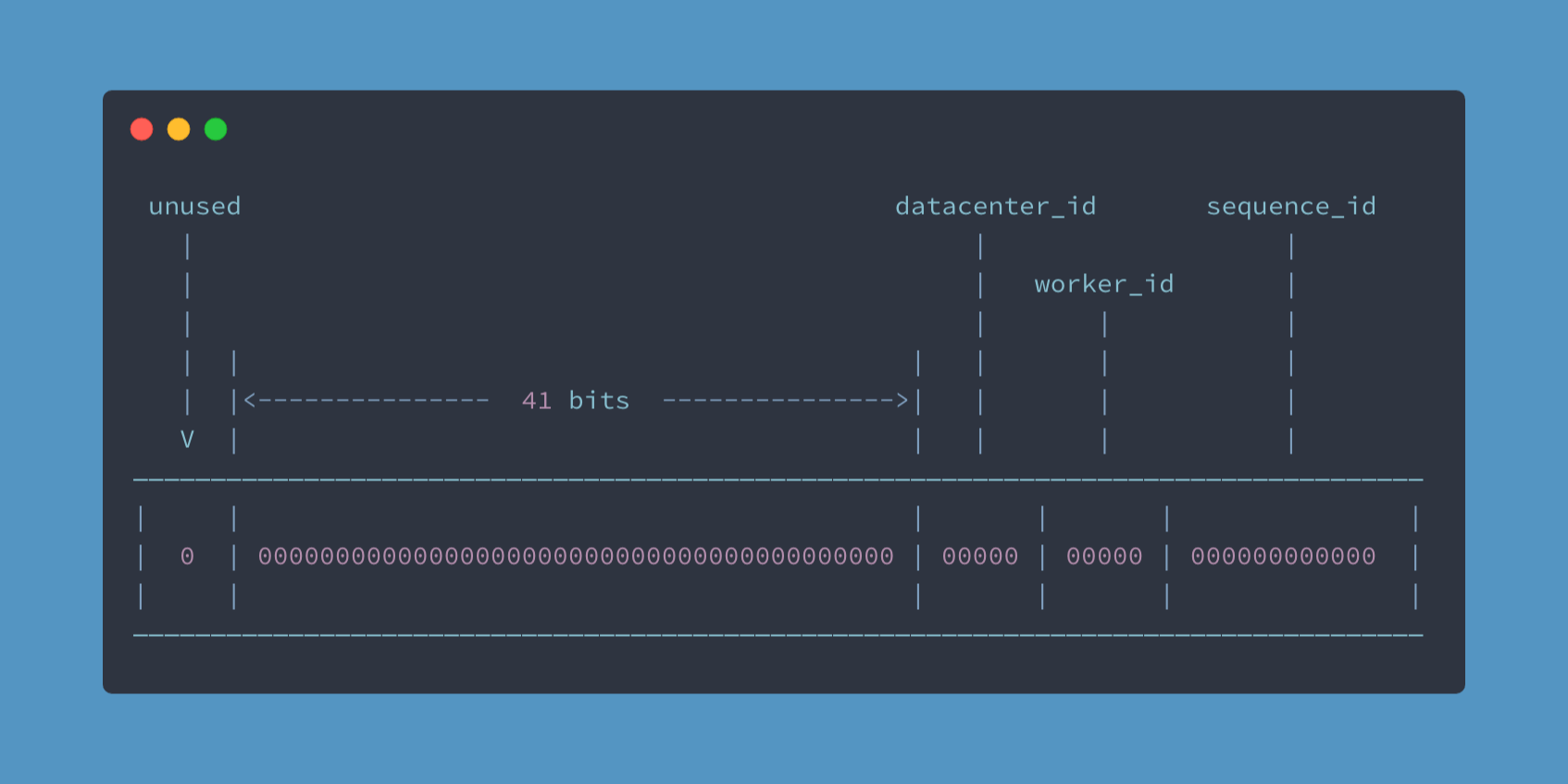
Snowflake is a network service for generating unique ID numbers at high scale with some simple guarantees.
- The first bit is unused sign bit.
- The second part consists of a 41-bit timestamp (milliseconds) whose value is the offset of the current time relative to a certain time.
- The 10 bits machineID, and max value is 2^10 -1 = 1023.
- The last part consists of 12 bits, its means the length of the serial number generated per millisecond per working node, a maximum of 2^12 -1 = 4095 IDs can be generated in the same millisecond.
- The binary length of 41 bits is at most 2^41 -1 millisecond = 69 years. So the snowflake algorithm can be used for up to 69 years, In order to maximize the use of the algorithm, you should specify a start time for it.
You must know, The ID generated by the snowflake algorithm is not guaranteed to be unique. For example, when two different requests enter the same machine at the same time, and the sequence generated by the node is the same, the generated ID will be duplicated.
So if you want use the snowflake algorithm to generate unique ID, You must ensure: The sequence-number generated in the same millisecond of the same node is unique. Based on this, we created this package and integrated multiple sequence-number providers into it.
- AtomicResolver (base sync/atmoic)
- Custom (you can custom)
Each provider only needs to ensure that the serial number generated in the same millisecond is different. You can get a unique ID.
Installation
$ go get github.com/godruoyi/go-snowflake
Useage
- simple to use.
import (
    "fmt"

    "github.com/godruoyi/go-snowflake"
)

func main() {
    id := snowflake.ID()
    fmt.Println(id)
    // 1537200202186752
}
- Specify the MachineID.
import (
    "fmt"

    "github.com/godruoyi/go-snowflake"
)

func main() {
    snowflake.SetMachineID(1)
    id := snowflake.ID()
    fmt.Println(id)
}
- Specify start time.
import (
    "fmt"
    "time"

    "github.com/godruoyi/go-snowflake"
)

func main() {
    snowflake.SetStartTime(time.Date(2014, 9, 1, 0, 0, 0, 0, time.UTC))
    id := snowflake.ID()
    fmt.Println(id)
}
- Parse ID.
import (
    "fmt"
    "time"

    "github.com/godruoyi/go-snowflake"
)

func main() {
    id := snowflake.ID()
    sid := snowflake.ParseID(id)

    fmt.Println(sid.ID)             //
    fmt.Println(sid.MachineID)      //
    fmt.Println(sid.Sequence)       //
    fmt.Println(sid.Timestamp)      //
    fmt.Println(sid.GenerateTime()) //
}
Best practices
⚠️⚠️ All SetXXX method is thread-unsafe, recommended you call him in the main function.
import (
    "fmt"
    "time"
    "net/http"

    "github.com/godruoyi/go-snowflake"
)

func main() {
    snowflake.SetMachineID(1) // change to your machineID
    snowflake.SetStartTime(time.Date(2014, 9, 1, 0, 0, 0, 0, time.UTC))

    http.HandleFunc("/order", submitOrder)
    http.ListenAndServe(":8090", nil)
}

func submitOrder(w http.ResponseWriter, req *http.Request) {
    orderId := snowflake.ID()
    // save order
}
Advanced
- Custom sequence resolver.
You can customize the sequence-number resolver by following way:
import (
    "fmt"
    "time"

    "github.com/godruoyi/go-snowflake"
)

func yourSequenceNumber(ms int64) (uint16, error) {

}

// usage

snowflake.SetSequenceResolver(yourSequenceNumber)
snowflake.ID()
And you can use closure:
License
MIT