mirror of
https://github.com/seaweedfs/seaweedfs.git
synced 2026-10-19 04:55:53 +00:00
Compare commits
2
Commits
| Author | SHA1 | Date | |
|---|---|---|---|
 Chris Lu |
1cb659019e | ||
|
Chris Lu
|
9ca9dd2379 |
+1
-2
@@ -19,5 +19,4 @@ ignore-regex = \b[a-z]+[A-Z]\w*\b|\b[A-Z][a-z]+[A-Z]\w*\b
|
||||
# thirdparty: literal Maven groupId `org.apache.hadoop.thirdparty` (external, cannot rename)
|
||||
# unknwon: GitHub username / Go module path (`github.com/unknwon/goconfig`)
|
||||
# atleast: CLI mode literal string in test/benchmark/fuse_db/bin/sqlite_verify.py
|
||||
# sme: local variable for a *streamMutateError in mount tests
|
||||
ignore-words-list = visibles,fo,te,ser,bject,unparseable,keep-alives,tread,anc,ue,auther,thirdparty,unknwon,atleast,sme
|
||||
ignore-words-list = visibles,fo,te,ser,bject,unparseable,keep-alives,tread,anc,ue,auther,thirdparty,unknwon,atleast
|
||||
|
||||
@@ -1,44 +0,0 @@
|
||||
name: Sign container images
|
||||
description: >
|
||||
Keyless cosign signature on each image, then a verification pass against the
|
||||
identity the signature should carry, so a misconfigured job fails here and not
|
||||
on someone's cluster. That identity is the calling workflow's own,
|
||||
https://github.com/<owner>/<repo>/.github/workflows/<file>@<ref>.
|
||||
The calling job needs `id-token: write` and a registry login for every image.
|
||||
|
||||
inputs:
|
||||
images:
|
||||
description: Image references by digest (name@sha256:...), whitespace separated.
|
||||
required: true
|
||||
|
||||
runs:
|
||||
using: composite
|
||||
steps:
|
||||
- name: Install cosign
|
||||
uses: sigstore/cosign-installer@v4.1.2
|
||||
|
||||
- name: Sign
|
||||
shell: bash
|
||||
env:
|
||||
IMAGES: ${{ inputs.images }}
|
||||
run: |
|
||||
set -euo pipefail
|
||||
# The .sig tag layout: the OCI-referrer bundle cosign 3 writes by default
|
||||
# is not read by the Kyverno and policy-controller releases in use today.
|
||||
# Cosign 3 also defaults to --use-signing-config, which insists on a
|
||||
# bundle for its output; turning it off falls back to the default
|
||||
# Fulcio and Rekor URLs, which is all the .sig layout ever used.
|
||||
cosign sign --yes --recursive \
|
||||
--new-bundle-format=false --use-signing-config=false \
|
||||
$IMAGES
|
||||
|
||||
- name: Verify
|
||||
shell: bash
|
||||
env:
|
||||
IMAGES: ${{ inputs.images }}
|
||||
run: |
|
||||
set -euo pipefail
|
||||
cosign verify \
|
||||
--certificate-oidc-issuer https://token.actions.githubusercontent.com \
|
||||
--certificate-identity "https://github.com/$GITHUB_WORKFLOW_REF" \
|
||||
$IMAGES
|
||||
@@ -1,9 +1,7 @@
|
||||
version: 2
|
||||
updates:
|
||||
- package-ecosystem: "github-actions"
|
||||
directories:
|
||||
- "/"
|
||||
- "/.github/actions/sign-image"
|
||||
directory: "/"
|
||||
schedule:
|
||||
interval: "weekly"
|
||||
- package-ecosystem: gomod
|
||||
|
||||
@@ -1,87 +0,0 @@
|
||||
#!/usr/bin/env python3
|
||||
"""Render the repository's star history to note/star_history.svg.
|
||||
|
||||
Uses the GitHub REST stargazers endpoint with the starred-at accept header,
|
||||
which caps at 40,000 entries (400 pages of 100). The chart is regenerated on
|
||||
a schedule; if the repo grows past that cap the script stops at 40,000 and
|
||||
logs a warning rather than under-reporting.
|
||||
"""
|
||||
import json
|
||||
import os
|
||||
import sys
|
||||
import urllib.request
|
||||
from datetime import datetime
|
||||
|
||||
import matplotlib
|
||||
|
||||
matplotlib.use("Agg")
|
||||
import matplotlib.pyplot as plt # noqa: E402
|
||||
from matplotlib.dates import AutoDateLocator, DateFormatter # noqa: E402
|
||||
|
||||
REPO = "seaweedfs/seaweedfs"
|
||||
TOKEN = os.environ["GITHUB_TOKEN"]
|
||||
OUT = os.environ.get("OUT", "note/star_history.svg")
|
||||
PAGE_CAP = 400 # GitHub's hard limit on stargazer pagination
|
||||
|
||||
|
||||
def fetch_stargazers():
|
||||
stars = []
|
||||
page = 1
|
||||
while page <= PAGE_CAP:
|
||||
url = f"https://api.github.com/repos/{REPO}/stargazers?per_page=100&page={page}"
|
||||
req = urllib.request.Request(
|
||||
url,
|
||||
headers={
|
||||
"Accept": "application/vnd.github.star+json",
|
||||
"Authorization": f"Bearer {TOKEN}",
|
||||
"X-GitHub-Api-Version": "2022-11-28",
|
||||
"User-Agent": "seaweedfs-star-history",
|
||||
},
|
||||
)
|
||||
with urllib.request.urlopen(req) as resp:
|
||||
batch = json.load(resp)
|
||||
if not batch:
|
||||
break
|
||||
for u in batch:
|
||||
sa = u.get("starred_at")
|
||||
if sa:
|
||||
stars.append(datetime.fromisoformat(sa.replace("Z", "+00:00")))
|
||||
if len(batch) < 100:
|
||||
break
|
||||
page += 1
|
||||
if page > PAGE_CAP:
|
||||
print(
|
||||
f"::warning::Hit the {PAGE_CAP}-page stargazer pagination cap; "
|
||||
"chart reflects the first 40,000 stars only."
|
||||
)
|
||||
return stars
|
||||
|
||||
|
||||
def render(stars, out):
|
||||
stars.sort()
|
||||
counts = list(range(1, len(stars) + 1))
|
||||
fig, ax = plt.subplots(figsize=(10, 6), dpi=130)
|
||||
ax.plot(stars, counts, color="#0969da", linewidth=1.6)
|
||||
ax.set_xlabel("Date")
|
||||
ax.set_ylabel("Stars")
|
||||
ax.set_title(f"{REPO} star history")
|
||||
ax.grid(True, linestyle="--", alpha=0.3)
|
||||
ax.xaxis.set_major_locator(AutoDateLocator())
|
||||
ax.xaxis.set_major_formatter(DateFormatter("%Y-%m"))
|
||||
fig.autofmt_xdate()
|
||||
fig.tight_layout()
|
||||
fig.savefig(out, format="svg", transparent=False)
|
||||
plt.close(fig)
|
||||
|
||||
|
||||
def main():
|
||||
stars = fetch_stargazers()
|
||||
if not stars:
|
||||
print("::error::No stargazers fetched; not updating the chart.")
|
||||
sys.exit(1)
|
||||
render(stars, OUT)
|
||||
print(f"Rendered {len(stars)} stars to {OUT}")
|
||||
|
||||
|
||||
if __name__ == "__main__":
|
||||
main()
|
||||
@@ -27,7 +27,7 @@ jobs:
|
||||
|
||||
# Initializes the CodeQL tools for scanning.
|
||||
- name: Initialize CodeQL
|
||||
uses: github/codeql-action/init@v4.38.1
|
||||
uses: github/codeql-action/init@v4.37.9
|
||||
# Override language selection by uncommenting this and choosing your languages
|
||||
with:
|
||||
languages: go
|
||||
@@ -35,7 +35,7 @@ jobs:
|
||||
# Autobuild attempts to build any compiled languages (C/C++, C#, or Java).
|
||||
# If this step fails, then you should remove it and run the build manually (see below).
|
||||
- name: Autobuild
|
||||
uses: github/codeql-action/autobuild@v4.38.1
|
||||
uses: github/codeql-action/autobuild@v4.37.9
|
||||
|
||||
# ℹ️ Command-line programs to run using the OS shell.
|
||||
# 📚 See https://docs.github.com/en/actions/using-workflows/workflow-syntax-for-github-actions#jobsjob_idstepsrun
|
||||
@@ -49,4 +49,4 @@ jobs:
|
||||
# make release
|
||||
|
||||
- name: Perform CodeQL Analysis
|
||||
uses: github/codeql-action/analyze@v4.38.1
|
||||
uses: github/codeql-action/analyze@v4.37.9
|
||||
|
||||
@@ -6,7 +6,6 @@ on:
|
||||
paths:
|
||||
- 'weed/**'
|
||||
- 'seaweed-volume/**'
|
||||
- 'seaweed-common/**'
|
||||
- 'seaweed-worker/**'
|
||||
- 'docker/**'
|
||||
- 'go.mod'
|
||||
@@ -102,9 +101,6 @@ jobs:
|
||||
build-dev-containers:
|
||||
needs: [build-rust-binaries]
|
||||
runs-on: [ubuntu-latest]
|
||||
permissions:
|
||||
contents: read
|
||||
id-token: write
|
||||
|
||||
steps:
|
||||
- name: Checkout
|
||||
@@ -153,7 +149,7 @@ jobs:
|
||||
org.opencontainers.image.vendor=Chris Lu
|
||||
|
||||
- name: Set up QEMU
|
||||
uses: docker/setup-qemu-action@v4.4.0
|
||||
uses: docker/setup-qemu-action@v4.2.0
|
||||
|
||||
- name: Create BuildKit config
|
||||
run: |
|
||||
@@ -184,7 +180,6 @@ jobs:
|
||||
password: ${{ secrets.GHCR_TOKEN }}
|
||||
|
||||
- name: Build
|
||||
id: build
|
||||
uses: docker/build-push-action@v7
|
||||
with:
|
||||
context: ./docker
|
||||
@@ -193,11 +188,3 @@ jobs:
|
||||
platforms: linux/amd64, linux/arm64
|
||||
tags: ${{ steps.docker_meta.outputs.tags }}
|
||||
labels: ${{ steps.docker_meta.outputs.labels }}
|
||||
|
||||
- name: Sign
|
||||
if: github.event_name != 'pull_request'
|
||||
uses: ./.github/actions/sign-image
|
||||
with:
|
||||
images: >-
|
||||
chrislusf/seaweedfs@${{ steps.build.outputs.digest }}
|
||||
ghcr.io/chrislusf/seaweedfs@${{ steps.build.outputs.digest }}
|
||||
|
||||
@@ -30,9 +30,6 @@ permissions:
|
||||
jobs:
|
||||
build-foundationdb-image:
|
||||
runs-on: ubuntu-latest
|
||||
permissions:
|
||||
contents: read
|
||||
id-token: write
|
||||
|
||||
steps:
|
||||
- name: Checkout
|
||||
@@ -129,7 +126,7 @@ jobs:
|
||||
echo "seaweedfs_ref=$seaweed" >> "$GITHUB_OUTPUT"
|
||||
|
||||
- name: Set up QEMU
|
||||
uses: docker/setup-qemu-action@v4.4.0
|
||||
uses: docker/setup-qemu-action@v4.2.0
|
||||
|
||||
- name: Set up Docker Buildx
|
||||
uses: docker/setup-buildx-action@v4
|
||||
@@ -157,7 +154,6 @@ jobs:
|
||||
fi
|
||||
|
||||
- name: Build and push image
|
||||
id: build
|
||||
uses: docker/build-push-action@v7
|
||||
with:
|
||||
context: ./docker
|
||||
@@ -175,8 +171,3 @@ jobs:
|
||||
org.opencontainers.image.description=SeaweedFS is a distributed storage system for blobs, objects, files, and data lake, to store and serve billions of files fast!
|
||||
org.opencontainers.image.vendor=Chris Lu
|
||||
|
||||
- name: Sign
|
||||
if: github.event_name != 'pull_request'
|
||||
uses: ./.github/actions/sign-image
|
||||
with:
|
||||
images: chrislusf/seaweedfs@${{ steps.build.outputs.digest }}
|
||||
|
||||
@@ -236,7 +236,7 @@ jobs:
|
||||
org.opencontainers.image.vendor=Chris Lu
|
||||
- name: Set up QEMU
|
||||
if: matrix.platform != 'amd64'
|
||||
uses: docker/setup-qemu-action@v4.4.0
|
||||
uses: docker/setup-qemu-action@v4.2.0
|
||||
- name: Create BuildKit config
|
||||
run: |
|
||||
cat > /tmp/buildkitd.toml <<EOF
|
||||
@@ -405,7 +405,7 @@ jobs:
|
||||
output: trivy-results.sarif
|
||||
exit-code: '0'
|
||||
- name: Upload Trivy scan results to GitHub Security
|
||||
uses: github/codeql-action/upload-sarif@v4.38.1
|
||||
uses: github/codeql-action/upload-sarif@v4.37.9
|
||||
if: always()
|
||||
with:
|
||||
sarif_file: trivy-results.sarif
|
||||
@@ -441,19 +441,15 @@ jobs:
|
||||
runs-on: ubuntu-latest
|
||||
needs: [setup, build, trivy-scan]
|
||||
if: needs.setup.outputs.publish == 'true' && github.event_name != 'pull_request'
|
||||
permissions:
|
||||
contents: read
|
||||
id-token: write
|
||||
strategy:
|
||||
matrix:
|
||||
variant: ${{ fromJSON(needs.setup.outputs.variants) }}
|
||||
steps:
|
||||
- name: Checkout the signing action
|
||||
- name: Checkout
|
||||
uses: actions/checkout@v7
|
||||
with:
|
||||
sparse-checkout: .github/actions
|
||||
persist-credentials: false
|
||||
|
||||
ref: ${{ github.event_name == 'workflow_dispatch' && github.event.inputs.source_ref || github.ref }}
|
||||
|
||||
- name: Configure variant
|
||||
id: config
|
||||
run: |
|
||||
@@ -486,29 +482,21 @@ jobs:
|
||||
run: |
|
||||
# Install crane for efficient multi-arch image copying
|
||||
cd $(mktemp -d)
|
||||
curl -sLO https://github.com/google/go-containerregistry/releases/download/v0.22.0/go-containerregistry_Linux_x86_64.tar.gz
|
||||
echo "edb74d53fad9a596860f59d1c5d04a43dfb5f441dc71f57060dd0bf39483c833 go-containerregistry_Linux_x86_64.tar.gz" | sha256sum -c -
|
||||
tar xzf go-containerregistry_Linux_x86_64.tar.gz crane
|
||||
curl -sL "https://github.com/google/go-containerregistry/releases/latest/download/go-containerregistry_Linux_x86_64.tar.gz" | tar xz
|
||||
sudo mv crane /usr/local/bin/
|
||||
crane version
|
||||
- name: Create and push manifest
|
||||
id: manifest
|
||||
env:
|
||||
BASE_TAG: ${{ github.event_name == 'workflow_dispatch' && github.event.inputs.image_tag || 'latest' }}
|
||||
run: |
|
||||
SUFFIX="${{ steps.config.outputs.tag_suffix }}"
|
||||
BASE_TAG="${{ github.event_name == 'workflow_dispatch' && github.event.inputs.image_tag || 'latest' }}"
|
||||
|
||||
# Create manifest on GHCR first (no rate limits)
|
||||
echo "Creating GHCR manifest (no rate limits)..."
|
||||
docker buildx imagetools create -t ghcr.io/chrislusf/seaweedfs:${BASE_TAG}${SUFFIX} \
|
||||
--metadata-file /tmp/manifest.json \
|
||||
ghcr.io/chrislusf/seaweedfs:${BASE_TAG}${SUFFIX}-amd64 \
|
||||
ghcr.io/chrislusf/seaweedfs:${BASE_TAG}${SUFFIX}-arm64 \
|
||||
ghcr.io/chrislusf/seaweedfs:${BASE_TAG}${SUFFIX}-arm \
|
||||
ghcr.io/chrislusf/seaweedfs:${BASE_TAG}${SUFFIX}-386
|
||||
# The copy and the signature below use the digest this run pushed, not whatever the tag points at by then.
|
||||
DIGEST=$(jq -er '."containerimage.descriptor".digest' /tmp/manifest.json)
|
||||
echo "digest=${DIGEST}" >> "$GITHUB_OUTPUT"
|
||||
|
||||
# Copy the complete multi-arch image from GHCR to Docker Hub
|
||||
# This only requires one pull from GHCR (no rate limit) and one push to Docker Hub
|
||||
@@ -544,10 +532,10 @@ jobs:
|
||||
# Use crane or skopeo to copy, fallback to docker if not available
|
||||
if command -v crane &> /dev/null; then
|
||||
echo "Using crane to copy..."
|
||||
retry_with_backoff crane copy ghcr.io/chrislusf/seaweedfs@${DIGEST} chrislusf/seaweedfs:${BASE_TAG}${SUFFIX}
|
||||
retry_with_backoff crane copy ghcr.io/chrislusf/seaweedfs:${BASE_TAG}${SUFFIX} chrislusf/seaweedfs:${BASE_TAG}${SUFFIX}
|
||||
elif command -v skopeo &> /dev/null; then
|
||||
echo "Using skopeo to copy..."
|
||||
retry_with_backoff skopeo copy --all docker://ghcr.io/chrislusf/seaweedfs@${DIGEST} docker://chrislusf/seaweedfs:${BASE_TAG}${SUFFIX}
|
||||
retry_with_backoff skopeo copy --all docker://ghcr.io/chrislusf/seaweedfs:${BASE_TAG}${SUFFIX} docker://chrislusf/seaweedfs:${BASE_TAG}${SUFFIX}
|
||||
else
|
||||
echo "Using docker buildx imagetools (pulling 4 images from Docker Hub)..."
|
||||
# Fallback: create manifest directly on Docker Hub (pulls from Docker Hub - rate limited)
|
||||
@@ -557,10 +545,3 @@ jobs:
|
||||
ghcr.io/chrislusf/seaweedfs:${BASE_TAG}${SUFFIX}-arm \
|
||||
ghcr.io/chrislusf/seaweedfs:${BASE_TAG}${SUFFIX}-386
|
||||
fi
|
||||
|
||||
- name: Sign
|
||||
uses: ./.github/actions/sign-image
|
||||
with:
|
||||
images: >-
|
||||
ghcr.io/chrislusf/seaweedfs@${{ steps.manifest.outputs.digest }}
|
||||
chrislusf/seaweedfs@${{ steps.manifest.outputs.digest }}
|
||||
|
||||
@@ -21,9 +21,6 @@ jobs:
|
||||
|
||||
build-large-release-container_foundationdb:
|
||||
runs-on: [ubuntu-latest]
|
||||
permissions:
|
||||
contents: read
|
||||
id-token: write
|
||||
|
||||
steps:
|
||||
-
|
||||
@@ -46,7 +43,7 @@ jobs:
|
||||
org.opencontainers.image.vendor=Chris Lu
|
||||
-
|
||||
name: Set up QEMU
|
||||
uses: docker/setup-qemu-action@v4.4.0
|
||||
uses: docker/setup-qemu-action@v4.2.0
|
||||
-
|
||||
name: Set up Docker Buildx
|
||||
uses: docker/setup-buildx-action@v4
|
||||
@@ -68,7 +65,6 @@ jobs:
|
||||
fi
|
||||
-
|
||||
name: Build
|
||||
id: build
|
||||
uses: docker/build-push-action@v7
|
||||
with:
|
||||
context: ./docker
|
||||
@@ -80,10 +76,4 @@ jobs:
|
||||
platforms: linux/amd64
|
||||
tags: ${{ steps.docker_meta.outputs.tags }}
|
||||
labels: ${{ steps.docker_meta.outputs.labels }}
|
||||
-
|
||||
name: Sign
|
||||
if: github.event_name != 'pull_request'
|
||||
uses: ./.github/actions/sign-image
|
||||
with:
|
||||
images: chrislusf/seaweedfs@${{ steps.build.outputs.digest }}
|
||||
|
||||
|
||||
@@ -231,7 +231,7 @@ jobs:
|
||||
|
||||
- name: Set up QEMU
|
||||
if: (github.event_name != 'workflow_dispatch' || github.event.inputs.variant == 'all' || github.event.inputs.variant == matrix.variant) && matrix.qemu
|
||||
uses: docker/setup-qemu-action@v4.4.0
|
||||
uses: docker/setup-qemu-action@v4.2.0
|
||||
|
||||
- name: Create BuildKit config
|
||||
if: github.event_name != 'workflow_dispatch' || github.event.inputs.variant == 'all' || github.event.inputs.variant == matrix.variant
|
||||
@@ -295,14 +295,10 @@ jobs:
|
||||
if-no-files-found: error
|
||||
retention-days: 1
|
||||
|
||||
# Assemble each variant's per-platform digests into one tag, mirror it to
|
||||
# Docker Hub, and sign the result on both registries.
|
||||
# Assemble each variant's per-platform digests into one tag, then mirror to Docker Hub.
|
||||
merge:
|
||||
needs: [build]
|
||||
runs-on: ubuntu-latest
|
||||
permissions:
|
||||
contents: read
|
||||
id-token: write
|
||||
strategy:
|
||||
fail-fast: false
|
||||
matrix:
|
||||
@@ -313,13 +309,6 @@ jobs:
|
||||
- { variant: large_disk_full, tag_suffix: _large_disk_full }
|
||||
- { variant: rocksdb, tag_suffix: _large_disk_rocksdb }
|
||||
steps:
|
||||
- name: Checkout the signing action
|
||||
if: github.event_name != 'workflow_dispatch' || github.event.inputs.variant == 'all' || github.event.inputs.variant == matrix.variant
|
||||
uses: actions/checkout@v7
|
||||
with:
|
||||
sparse-checkout: .github/actions
|
||||
persist-credentials: false
|
||||
|
||||
- name: Download digests
|
||||
if: github.event_name != 'workflow_dispatch' || github.event.inputs.variant == 'all' || github.event.inputs.variant == matrix.variant
|
||||
uses: actions/download-artifact@v8
|
||||
@@ -342,17 +331,12 @@ jobs:
|
||||
|
||||
- name: Create multi-arch tag on GHCR
|
||||
if: github.event_name != 'workflow_dispatch' || github.event.inputs.variant == 'all' || github.event.inputs.variant == matrix.variant
|
||||
id: manifest
|
||||
working-directory: /tmp/digests
|
||||
run: |
|
||||
docker buildx imagetools create \
|
||||
-t ${{ env.IMAGE }}:${{ env.RELEASE_TAG }}${{ matrix.tag_suffix }} \
|
||||
--metadata-file /tmp/manifest.json \
|
||||
$(printf '${{ env.IMAGE }}@sha256:%s ' *)
|
||||
docker buildx imagetools inspect ${{ env.IMAGE }}:${{ env.RELEASE_TAG }}${{ matrix.tag_suffix }}
|
||||
# The copy and the signature below use the digest this run pushed, not whatever the tag points at by then.
|
||||
digest=$(jq -er '."containerimage.descriptor".digest' /tmp/manifest.json)
|
||||
echo "digest=${digest}" >> "$GITHUB_OUTPUT"
|
||||
|
||||
- name: Login to Docker Hub
|
||||
if: github.event_name != 'workflow_dispatch' || github.event.inputs.variant == 'all' || github.event.inputs.variant == matrix.variant
|
||||
@@ -365,9 +349,7 @@ jobs:
|
||||
if: github.event_name != 'workflow_dispatch' || github.event.inputs.variant == 'all' || github.event.inputs.variant == matrix.variant
|
||||
run: |
|
||||
cd $(mktemp -d)
|
||||
curl -sLO https://github.com/google/go-containerregistry/releases/download/v0.22.0/go-containerregistry_Linux_x86_64.tar.gz
|
||||
echo "edb74d53fad9a596860f59d1c5d04a43dfb5f441dc71f57060dd0bf39483c833 go-containerregistry_Linux_x86_64.tar.gz" | sha256sum -c -
|
||||
tar xzf go-containerregistry_Linux_x86_64.tar.gz crane
|
||||
curl -sL "https://github.com/google/go-containerregistry/releases/latest/download/go-containerregistry_Linux_x86_64.tar.gz" | tar xz
|
||||
sudo mv crane /usr/local/bin/
|
||||
crane version
|
||||
|
||||
@@ -398,18 +380,10 @@ jobs:
|
||||
|
||||
echo "Copying ${{ matrix.variant }} from GHCR to Docker Hub..."
|
||||
retry_with_backoff crane copy \
|
||||
${{ env.IMAGE }}@${{ steps.manifest.outputs.digest }} \
|
||||
${{ env.IMAGE }}:${{ env.RELEASE_TAG }}${{ matrix.tag_suffix }} \
|
||||
chrislusf/seaweedfs:${{ env.RELEASE_TAG }}${{ matrix.tag_suffix }}
|
||||
echo "Copied ${{ matrix.variant }} to Docker Hub"
|
||||
|
||||
- name: Sign ${{ matrix.variant }}
|
||||
if: github.event_name != 'workflow_dispatch' || github.event.inputs.variant == 'all' || github.event.inputs.variant == matrix.variant
|
||||
uses: ./.github/actions/sign-image
|
||||
with:
|
||||
images: >-
|
||||
${{ env.IMAGE }}@${{ steps.manifest.outputs.digest }}
|
||||
chrislusf/seaweedfs@${{ steps.manifest.outputs.digest }}
|
||||
|
||||
# Report-only trivy scan: uploads fixable HIGH/CRITICAL findings to GitHub
|
||||
# Security for visibility, but never blocks the release. Releases (including
|
||||
# `latest`) ship regardless — vulnerabilities are tracked, not gated, since
|
||||
@@ -456,7 +430,7 @@ jobs:
|
||||
|
||||
- name: Upload Trivy scan results to GitHub Security
|
||||
if: always()
|
||||
uses: github/codeql-action/upload-sarif@v4.38.1
|
||||
uses: github/codeql-action/upload-sarif@v4.37.9
|
||||
with:
|
||||
sarif_file: trivy-results.sarif
|
||||
category: trivy-${{ matrix.variant }}
|
||||
@@ -465,8 +439,7 @@ jobs:
|
||||
# image. crane tag adds an extra tag to an existing manifest — no rebuild,
|
||||
# no QEMU, no separate workflow. Replaces the old container_latest.yml
|
||||
# rebuild that often failed or lagged behind the release. Independent of
|
||||
# trivy-scan: vuln findings are reported but do not block `latest`. The
|
||||
# cosign signature is attached to the digest, so `latest` carries it too.
|
||||
# trivy-scan: vuln findings are reported but do not block `latest`.
|
||||
tag-latest:
|
||||
runs-on: ubuntu-latest
|
||||
needs: [merge]
|
||||
@@ -495,9 +468,7 @@ jobs:
|
||||
- name: Install crane
|
||||
run: |
|
||||
cd $(mktemp -d)
|
||||
curl -sLO https://github.com/google/go-containerregistry/releases/download/v0.22.0/go-containerregistry_Linux_x86_64.tar.gz
|
||||
echo "edb74d53fad9a596860f59d1c5d04a43dfb5f441dc71f57060dd0bf39483c833 go-containerregistry_Linux_x86_64.tar.gz" | sha256sum -c -
|
||||
tar xzf go-containerregistry_Linux_x86_64.tar.gz crane
|
||||
curl -sL "https://github.com/google/go-containerregistry/releases/latest/download/go-containerregistry_Linux_x86_64.tar.gz" | tar xz
|
||||
sudo mv crane /usr/local/bin/
|
||||
crane version
|
||||
|
||||
|
||||
@@ -22,9 +22,6 @@ permissions:
|
||||
jobs:
|
||||
build-rocksdb-image:
|
||||
runs-on: ubuntu-latest
|
||||
permissions:
|
||||
contents: read
|
||||
id-token: write
|
||||
|
||||
steps:
|
||||
- name: Checkout
|
||||
@@ -85,7 +82,7 @@ jobs:
|
||||
echo "seaweedfs_ref=$seaweed" >> "$GITHUB_OUTPUT"
|
||||
|
||||
- name: Set up QEMU
|
||||
uses: docker/setup-qemu-action@99012661954931238ded8c8b007157a8430204e1 # v1
|
||||
uses: docker/setup-qemu-action@96fe6ef7f33517b61c61be40b68a1882f3264fb8 # v1
|
||||
|
||||
- name: Set up Docker Buildx
|
||||
uses: docker/setup-buildx-action@4d04d5d9486b7bd6fa91e7baf45bbb4f8b9deedd # v1
|
||||
@@ -97,7 +94,6 @@ jobs:
|
||||
password: ${{ secrets.DOCKER_PASSWORD }}
|
||||
|
||||
- name: Build and push image
|
||||
id: build
|
||||
uses: docker/build-push-action@bcafcacb16a39f128d818304e6c9c0c18556b85f # v2
|
||||
with:
|
||||
context: ./docker
|
||||
@@ -112,8 +108,3 @@ jobs:
|
||||
org.opencontainers.image.title=seaweedfs
|
||||
org.opencontainers.image.description=SeaweedFS is a distributed storage system for blobs, objects, files, and data lake, to store and serve billions of files fast!
|
||||
org.opencontainers.image.vendor=Chris Lu
|
||||
|
||||
- name: Sign
|
||||
uses: ./.github/actions/sign-image
|
||||
with:
|
||||
images: chrislusf/seaweedfs@${{ steps.build.outputs.digest }}
|
||||
|
||||
@@ -35,48 +35,11 @@ jobs:
|
||||
cd telemetry/server
|
||||
go mod tidy
|
||||
echo "Building telemetry server..."
|
||||
CGO_ENABLED=0 GOOS=linux GOARCH=amd64 go build -o ../../telemetry-server .
|
||||
GOOS=linux GOARCH=amd64 go build -o ../../telemetry-server .
|
||||
cd ../..
|
||||
ls -la telemetry-server
|
||||
echo "Build completed successfully"
|
||||
|
||||
- name: Generate Service Configuration
|
||||
if: github.event_name == 'workflow_dispatch' && (inputs.setup || inputs.deploy)
|
||||
env:
|
||||
REMOTE_USER: ${{ secrets.TELEMETRY_USER }}
|
||||
run: |
|
||||
# Create systemd service file
|
||||
echo "
|
||||
[Unit]
|
||||
Description=SeaweedFS Telemetry Server
|
||||
After=network.target
|
||||
|
||||
[Service]
|
||||
Type=simple
|
||||
User=$REMOTE_USER
|
||||
WorkingDirectory=/home/$REMOTE_USER/seaweedfs-telemetry
|
||||
ExecStart=/bin/sh -c 'exec /home/$REMOTE_USER/seaweedfs-telemetry/bin/telemetry-server -port=8353 >>/home/$REMOTE_USER/seaweedfs-telemetry/logs/telemetry.log 2>>/home/$REMOTE_USER/seaweedfs-telemetry/logs/telemetry.error.log'
|
||||
Restart=always
|
||||
RestartSec=5
|
||||
|
||||
[Install]
|
||||
WantedBy=multi-user.target" > telemetry.service
|
||||
|
||||
# Setup logrotate configuration
|
||||
echo "# SeaweedFS Telemetry service log rotation
|
||||
/home/$REMOTE_USER/seaweedfs-telemetry/logs/*.log {
|
||||
daily
|
||||
rotate 30
|
||||
compress
|
||||
delaycompress
|
||||
missingok
|
||||
notifempty
|
||||
create 644 $REMOTE_USER $REMOTE_USER
|
||||
postrotate
|
||||
systemctl restart telemetry.service
|
||||
endscript
|
||||
}" > telemetry_logrotate
|
||||
|
||||
- name: First-time Server Setup
|
||||
if: github.event_name == 'workflow_dispatch' && inputs.setup
|
||||
env:
|
||||
@@ -98,6 +61,40 @@ jobs:
|
||||
touch ~/seaweedfs-telemetry/logs/telemetry.log ~/seaweedfs-telemetry/logs/telemetry.error.log && \
|
||||
chmod 644 ~/seaweedfs-telemetry/logs/*.log"
|
||||
|
||||
# Create systemd service file
|
||||
echo "
|
||||
[Unit]
|
||||
Description=SeaweedFS Telemetry Server
|
||||
After=network.target
|
||||
|
||||
[Service]
|
||||
Type=simple
|
||||
User=$REMOTE_USER
|
||||
WorkingDirectory=/home/$REMOTE_USER/seaweedfs-telemetry
|
||||
ExecStart=/home/$REMOTE_USER/seaweedfs-telemetry/bin/telemetry-server -port=8353
|
||||
Restart=always
|
||||
RestartSec=5
|
||||
StandardOutput=append:/home/$REMOTE_USER/seaweedfs-telemetry/logs/telemetry.log
|
||||
StandardError=append:/home/$REMOTE_USER/seaweedfs-telemetry/logs/telemetry.error.log
|
||||
|
||||
[Install]
|
||||
WantedBy=multi-user.target" > telemetry.service
|
||||
|
||||
# Setup logrotate configuration
|
||||
echo "# SeaweedFS Telemetry service log rotation
|
||||
/home/$REMOTE_USER/seaweedfs-telemetry/logs/*.log {
|
||||
daily
|
||||
rotate 30
|
||||
compress
|
||||
delaycompress
|
||||
missingok
|
||||
notifempty
|
||||
create 644 $REMOTE_USER $REMOTE_USER
|
||||
postrotate
|
||||
systemctl restart telemetry.service
|
||||
endscript
|
||||
}" > telemetry_logrotate
|
||||
|
||||
# Copy configuration files
|
||||
scp -i ~/.ssh/deploy_key telemetry/grafana-dashboard.json $REMOTE_USER@$REMOTE_HOST:~/seaweedfs-telemetry/
|
||||
scp -i ~/.ssh/deploy_key telemetry/prometheus.yml $REMOTE_USER@$REMOTE_HOST:~/seaweedfs-telemetry/
|
||||
@@ -140,18 +137,11 @@ jobs:
|
||||
scp -i ~/.ssh/deploy_key telemetry/grafana-dashboard.json $REMOTE_USER@$REMOTE_HOST:~/seaweedfs-telemetry/
|
||||
scp -i ~/.ssh/deploy_key telemetry/prometheus.yml $REMOTE_USER@$REMOTE_HOST:~/seaweedfs-telemetry/
|
||||
|
||||
# Copy updated service and logrotate files
|
||||
scp -i ~/.ssh/deploy_key telemetry.service telemetry_logrotate $REMOTE_USER@$REMOTE_HOST:~/seaweedfs-telemetry/
|
||||
|
||||
# Check if service exists and deploy accordingly
|
||||
ssh -i ~/.ssh/deploy_key $REMOTE_USER@$REMOTE_HOST "
|
||||
if systemctl list-unit-files telemetry.service >/dev/null 2>&1; then
|
||||
echo 'Service exists, performing update...'
|
||||
set -e
|
||||
sudo systemctl stop telemetry.service
|
||||
sudo mv ~/seaweedfs-telemetry/telemetry.service /etc/systemd/system/
|
||||
sudo mv ~/seaweedfs-telemetry/telemetry_logrotate /etc/logrotate.d/seaweedfs-telemetry
|
||||
sudo systemctl daemon-reload
|
||||
mkdir -p ~/seaweedfs-telemetry/bin
|
||||
mv ~/seaweedfs-telemetry/tmp/telemetry-server ~/seaweedfs-telemetry/bin/
|
||||
chmod +x ~/seaweedfs-telemetry/bin/telemetry-server
|
||||
|
||||
@@ -90,12 +90,6 @@ jobs:
|
||||
echo "S3 credentials reference the existing secret for $workload"
|
||||
done
|
||||
|
||||
echo "=== Testing ingress labels ==="
|
||||
helm template test $CHART_DIR --set s3.enabled=true,s3.ingress.enabled=true \
|
||||
--set s3.ingress.labels.external-dns=s3 > /tmp/s3-ingress-labels.yaml
|
||||
grep -A 12 "^kind: Ingress" /tmp/s3-ingress-labels.yaml | grep -q "^ external-dns: s3"
|
||||
echo "S3 ingress renders custom labels"
|
||||
|
||||
echo "=== Testing with all-in-one mode ==="
|
||||
helm template test $CHART_DIR --set allInOne.enabled=true > /tmp/allinone.yaml
|
||||
grep -q "seaweedfs-all-in-one" /tmp/allinone.yaml
|
||||
@@ -116,20 +110,6 @@ jobs:
|
||||
grep -q "security-config" /tmp/security.yaml
|
||||
echo "Security configuration renders correctly"
|
||||
|
||||
echo ""
|
||||
echo "=== Testing admin.allowInsecureBind satisfies the admin auth render guard ==="
|
||||
helm template test $CHART_DIR --set admin.enabled=true --set admin.allowInsecureBind=true \
|
||||
> /tmp/admin-allow-insecure-bind.yaml
|
||||
grep -q -- "-allowInsecureBind" /tmp/admin-allow-insecure-bind.yaml
|
||||
echo "admin.allowInsecureBind renders -allowInsecureBind and passes the render guard"
|
||||
|
||||
if helm template test $CHART_DIR --set admin.enabled=true > /tmp/admin-no-auth.yaml 2>/tmp/admin-no-auth.err; then
|
||||
echo "FAIL: admin.enabled=true with no auth configured should fail to render"
|
||||
exit 1
|
||||
fi
|
||||
grep -q "admin.allowInsecureBind" /tmp/admin-no-auth.err
|
||||
echo "admin with no auth configured still fails the render guard, and the guard mentions admin.allowInsecureBind"
|
||||
|
||||
echo ""
|
||||
echo "=== Testing JWT expiration overrides ==="
|
||||
helm template test $CHART_DIR \
|
||||
@@ -241,9 +221,6 @@ jobs:
|
||||
out = render({
|
||||
"global.seaweedfs.securityConfig.jwtSigning.filerWrite": "true",
|
||||
"admin.enabled": "true",
|
||||
# admin.ip defaults to 0.0.0.0 (non-loopback), which weed admin 4.46
|
||||
# refuses to bind without authentication.
|
||||
"admin.secret.adminPassword": "ci-admin-password",
|
||||
})
|
||||
cm = configmap(out, "test-seaweedfs-security-config")
|
||||
if cm is None:
|
||||
@@ -1158,9 +1135,6 @@ jobs:
|
||||
"s3.enabled": "true",
|
||||
"sftp.enabled": "true",
|
||||
"admin.enabled": "true",
|
||||
# admin.ip defaults to 0.0.0.0 (non-loopback), which weed admin 4.46
|
||||
# refuses to bind without authentication.
|
||||
"admin.secret.adminPassword": "ci-admin-password",
|
||||
"worker.enabled": "true",
|
||||
"cosi.enabled": "true",
|
||||
"s3.createBuckets[0].name": "b",
|
||||
@@ -1357,7 +1331,7 @@ jobs:
|
||||
# Which means egress on its own must render for a release that runs
|
||||
# neither COSI nor a resize: no component of it reaches the API server,
|
||||
# so nothing may demand a CIDR for one.
|
||||
for label, values in {"defaults": {}, "admin": {"admin.enabled": "true", "admin.secret.adminPassword": "ci-admin-password"}}.items():
|
||||
for label, values in {"defaults": {}, "admin": {"admin.enabled": "true"}}.items():
|
||||
try:
|
||||
render(dict(values, **{"networkPolicy.enabled": "true",
|
||||
"networkPolicy.egress.enabled": "true"}))
|
||||
@@ -1418,9 +1392,6 @@ jobs:
|
||||
|
||||
ALL_ON = {
|
||||
"admin.enabled": "true",
|
||||
# admin.ip defaults to 0.0.0.0 (non-loopback), which weed admin 4.46
|
||||
# refuses to bind without authentication.
|
||||
"admin.secret.adminPassword": "ci-admin-password",
|
||||
"s3.enabled": "true",
|
||||
"sftp.enabled": "true",
|
||||
"worker.enabled": "true",
|
||||
@@ -1603,7 +1574,7 @@ jobs:
|
||||
echo "IMAGE_TAG=$TAG" >> $GITHUB_ENV
|
||||
|
||||
- name: Create kind cluster
|
||||
uses: helm/kind-action@v1.15.0
|
||||
uses: helm/kind-action@v1.14.0
|
||||
|
||||
- name: Run chart-testing (install)
|
||||
run: |
|
||||
|
||||
@@ -185,19 +185,8 @@ jobs:
|
||||
if (Test-Path S:\walk) { throw "directory survived recursive delete" }
|
||||
Write-Host "::endgroup::"
|
||||
|
||||
# Tear down everything we started so the runner's later steps (Logs,
|
||||
# post-checkout) launch into a clean environment. A WinFsp mount left
|
||||
# active and a weed.exe holding winfsp-x64.dll have been seen to make
|
||||
# the next step's pwsh.exe fail with STATUS_DLL_INIT_FAILED
|
||||
# (0xC0000142), which fails a job whose actual test step passed.
|
||||
try { Stop-Mount } catch { Write-Host "no mount to stop at teardown: $_" }
|
||||
Get-CimInstance Win32_Process -Filter "Name = 'weed.exe'" |
|
||||
ForEach-Object { Stop-Process -Id $_.ProcessId -Force -ErrorAction SilentlyContinue }
|
||||
Start-Sleep -Seconds 3
|
||||
|
||||
- name: Logs
|
||||
if: always()
|
||||
continue-on-error: true
|
||||
shell: pwsh
|
||||
run: |
|
||||
foreach ($f in 'C:\seaweed-mount.log','C:\seaweed-mount.err.log','C:\seaweed-remount.log','C:\seaweed-remount.err.log','C:\seaweed-remount2.log','C:\seaweed-remount2.err.log','C:\seaweed-dirmount.log','C:\seaweed-dirmount.err.log','C:\seaweed-mini.log','C:\seaweed-mini.err.log') {
|
||||
|
||||
@@ -8,7 +8,6 @@ on:
|
||||
- 'go.mod'
|
||||
- 'go.sum'
|
||||
- 'seaweed-volume/**'
|
||||
- 'seaweed-common/**'
|
||||
- 'test/perf/**'
|
||||
- '.github/workflows/performance.yml'
|
||||
workflow_dispatch:
|
||||
|
||||
@@ -178,8 +178,6 @@ jobs:
|
||||
needs: release
|
||||
if: ${{ inputs.downstream && !inputs.dry_run }}
|
||||
runs-on: ubuntu-latest
|
||||
# The wait below puts no bound of its own on runner-queue time; this does.
|
||||
timeout-minutes: 120
|
||||
permissions: {}
|
||||
strategy:
|
||||
fail-fast: false
|
||||
@@ -206,9 +204,8 @@ jobs:
|
||||
|
||||
# The dispatched workflow pins seaweedfs with `go get -u ...@latest`, so
|
||||
# wait until the proxy serves the release commit as the tip. Asking for
|
||||
# the commit by name is what makes the proxy fetch it. The proxy can
|
||||
# take longer than five minutes to refresh @latest after a new tag.
|
||||
for _ in $(seq 120); do
|
||||
# the commit by name is what makes the proxy fetch it.
|
||||
for _ in $(seq 30); do
|
||||
curl -sf "https://proxy.golang.org/${MODULE}/@v/${SHA}.info" >/dev/null || true
|
||||
TIP=$(curl -sf "https://proxy.golang.org/${MODULE}/@latest" | jq -r '.Origin.Hash // ""' || true)
|
||||
[ "$TIP" = "$SHA" ] && break
|
||||
@@ -219,60 +216,21 @@ jobs:
|
||||
exit 1
|
||||
fi
|
||||
|
||||
# The dispatched workflow publishes the release as its last step, so
|
||||
# its conclusion decides success. Wait on the run, not on a wall
|
||||
# clock: time it spends queued for a runner must not count against
|
||||
# the budget. A dispatch does not return its run id, so take the
|
||||
# newest workflow_dispatch run created since ours; a concurrent
|
||||
# dispatch would be performing this same release, and waiting on it
|
||||
# is just as good.
|
||||
# Wait on the release the dispatched workflow publishes, not on the run
|
||||
# that publishes it: a dispatch cannot be told apart from a concurrent
|
||||
# one through the API, and the release is what we are here for.
|
||||
released() { gh api "repos/${REPO}/releases?per_page=30" --jq '[.[].tag_name]'; }
|
||||
|
||||
BEFORE=$(released)
|
||||
# A minute early, so runner clock skew cannot hide the run.
|
||||
DISPATCHED_AT=$(date -u -d '1 minute ago' '+%Y-%m-%dT%H:%M:%SZ')
|
||||
gh workflow run -R "$REPO" "$WORKFLOW" --ref master -f bump=patch -f update_seaweedfs=true
|
||||
|
||||
RUN_ID=""
|
||||
for _ in $(seq 12); do
|
||||
sleep 10
|
||||
RUN_ID=$(gh api -X GET "repos/${REPO}/actions/workflows/${WORKFLOW}/runs" \
|
||||
-f event=workflow_dispatch -f "created=>=${DISPATCHED_AT}" \
|
||||
--jq '(.workflow_runs | sort_by(.created_at) | last | .id) // empty' || true)
|
||||
[ -n "$RUN_ID" ] && break
|
||||
done
|
||||
if [ -z "$RUN_ID" ]; then
|
||||
echo "::error::the dispatch created no ${WORKFLOW} run in ${REPO}; see https://github.com/${REPO}/actions/workflows/${WORKFLOW}"
|
||||
exit 1
|
||||
fi
|
||||
RUN_URL="https://github.com/${REPO}/actions/runs/${RUN_ID}"
|
||||
echo "waiting on ${RUN_URL}"
|
||||
|
||||
# 20 minutes of execution; polls that find the run still queued do
|
||||
# not consume it.
|
||||
RUNNING=0
|
||||
STATE=""
|
||||
while :; do
|
||||
for _ in $(seq 80); do
|
||||
sleep 15
|
||||
STATE=$(gh api "repos/${REPO}/actions/runs/${RUN_ID}" \
|
||||
--jq '.status + "/" + (.conclusion // "")' || true)
|
||||
case "$STATE" in
|
||||
completed/*) break ;;
|
||||
in_progress/*) RUNNING=$((RUNNING + 1)) ;;
|
||||
esac
|
||||
if [ "$RUNNING" -gt 80 ]; then
|
||||
echo "::error::${RUN_URL} has been executing for over 20 minutes; giving up on it"
|
||||
exit 1
|
||||
fi
|
||||
NEW=$(released | jq -c --argjson before "$BEFORE" '. - $before')
|
||||
[ "$(jq length <<<"$NEW")" -gt 0 ] && break
|
||||
done
|
||||
if [ "$STATE" != "completed/success" ]; then
|
||||
echo "::error::${RUN_URL} concluded '${STATE#completed/}'"
|
||||
exit 1
|
||||
fi
|
||||
|
||||
NEW=$(released | jq -c --argjson before "$BEFORE" '. - $before')
|
||||
if [ "$(jq length <<<"$NEW")" -eq 0 ]; then
|
||||
echo "::error::${RUN_URL} succeeded but ${REPO} shows no new release"
|
||||
echo "::error::${REPO} published no release within 20 minutes; see https://github.com/${REPO}/actions/workflows/${WORKFLOW}"
|
||||
exit 1
|
||||
fi
|
||||
echo "${REPO} released $(jq -r 'join(", ")' <<<"$NEW")"
|
||||
|
||||
@@ -5,7 +5,6 @@ on:
|
||||
branches: [ master ]
|
||||
paths:
|
||||
- 'seaweed-volume/**'
|
||||
- 'seaweed-common/**'
|
||||
- 'test/volume_server/**'
|
||||
- 'weed/pb/volume_server.proto'
|
||||
- 'weed/pb/volume_server_pb/**'
|
||||
@@ -14,7 +13,6 @@ on:
|
||||
branches: [ master, main ]
|
||||
paths:
|
||||
- 'seaweed-volume/**'
|
||||
- 'seaweed-common/**'
|
||||
- 'test/volume_server/**'
|
||||
- 'weed/pb/volume_server.proto'
|
||||
- 'weed/pb/volume_server_pb/**'
|
||||
@@ -29,29 +27,6 @@ permissions:
|
||||
|
||||
|
||||
jobs:
|
||||
changes:
|
||||
name: Detect changed paths
|
||||
runs-on: ubuntu-latest
|
||||
timeout-minutes: 5
|
||||
permissions:
|
||||
contents: read
|
||||
outputs:
|
||||
rust: ${{ steps.filter.outputs.rust }}
|
||||
steps:
|
||||
- name: Checkout code
|
||||
uses: actions/checkout@v7
|
||||
with:
|
||||
fetch-depth: 0
|
||||
|
||||
- name: Filter changed paths
|
||||
id: filter
|
||||
uses: dorny/paths-filter@v4
|
||||
with:
|
||||
filters: |
|
||||
rust:
|
||||
- 'seaweed-volume/**'
|
||||
- '.github/workflows/rust-volume-server-tests.yml'
|
||||
|
||||
rust-unit-tests:
|
||||
name: Rust Unit Tests
|
||||
runs-on: ubuntu-22.04
|
||||
@@ -77,79 +52,16 @@ jobs:
|
||||
~/.cargo/registry
|
||||
~/.cargo/git
|
||||
seaweed-volume/target
|
||||
key: rust-${{ steps.toolchain.outputs.fingerprint }}-${{ hashFiles('seaweed-volume/Cargo.lock', 'seaweed-common/Cargo.lock') }}
|
||||
key: rust-${{ steps.toolchain.outputs.fingerprint }}-${{ hashFiles('seaweed-volume/Cargo.lock') }}
|
||||
restore-keys: |
|
||||
rust-${{ steps.toolchain.outputs.fingerprint }}-
|
||||
|
||||
- name: Build Rust volume server
|
||||
run: cd seaweed-volume && cargo build --release
|
||||
|
||||
# The crate is warning-free under clippy as of the sweep that added
|
||||
# this step. Uncomment to make that a gate; `[lints.clippy]` in
|
||||
# seaweed-volume/Cargo.toml is where crate-wide exceptions live.
|
||||
# - name: Clippy
|
||||
# run: cd seaweed-volume && cargo clippy --all-targets -- -D warnings
|
||||
|
||||
# The crate is rustfmt-clean as of the PR that added this step.
|
||||
# Uncomment to keep it that way.
|
||||
# - name: Check formatting
|
||||
# run: cd seaweed-volume && cargo fmt --check
|
||||
|
||||
# seaweed-common is a path dependency of this crate, not a member of its
|
||||
# workspace, so the run below does not reach its own tests. It builds into
|
||||
# this job's cached target directory, and the cache key above covers the
|
||||
# shared crate's lock, so the aws-lc-sys that rustls pulls in is restored
|
||||
# with the cache instead of compiled from scratch on every run.
|
||||
- name: Run shared-crate unit tests
|
||||
env:
|
||||
CARGO_TARGET_DIR: ${{ github.workspace }}/seaweed-volume/target
|
||||
run: cd seaweed-common && cargo test
|
||||
|
||||
- name: Run Rust unit tests
|
||||
run: cd seaweed-volume && cargo test
|
||||
|
||||
- name: Run Rust unit tests (redb experimental cursor)
|
||||
run: cd seaweed-volume && cargo test --features redb-experimental-cursor --lib storage::needle_map
|
||||
|
||||
rust-unit-tests-windows:
|
||||
name: Rust Unit Tests (Windows)
|
||||
runs-on: windows-latest
|
||||
timeout-minutes: 30
|
||||
needs: [changes]
|
||||
if: needs.changes.outputs.rust == 'true'
|
||||
defaults:
|
||||
run:
|
||||
shell: bash
|
||||
|
||||
steps:
|
||||
- name: Checkout code
|
||||
uses: actions/checkout@v7
|
||||
|
||||
- name: Install Rust toolchain
|
||||
uses: dtolnay/rust-toolchain@stable
|
||||
|
||||
# No glibc on Windows: key the cache on the toolchain and OS only.
|
||||
- name: Fingerprint build toolchain
|
||||
id: toolchain
|
||||
run: echo "fingerprint=windows-rustc-$(rustc -V | awk '{print $2}')" >> "$GITHUB_OUTPUT"
|
||||
|
||||
- name: Cache cargo registry and target
|
||||
uses: actions/cache@v6
|
||||
with:
|
||||
path: |
|
||||
~/.cargo/registry
|
||||
~/.cargo/git
|
||||
seaweed-volume/target
|
||||
key: rust-windows-${{ steps.toolchain.outputs.fingerprint }}-${{ hashFiles('seaweed-volume/Cargo.lock') }}
|
||||
restore-keys: |
|
||||
rust-windows-${{ steps.toolchain.outputs.fingerprint }}-
|
||||
|
||||
- name: Run Rust unit tests
|
||||
run: cd seaweed-volume && cargo test
|
||||
|
||||
- name: Run Rust unit tests (redb experimental cursor)
|
||||
run: cd seaweed-volume && cargo test --features redb-experimental-cursor --lib storage::needle_map
|
||||
|
||||
rust-integration-tests:
|
||||
name: Rust Integration Tests
|
||||
runs-on: ubuntu-22.04
|
||||
@@ -180,7 +92,7 @@ jobs:
|
||||
~/.cargo/registry
|
||||
~/.cargo/git
|
||||
seaweed-volume/target
|
||||
key: rust-${{ steps.toolchain.outputs.fingerprint }}-${{ hashFiles('seaweed-volume/Cargo.lock', 'seaweed-common/Cargo.lock') }}
|
||||
key: rust-${{ steps.toolchain.outputs.fingerprint }}-${{ hashFiles('seaweed-volume/Cargo.lock') }}
|
||||
restore-keys: |
|
||||
rust-${{ steps.toolchain.outputs.fingerprint }}-
|
||||
|
||||
@@ -262,7 +174,7 @@ jobs:
|
||||
~/.cargo/registry
|
||||
~/.cargo/git
|
||||
seaweed-volume/target
|
||||
key: rust-${{ steps.toolchain.outputs.fingerprint }}-${{ hashFiles('seaweed-volume/Cargo.lock', 'seaweed-common/Cargo.lock') }}
|
||||
key: rust-${{ steps.toolchain.outputs.fingerprint }}-${{ hashFiles('seaweed-volume/Cargo.lock') }}
|
||||
restore-keys: |
|
||||
rust-${{ steps.toolchain.outputs.fingerprint }}-
|
||||
|
||||
|
||||
@@ -5,14 +5,12 @@ on:
|
||||
branches: [ master ]
|
||||
paths:
|
||||
- 'seaweed-worker/**'
|
||||
- 'seaweed-common/**'
|
||||
- 'weed/pb/plugin.proto'
|
||||
- '.github/workflows/rust-worker-tests.yml'
|
||||
push:
|
||||
branches: [ master, main ]
|
||||
paths:
|
||||
- 'seaweed-worker/**'
|
||||
- 'seaweed-common/**'
|
||||
- 'weed/pb/plugin.proto'
|
||||
- '.github/workflows/rust-worker-tests.yml'
|
||||
|
||||
@@ -51,7 +49,7 @@ jobs:
|
||||
~/.cargo/registry
|
||||
~/.cargo/git
|
||||
seaweed-worker/target/release
|
||||
key: rust-worker-${{ steps.toolchain.outputs.fingerprint }}-${{ hashFiles('seaweed-worker/Cargo.lock', 'seaweed-common/Cargo.lock') }}
|
||||
key: rust-worker-${{ steps.toolchain.outputs.fingerprint }}-${{ hashFiles('seaweed-worker/Cargo.lock') }}
|
||||
restore-keys: |
|
||||
rust-worker-${{ steps.toolchain.outputs.fingerprint }}-
|
||||
|
||||
@@ -75,28 +73,6 @@ jobs:
|
||||
- name: Build the plugin workers
|
||||
run: cd seaweed-worker && cargo build --release
|
||||
|
||||
# The workspace is warning-free under clippy as of the sweep that added
|
||||
# this step. Uncomment to make that a gate; `[workspace.lints.clippy]`
|
||||
# in seaweed-worker/Cargo.toml is where crate-wide exceptions live.
|
||||
# - name: Clippy
|
||||
# run: cd seaweed-worker && cargo clippy --workspace --all-targets -- -D warnings
|
||||
|
||||
# The workspace is rustfmt-clean as of the PR that added this step.
|
||||
# Uncomment to keep it that way.
|
||||
# - name: Check formatting
|
||||
# run: cd seaweed-worker && cargo fmt --all --check
|
||||
|
||||
# seaweed-common is a path dependency of core and lance, not a member of
|
||||
# this workspace, so `--workspace` below does not reach its own tests.
|
||||
# Release and this job's cached target directory, and the cache key above
|
||||
# covers the shared crate's lock. That lock pins the same rustls and
|
||||
# aws-lc-sys this workspace resolves, so the release build above has
|
||||
# already paid for them.
|
||||
- name: Run shared-crate unit tests
|
||||
env:
|
||||
CARGO_TARGET_DIR: ${{ github.workspace }}/seaweed-worker/target
|
||||
run: cd seaweed-common && cargo test --release
|
||||
|
||||
# The tests that need a live gateway skip themselves without one, the way
|
||||
# the Go integration tests skip without Docker; the lifecycle suite in
|
||||
# test/s3tables/lifecycle is what runs them against a real cluster.
|
||||
|
||||
@@ -5,7 +5,6 @@ on:
|
||||
branches: [ master ]
|
||||
paths:
|
||||
- 'seaweed-volume/**'
|
||||
- 'seaweed-common/**'
|
||||
- '.github/workflows/rust_binaries_dev.yml'
|
||||
|
||||
permissions:
|
||||
|
||||
@@ -1,106 +0,0 @@
|
||||
name: "Snowflake S3Compat API tests"
|
||||
|
||||
on:
|
||||
push:
|
||||
branches: [ master ]
|
||||
paths:
|
||||
- 'weed/s3api/**'
|
||||
- 'weed/filer/**'
|
||||
- 'weed/server/**'
|
||||
- 'weed/iam/**'
|
||||
- 'weed/command/**'
|
||||
- 'weed/storage/**'
|
||||
- 'weed/operation/**'
|
||||
- 'weed/wdclient/**'
|
||||
- 'weed/cluster/**'
|
||||
- 'weed/pb/**'
|
||||
- 'test/s3/snowflake/**'
|
||||
- 'go.mod'
|
||||
- 'go.sum'
|
||||
- '.github/workflows/s3-snowflake-tests.yml'
|
||||
pull_request:
|
||||
branches: [ master ]
|
||||
paths:
|
||||
- 'weed/s3api/**'
|
||||
- 'weed/filer/**'
|
||||
- 'weed/server/**'
|
||||
- 'weed/iam/**'
|
||||
- 'weed/command/**'
|
||||
- 'weed/storage/**'
|
||||
- 'weed/operation/**'
|
||||
- 'weed/wdclient/**'
|
||||
- 'weed/cluster/**'
|
||||
- 'weed/pb/**'
|
||||
- 'test/s3/snowflake/**'
|
||||
- 'go.mod'
|
||||
- 'go.sum'
|
||||
- '.github/workflows/s3-snowflake-tests.yml'
|
||||
|
||||
concurrency:
|
||||
group: ${{ github.event.pull_request.number || github.ref }}/s3-snowflake-tests
|
||||
cancel-in-progress: true
|
||||
|
||||
permissions:
|
||||
contents: read
|
||||
|
||||
jobs:
|
||||
snowflake-s3compat-tests:
|
||||
name: Snowflake S3Compat API tests
|
||||
runs-on: ubuntu-22.04
|
||||
timeout-minutes: 30
|
||||
env:
|
||||
WORK_DIR: /tmp/seaweedfs-snowflake-tests
|
||||
steps:
|
||||
- name: Check out code
|
||||
uses: actions/checkout@v7
|
||||
with:
|
||||
persist-credentials: false
|
||||
|
||||
- name: Set up Go
|
||||
uses: actions/setup-go@v7
|
||||
with:
|
||||
go-version-file: 'go.mod'
|
||||
id: go
|
||||
|
||||
- name: Set up Java
|
||||
uses: actions/setup-java@v6
|
||||
with:
|
||||
java-version: '17'
|
||||
distribution: 'temurin'
|
||||
cache: 'maven'
|
||||
|
||||
- name: Install SeaweedFS
|
||||
run: |
|
||||
cd weed
|
||||
go install -buildvcs=false
|
||||
weed version
|
||||
|
||||
- name: Run Snowflake S3Compat API tests
|
||||
timeout-minutes: 20
|
||||
run: |
|
||||
# Starts weed server, creates the buckets/objects the suite needs,
|
||||
# clones the upstream suite, and runs mvn -Dtest=S3CompatApiTest.
|
||||
bash test/s3/snowflake/run.sh
|
||||
|
||||
- name: Show logs on failure
|
||||
if: failure()
|
||||
run: |
|
||||
echo "=== SeaweedFS Server Log ==="
|
||||
tail -200 "$WORK_DIR/weed.log" || echo "No server log"
|
||||
echo ""
|
||||
echo "=== Surefire results ==="
|
||||
cat "$WORK_DIR"/snowflake-s3compat-api-test-suite/s3compatapi/target/surefire-reports/*.txt 2>/dev/null || echo "No surefire reports"
|
||||
|
||||
- name: Upload test results
|
||||
if: always()
|
||||
uses: actions/upload-artifact@v7
|
||||
with:
|
||||
name: snowflake-s3compat-surefire-reports
|
||||
path: /tmp/seaweedfs-snowflake-tests/snowflake-s3compat-api-test-suite/s3compatapi/target/surefire-reports/
|
||||
retention-days: 14
|
||||
|
||||
- name: Cleanup
|
||||
if: always()
|
||||
run: |
|
||||
pkill -9 -f "weed server" || true
|
||||
rm -rf "$WORK_DIR" || true
|
||||
@@ -439,117 +439,6 @@ jobs:
|
||||
path: test/s3tables/catalog_clickhouse/test-output.log
|
||||
retention-days: 3
|
||||
|
||||
olake-iceberg-catalog-tests:
|
||||
name: OLake Iceberg Catalog Integration Tests (${{ matrix.tag }})
|
||||
runs-on: ubuntu-22.04
|
||||
timeout-minutes: 30
|
||||
strategy:
|
||||
fail-fast: false
|
||||
matrix:
|
||||
include:
|
||||
# Pinned baseline, and latest so new OLake releases are exercised
|
||||
# without a code change. OLake's Iceberg writer is a Java sidecar
|
||||
# whose Iceberg version moves independently of the Go release, so
|
||||
# the latest leg is the one that catches library drift.
|
||||
- olake-image: olakego/source-postgres:v0.10.1
|
||||
tag: "v0.10.1"
|
||||
- olake-image: olakego/source-postgres:latest
|
||||
tag: latest
|
||||
|
||||
steps:
|
||||
- name: Check out code
|
||||
uses: actions/checkout@v7
|
||||
|
||||
- name: Set up Go
|
||||
uses: actions/setup-go@v7
|
||||
with:
|
||||
go-version-file: 'go.mod'
|
||||
id: go
|
||||
|
||||
- name: Configure Docker Hub mirror
|
||||
run: |
|
||||
echo '{"registry-mirrors": ["https://mirror.gcr.io"]}' | sudo tee /etc/docker/daemon.json
|
||||
sudo systemctl restart docker
|
||||
|
||||
- name: Pre-pull images
|
||||
run: |
|
||||
pull() { for i in 1 2 3; do docker pull "$1" && return 0; sleep 15; done; return 1; }
|
||||
pull ${{ matrix.olake-image }}
|
||||
pull postgres:16
|
||||
pull python:3.11-slim
|
||||
|
||||
- name: Run go mod tidy
|
||||
run: go mod tidy
|
||||
|
||||
- name: Install SeaweedFS
|
||||
run: |
|
||||
go install -buildvcs=false ./weed
|
||||
|
||||
- name: Run OLake Iceberg Catalog Integration Tests
|
||||
timeout-minutes: 25
|
||||
working-directory: test/s3tables/catalog_olake
|
||||
env:
|
||||
OLAKE_IMAGE: ${{ matrix.olake-image }}
|
||||
run: |
|
||||
set -x
|
||||
set -o pipefail
|
||||
echo "=== System Information ==="
|
||||
uname -a
|
||||
free -h
|
||||
df -h
|
||||
docker info
|
||||
echo "=== Starting OLake Iceberg Catalog Tests ==="
|
||||
|
||||
go test -v -timeout 20m . 2>&1 | tee test-output.log || {
|
||||
echo "OLake Iceberg catalog integration tests failed"
|
||||
exit 1
|
||||
}
|
||||
|
||||
# The suite skips itself when Docker is unavailable, so a green job is not
|
||||
# by itself evidence that anything ran. Assert execution explicitly.
|
||||
- name: Assert the suite actually ran
|
||||
working-directory: test/s3tables/catalog_olake
|
||||
run: |
|
||||
log=test-output.log
|
||||
if [ ! -f "$log" ]; then
|
||||
echo "::error::no test-output.log; the suite did not run"
|
||||
exit 1
|
||||
fi
|
||||
passes=$(grep -c '^--- PASS' "$log" || true)
|
||||
skips=$(grep -c '^--- SKIP' "$log" || true)
|
||||
echo "top-level PASS=$passes SKIP=$skips"
|
||||
if [ "$skips" -gt 0 ]; then
|
||||
echo "::error::the OLake suite skipped $skips top-level test(s); the environment it needs was not provisioned, so this job proves nothing"
|
||||
grep '^--- SKIP' "$log" | head -20
|
||||
exit 1
|
||||
fi
|
||||
if [ "$passes" -lt 1 ]; then
|
||||
echo "::error::the OLake suite recorded no passing top-level test"
|
||||
exit 1
|
||||
fi
|
||||
|
||||
- name: Show test output on failure
|
||||
if: failure()
|
||||
working-directory: test/s3tables/catalog_olake
|
||||
run: |
|
||||
echo "=== Test Output ==="
|
||||
if [ -f test-output.log ]; then
|
||||
tail -200 test-output.log
|
||||
fi
|
||||
|
||||
echo "=== Process information ==="
|
||||
ps aux | grep -E "(weed|test|docker|olake|postgres)" || true
|
||||
echo "=== Containers ==="
|
||||
docker ps -a | head -30 || true
|
||||
|
||||
- name: Upload test logs on failure
|
||||
if: failure()
|
||||
uses: actions/upload-artifact@v7
|
||||
with:
|
||||
name: olake-iceberg-catalog-test-logs-${{ matrix.tag }}
|
||||
path: test/s3tables/catalog_olake/test-output.log
|
||||
retention-days: 3
|
||||
|
||||
polaris-integration-tests:
|
||||
name: Polaris Integration Tests
|
||||
runs-on: ubuntu-22.04
|
||||
|
||||
@@ -128,9 +128,6 @@ jobs:
|
||||
echo "All SeaweedFS components are ready!"
|
||||
cd ../s3-tests
|
||||
sed -i "s/assert prefixes == \['foo%2B1\/', 'foo\/', 'quux%20ab\/'\]/assert prefixes == \['foo\/', 'foo%2B1\/', 'quux%20ab\/'\]/" s3tests/functional/test_s3.py
|
||||
# The suite expects RGW's 400 InvalidPart for a partNumber past the last
|
||||
# part; AWS answers 416 InvalidPartNumber, which is what we return.
|
||||
sed -i "/# request PartNumber out of range/,+4{s/assert status == 400/assert status == 416/; s/assert error_code == 'InvalidPart'/assert error_code == 'InvalidPartNumber'/}" s3tests/functional/test_s3.py
|
||||
|
||||
# Debug: Show the config file contents
|
||||
echo "=== S3 Config File Contents ==="
|
||||
@@ -971,9 +968,6 @@ jobs:
|
||||
echo "All SeaweedFS components are ready!"
|
||||
cd ../s3-tests
|
||||
sed -i "s/assert prefixes == \['foo%2B1\/', 'foo\/', 'quux%20ab\/'\]/assert prefixes == \['foo\/', 'foo%2B1\/', 'quux%20ab\/'\]/" s3tests/functional/test_s3.py
|
||||
# The suite expects RGW's 400 InvalidPart for a partNumber past the last
|
||||
# part; AWS answers 416 InvalidPartNumber, which is what we return.
|
||||
sed -i "/# request PartNumber out of range/,+4{s/assert status == 400/assert status == 416/; s/assert error_code == 'InvalidPart'/assert error_code == 'InvalidPartNumber'/}" s3tests/functional/test_s3.py
|
||||
# Create and update s3tests.conf to use port 8004
|
||||
cp ../docker/compose/s3tests.conf ../docker/compose/s3tests-sql.conf
|
||||
sed -i 's/port = 8000/port = 8004/g' ../docker/compose/s3tests-sql.conf
|
||||
|
||||
@@ -1,74 +0,0 @@
|
||||
---
|
||||
name: Star History
|
||||
|
||||
on:
|
||||
schedule:
|
||||
- cron: "0 0 * * *" # daily, 00:00 UTC
|
||||
workflow_dispatch:
|
||||
|
||||
permissions:
|
||||
contents: write
|
||||
|
||||
concurrency:
|
||||
# Only one chart regeneration per branch at a time; a newer run on the same
|
||||
# branch cancels an in-flight one so overlapping runs never conflict on
|
||||
# note/star_history.svg during rebase. Scoped by ref so a manual run on
|
||||
# another branch can't cancel the daily master update.
|
||||
group: star-history-${{ github.ref }}
|
||||
cancel-in-progress: true
|
||||
|
||||
jobs:
|
||||
render:
|
||||
name: Regenerate star history chart
|
||||
runs-on: ubuntu-latest
|
||||
|
||||
steps:
|
||||
- name: Checkout
|
||||
uses: actions/checkout@v7
|
||||
with:
|
||||
# Full history so the chart commit can rebase onto a moved master.
|
||||
fetch-depth: 0
|
||||
|
||||
- name: Set up Python
|
||||
uses: actions/setup-python@v7
|
||||
with:
|
||||
python-version: "3.x"
|
||||
cache: pip
|
||||
cache-dependency-path: .github/scripts/star_history.py
|
||||
|
||||
- name: Install matplotlib
|
||||
run: pip install matplotlib
|
||||
|
||||
- name: Render chart
|
||||
env:
|
||||
GITHUB_TOKEN: ${{ secrets.GITHUB_TOKEN }}
|
||||
run: python .github/scripts/star_history.py
|
||||
|
||||
- name: Commit if changed
|
||||
run: |
|
||||
git config user.name "github-actions[bot]"
|
||||
git config user.email "41898282+github-actions[bot]@users.noreply.github.com"
|
||||
if git diff --quiet -- note/star_history.svg; then
|
||||
echo "No changes to the chart."
|
||||
exit 0
|
||||
fi
|
||||
git add note/star_history.svg
|
||||
git commit -m "docs: regenerate star history chart"
|
||||
# Rebase and retry so a concurrent push to master doesn't lose the chart.
|
||||
for attempt in 1 2 3 4 5; do
|
||||
if [ "$attempt" -gt 1 ]; then
|
||||
# Guard the rebase: a transient fetch error or conflict must not
|
||||
# abort the fail-fast shell before the remaining attempts run.
|
||||
if ! git pull --rebase origin "$GITHUB_REF_NAME"; then
|
||||
echo "rebase failed (attempt ${attempt}); aborting and retrying"
|
||||
git rebase --abort || true
|
||||
continue
|
||||
fi
|
||||
fi
|
||||
if git push origin HEAD:"$GITHUB_REF_NAME"; then
|
||||
exit 0
|
||||
fi
|
||||
echo "push rejected (attempt ${attempt}); will rebase and retry"
|
||||
done
|
||||
echo "::error::could not push star history chart after retries"
|
||||
exit 1
|
||||
@@ -116,6 +116,7 @@ test/s3/versioning/weed-test.log
|
||||
/docker/admin_integration/data
|
||||
docker/agent_pub_record
|
||||
docker/admin_integration/weed-local
|
||||
/seaweedfs-rdma-sidecar/bin
|
||||
/test/s3/encryption/filerldb2
|
||||
/test/s3/sse/filerldb2
|
||||
test/s3/sse/weed-test.log
|
||||
|
||||
@@ -12,258 +12,425 @@
|
||||
|
||||

|
||||
|
||||
SeaweedFS is a simple and highly scalable distributed file system. There are two objectives:
|
||||
<h2 align="center"><a href="https://www.patreon.com/seaweedfs">Sponsor SeaweedFS via Patreon</a></h2>
|
||||
|
||||
1. to store billions of files!
|
||||
2. to serve the files fast!
|
||||
SeaweedFS is an independent Apache-licensed open source project with its ongoing development made
|
||||
possible entirely thanks to the support of these awesome [backers](https://github.com/seaweedfs/seaweedfs/blob/master/backers.md).
|
||||
If you'd like to grow SeaweedFS even stronger, please consider joining our
|
||||
<a href="https://www.patreon.com/seaweedfs">sponsors on Patreon</a>.
|
||||
|
||||
One `weed` binary serves an S3 object store, a POSIX file system, and a lakehouse with S3 Tables, all over the same data. Each blob is one disk read away, capacity grows by starting another volume server, and cloud storage can be cached or tiered transparently. Both read and write operations have O(1) complexity and can run at the full speed supported by the underlying hardware.
|
||||
Your support will be really appreciated by me and other supporters!
|
||||
|
||||
<!--
|
||||
<h4 align="center">Platinum</h4>
|
||||
|
||||
<p align="center">
|
||||
<a href="" target="_blank">
|
||||
Add your name or icon here
|
||||
</a>
|
||||
</p>
|
||||
-->
|
||||
|
||||
### Gold Sponsors
|
||||
[](https://www.nodion.com)
|
||||
[](https://www.piknik.com)
|
||||
[](https://www.keepsec.ca)
|
||||
[](https://zyner.org)
|
||||
|
||||
---
|
||||
|
||||
- [Download Binaries for different platforms](https://github.com/seaweedfs/seaweedfs/releases/latest)
|
||||
- [SeaweedFS on Slack](https://join.slack.com/t/seaweedfs/shared_invite/enQtMzI4MTMwMjU2MzA3LTEyYzZmZWYzOGQ3MDJlZWMzYmI0OTE4OTJiZjJjODBmMzUxNmYwODg0YjY3MTNlMjBmZDQ1NzQ5NDJhZWI2ZmY)
|
||||
- [SeaweedFS on Twitter](https://twitter.com/SeaweedFS)
|
||||
- [SeaweedFS on Telegram](https://t.me/Seaweedfs)
|
||||
- [SeaweedFS on Reddit](https://www.reddit.com/r/SeaweedFS/)
|
||||
- [SeaweedFS Mailing List](https://groups.google.com/d/forum/seaweedfs)
|
||||
- [Wiki Documentation](https://github.com/seaweedfs/seaweedfs/wiki)
|
||||
- [HTTP REST API](REST_API.md) for the filer, master, and volume servers
|
||||
- Community: [Slack](https://join.slack.com/t/seaweedfs/shared_invite/enQtMzI4MTMwMjU2MzA3LTEyYzZmZWYzOGQ3MDJlZWMzYmI0OTE4OTJiZjJjODBmMzUxNmYwODg0YjY3MTNlMjBmZDQ1NzQ5NDJhZWI2ZmY), [Twitter](https://twitter.com/SeaweedFS), [Telegram](https://t.me/Seaweedfs), [Reddit](https://www.reddit.com/r/SeaweedFS/), [Mailing List](https://groups.google.com/d/forum/seaweedfs)
|
||||
- [SeaweedFS White Paper](https://github.com/seaweedfs/seaweedfs/wiki/SeaweedFS_Architecture.pdf) and introduction slides: [2025.5](https://docs.google.com/presentation/d/1tdkp45J01oRV68dIm4yoTXKJDof-EhainlA0LMXexQE/edit?usp=sharing), [2021.5](https://docs.google.com/presentation/d/1DcxKWlINc-HNCjhYeERkpGXXm6nTCES8mi2W5G0Z4Ts/edit?usp=sharing), [2019.3](https://www.slideshare.net/chrislusf/seaweedfs-introduction)
|
||||
- [SeaweedFS White Paper](https://github.com/seaweedfs/seaweedfs/wiki/SeaweedFS_Architecture.pdf)
|
||||
- [SeaweedFS Introduction Slides 2025.5](https://docs.google.com/presentation/d/1tdkp45J01oRV68dIm4yoTXKJDof-EhainlA0LMXexQE/edit?usp=sharing)
|
||||
- [SeaweedFS Introduction Slides 2021.5](https://docs.google.com/presentation/d/1DcxKWlINc-HNCjhYeERkpGXXm6nTCES8mi2W5G0Z4Ts/edit?usp=sharing)
|
||||
- [SeaweedFS Introduction Slides 2019.3](https://www.slideshare.net/chrislusf/seaweedfs-introduction)
|
||||
|
||||
Table of Contents
|
||||
=================
|
||||
|
||||
* [Quick Start](#quick-start)
|
||||
* [One command](#one-command)
|
||||
* [Docker](#docker)
|
||||
* [Docker Compose](#docker-compose)
|
||||
* [Kubernetes with Helm](#kubernetes-with-helm)
|
||||
* [Build from source](#build-from-source)
|
||||
* [Scale out](#scale-out)
|
||||
* [Why SeaweedFS](#why-seaweedfs)
|
||||
* [Fast](#fast)
|
||||
* [Scalable](#scalable)
|
||||
* [The most complete S3 API](#the-most-complete-s3-api)
|
||||
* [A data warehouse with S3 Tables](#a-data-warehouse-with-s3-tables)
|
||||
* [A fast cache for cloud storage](#a-fast-cache-for-cloud-storage)
|
||||
* [Active-active replication and more](#active-active-replication-and-more)
|
||||
* [Architecture](#architecture)
|
||||
* [Compared to Other Systems](#compared-to-other-systems)
|
||||
* [Quick Start with weed mini](#quick-start-with-weed-mini)
|
||||
* [Quick Start for S3 API on Docker](#quick-start-for-s3-api-on-docker)
|
||||
* [Introduction](#introduction)
|
||||
* [Features](#features)
|
||||
* [Additional Features](#additional-features)
|
||||
* [Filer Features](#filer-features)
|
||||
* [Example: Using Seaweed Blob Store](#example-using-seaweed-blob-store)
|
||||
* [Architecture](#object-store-architecture)
|
||||
* [Compared to Other File Systems](#compared-to-other-file-systems)
|
||||
* [Compared to HDFS](#compared-to-hdfs)
|
||||
* [Compared to GlusterFS, Ceph](#compared-to-glusterfs-ceph)
|
||||
* [Compared to MooseFS](#compared-to-moosefs)
|
||||
* [Compared to GlusterFS](#compared-to-glusterfs)
|
||||
* [Compared to Ceph](#compared-to-ceph)
|
||||
* [Compared to MinIO, RustFS](#compared-to-minio-rustfs)
|
||||
* [Dev Plan](#dev-plan)
|
||||
* [Installation Guide](#installation-guide)
|
||||
* [Disk Related Topics](#disk-related-topics)
|
||||
* [Benchmark](#benchmark)
|
||||
* [Enterprise](#enterprise)
|
||||
* [License](#license)
|
||||
* [Sponsors](#sponsors)
|
||||
|
||||
# Quick Start #
|
||||
|
||||
## One command ##
|
||||
|
||||
Download the latest binary from the [releases](https://github.com/seaweedfs/seaweedfs/releases/latest) page and unzip the single `weed` (or `weed.exe`) file, or let the install script put it in `/usr/local/bin`:
|
||||
## Quick Start with weed mini ##
|
||||
|
||||
```bash
|
||||
curl -fsSL https://raw.githubusercontent.com/seaweedfs/seaweedfs/master/install.sh | bash
|
||||
```
|
||||
|
||||
Then start a ready-to-use S3 object store:
|
||||
Download the latest binary from https://github.com/seaweedfs/seaweedfs/releases and unzip the single `weed` (or `weed.exe`) file, or run `go install github.com/seaweedfs/seaweedfs/weed@latest`. Then start a ready-to-use S3 object store with credentials and a pre-created bucket in one command:
|
||||
|
||||
```bash
|
||||
AWS_ACCESS_KEY_ID=admin \
|
||||
AWS_SECRET_ACCESS_KEY=secret \
|
||||
S3_BUCKET=my-bucket \
|
||||
./weed mini -dir=./data
|
||||
./weed mini -dir=/data
|
||||
```
|
||||
|
||||
That's it. The S3 endpoint is at http://localhost:8333, `my-bucket` exists, and `admin`/`secret` are valid credentials:
|
||||
That's it — the S3 endpoint is at http://localhost:8333, `my-bucket` already exists, and `admin`/`secret` are valid credentials. `S3_BUCKET` accepts a comma-separated list (e.g. `raw,processed`); use `S3_TABLE_BUCKET` for S3 Tables buckets, each `name` or `name:FORMAT` where the format is `ICEBERG` (the default) or `LANCE`. Drop any of the env vars to skip that piece (no AWS keys → S3 runs in unauthenticated "Allow All" mode for development).
|
||||
|
||||
```bash
|
||||
AWS_ACCESS_KEY_ID=admin AWS_SECRET_ACCESS_KEY=secret \
|
||||
aws --endpoint-url http://localhost:8333 s3 cp README.md s3://my-bucket/
|
||||
```
|
||||
|
||||
The same process also runs the master, a volume server, the filer, WebDAV, the Iceberg REST catalog, and the Admin UI. Add `S3_TABLE_BUCKET=warehouse` to also create an Iceberg table bucket, or `warehouse:LANCE` for a Lance one. Drop the AWS keys to run without authentication for development.
|
||||
The same command starts everything else too:
|
||||
- **S3 Endpoint**: http://localhost:8333
|
||||
- **Master UI**: http://localhost:9333
|
||||
- **Volume Server**: http://localhost:9340
|
||||
- **Filer UI**: http://localhost:8888
|
||||
- **WebDAV**: http://localhost:7333
|
||||
- **Admin UI**: http://localhost:23646
|
||||
|
||||
> macOS: if the binary is quarantined, run `xattr -d com.apple.quarantine ./weed` first.
|
||||
|
||||
`weed mini` is auto-tuned for one node and is fine for single-node production, such as an S3 gateway that issues presigned URLs. See [Quick Start with weed mini][WeedMini].
|
||||
Perfect for development, testing, learning SeaweedFS, and single-node deployments. To scale out, add more volume servers by running `weed volume -dir="/some/data/dir2" -master="<master_host>:9333" -port=8081` locally, on another machine, or on thousands of machines.
|
||||
|
||||
## Docker ##
|
||||
## Quick Start for S3 API on Docker ##
|
||||
|
||||
```bash
|
||||
docker run -p 8333:8333 -v weed-data:/data \
|
||||
docker run -p 8333:8333 \
|
||||
-e AWS_ACCESS_KEY_ID=admin \
|
||||
-e AWS_SECRET_ACCESS_KEY=secret \
|
||||
-e S3_BUCKET=my-bucket \
|
||||
chrislusf/seaweedfs
|
||||
```
|
||||
|
||||
Same behavior as the `weed mini` command above.
|
||||
Same behavior as the `weed mini` command above — the S3 endpoint is at http://localhost:8333 with `my-bucket` pre-created. Drop the env vars to run anonymously for development.
|
||||
|
||||
## Docker Compose ##
|
||||
# Introduction #
|
||||
|
||||
To run master, volume server, filer, S3, and WebDAV as separate services:
|
||||
SeaweedFS is a simple and highly scalable distributed file system. There are two objectives:
|
||||
|
||||
```bash
|
||||
wget https://raw.githubusercontent.com/seaweedfs/seaweedfs/master/docker/seaweedfs-compose.yml
|
||||
wget -P prometheus https://raw.githubusercontent.com/seaweedfs/seaweedfs/master/docker/prometheus/prometheus.yml
|
||||
docker compose -f seaweedfs-compose.yml -p seaweedfs up
|
||||
```
|
||||
1. to store billions of files!
|
||||
2. to serve the files fast!
|
||||
|
||||
[Docker Compose for S3][DockerComposeS3] adds credentials, and the [docker/compose](docker/compose) folder has variants for replication, mounts, message queues, and more.
|
||||
SeaweedFS started as a blob store to handle small files efficiently.
|
||||
Instead of managing all file metadata in a central master,
|
||||
the central master only manages volumes on volume servers,
|
||||
and these volume servers manage files and their metadata.
|
||||
This relieves concurrency pressure from the central master and spreads file metadata into volume servers,
|
||||
allowing faster file access (O(1), usually just one disk read operation).
|
||||
|
||||
## Kubernetes with Helm ##
|
||||
There is only 40 bytes of disk storage overhead for each file's metadata.
|
||||
It is so simple with O(1) disk reads that you are welcome to challenge the performance with your actual use cases.
|
||||
|
||||
```bash
|
||||
helm repo add seaweedfs https://seaweedfs.github.io/seaweedfs/helm
|
||||
helm install seaweedfs seaweedfs/seaweedfs -n seaweedfs --create-namespace -f values.yaml
|
||||
```
|
||||
SeaweedFS started by implementing [Facebook's Haystack design paper](http://www.usenix.org/event/osdi10/tech/full_papers/Beaver.pdf).
|
||||
Also, SeaweedFS implements erasure coding with ideas from
|
||||
[f4: Facebook’s Warm BLOB Storage System](https://www.usenix.org/system/files/conference/osdi14/osdi14-paper-muralidhar.pdf), and has a lot of similarities with [Facebook’s Tectonic Filesystem](https://www.usenix.org/system/files/fast21-pan.pdf) and [Google's Colossus File System](https://cloud.google.com/blog/products/storage-data-transfer/a-peek-behind-colossus-googles-file-system)
|
||||
|
||||
A production-shaped `values.yaml` for a three-node cluster: two copies of every write, three masters, and an S3 endpoint with credentials and a bucket.
|
||||
On top of the blob store, optional [Filer] can support directories and POSIX attributes.
|
||||
Filer is a separate linearly-scalable stateless server with customizable metadata stores,
|
||||
e.g., MySql, Postgres, Redis, Cassandra, HBase, Mongodb, Elastic Search, LevelDB, RocksDB, Sqlite, MemSql, TiDB, Etcd, CockroachDB, YDB, etc.
|
||||
|
||||
```yaml
|
||||
global:
|
||||
seaweedfs:
|
||||
enableReplication: true
|
||||
replicationPlacement: "001" # one extra copy on another server; "002" for two
|
||||
SeaweedFS can transparently integrate with the cloud.
|
||||
With hot data on local cluster, and warm data on the cloud with O(1) access time,
|
||||
SeaweedFS can achieve both fast local access time and elastic cloud storage capacity.
|
||||
What's more, the cloud storage access API cost is minimized.
|
||||
Faster and cheaper than direct cloud storage!
|
||||
|
||||
master:
|
||||
replicas: 3
|
||||
data:
|
||||
type: persistentVolumeClaim # the cluster's default storage class; add storageClass to pick one
|
||||
size: 1Gi
|
||||
|
||||
volume:
|
||||
replicas: 3 # at least 1 + the sum of the replication digits
|
||||
dataDirs:
|
||||
- name: data
|
||||
type: persistentVolumeClaim
|
||||
size: 500Gi
|
||||
maxVolumes: 0 # size the volume count from the disk
|
||||
|
||||
filer:
|
||||
replicas: 2
|
||||
data:
|
||||
type: persistentVolumeClaim
|
||||
size: 20Gi
|
||||
|
||||
s3:
|
||||
enabled: true
|
||||
replicas: 2
|
||||
enableAuth: true
|
||||
credentials:
|
||||
admin:
|
||||
accessKey: admin
|
||||
secretKey: change-me
|
||||
createBuckets:
|
||||
- name: app-storage
|
||||
```
|
||||
|
||||
The S3 endpoint is the `seaweedfs-s3` service on port 8333. [Helm Chart Recipes][HelmRecipes] has values for a development cluster, a lakehouse with the Iceberg catalog exposed, filer metadata on PostgreSQL, and node-local disks. The [SeaweedFS Operator][Operator] and the [CSI driver][SeaweedFsCsiDriver] are the other Kubernetes paths.
|
||||
|
||||
## Build from source ##
|
||||
|
||||
```bash
|
||||
git clone https://github.com/seaweedfs/seaweedfs.git
|
||||
cd seaweedfs/weed && make install
|
||||
```
|
||||
|
||||
`weed` lands in `$GOPATH/bin`. [Getting Started][GettingStarted] covers running master, volume, filer, and S3 as separate processes.
|
||||
|
||||
## Scale out ##
|
||||
|
||||
Capacity is a volume server. Start one on any machine with disk and point it at the master:
|
||||
|
||||
```bash
|
||||
weed volume -dir=/data -master=<master_host>:9333
|
||||
```
|
||||
|
||||
Nothing rebalances until you ask it to. Throughput is a filer or S3 gateway; they are stateless, so run as many as you need behind a load balancer. [Production Setup][ProductionSetup] walks through a multi-node cluster.
|
||||
SeaweedFS also ships a built-in **Iceberg REST Catalog**, turning the same cluster into a self-contained lakehouse.
|
||||
Spark, Trino, Dremio, DuckDB, and RisingWave can query Iceberg tables directly — no Hive Metastore, Glue, or
|
||||
external catalog service required. Storage and table metadata live in one system, simplifying on-prem and
|
||||
small-team analytics stacks.
|
||||
|
||||
[Back to TOC](#table-of-contents)
|
||||
|
||||
# Why SeaweedFS #
|
||||
|
||||
## Fast ##
|
||||
|
||||
* One disk read per blob. A small file is one blob; a large file is split into chunks of a few MB, each its own blob. A volume server keeps a 16-byte index entry per blob in memory and reads it in a single seek, also for erasure-coded data.
|
||||
* The master is not in the read path. Clients cache the volume-to-server mapping and talk to volume servers directly.
|
||||
* 40 bytes of metadata per file on disk. Small files are packed into append-only volume files, so there is no per-file inode, no per-file metadata file, no fragmentation, and writes are SSD friendly.
|
||||
* Hot data is replicated; [erasure coding][ErasureCoding] is applied to warm data in the background, so writes never pay the encoding cost.
|
||||
* The [Rust volume server][RustVolume] is a drop-in for higher throughput and lower tail latency on the same on-disk format.
|
||||
|
||||
On one laptop, [`weed benchmark`][Benchmarks] writes 1KB files at 15,700 per second and reads them back at 47,000 per second, and a mixed S3 [warp][S3Benchmark] run totals 3.2 GiB/s. Numbers are in the [Benchmark](#benchmark) section; throughput grows with volume servers and gateways.
|
||||
|
||||
## Scalable ##
|
||||
|
||||
* The master tracks volumes, not files. A cluster with billions of files has a few thousand volumes, so the master stays small. One master is enough for most clusters; run three for [Raft failover][FailoverMaster].
|
||||
* Adding a server adds capacity with no data reshuffle. Balancing, vacuum, erasure coding, and repair run on demand from [`weed shell`][WeedShell] or the [maintenance worker][Worker].
|
||||
* Filer and S3 gateways are stateless and scale linearly. Directory metadata lives in a [store you already run][FilerStores]: LevelDB, RocksDB, SQLite, MySQL, PostgreSQL, Cassandra, HBase, MongoDB, Redis, Elasticsearch, etcd, TiKV, FoundationDB, YDB, ArangoDB, Tarantool, and MySQL or PostgreSQL compatible databases such as TiDB, CockroachDB, and MemSQL.
|
||||
* Rack and data center aware [replication][Replication], [tiered storage][TieredStorage] across disk types, and [transparent cloud tiering][CloudTier] for unlimited capacity.
|
||||
* Files from a byte to [tens of TB][SuperLargeFiles]. Volumes up to 8TB with the large-disk build.
|
||||
|
||||
## The most complete S3 API ##
|
||||
|
||||
The S3 gateway implements the object, bucket, S3 Tables, IAM, and STS APIs on one endpoint, so the AWS SDKs and CLI, rclone, restic, Spark, and Trino work unchanged.
|
||||
|
||||
| API | Operations |
|
||||
| --- | --- |
|
||||
| S3 bucket and object | 73 |
|
||||
| S3 Tables | 36 |
|
||||
| IAM | 39 |
|
||||
| STS | 5 |
|
||||
|
||||
* [Versioning][Versioning], [Object Lock][ObjectLock] with retention and legal hold, [lifecycle][Lifecycle] rules, tagging, [CORS][CORS], [conditional reads and writes][ConditionalOps], checksums, presigned URLs, browser POST uploads, multipart uploads, and an atomic [RenameObject][RenameObject].
|
||||
* [Bucket policies][BucketPolicies] with [conditions][PolicyConditions] and [variables][PolicyVariables]; IAM users, groups, and policies; STS with [OIDC][OIDC], LDAP, and [Kubernetes service accounts][K8sSA].
|
||||
* [SSE-S3, SSE-KMS, and SSE-C][SSE] server-side encryption, with OpenBao and Vault, AWS KMS, Azure Key Vault, and GCP KMS as key providers.
|
||||
* [Audit log][AuditLog], [bucket quota][BucketQuota], and [rate limiting][RateLimiting].
|
||||
* Each bucket is its own collection, so deleting a bucket is instant.
|
||||
|
||||
The full operation list is in [Amazon S3 API][AmazonS3API], and [Supported APIs vs MinIO][S3vsMinio] compares. The S3 compatibility suite and the SDK, IAM, SSE, policy, and Spark integration tests run in CI on every change.
|
||||
|
||||
## A data warehouse with S3 Tables ##
|
||||
|
||||
SeaweedFS is a lakehouse in one system. [S3 Table Buckets][S3TableBucket] hold Apache Iceberg tables by default, or [Lance][LanceCatalog] tables for vectors and multimodal data, and the built-in [Iceberg REST Catalog][IcebergCatalog] and Lance namespace serve them directly. There is no Hive Metastore, Glue, or separate catalog service to deploy, secure, and back up.
|
||||
|
||||
* Query engines operate on the same tables at the same time: [Spark][SparkIceberg], [Trino][TrinoIceberg], [Dremio][DremioIceberg], [DuckDB][DuckDBIceberg], [Apache Doris][DorisIceberg], [RisingWave][RisingWaveIceberg], ClickHouse, and [LanceDB][LanceDB]. Catalog commits are atomic compare-and-swap, so concurrent writers are safe. [Lakekeeper][Lakekeeper] can front the same storage with STS-vended credentials.
|
||||
* [Automated table maintenance][IcebergMaintenance]: compaction, snapshot expiration, orphan file removal, and manifest rewriting, configured per bucket or table through the S3 Tables maintenance APIs, and the same for [Lance][LanceMaintenance].
|
||||
* IAM at the bucket, namespace, and table level with standard bucket policies, see [S3 Tables Security][S3TablesSecurity].
|
||||
* A [Hadoop compatible file system][Hadoop] for Spark, Flink, and HBase.
|
||||
|
||||
`S3_TABLE_BUCKET=warehouse ./weed mini -dir=./data` brings the whole stack up on a laptop.
|
||||
|
||||
## A fast cache for cloud storage ##
|
||||
|
||||
[Cloud Drive][CloudDrive] mounts a bucket from S3, Google Cloud Storage, Azure, Backblaze B2, Wasabi, Storj, or any S3-compatible store into SeaweedFS and serves it at local speed:
|
||||
|
||||
* Metadata is pulled once, so listing, stat, and directory walks cost no cloud API calls.
|
||||
* File content is downloaded once, on first read or [warmed][CacheRemote] by folder, name pattern, size, or age, and cached with the capacity of the whole cluster: cache everything, no churn.
|
||||
* Local writes complete at local latency and are written back to the cloud asynchronously in the cloud's native layout, so other tools keep reading the bucket directly.
|
||||
* Uncache by the same rules to free local disk while keeping the metadata.
|
||||
|
||||
[Cloud Tier][CloudTier] goes the other direction, moving whole warm volumes to cloud storage while keeping one-read access, and the [Gateway to Remote Object Storage][GatewayToRemoteObjectStore] mirrors every bucket to a remote store. Faster and cheaper than reading the cloud directly.
|
||||
|
||||
## Active-active replication and more ##
|
||||
|
||||
* [Active-active or active-passive replication][ActiveActiveAsyncReplication] between clusters, continuous and resumable, for the whole tree or chosen folders, across data centers.
|
||||
* [Filer store replication][FilerStoreReplication] for metadata HA, [async backup][AsyncBackup] to cloud storage, [metadata backup][MetaBackup], and [change data capture][CDC] with [webhooks][Webhook] on every metadata event.
|
||||
* The same data as a [FUSE mount][Mount] on Linux, macOS, and [Windows][MountWindows], over [WebDAV][WebDAV], [SFTP][SFTP], HDFS, HTTP, and [TUS resumable uploads][TUS]; on Kubernetes through the [CSI driver][SeaweedFsCsiDriver] and [Operator][Operator].
|
||||
* [AES256-GCM encryption at rest][FilerDataEncryption], TLS and mTLS between components, JWT-signed volume access, and [FIPS][FIPS] builds.
|
||||
* [Admin UI][AdminUI], Prometheus [metrics][Metrics], [TTL][VolumeServerTTL] per file or volume, automatic compression and compaction, and [seaweed-up][SeaweedUp] for bare-metal clusters.
|
||||
# Features #
|
||||
## Additional Blob Store Features ##
|
||||
* Support different replication levels, with rack and data center aware.
|
||||
* Automatic master servers failover - no single point of failure (SPOF).
|
||||
* Automatic compression depending on file MIME type.
|
||||
* Automatic compaction to reclaim disk space after deletion or update.
|
||||
* [Automatic entry TTL expiration][VolumeServerTTL].
|
||||
* Flexible Capacity Expansion: Any server with some disk space can add to the total storage space.
|
||||
* Adding/Removing servers does **not** cause any data re-balancing unless triggered by admin commands.
|
||||
* Optional picture resizing.
|
||||
* Support ETag, Accept-Range, Last-Modified, etc.
|
||||
* Support in-memory/leveldb/readonly mode tuning for memory/performance balance.
|
||||
* Support rebalancing the writable and readonly volumes.
|
||||
* [Customizable Multiple Storage Tiers][TieredStorage]: Customizable storage disk types to balance performance and cost.
|
||||
* [Transparent cloud integration][CloudTier]: unlimited capacity via tiered cloud storage for warm data.
|
||||
* [Erasure Coding for warm storage][ErasureCoding] Rack-Aware 10.4 erasure coding reduces storage cost and increases availability. Enterprise version can customize EC ratio.
|
||||
|
||||
[Back to TOC](#table-of-contents)
|
||||
|
||||
# Architecture #
|
||||
## Filer Features ##
|
||||
* [Filer server][Filer] provides "normal" directories and files via HTTP.
|
||||
* [File TTL][FilerTTL] automatically expires file metadata and actual file data.
|
||||
* [Mount filer][Mount] reads and writes files directly as a local directory via FUSE.
|
||||
* [Filer Store Replication][FilerStoreReplication] enables HA for filer meta data stores.
|
||||
* [Active-Active Replication][ActiveActiveAsyncReplication] enables asynchronous one-way or two-way cross cluster continuous replication.
|
||||
* [Amazon S3 compatible API][AmazonS3API] accesses files with S3 tooling.
|
||||
* [Hadoop Compatible File System][Hadoop] accesses files from Hadoop/Spark/Flink/etc or even runs HBase.
|
||||
* [Async Replication To Cloud][BackupToCloud] has extremely fast local access and backups to Amazon S3, Google Cloud Storage, Azure, BackBlaze.
|
||||
* [WebDAV] accesses as a mapped drive on Mac and Windows, or from mobile devices.
|
||||
* [AES256-GCM Encrypted Storage][FilerDataEncryption] safely stores the encrypted data.
|
||||
* [Super Large Files][SuperLargeFiles] stores large or super large files in tens of TB.
|
||||
* [Cloud Drive][CloudDrive] mounts cloud storage to local cluster, cached for fast read and write with asynchronous write back.
|
||||
* [Gateway to Remote Object Store][GatewayToRemoteObjectStore] mirrors bucket operations to remote object storage, in addition to [Cloud Drive][CloudDrive]
|
||||
|
||||
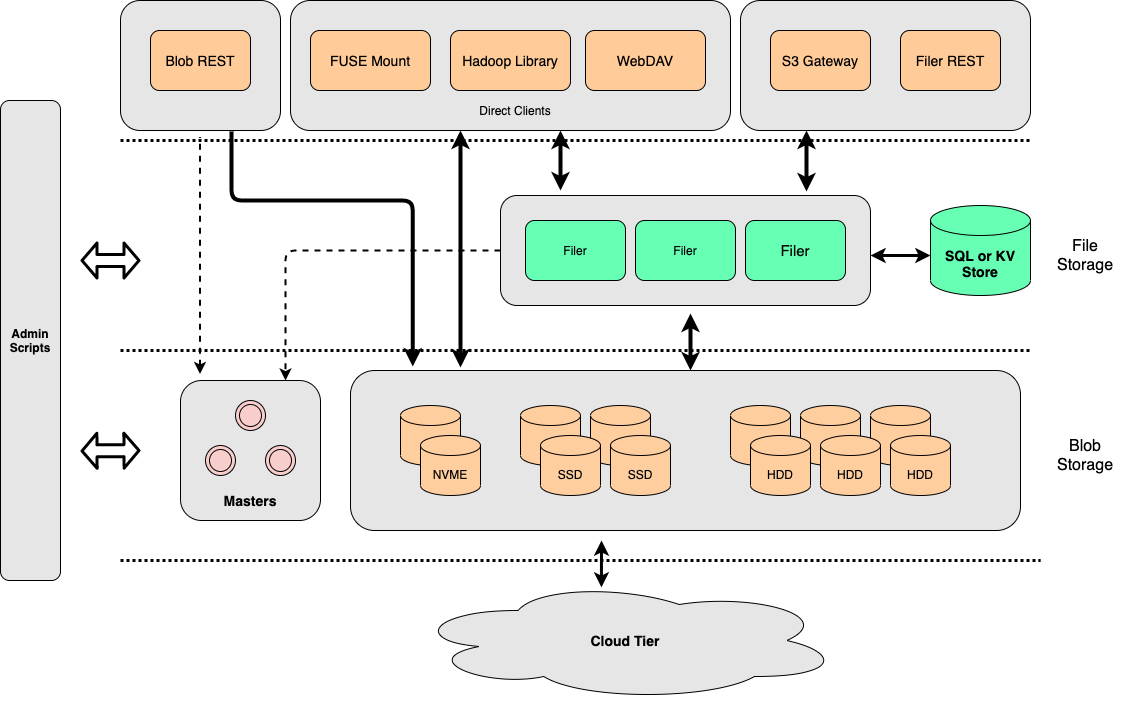
|
||||
## Data Lakehouse Features ##
|
||||
* [S3 Table Buckets][S3TableBucket] expose a dedicated namespace for Iceberg tables with strict layout validation.
|
||||
* Built-in [Iceberg REST Catalog][IcebergCatalog] runs alongside the S3 endpoint — no external metastore needed.
|
||||
* Native integrations with [Apache Spark][SparkIceberg], [Trino][TrinoIceberg], [Dremio][DremioIceberg], [DuckDB][DuckDBIceberg], and [RisingWave][RisingWaveIceberg].
|
||||
* [Automated table maintenance][IcebergMaintenance]: compaction, snapshot expiration, orphan removal, manifest rewriting.
|
||||
* Granular IAM at the bucket, namespace, and table level via standard S3 bucket policies.
|
||||
|
||||
* **Master** servers, one or a Raft group of three, track which volume lives on which volume server and hand out file ids. They are not in the read path.
|
||||
* **Volume** servers store blobs in append-only volume files, keep a 16-byte in-memory index per blob, and replicate or erasure-code at the volume level.
|
||||
* **Filer** servers add directories and files on top, with metadata in a store of your choice, and expose HTTP, S3, WebDAV, SFTP, FUSE, and the table catalogs.
|
||||
## Kubernetes ##
|
||||
* [Kubernetes CSI Driver][SeaweedFsCsiDriver] A Container Storage Interface (CSI) Driver. [](https://hub.docker.com/r/chrislusf/seaweedfs-csi-driver/)
|
||||
* [SeaweedFS Operator](https://github.com/seaweedfs/seaweedfs-operator)
|
||||
|
||||
[Filer]: https://github.com/seaweedfs/seaweedfs/wiki/Directories-and-Files
|
||||
[SuperLargeFiles]: https://github.com/seaweedfs/seaweedfs/wiki/Data-Structure-for-Large-Files
|
||||
[Mount]: https://github.com/seaweedfs/seaweedfs/wiki/FUSE-Mount
|
||||
[AmazonS3API]: https://github.com/seaweedfs/seaweedfs/wiki/Amazon-S3-API
|
||||
[BackupToCloud]: https://github.com/seaweedfs/seaweedfs/wiki/Async-Replication-to-Cloud
|
||||
[Hadoop]: https://github.com/seaweedfs/seaweedfs/wiki/Hadoop-Compatible-File-System
|
||||
[WebDAV]: https://github.com/seaweedfs/seaweedfs/wiki/WebDAV
|
||||
[ErasureCoding]: https://github.com/seaweedfs/seaweedfs/wiki/Erasure-coding-for-warm-storage
|
||||
[TieredStorage]: https://github.com/seaweedfs/seaweedfs/wiki/Tiered-Storage
|
||||
[CloudTier]: https://github.com/seaweedfs/seaweedfs/wiki/Cloud-Tier
|
||||
[FilerDataEncryption]: https://github.com/seaweedfs/seaweedfs/wiki/Filer-Data-Encryption
|
||||
[FilerTTL]: https://github.com/seaweedfs/seaweedfs/wiki/Filer-Stores
|
||||
[VolumeServerTTL]: https://github.com/seaweedfs/seaweedfs/wiki/Store-file-with-a-Time-To-Live
|
||||
[SeaweedFsCsiDriver]: https://github.com/seaweedfs/seaweedfs-csi-driver
|
||||
[ActiveActiveAsyncReplication]: https://github.com/seaweedfs/seaweedfs/wiki/Filer-Active-Active-cross-cluster-continuous-synchronization
|
||||
[FilerStoreReplication]: https://github.com/seaweedfs/seaweedfs/wiki/Filer-Store-Replication
|
||||
[KeyLargeValueStore]: https://github.com/seaweedfs/seaweedfs/wiki/Filer-as-a-Key-Large-Value-Store
|
||||
[CloudDrive]: https://github.com/seaweedfs/seaweedfs/wiki/Cloud-Drive-Architecture
|
||||
[GatewayToRemoteObjectStore]: https://github.com/seaweedfs/seaweedfs/wiki/Gateway-to-Remote-Object-Storage
|
||||
[S3TableBucket]: https://github.com/seaweedfs/seaweedfs/wiki/S3-Table-Bucket
|
||||
[IcebergCatalog]: https://github.com/seaweedfs/seaweedfs/wiki/SeaweedFS-Iceberg-Catalog
|
||||
[IcebergMaintenance]: https://github.com/seaweedfs/seaweedfs/wiki/Iceberg-Table-Maintenance
|
||||
[SparkIceberg]: https://github.com/seaweedfs/seaweedfs/wiki/Spark-Iceberg-Integration
|
||||
[TrinoIceberg]: https://github.com/seaweedfs/seaweedfs/wiki/Trino-Iceberg-Integration
|
||||
[DremioIceberg]: https://github.com/seaweedfs/seaweedfs/wiki/Dremio-Iceberg-Integration
|
||||
[DuckDBIceberg]: https://github.com/seaweedfs/seaweedfs/wiki/DuckDB-Iceberg-Integration
|
||||
[RisingWaveIceberg]: https://github.com/seaweedfs/seaweedfs/wiki/RisingWave-Iceberg-Integration
|
||||
|
||||
The blob store started from [Facebook's Haystack](http://www.usenix.org/event/osdi10/tech/full_papers/Beaver.pdf), erasure coding takes ideas from [f4](https://www.usenix.org/system/files/conference/osdi14/osdi14-paper-muralidhar.pdf), and the whole has a lot in common with [Tectonic](https://www.usenix.org/system/files/fast21-pan.pdf) and [Colossus](https://cloud.google.com/blog/products/storage-data-transfer/a-peek-behind-colossus-googles-file-system). How file ids are assigned, written, and looked up, and why a master that tracks volumes scales, is in [Blob Store Architecture][BlobStoreArchitecture]; the services are in [Components][Components] and the [white paper][WhitePaper].
|
||||
|
||||
[Back to TOC](#table-of-contents)
|
||||
|
||||
# Compared to Other Systems #
|
||||
## Example: Using Seaweed Blob Store ##
|
||||
|
||||
By default, the master node runs on port 9333, and the volume nodes run on port 8080.
|
||||
Let's start one master node, and two volume nodes on port 8080 and 8081. Ideally, they should be started from different machines. We'll use localhost as an example.
|
||||
|
||||
SeaweedFS uses HTTP REST operations to read, write, and delete. The responses are in JSON or JSONP format.
|
||||
|
||||
### Start Master Server ###
|
||||
|
||||
```
|
||||
> ./weed master
|
||||
```
|
||||
|
||||
### Start Volume Servers ###
|
||||
|
||||
```
|
||||
> weed volume -dir="/tmp/data1" -max=5 -master="localhost:9333" -port=8080 &
|
||||
> weed volume -dir="/tmp/data2" -max=10 -master="localhost:9333" -port=8081 &
|
||||
```
|
||||
|
||||
### Write A Blob ###
|
||||
|
||||
A blob, also referred as a needle, a chunk, or mistakenly as a file, is just a byte array. It can have attributes, such as name, mime type, create or update time, etc. But basically it is just a byte array of a relatively small size, such as 2 MB ~ 64 MB. The size is not fixed.
|
||||
|
||||
To upload a blob: first, send a HTTP POST, PUT, or GET request to `/dir/assign` to get an `fid` and a volume server URL:
|
||||
|
||||
```
|
||||
> curl http://localhost:9333/dir/assign
|
||||
{"count":1,"fid":"3,01637037d6","url":"127.0.0.1:8080","publicUrl":"localhost:8080"}
|
||||
```
|
||||
|
||||
Second, to store the blob content, send a HTTP multi-part POST request to `url + '/' + fid` from the response:
|
||||
|
||||
```
|
||||
> curl -F file=@/home/chris/myphoto.jpg http://127.0.0.1:8080/3,01637037d6
|
||||
{"name":"myphoto.jpg","size":43234,"eTag":"1cc0118e"}
|
||||
```
|
||||
|
||||
To update, send another POST request with updated blob content.
|
||||
|
||||
For deletion, send an HTTP DELETE request to the same `url + '/' + fid` URL:
|
||||
|
||||
```
|
||||
> curl -X DELETE http://127.0.0.1:8080/3,01637037d6
|
||||
```
|
||||
|
||||
### Save Blob Id ###
|
||||
|
||||
Now, you can save the `fid`, 3,01637037d6 in this case, to a database field.
|
||||
|
||||
The number 3 at the start represents a volume id. After the comma, it's one file key, 01, and a file cookie, 637037d6.
|
||||
|
||||
The volume id is an unsigned 32-bit integer. The file key is an unsigned 64-bit integer. The file cookie is an unsigned 32-bit integer, used to prevent URL guessing.
|
||||
|
||||
The file key and file cookie are both coded in hex. You can store the <volume id, file key, file cookie> tuple in your own format, or simply store the `fid` as a string.
|
||||
|
||||
If stored as a string, in theory, you would need 8+1+16+8=33 bytes. A char(33) would be enough, if not more than enough, since most uses will not need 2^32 volumes.
|
||||
|
||||
If space is really a concern, you can store the file id in the binary format. You would need one 4-byte integer for volume id, 8-byte long number for file key, and a 4-byte integer for the file cookie. So 16 bytes are more than enough.
|
||||
|
||||
### Read a Blob ###
|
||||
|
||||
Here is an example of how to render the URL.
|
||||
|
||||
First look up the volume server's URLs by the file's volumeId:
|
||||
|
||||
```
|
||||
> curl http://localhost:9333/dir/lookup?volumeId=3
|
||||
{"volumeId":"3","locations":[{"publicUrl":"localhost:8080","url":"localhost:8080"}]}
|
||||
```
|
||||
|
||||
Since (usually) there are not too many volume servers, and volumes don't move often, you can cache the results most of the time. Depending on the replication type, one volume can have multiple replica locations. Just randomly pick one location to read.
|
||||
|
||||
Now you can take the public URL, render the URL or directly read from the volume server via URL:
|
||||
|
||||
```
|
||||
http://localhost:8080/3,01637037d6.jpg
|
||||
```
|
||||
|
||||
Notice we add a file extension ".jpg" here. It's optional and just one way for the client to specify the file content type.
|
||||
|
||||
If you want a nicer URL, you can use one of these alternative URL formats:
|
||||
|
||||
```
|
||||
http://localhost:8080/3/01637037d6/my_preferred_name.jpg
|
||||
http://localhost:8080/3/01637037d6.jpg
|
||||
http://localhost:8080/3,01637037d6.jpg
|
||||
http://localhost:8080/3/01637037d6
|
||||
http://localhost:8080/3,01637037d6
|
||||
```
|
||||
|
||||
If you want to get a scaled version of an image, you can add some params:
|
||||
|
||||
```
|
||||
http://localhost:8080/3/01637037d6.jpg?height=200&width=200
|
||||
http://localhost:8080/3/01637037d6.jpg?height=200&width=200&mode=fit
|
||||
http://localhost:8080/3/01637037d6.jpg?height=200&width=200&mode=fill
|
||||
```
|
||||
|
||||
### Rack-Aware and Data Center-Aware Replication ###
|
||||
|
||||
SeaweedFS applies the replication strategy at a volume level. So, when you are getting a blob id, you can specify the replication strategy. For example:
|
||||
|
||||
```
|
||||
curl http://localhost:9333/dir/assign?replication=001
|
||||
```
|
||||
|
||||
The replication parameter options are:
|
||||
|
||||
```
|
||||
000: no replication
|
||||
001: replicate once on the same rack
|
||||
010: replicate once on a different rack, but same data center
|
||||
100: replicate once on a different data center
|
||||
200: replicate twice on two different data center
|
||||
110: replicate once on a different rack, and once on a different data center
|
||||
```
|
||||
|
||||
More details about replication can be found [on the wiki][Replication].
|
||||
|
||||
[Replication]: https://github.com/seaweedfs/seaweedfs/wiki/Replication
|
||||
|
||||
You can also set the default replication strategy when starting the master server.
|
||||
|
||||
### Allocate Blob Key on Specific Data Center ###
|
||||
|
||||
Volume servers can be started with a specific data center name:
|
||||
|
||||
```
|
||||
weed volume -dir=/tmp/1 -port=8080 -dataCenter=dc1
|
||||
weed volume -dir=/tmp/2 -port=8081 -dataCenter=dc2
|
||||
```
|
||||
|
||||
When requesting a blob key, an optional "dataCenter" parameter can limit the assigned volume to the specific data center. For example, this specifies that the assigned volume should be limited to 'dc1':
|
||||
|
||||
```
|
||||
http://localhost:9333/dir/assign?dataCenter=dc1
|
||||
```
|
||||
|
||||
### Other Features ###
|
||||
* [No Single Point of Failure][feat-1]
|
||||
* [Insert with your own keys][feat-2]
|
||||
* [Chunking large files][feat-3]
|
||||
* [Collection as a Simple Name Space][feat-4]
|
||||
|
||||
[feat-1]: https://github.com/seaweedfs/seaweedfs/wiki/Failover-Master-Server
|
||||
[feat-2]: https://github.com/seaweedfs/seaweedfs/wiki/Optimization#insert-with-your-own-keys
|
||||
[feat-3]: https://github.com/seaweedfs/seaweedfs/wiki/Optimization#upload-large-files
|
||||
[feat-4]: https://github.com/seaweedfs/seaweedfs/wiki/Optimization#collection-as-a-simple-name-space
|
||||
|
||||
[Back to TOC](#table-of-contents)
|
||||
|
||||
## Blob Store Architecture ##
|
||||
|
||||
Usually distributed file systems split each file into chunks. A central server keeps a mapping of filenames to chunks, and also which chunks each chunk server has.
|
||||
|
||||
The main drawback is that the central server can't handle many small files efficiently, and since all read requests need to go through the central master, so it might not scale well for many concurrent users.
|
||||
|
||||
Instead of managing chunks, SeaweedFS manages data volumes in the master server. Each data volume is 32GB in size, and can hold a lot of blobs. And each storage node can have many data volumes. So the master node only needs to store the metadata about the volumes, which is a fairly small amount of data and is generally stable.
|
||||
|
||||
The actual blob metadata, which are the blob volume, offset, and size, is stored in each volume on volume servers. Since each volume server only manages metadata of blobs on its own disk, with only 16 bytes for each blob, all access can read the metadata just from memory and only needs one disk operation to actually read file data.
|
||||
|
||||
For comparison, consider that an xfs inode structure in Linux is 536 bytes.
|
||||
|
||||
### Master Server and Volume Server ###
|
||||
|
||||
The architecture is fairly simple. The actual data is stored in volumes on storage nodes. One volume server can have multiple volumes, and can both support read and write access with basic authentication.
|
||||
|
||||
All volumes are managed by a master server. The master server contains the volume id to volume server mapping. This is fairly static information, and can be easily cached.
|
||||
|
||||
On each write request, the master server also generates a file key, which is a growing 64-bit unsigned integer. Since write requests are not generally as frequent as read requests, one master server should be able to handle the concurrency well.
|
||||
|
||||
### Write and Read files ###
|
||||
|
||||
When a client sends a write request, the master server returns (volume id, file key, file cookie, volume node URL) for the blob. The client then contacts the volume node and POSTs the blob content.
|
||||
|
||||
When a client needs to read a blob based on (volume id, file key, file cookie), it asks the master server by the volume id for the (volume node URL, volume node public URL), or retrieves this from a cache. Then the client can GET the content, or just render the URL on web pages and let browsers fetch the content.
|
||||
|
||||
### Saving memory ###
|
||||
|
||||
All blob metadata stored on a volume server is readable from memory without disk access. Each file takes just a 16-byte map entry of <64bit key, 32bit offset, 32bit size>. Of course, each map entry has its own space cost for the map. But usually the disk space runs out before the memory does.
|
||||
|
||||
### Tiered Storage to the cloud ###
|
||||
|
||||
The local volume servers are much faster, while cloud storages have elastic capacity and are actually more cost-efficient if not accessed often (usually free to upload, but relatively costly to access). With the append-only structure and O(1) access time, SeaweedFS can take advantage of both local and cloud storage by offloading the warm data to the cloud.
|
||||
|
||||
Usually hot data are fresh and warm data are old. SeaweedFS puts the newly created volumes on local servers, and optionally upload the older volumes on the cloud. If the older data are accessed less often, this literally gives you unlimited capacity with limited local servers, and still fast for new data.
|
||||
|
||||
With the O(1) access time, the network latency cost is kept at minimum.
|
||||
|
||||
If the hot/warm data is split as 20/80, with 20 servers, you can achieve storage capacity of 100 servers. That's a cost saving of 80%! Or you can repurpose the 80 servers to store new data also, and get 5X storage throughput.
|
||||
|
||||
[Back to TOC](#table-of-contents)
|
||||
|
||||
## SeaweedFS Filer ##
|
||||
|
||||
Built on top of the blob store, SeaweedFS Filer adds directory structure to create a file system. The directory structure is an interface that is implemented in many key-value stores or databases.
|
||||
|
||||
The content of a file is mapped to one or many blobs, distributed to multiple volumes on multiple volume servers.
|
||||
|
||||
## Compared to Other File Systems ##
|
||||
|
||||
Most other distributed file systems seem more complicated than necessary.
|
||||
|
||||
@@ -271,7 +438,9 @@ SeaweedFS is meant to be fast and simple, in both setup and operation. If you do
|
||||
|
||||
SeaweedFS is constantly moving forward. Same with other systems. These comparisons can be outdated quickly. Please help to keep them updated.
|
||||
|
||||
## Compared to HDFS ##
|
||||
[Back to TOC](#table-of-contents)
|
||||
|
||||
### Compared to HDFS ###
|
||||
|
||||
HDFS uses the chunk approach for each file, and is ideal for storing large files.
|
||||
|
||||
@@ -279,7 +448,9 @@ SeaweedFS is ideal for serving relatively smaller files quickly and concurrently
|
||||
|
||||
SeaweedFS can also store extra large files by splitting them into manageable data chunks, and store the file ids of the data chunks into a meta chunk. This is managed by "weed upload/download" tool, and the weed master or volume servers are agnostic about it.
|
||||
|
||||
## Compared to GlusterFS, Ceph ##
|
||||
[Back to TOC](#table-of-contents)
|
||||
|
||||
### Compared to GlusterFS, Ceph ###
|
||||
|
||||
The architectures are mostly the same. SeaweedFS aims to store and read files fast, with a simple and flat architecture. The main differences are
|
||||
|
||||
@@ -298,15 +469,25 @@ The architectures are mostly the same. SeaweedFS aims to store and read files fa
|
||||
| MinIO | separate meta file per drive for each file | | | Yes | No |
|
||||
| RustFS | separate meta file per drive for each file | | | Yes | No |
|
||||
|
||||
GlusterFS stores files, both directories and content, in configurable volumes called "bricks". It hashes the path and filename into ids, and assigned to virtual volumes, and then mapped to "bricks".
|
||||
[Back to TOC](#table-of-contents)
|
||||
|
||||
## Compared to MooseFS ##
|
||||
### Compared to GlusterFS ###
|
||||
|
||||
GlusterFS stores files, both directories and content, in configurable volumes called "bricks".
|
||||
|
||||
GlusterFS hashes the path and filename into ids, and assigned to virtual volumes, and then mapped to "bricks".
|
||||
|
||||
[Back to TOC](#table-of-contents)
|
||||
|
||||
### Compared to MooseFS ###
|
||||
|
||||
MooseFS chooses to neglect small file issue. From moosefs 3.0 manual, "even a small file will occupy 64KiB plus additionally 4KiB of checksums and 1KiB for the header", because it "was initially designed for keeping large amounts (like several thousands) of very big files"
|
||||
|
||||
MooseFS Master Server keeps all meta data in memory. Same issue as HDFS namenode.
|
||||
MooseFS Master Server keeps all meta data in memory. Same issue as HDFS namenode.
|
||||
|
||||
## Compared to Ceph ##
|
||||
[Back to TOC](#table-of-contents)
|
||||
|
||||
### Compared to Ceph ###
|
||||
|
||||
Ceph can be setup similar to SeaweedFS as a key->blob store. It is much more complicated, with the need to support layers on top of it. [Here is a more detailed comparison](https://github.com/seaweedfs/seaweedfs/issues/120)
|
||||
|
||||
@@ -326,11 +507,13 @@ SeaweedFS Filer uses off-the-shelf stores, such as MySql, Postgres, Sqlite, Mong
|
||||
| Volume | OSD | optimized for small files |
|
||||
| Filer | Ceph FS | linearly scalable, Customizable, O(1) or O(logN) |
|
||||
|
||||
## Compared to MinIO, RustFS ##
|
||||
[Back to TOC](#table-of-contents)
|
||||
|
||||
### Compared to MinIO, RustFS ###
|
||||
|
||||
Please note, as Apr 25, 2026 MinIO ceased development. It's strongly discouraged to use that unmaintained software with multiple security bugs. RustFS is a MinIO reimplementation in Rust, Apache 2.0 licensed and still developed, keeping MinIO's storage model down to a byte-compatible on-disk format. So the points below apply to both.
|
||||
|
||||
MinIO followed AWS S3 closely and was ideal for testing for S3 API. It had good UI, policies, versionings, etc. SeaweedFS is trying to catch up here.
|
||||
MinIO followed AWS S3 closely and was ideal for testing for S3 API. It had good UI, policies, versionings, etc. SeaweedFS is trying to catch up here.
|
||||
|
||||
The metadata are in simple files. Each file write incurs extra writes to the corresponding meta file, on every drive of the erasure set. Changing only tags or retention rewrites that meta file on all of them, so the write amplification does not shrink with object size.
|
||||
|
||||
@@ -347,18 +530,113 @@ There are specific requirements on storage layout, which makes it hard to scale
|
||||
|
||||
[Back to TOC](#table-of-contents)
|
||||
|
||||
# Benchmark #
|
||||
## Dev Plan ##
|
||||
|
||||
Unscientific single-machine numbers from a MacBook with an SSD. [`weed benchmark`][Benchmarks], 1 million 1KB files, concurrency 16:
|
||||
* More tools and documentation, on how to manage and scale the system.
|
||||
* Read and write stream data.
|
||||
* Support structured data.
|
||||
|
||||
| | Requests per second | p50 | p99 |
|
||||
| --- | --- | --- | --- |
|
||||
| Write | 15,708 | 0.8 ms | 2.6 ms |
|
||||
| Random read | 47,019 | 0.3 ms | 0.7 ms |
|
||||
This is a super exciting project! And we need helpers and [support](https://www.patreon.com/seaweedfs)!
|
||||
|
||||
`make benchmark` runs [warp][S3Benchmark] mixed S3 traffic against a local `weed server`:
|
||||
[Back to TOC](#table-of-contents)
|
||||
|
||||
## Installation Guide ##
|
||||
|
||||
> Installation guide for users who are not familiar with golang
|
||||
|
||||
Step 1: install go on your machine and setup the environment by following the instructions at:
|
||||
|
||||
https://golang.org/doc/install
|
||||
|
||||
make sure to define your $GOPATH
|
||||
|
||||
|
||||
Step 2: checkout this repo:
|
||||
```bash
|
||||
git clone https://github.com/seaweedfs/seaweedfs.git
|
||||
```
|
||||
Step 3: download, compile, and install the project by executing the following command
|
||||
|
||||
```bash
|
||||
cd seaweedfs/weed && make install
|
||||
```
|
||||
|
||||
Once this is done, you will find the executable "weed" in your `$GOPATH/bin` directory
|
||||
|
||||
For more installation options, including how to run with Docker, see the [Getting Started guide](https://github.com/seaweedfs/seaweedfs/wiki/Getting-Started).
|
||||
|
||||
[Back to TOC](#table-of-contents)
|
||||
|
||||
## Disk Related Topics ##
|
||||
|
||||
### Hard Drive Performance ###
|
||||
|
||||
When testing read performance on SeaweedFS, it basically becomes a performance test of your hard drive's random read speed. Hard drives usually get 100MB/s~200MB/s.
|
||||
|
||||
### Solid State Disk ###
|
||||
|
||||
To modify or delete small files, SSD must delete a whole block at a time, and move content in existing blocks to a new block. SSD is fast when brand new, but will get fragmented over time and you have to garbage collect, compacting blocks. SeaweedFS is friendly to SSD since it is append-only. Deletion and compaction are done on volume level in the background, not slowing reading and not causing fragmentation.
|
||||
|
||||
[Back to TOC](#table-of-contents)
|
||||
|
||||
## Benchmark ##
|
||||
|
||||
My Own Unscientific Single Machine Results on Mac Book with Solid State Disk, CPU: 1 Intel Core i7 2.6GHz.
|
||||
|
||||
Write 1 million 1KB file:
|
||||
```
|
||||
Concurrency Level: 16
|
||||
Time taken for tests: 66.753 seconds
|
||||
Completed requests: 1048576
|
||||
Failed requests: 0
|
||||
Total transferred: 1106789009 bytes
|
||||
Requests per second: 15708.23 [#/sec]
|
||||
Transfer rate: 16191.69 [Kbytes/sec]
|
||||
|
||||
Connection Times (ms)
|
||||
min avg max std
|
||||
Total: 0.3 1.0 84.3 0.9
|
||||
|
||||
Percentage of the requests served within a certain time (ms)
|
||||
50% 0.8 ms
|
||||
66% 1.0 ms
|
||||
75% 1.1 ms
|
||||
80% 1.2 ms
|
||||
90% 1.4 ms
|
||||
95% 1.7 ms
|
||||
98% 2.1 ms
|
||||
99% 2.6 ms
|
||||
100% 84.3 ms
|
||||
```
|
||||
|
||||
Randomly read 1 million files:
|
||||
```
|
||||
Concurrency Level: 16
|
||||
Time taken for tests: 22.301 seconds
|
||||
Completed requests: 1048576
|
||||
Failed requests: 0
|
||||
Total transferred: 1106812873 bytes
|
||||
Requests per second: 47019.38 [#/sec]
|
||||
Transfer rate: 48467.57 [Kbytes/sec]
|
||||
|
||||
Connection Times (ms)
|
||||
min avg max std
|
||||
Total: 0.0 0.3 54.1 0.2
|
||||
|
||||
Percentage of the requests served within a certain time (ms)
|
||||
50% 0.3 ms
|
||||
90% 0.4 ms
|
||||
98% 0.6 ms
|
||||
99% 0.7 ms
|
||||
100% 54.1 ms
|
||||
```
|
||||
|
||||
### Run WARP and launch a mixed benchmark. ###
|
||||
|
||||
```
|
||||
make benchmark
|
||||
warp: Benchmark data written to "warp-mixed-2025-12-05[194844]-kBpU.csv.zst"
|
||||
|
||||
Mixed operations.
|
||||
Operation: DELETE, 10%, Concurrency: 20, Ran 42s.
|
||||
* Throughput: 55.13 obj/s
|
||||
@@ -375,19 +653,17 @@ Operation: STAT, 30%, Concurrency: 20, Ran 42s.
|
||||
Cluster Total: 3302.88 MiB/s, 550.51 obj/s over 43s.
|
||||
```
|
||||
|
||||
Read throughput is bounded by the random read speed of the disks, and grows with every volume server added. More numbers, including multi-node, FUSE, and Hadoop, are in [Benchmarks][Benchmarks], [S3 API Benchmark][S3Benchmark], [FIO benchmark][FIO], and [Independent Benchmarks][IndependentBenchmarks].
|
||||
|
||||
[Back to TOC](#table-of-contents)
|
||||
|
||||
# Enterprise #
|
||||
## Enterprise ##
|
||||
|
||||
For enterprise users, please visit [seaweedfs.com](https://seaweedfs.com) for the SeaweedFS Enterprise Edition,
|
||||
which has advanced features, including data recovery, self-healing storage,
|
||||
For enterprise users, please visit [seaweedfs.com](https://seaweedfs.com) for the SeaweedFS Enterprise Edition,
|
||||
which has advanced features, including data recovery, self-healing storage,
|
||||
customizable erasure coding, EC vacuum and repair, etc.
|
||||
|
||||
[Back to TOC](#table-of-contents)
|
||||
|
||||
# License #
|
||||
## License ##
|
||||
|
||||
Licensed under the Apache License, Version 2.0 (the "License");
|
||||
you may not use this file except in compliance with the License.
|
||||
@@ -401,114 +677,9 @@ WITHOUT WARRANTIES OR CONDITIONS OF ANY KIND, either express or implied.
|
||||
See the License for the specific language governing permissions and
|
||||
limitations under the License.
|
||||
|
||||
[Back to TOC](#table-of-contents)
|
||||
|
||||
# Sponsors #
|
||||
|
||||
<h3 align="center"><a href="https://www.patreon.com/seaweedfs">Sponsor SeaweedFS via Patreon</a></h3>
|
||||
|
||||
SeaweedFS is an independent Apache-licensed open source project with its ongoing development made
|
||||
possible entirely thanks to the support of these awesome [backers](https://github.com/seaweedfs/seaweedfs/blob/master/backers.md).
|
||||
If you'd like to grow SeaweedFS even stronger, please consider joining our
|
||||
<a href="https://www.patreon.com/seaweedfs">sponsors on Patreon</a>.
|
||||
|
||||
Your support will be really appreciated by me and other supporters!
|
||||
|
||||
<!--
|
||||
<h4 align="center">Platinum</h4>
|
||||
|
||||
<p align="center">
|
||||
<a href="" target="_blank">
|
||||
<img src="https://raw.githubusercontent.com/seaweedfs/seaweedfs/master/note/sponsor_nodion.png" width="200" alt="nodion">
|
||||
</a>
|
||||
</p>
|
||||
-->
|
||||
|
||||
### Gold Sponsors
|
||||
[](https://www.nodion.com)
|
||||
[](https://www.piknik.com)
|
||||
[](https://www.keepsec.ca)
|
||||
[](https://zyner.org)
|
||||
The text of this page is available for modification and reuse under the terms of the Creative Commons Attribution-Sharealike 3.0 Unported License and the GNU Free Documentation License (unversioned, with no invariant sections, front-cover texts, or back-cover texts).
|
||||
|
||||
[Back to TOC](#table-of-contents)
|
||||
|
||||
## Star History
|
||||
|
||||

|
||||
|
||||
[WeedMini]: https://github.com/seaweedfs/seaweedfs/wiki/Quick-Start-with-weed-mini
|
||||
[DockerComposeS3]: https://github.com/seaweedfs/seaweedfs/wiki/Docker-Compose-for-S3
|
||||
[HelmRecipes]: https://github.com/seaweedfs/seaweedfs/wiki/Helm-Chart-Recipes
|
||||
[Operator]: https://github.com/seaweedfs/seaweedfs-operator
|
||||
[SeaweedFsCsiDriver]: https://github.com/seaweedfs/seaweedfs-csi-driver
|
||||
[GettingStarted]: https://github.com/seaweedfs/seaweedfs/wiki/Getting-Started
|
||||
[ProductionSetup]: https://github.com/seaweedfs/seaweedfs/wiki/Production-Setup
|
||||
[ErasureCoding]: https://github.com/seaweedfs/seaweedfs/wiki/Erasure-Coding-for-warm-storage
|
||||
[RustVolume]: https://github.com/seaweedfs/seaweedfs/wiki/Rust-Volume-Server
|
||||
[Benchmarks]: https://github.com/seaweedfs/seaweedfs/wiki/Benchmarks
|
||||
[S3Benchmark]: https://github.com/seaweedfs/seaweedfs/wiki/S3-API-Benchmark
|
||||
[FIO]: https://github.com/seaweedfs/seaweedfs/wiki/FIO-benchmark
|
||||
[IndependentBenchmarks]: https://github.com/seaweedfs/seaweedfs/wiki/Independent-Benchmarks
|
||||
[FailoverMaster]: https://github.com/seaweedfs/seaweedfs/wiki/Failover-Master-Server
|
||||
[WeedShell]: https://github.com/seaweedfs/seaweedfs/wiki/weed-shell
|
||||
[Worker]: https://github.com/seaweedfs/seaweedfs/wiki/Worker
|
||||
[FilerStores]: https://github.com/seaweedfs/seaweedfs/wiki/Filer-Stores
|
||||
[Replication]: https://github.com/seaweedfs/seaweedfs/wiki/Replication
|
||||
[TieredStorage]: https://github.com/seaweedfs/seaweedfs/wiki/Tiered-Storage
|
||||
[CloudTier]: https://github.com/seaweedfs/seaweedfs/wiki/Cloud-Tier
|
||||
[SuperLargeFiles]: https://github.com/seaweedfs/seaweedfs/wiki/Data-Structure-for-Large-Files
|
||||
[Versioning]: https://github.com/seaweedfs/seaweedfs/wiki/S3-Object-Versioning
|
||||
[ObjectLock]: https://github.com/seaweedfs/seaweedfs/wiki/S3-Object-Lock-and-Retention
|
||||
[Lifecycle]: https://github.com/seaweedfs/seaweedfs/wiki/S3-Lifecycle
|
||||
[CORS]: https://github.com/seaweedfs/seaweedfs/wiki/S3-CORS
|
||||
[ConditionalOps]: https://github.com/seaweedfs/seaweedfs/wiki/S3-Conditional-Operations
|
||||
[RenameObject]: https://github.com/seaweedfs/seaweedfs/wiki/S3-RenameObject
|
||||
[BucketPolicies]: https://github.com/seaweedfs/seaweedfs/wiki/S3-Bucket-Policies
|
||||
[PolicyConditions]: https://github.com/seaweedfs/seaweedfs/wiki/S3-Policy-Conditions
|
||||
[PolicyVariables]: https://github.com/seaweedfs/seaweedfs/wiki/S3-Policy-Variables
|
||||
[OIDC]: https://github.com/seaweedfs/seaweedfs/wiki/OIDC-Integration
|
||||
[K8sSA]: https://github.com/seaweedfs/seaweedfs/wiki/Kubernetes-ServiceAccount-Authentication
|
||||
[SSE]: https://github.com/seaweedfs/seaweedfs/wiki/Server-Side-Encryption
|
||||
[AuditLog]: https://github.com/seaweedfs/seaweedfs/wiki/S3-API-Audit-log
|
||||
[BucketQuota]: https://github.com/seaweedfs/seaweedfs/wiki/S3-Bucket-Quota
|
||||
[RateLimiting]: https://github.com/seaweedfs/seaweedfs/wiki/S3-Rate-Limiting
|
||||
[AmazonS3API]: https://github.com/seaweedfs/seaweedfs/wiki/Amazon-S3-API
|
||||
[S3vsMinio]: https://github.com/seaweedfs/seaweedfs/wiki/Supported-APIs-vs-Minio
|
||||
[S3TableBucket]: https://github.com/seaweedfs/seaweedfs/wiki/S3-Table-Bucket
|
||||
[LanceCatalog]: https://github.com/seaweedfs/seaweedfs/wiki/SeaweedFS-Lance-Catalog
|
||||
[IcebergCatalog]: https://github.com/seaweedfs/seaweedfs/wiki/SeaweedFS-Iceberg-Catalog
|
||||
[SparkIceberg]: https://github.com/seaweedfs/seaweedfs/wiki/Spark-Iceberg-Integration
|
||||
[TrinoIceberg]: https://github.com/seaweedfs/seaweedfs/wiki/Trino-Iceberg-Integration
|
||||
[DremioIceberg]: https://github.com/seaweedfs/seaweedfs/wiki/Dremio-Iceberg-Integration
|
||||
[DuckDBIceberg]: https://github.com/seaweedfs/seaweedfs/wiki/DuckDB-Iceberg-Integration
|
||||
[DorisIceberg]: https://github.com/seaweedfs/seaweedfs/wiki/Doris-Iceberg-Integration
|
||||
[RisingWaveIceberg]: https://github.com/seaweedfs/seaweedfs/wiki/RisingWave-Iceberg-Integration
|
||||
[LanceDB]: https://github.com/seaweedfs/seaweedfs/wiki/LanceDB-Integration
|
||||
[Lakekeeper]: https://github.com/seaweedfs/seaweedfs/wiki/Lakekeeper-Iceberg-Integration
|
||||
[IcebergMaintenance]: https://github.com/seaweedfs/seaweedfs/wiki/Iceberg-Table-Maintenance
|
||||
[LanceMaintenance]: https://github.com/seaweedfs/seaweedfs/wiki/Lance-Maintenance-Worker
|
||||
[S3TablesSecurity]: https://github.com/seaweedfs/seaweedfs/wiki/S3-Tables-Security
|
||||
[Hadoop]: https://github.com/seaweedfs/seaweedfs/wiki/Hadoop-Compatible-File-System
|
||||
[CloudDrive]: https://github.com/seaweedfs/seaweedfs/wiki/Cloud-Drive-Architecture
|
||||
[CacheRemote]: https://github.com/seaweedfs/seaweedfs/wiki/Cache-Remote-Storage
|
||||
[GatewayToRemoteObjectStore]: https://github.com/seaweedfs/seaweedfs/wiki/Gateway-to-Remote-Object-Storage
|
||||
[ActiveActiveAsyncReplication]: https://github.com/seaweedfs/seaweedfs/wiki/Filer-Active-Active-cross-cluster-continuous-synchronization
|
||||
[FilerStoreReplication]: https://github.com/seaweedfs/seaweedfs/wiki/Filer-Store-Replication
|
||||
[AsyncBackup]: https://github.com/seaweedfs/seaweedfs/wiki/Async-Backup
|
||||
[MetaBackup]: https://github.com/seaweedfs/seaweedfs/wiki/Async-Filer-Metadata-Backup
|
||||
[CDC]: https://github.com/seaweedfs/seaweedfs/wiki/Filer-Change-Data-Capture
|
||||
[Webhook]: https://github.com/seaweedfs/seaweedfs/wiki/Filer-Notification-Webhook
|
||||
[Mount]: https://github.com/seaweedfs/seaweedfs/wiki/FUSE-Mount
|
||||
[MountWindows]: https://github.com/seaweedfs/seaweedfs/wiki/Mount-on-Windows
|
||||
[WebDAV]: https://github.com/seaweedfs/seaweedfs/wiki/WebDAV
|
||||
[SFTP]: https://github.com/seaweedfs/seaweedfs/wiki/SFTP-Server
|
||||
[TUS]: https://github.com/seaweedfs/seaweedfs/wiki/TUS-Resumable-Uploads
|
||||
[FilerDataEncryption]: https://github.com/seaweedfs/seaweedfs/wiki/Filer-Data-Encryption
|
||||
[FIPS]: https://github.com/seaweedfs/seaweedfs/wiki/Cryptography-and-FIPS-Compliance
|
||||
[AdminUI]: https://github.com/seaweedfs/seaweedfs/wiki/Admin-UI
|
||||
[Metrics]: https://github.com/seaweedfs/seaweedfs/wiki/System-Metrics
|
||||
[VolumeServerTTL]: https://github.com/seaweedfs/seaweedfs/wiki/Store-file-with-a-Time-To-Live
|
||||
[SeaweedUp]: https://github.com/seaweedfs/seaweedfs/wiki/Deployment-with-seaweed-up
|
||||
[BlobStoreArchitecture]: https://github.com/seaweedfs/seaweedfs/wiki/Blob-Store-Architecture
|
||||
[Components]: https://github.com/seaweedfs/seaweedfs/wiki/Components
|
||||
[WhitePaper]: https://github.com/seaweedfs/seaweedfs/wiki/SeaweedFS_Architecture.pdf
|
||||
## Stargazers over time
|
||||
[](https://starchart.cc/seaweedfs/seaweedfs)
|
||||
|
||||
-344
@@ -1,344 +0,0 @@
|
||||
# SeaweedFS HTTP REST API
|
||||
|
||||
SeaweedFS exposes three HTTP surfaces:
|
||||
|
||||
| Service | Default port | Addressing |
|
||||
|---------|--------------|------------|
|
||||
| Filer | 8888 | File system paths (`/dir/name`) |
|
||||
| Master | 9333 | File id assignment and cluster topology |
|
||||
| Volume server | 8080 | File content by file id (`vid,fid`) |
|
||||
|
||||
Most clients only need the filer API (paths) or the S3 API. The master and
|
||||
volume APIs are the lower-level blob store interface.
|
||||
|
||||
Conventions applying to all three:
|
||||
|
||||
- Responses are JSON unless noted otherwise. Append `&pretty=y` to pretty-print.
|
||||
- A file id (`fid`) has the form `volumeId,fileKeyCookie`, e.g. `3,01637037d6`.
|
||||
An optional suffix selects a reserved id from a `count` assignment
|
||||
(`3,01637037d6_1`, `_2`, ...), and an optional extension
|
||||
(`3,01637037d6.jpg`) sets the content type on reads.
|
||||
- `replication` is a 3-digit replica placement `xyz`: `x` copies in other
|
||||
data centers, `y` on other racks in the same data center, `z` on other
|
||||
volume servers on the same rack. `000` = no replication, `001` = one copy
|
||||
on the same rack, `010` = one copy on a different rack, `100` = one copy in
|
||||
another data center, `200` = two copies in two other data centers, `110` =
|
||||
one copy in another data center plus one on another rack.
|
||||
- `ttl` units: `m` minute, `h` hour, `d` day, `w` week, `M` month, `y` year.
|
||||
|
||||
## Filer API (port 8888)
|
||||
|
||||
The filer presents a POSIX-like namespace over the volume servers.
|
||||
|
||||
### Upload a file
|
||||
|
||||
```bash
|
||||
# PUT the raw body to the target path
|
||||
curl -T /home/chris/myphoto.jpg "http://localhost:8888/dir/myphoto.jpg"
|
||||
|
||||
# or POST as multipart form (the part filename becomes the entry name)
|
||||
curl -F file=@/home/chris/myphoto.jpg "http://localhost:8888/dir/"
|
||||
```
|
||||
|
||||
Response `201 Created`:
|
||||
|
||||
```json
|
||||
{"name":"myphoto.jpg","size":43234,"eTag":"0x6c656...","mtime":"...","chunks":[...]}
|
||||
```
|
||||
|
||||
Query parameters:
|
||||
|
||||
| Parameter | Description | Default |
|
||||
|-----------|-------------|---------|
|
||||
| `collection` | collection name | empty |
|
||||
| `replication` | replica placement code | filer default |
|
||||
| `ttl` | file expiration, e.g. `3d` | never |
|
||||
| `disk` | disk type to store on | filer default |
|
||||
| `fsync` | `true` fsyncs on the volume server | false |
|
||||
| `dataCenter` | preferred data center | empty |
|
||||
| `rack` | preferred rack | empty |
|
||||
| `dataNode` | preferred volume server | empty |
|
||||
| `saveInside` | store small content inside the metadata instead of a volume | false |
|
||||
| `maxMB` | split the upload into chunks of this many MB | filer `-maxMB` |
|
||||
| `mode` | unix permission bits, e.g. `0644` | `0660` |
|
||||
| `op` | `append` appends to an existing file | overwrite |
|
||||
| `skipCheckParentDir` | `true` skips the parent-directory existence check | false |
|
||||
|
||||
### Create a directory
|
||||
|
||||
```bash
|
||||
curl -X POST "http://localhost:8888/dir/newdir/"
|
||||
```
|
||||
|
||||
A POST to a path ending in `/` with no content creates the directory,
|
||||
including missing parents.
|
||||
|
||||
### Read a file
|
||||
|
||||
```bash
|
||||
curl "http://localhost:8888/dir/myphoto.jpg"
|
||||
```
|
||||
|
||||
Supports `Range` requests (`Accept-Ranges: bytes`), `ETag`, and the
|
||||
`If-None-Match` / `If-Modified-Since` conditional headers. `HEAD` returns
|
||||
headers only. Entry headers stored as extended attributes are echoed back,
|
||||
minus internal `Seaweed-` and `xattr-` keys.
|
||||
|
||||
Entry metadata instead of content:
|
||||
|
||||
```bash
|
||||
curl "http://localhost:8888/dir/myphoto.jpg?metadata=true"
|
||||
```
|
||||
|
||||
`metadata=true&resolveManifest=true` additionally resolves chunked-manifest
|
||||
entries into their real chunk list.
|
||||
|
||||
### List a directory
|
||||
|
||||
```bash
|
||||
curl -H "Accept: application/json" "http://localhost:8888/dir/?limit=10&lastFileName=a.jpg"
|
||||
```
|
||||
|
||||
| Parameter | Description | Default |
|
||||
|-----------|-------------|---------|
|
||||
| `limit` | max entries per page | filer `-dirListLimit` |
|
||||
| `lastFileName` | resume listing after this entry name | empty |
|
||||
| `namePattern` | include only names matching the wildcard | empty |
|
||||
| `namePatternExclude` | exclude names matching the wildcard | empty |
|
||||
|
||||
The JSON response carries `Path`, `Entries`, `Limit`, `LastFileName`,
|
||||
`ShouldDisplayLoadMore`, and `EmptyFolder`. Without the `Accept` header the
|
||||
filer renders its HTML browser.
|
||||
|
||||
### Move and copy
|
||||
|
||||
```bash
|
||||
curl -X POST "http://localhost:8888/dir/newname.jpg?mv.from=/dir/myphoto.jpg"
|
||||
curl -X POST "http://localhost:8888/dir/copy.jpg?cp.from=/dir/myphoto.jpg"
|
||||
```
|
||||
|
||||
`mv.from` renames or moves the source to the request path (`204 No Content`).
|
||||
`cp.from` copies it.
|
||||
|
||||
### Append
|
||||
|
||||
```bash
|
||||
curl -T chunk2.bin "http://localhost:8888/dir/file.bin?op=append"
|
||||
```
|
||||
|
||||
### Delete
|
||||
|
||||
```bash
|
||||
curl -X DELETE "http://localhost:8888/dir/myphoto.jpg"
|
||||
curl -X DELETE "http://localhost:8888/dir/?recursive=true"
|
||||
```
|
||||
|
||||
| Parameter | Description | Default |
|
||||
|-----------|-------------|---------|
|
||||
| `recursive` | delete a non-empty directory tree | false; when the filer runs with `filer.options.recursive_delete=true`, deletes are recursive unless `recursive=false` |
|
||||
| `ignoreRecursiveError` | keep deleting remaining entries after an error | false |
|
||||
| `skipChunkDeletion` | remove only the metadata, keep volume data | false |
|
||||
|
||||
### Tagging
|
||||
|
||||
Tags are carried as `Seaweed-`-prefixed request headers, not query
|
||||
parameters; `?tagging` selects the tagging handler and `?tagging=K1,K2`
|
||||
lists the keys to remove. Header names are canonicalized on write
|
||||
(`Seaweed-k1` is stored as `Seaweed-K1`), and the delete list is matched
|
||||
case-sensitively against the stored names.
|
||||
|
||||
```bash
|
||||
curl -X PUT -H "Seaweed-k1: v1" -H "Seaweed-k2: v2" "http://localhost:8888/dir/file.jpg?tagging"
|
||||
curl -X DELETE "http://localhost:8888/dir/file.jpg?tagging=K1,K2"
|
||||
```
|
||||
|
||||
### Read by file id
|
||||
|
||||
```bash
|
||||
curl "http://localhost:8888/?proxyChunkId=3,01637037d6"
|
||||
```
|
||||
|
||||
The filer proxies the chunk read to the right volume server, so only the
|
||||
filer port needs to be exposed.
|
||||
|
||||
### Resumable uploads
|
||||
|
||||
The filer serves the [TUS protocol](https://tus.io/) for resumable uploads
|
||||
(`POST`, `PATCH`, `HEAD` on upload URLs). It is enabled by default at
|
||||
`/.tus`; `-tusBasePath` changes the endpoint base path.
|
||||
|
||||
### Health
|
||||
|
||||
`GET /healthz` and `GET /readyz` return `200 OK`.
|
||||
|
||||
## Master API (port 9333)
|
||||
|
||||
Write-affecting endpoints are automatically proxied to the current leader, so
|
||||
any master in the quorum can serve them.
|
||||
|
||||
### Assign a file id
|
||||
|
||||
```bash
|
||||
curl "http://localhost:9333/dir/assign?count=1&replication=001&collection=turbo&dataCenter=dc1&ttl=3d&disk=ssd"
|
||||
{"count":1,"fid":"3,01637037d6","url":"127.0.0.1:8080","publicUrl":"localhost:8080"}
|
||||
```
|
||||
|
||||
Upload the file content to `http://<url>/<fid>` afterwards. With `count>1`,
|
||||
use `<fid>_1`, `<fid>_2`, ... for the additional ids.
|
||||
|
||||
| Parameter | Description | Default |
|
||||
|-----------|-------------|---------|
|
||||
| `count` | file ids to reserve | 1 |
|
||||
| `collection` | collection name | empty |
|
||||
| `dataCenter` | preferred data center | empty |
|
||||
| `rack` | preferred rack | empty |
|
||||
| `dataNode` | preferred volume server | empty |
|
||||
| `replication` | replica placement | master `-defaultReplication` |
|
||||
| `ttl` | file expiration, e.g. `3d` | never |
|
||||
| `disk` | disk type | empty |
|
||||
| `dataSize` | expected file size in bytes | 0 |
|
||||
| `preallocate` | bytes to preallocate for new volumes | master `-volumePreallocate` |
|
||||
| `writableVolumeCount` | grow this many volumes when none are writable | master default |
|
||||
| `memoryMapMaxSizeMb` | memory-mapped file size (Windows) | 0 |
|
||||
|
||||
### Look up a volume or file id
|
||||
|
||||
```bash
|
||||
curl "http://localhost:9333/dir/lookup?volumeId=3"
|
||||
{"locations":[{"url":"localhost:8080","publicUrl":"localhost:8080"}]}
|
||||
```
|
||||
|
||||
| Parameter | Description | Default |
|
||||
|-----------|-------------|---------|
|
||||
| `volumeId` | volume id; a full `vid,fid` is accepted too | required |
|
||||
| `fileId` | like `volumeId`, but also returns a write JWT when security is on | empty |
|
||||
| `collection` | speeds up the lookup | empty |
|
||||
| `read` | `yes` generates a read JWT instead of a write JWT | empty |
|
||||
|
||||
### Store a file in one call
|
||||
|
||||
```bash
|
||||
curl -F file=@/home/chris/report.pdf "http://localhost:9333/submit?collection=turbo&replication=001"
|
||||
{"fileName":"report.pdf","fid":"3,01637037d6","fileUrl":"localhost:8080/3,01637037d6","size":43234,"eTag":"0x6c656..."}
|
||||
```
|
||||
|
||||
`POST /submit` accepts multipart file data plus the `dir/assign` placement
|
||||
parameters (`count`, `collection`, `dataCenter`, `rack`, `replication`,
|
||||
`ttl`, `disk`), assigns a file id, uploads to the volume server, and returns
|
||||
the result.
|
||||
|
||||
### Redirect to a file
|
||||
|
||||
```bash
|
||||
curl -v "http://localhost:9333/3,01637037d6"
|
||||
```
|
||||
|
||||
`GET /{fileId}` answers `308 Permanent Redirect` to a volume server holding
|
||||
the file, preserving the query string (e.g. image-resize parameters).
|
||||
|
||||
### Cluster status
|
||||
|
||||
```bash
|
||||
curl "http://localhost:9333/dir/status?pretty=y" # full topology tree
|
||||
curl "http://localhost:9333/vol/status?pretty=y" # every volume on every node
|
||||
curl "http://localhost:9333/collection/info?collection=turbo"
|
||||
curl "http://localhost:9333/collection/info?collection=turbo&detail=true"
|
||||
```
|
||||
|
||||
`collection/info` returns aggregated `TotalSize`, `FileCount`, `UsedSize`,
|
||||
`VolumeCount`; `detail=true` splits them per volume layout.
|
||||
|
||||
### Grow volumes
|
||||
|
||||
```bash
|
||||
curl "http://localhost:9333/vol/grow?count=4&replication=001&collection=turbo&ttl=5d&disk=ssd&dataCenter=dc1&rack=rack1"
|
||||
{"count":4}
|
||||
```
|
||||
|
||||
`count` is required; the placement parameters match `dir/assign`. One volume
|
||||
serves one write at a time, so pre-allocated volumes raise write concurrency.
|
||||
|
||||
### Vacuum deleted space
|
||||
|
||||
```bash
|
||||
curl "http://localhost:9333/vol/vacuum?garbageThreshold=0.4"
|
||||
```
|
||||
|
||||
| Parameter | Description | Default |
|
||||
|-----------|-------------|---------|
|
||||
| `garbageThreshold` | minimum deleted-bytes ratio before a volume is compacted | master `-garbageThreshold` (0.3) |
|
||||
|
||||
Vacuuming makes a volume read-only, copies live needles to a new volume, and
|
||||
swaps it in.
|
||||
|
||||
### Delete a collection
|
||||
|
||||
```bash
|
||||
curl "http://localhost:9333/col/delete?collection=benchmark"
|
||||
```
|
||||
|
||||
Deletes all volumes of the collection, including erasure-coded shards.
|
||||
`204 No Content` on success.
|
||||
|
||||
### Health
|
||||
|
||||
```bash
|
||||
curl -I "http://localhost:9333/healthz" # liveness
|
||||
curl -I "http://localhost:9333/readyz" # readiness
|
||||
curl "http://localhost:9333/" # web UI
|
||||
```
|
||||
|
||||
## Volume server API (port 8080)
|
||||
|
||||
The volume server stores file content by file id. Clients normally get the
|
||||
volume URL from `dir/assign` or `dir/lookup`.
|
||||
|
||||
### Upload
|
||||
|
||||
```bash
|
||||
curl -F file=@/home/chris/myphoto.jpg "http://127.0.0.1:8080/3,01637037d6"
|
||||
{"name":"myphoto.jpg","size":43234,"eTag":"0x6c656...","mime":"image/jpeg","contentMd5":"..."}
|
||||
```
|
||||
|
||||
PUT or POST the body (or a multipart `file` part) to `/{vid},{fid}`.
|
||||
`204 No Content` is returned when the content is unchanged. `?ts=<unix>`
|
||||
sets the stored modification time.
|
||||
|
||||
### Read
|
||||
|
||||
```bash
|
||||
curl "http://127.0.0.1:8080/3,01637037d6"
|
||||
curl "http://127.0.0.1:8080/3,01637037d6.jpg" # sets Content-Type from the extension
|
||||
```
|
||||
|
||||
Supports `Range` and `HEAD`. Image files can be resized server-side:
|
||||
|
||||
| Parameter | Description |
|
||||
|-----------|-------------|
|
||||
| `width`, `height` | resize bounds in pixels |
|
||||
| `mode` | `fit` (contain) or `fill` (cover); omitted resizes to `width`/`height` |
|
||||
| `crop_x1`, `crop_y1`, `crop_x2`, `crop_y2` | explicit crop rectangle |
|
||||
| `cm` | `false` returns the chunk-manifest blob instead of resolving it |
|
||||
| `readDeleted` | `true` reads soft-deleted needles |
|
||||
| `collection` | passed through redirects for the right volume |
|
||||
|
||||
### Delete
|
||||
|
||||
```bash
|
||||
curl -X DELETE "http://127.0.0.1:8080/3,01637037d6"
|
||||
{"size":43234}
|
||||
```
|
||||
|
||||
`?ts=<unix>` sets the deletion timestamp. Replicated volumes propagate the
|
||||
delete to every replica.
|
||||
|
||||
### Status
|
||||
|
||||
```bash
|
||||
curl "http://localhost:8080/status?pretty=y" # disk and volume inventory
|
||||
curl -I "http://localhost:8080/healthz" # liveness/readiness
|
||||
```
|
||||
|
||||
`OPTIONS` preflights answer CORS headers. When `-port.public` differs from
|
||||
`-port`, the volume server opens a separate read-only public listener on
|
||||
that port; `-publicUrl` sets the address it advertises to clients.
|
||||
@@ -1,418 +0,0 @@
|
||||
# SeaweedFS as an Apache CloudStack Object Storage Provider
|
||||
|
||||
A CloudStack ObjectStore plugin that makes SeaweedFS a first-class object storage
|
||||
backend inside Apache CloudStack, alongside the existing MinIO and Ceph RGW
|
||||
providers. This is a collaboration with proIO (Swen), who builds private clouds on
|
||||
CloudStack and wants SeaweedFS as a storage option.
|
||||
|
||||
## The request
|
||||
|
||||
> We can only add MinIO and Ceph as object storage [in CloudStack] today. I want
|
||||
> to get SeaweedFS into this project... What we need is to build a provider which
|
||||
> does the communication between Cloudstack and SeaweedFS.
|
||||
|
||||
This is **not** a SeaweedFS-side feature. The work lives in the Apache CloudStack
|
||||
repo (Java): a new plugin under `plugins/storage/object/seaweedfs/` that implements
|
||||
CloudStack's ObjectStore plugin framework and talks to SeaweedFS over its S3 and
|
||||
IAM APIs. SeaweedFS itself needs no changes for the core to work — its S3 API
|
||||
already covers every bucket operation CloudStack requires, and its IAM API covers
|
||||
user/credential management.
|
||||
|
||||
## How the CloudStack ObjectStore framework works
|
||||
|
||||
CloudStack 4.18+ introduced an Object Storage framework. An admin registers an
|
||||
object storage pool via `addObjectStoragePool` (URL + provider + credentials);
|
||||
tenants then create and manage buckets on it through CloudStack APIs. CloudStack
|
||||
manages pool and bucket lifecycle; the underlying provider handles the actual
|
||||
object protocol.
|
||||
|
||||
A provider is a plugin module implementing three interfaces:
|
||||
|
||||
### 1. `ObjectStoreProvider` — registration
|
||||
|
||||
`MinIOObjectStoreProviderImpl` is the reference. It is a Spring `@Component` that:
|
||||
- Returns a provider name (`"MinIO"`)
|
||||
- Returns `DataStoreProviderType.OBJECT`
|
||||
- In `configure()`, injects the lifecycle and driver implementations and calls
|
||||
`storeMgr.registerDriver(name, driver)`
|
||||
|
||||
### 2. `ObjectStoreLifeCycle` — pool add/remove
|
||||
|
||||
`MinIOObjectStoreLifeCycleImpl.initialize()` reads the URL, name, and
|
||||
`accesskey`/`secretkey` details from the `addObjectStoragePool` call, tests the
|
||||
connection by listing buckets, and persists an `ObjectStoreVO` via
|
||||
`ObjectStoreHelper`. The other methods (attachCluster/Host/Zone, maintain,
|
||||
deleteDataStore) are no-ops for object storage.
|
||||
|
||||
### 3. `ObjectStoreDriver` — bucket + user operations
|
||||
|
||||
`ObjectStoreDriver` (in `engine/storage/.../object/ObjectStoreDriver.java`) extends
|
||||
`DataStoreDriver` and defines the bucket/user contract. Every provider must
|
||||
implement:
|
||||
|
||||
| Method | Purpose |
|
||||
| --- | --- |
|
||||
| `createBucket(Bucket, boolean objectLock)` | Create a bucket |
|
||||
| `listBuckets(long storeId)` | List all buckets |
|
||||
| `deleteBucket(BucketTO, long storeId)` | Delete a bucket |
|
||||
| `createUser(long accountId, long storeId)` | Provision a user + credentials for a CloudStack account |
|
||||
| `setBucketPolicy` / `getBucketPolicy` / `deleteBucketPolicy` | Bucket policy CRUD |
|
||||
| `setBucketEncryption` / `deleteBucketEncryption` | SSE config |
|
||||
| `setBucketVersioning` / `deleteBucketVersioning` | Versioning enable/suspend |
|
||||
| `setBucketQuota(BucketTO, long storeId, long size)` | Per-bucket quota |
|
||||
| `getAllBucketsUsage(long storeId)` | Usage map for billing/accounting |
|
||||
| `getBucketAcl` / `setBucketAcl` | ACLs (MinIO/Ceph return null / no-op) |
|
||||
|
||||
`BaseObjectStoreDriverImpl` provides no-op defaults for the `DataStoreDriver`
|
||||
methods (`createAsync`, `deleteAsync`, `copyAsync`, `canCopy`, `resize`,
|
||||
`getTO`, `getStoreTO`), so object-store providers only implement the bucket/user
|
||||
methods above.
|
||||
|
||||
## How the four existing providers differ (and where SeaweedFS lands)
|
||||
|
||||
CloudStack ships four object-store providers. Three are relevant; the simulator
|
||||
is a test stub.
|
||||
|
||||
| Concern | MinIO | Ceph RGW | Cloudian HyperStore | SeaweedFS |
|
||||
| --- | --- | --- | --- | --- |
|
||||
| Bucket CRUD | `MinioClient` (S3) | `AmazonS3` (AWS SDK v1) | `AmazonS3` (AWS SDK v1) | `AmazonS3` (AWS SDK v1) |
|
||||
| Bucket policy | `MinioClient` | `AmazonS3` | `AmazonS3` | `AmazonS3` |
|
||||
| Versioning | `MinioClient` | `AmazonS3` | `AmazonS3` | `AmazonS3` |
|
||||
| Encryption | `MinioClient` | not implemented | `AmazonS3` | `AmazonS3` |
|
||||
| **User creation** | `MinioAdminClient` | `RgwAdmin` | **`AmazonIdentityManagement`** | **`AmazonIdentityManagement`** |
|
||||
| **Per-bucket quota** | `MinioAdminClient` | `RgwAdmin` | **not supported** (throws) | **S3 extension** (`PUT /{bucket}?seaweedfs-quota`, SigV4, `s3:PutBucketQuota`) |
|
||||
| **Usage reporting** | `MinioAdminClient` | `RgwAdmin` | Cloudian admin API | S3 `ListObjectsV2` (MVP); Prometheus / SOSAPI `capacity.xml` (recommended) |
|
||||
|
||||
**Cloudian HyperStore is the direct precedent.** It is an S3-compatible store
|
||||
that, like SeaweedFS, manages users via the **standard AWS IAM API** using the
|
||||
AWS IAM Java SDK (`com.amazonaws.services.identitymanagement`). Its driver
|
||||
(`CloudianHyperStoreObjectStoreDriverImpl`) and util
|
||||
(`CloudianHyperStoreUtil`) are the template this design follows almost line for
|
||||
line. Cloudian even validates the quota limitation the same way this design
|
||||
proposes for the MVP: `setBucketQuota` throws for any non-zero size and only
|
||||
accepts `0` (no quota).
|
||||
|
||||
The SeaweedFS plugin is therefore a **simpler Cloudian** — same AWS S3 + IAM SDK
|
||||
clients, same store-details keys (`s3Url`, `iamUrl`, `accesskey`, `secretkey`),
|
||||
same IAM-user-with-restricted-policy pattern, but with no proprietary admin
|
||||
client at all (Cloudian has its own `CloudianClient` for its admin API; SeaweedFS
|
||||
needs only S3 + IAM). For quota, the plugin uses a narrow SeaweedFS S3 extension
|
||||
(see below); for usage reporting, it falls back to S3 `ListObjectsV2` in the MVP
|
||||
and recommends Prometheus or SOSAPI `capacity.xml` for production scale.
|
||||
|
||||
### Quota via the S3 `?seaweedfs-quota` extension
|
||||
|
||||
SeaweedFS supports bucket quota natively (server-side enforcement via a
|
||||
read-only flag when usage exceeds the limit). Rather than exposing the broad
|
||||
admin REST API (which would require a global bearer token and grant cluster-wide
|
||||
admin access), the integration uses a **narrow, scoped S3 subresource**:
|
||||
|
||||
- `PUT /{bucket}?seaweedfs-quota` — set bucket quota (IAM permission `s3:PutBucketQuota`)
|
||||
- `GET /{bucket}?seaweedfs-quota` — get bucket quota (IAM permission `s3:GetBucketQuota`)
|
||||
|
||||
**PUT request body** (JSON):
|
||||
```json
|
||||
{"quota_size": 100, "quota_unit": "GB", "quota_enabled": true}
|
||||
```
|
||||
|
||||
**GET response body** (JSON):
|
||||
```json
|
||||
{"quota_size": 107374182400, "quota_unit": "B", "quota_enabled": true}
|
||||
```
|
||||
|
||||
Note: GET always returns `quota_unit: "B"` and the absolute byte count, not
|
||||
the original unit. A disabled-but-retained quota returns a positive
|
||||
`quota_size` with `quota_enabled: false`.
|
||||
|
||||
Quota is stored on the bucket's filer entry (positive = enabled, negative =
|
||||
disabled but retained, zero = no quota), matching the existing admin REST API
|
||||
behavior. When quota is cleared, the bucket's read-only flag is also lifted.
|
||||
|
||||
**Authentication** uses the existing S3 SigV4 flow — no new global secret is
|
||||
needed. The CloudStack service credential (the `accesskey`/`secretkey` on the
|
||||
object store) is the admin credential used for all driver operations: bucket
|
||||
CRUD, IAM user provisioning, and quota management. It must have broad S3 and
|
||||
IAM permissions. The per-account IAM users created by `createUser` are the
|
||||
ones with restricted permissions (full S3 access except bucket
|
||||
creation/deletion). A future hardening could split quota management onto a
|
||||
separate credential scoped to only `s3:PutBucketQuota`/`s3:GetBucketQuota`,
|
||||
but the MVP uses the single admin credential for simplicity, matching how
|
||||
the MinIO and Ceph providers work.
|
||||
|
||||
The plugin's `setBucketQuota` signs and sends the `PUT /{bucket}?seaweedfs-quota`
|
||||
request using the AWS SDK v1 `AWSS3V4Signer` for SigV4 signing, then sends the
|
||||
signed request via `java.net.http.HttpClient` (the AWS S3 SDK doesn't natively
|
||||
support custom subresources, so we sign manually and send the request
|
||||
ourselves). The `seaweedfs-quota` query parameter is included in the signed
|
||||
canonical query string.
|
||||
|
||||
### Usage reporting
|
||||
|
||||
`getAllBucketsUsage` must return a `Map<String, Long>` of bucket name → size.
|
||||
MinIO uses `MinioAdminClient.getDataUsageInfo`; Ceph uses
|
||||
`RgwAdmin.listBucketInfo`. SeaweedFS has no admin rollup endpoint, so the MVP
|
||||
plugin computes it by listing buckets and summing object sizes via S3
|
||||
`ListObjectsV2` — expensive for large stores.
|
||||
|
||||
For production scale, SeaweedFS already exposes per-bucket size in:
|
||||
- **Prometheus metrics** (`bucket_size_bytes` gauge, refreshed every minute)
|
||||
- **SOSAPI `capacity.xml`** (reports capacity, available space, and usage
|
||||
through the S3 endpoint)
|
||||
|
||||
Operators should consume one of those instead of S3 list-based aggregation for
|
||||
large deployments. The MVP's list-based approach is correct but slow; flag it as
|
||||
a known limitation.
|
||||
|
||||
## SeaweedFS API surface (what the plugin relies on)
|
||||
|
||||
SeaweedFS exposes two relevant APIs, both AWS-compatible:
|
||||
|
||||
### S3 API (`weed s3`)
|
||||
Full S3-compatible surface. Confirmed against the SeaweedFS S3 wiki and code:
|
||||
- `CreateBucket`, `HeadBucket`, `ListBuckets`, `DeleteBucket`
|
||||
- `PutBucketPolicy`, `GetBucketPolicy`, `DeleteBucketPolicy`
|
||||
- `PutBucketVersioning` (Enabled / Suspended), `GetBucketVersioning`
|
||||
- `PutBucketEncryption`, `GetBucketEncryption`, `DeleteBucketEncryption`
|
||||
- `PutBucketAcl`, `GetBucketAcl`
|
||||
- `ListObjectsV2`, `HeadObject`, `GetObject`, `PutObject`, `DeleteObject`
|
||||
- Bucket quota via extended attributes / `s3.bucket.quota` (enforced server-side,
|
||||
surfaced as a read-only state when exceeded — see PR #10224)
|
||||
|
||||
### IAM API (`weed iam` / `iamapi`)
|
||||
AWS IAM-compatible REST endpoints, implemented in `weed/iamapi/`. Confirmed by
|
||||
the test suite which uses the **AWS IAM SDK** (`aws-sdk-go/service/iam`) against
|
||||
the same handlers CloudStack would call:
|
||||
- `CreateUser`, `DeleteUser`, `ListUsers`, `GetUser`
|
||||
- `CreateAccessKey`, `DeleteAccessKey`, `ListAccessKeys`
|
||||
- `PutUserPolicy`, `GetUserPolicy`, `DeleteUserPolicy`
|
||||
- `AttachUserPolicy`, `ListAttachedUserPolicies`
|
||||
|
||||
This means the CloudStack plugin can manage SeaweedFS users with the **AWS IAM
|
||||
Java SDK** (`com.amazonaws.services.identitymanagement.AmazonIdentityManagement`),
|
||||
exactly the way the AWS IAM Go SDK is used in SeaweedFS's own tests. No proprietary
|
||||
admin client is needed. **Cloudian HyperStore already does exactly this** in the
|
||||
CloudStack tree — the SeaweedFS plugin follows the same pattern.
|
||||
|
||||
## Design
|
||||
|
||||
### Module layout
|
||||
|
||||
New CloudStack plugin module, mirroring `plugins/storage/object/cloudian/`
|
||||
(the closest precedent — same AWS S3 + IAM SDK approach):
|
||||
|
||||
```
|
||||
plugins/storage/object/seaweedfs/
|
||||
pom.xml
|
||||
src/main/java/org/apache/cloudstack/storage/datastore/
|
||||
driver/SeaweedFSObjectStoreDriverImpl.java
|
||||
lifecycle/SeaweedFSObjectStoreLifeCycleImpl.java
|
||||
provider/SeaweedFSObjectStoreProviderImpl.java
|
||||
util/SeaweedFSObjectStoreUtil.java
|
||||
src/test/java/org/apache/cloudstack/storage/datastore/
|
||||
driver/SeaweedFSObjectStoreDriverImplTest.java
|
||||
provider/SeaweedFSObjectStoreProviderImplTest.java
|
||||
src/main/resources/META-INF/cloudstack/storage-object-seaweedfs/
|
||||
module.properties
|
||||
spring-storage-object-seaweedfs-context.xml
|
||||
```
|
||||
|
||||
### `SeaweedFSObjectStoreProviderImpl`
|
||||
|
||||
Direct copy of `MinIOObjectStoreProviderImpl` with `providerName = "SeaweedFS"`,
|
||||
injecting the SeaweedFS lifecycle and driver. Registers via
|
||||
`storeMgr.registerDriver`.
|
||||
|
||||
### `SeaweedFSObjectStoreLifeCycleImpl`
|
||||
|
||||
Copy of `MinIOObjectStoreLifeCycleImpl`. `initialize()` reads `url`, `name`,
|
||||
`accesskey`, `secretkey` from the `addObjectStoragePool` details map, tests the
|
||||
connection by calling `AmazonS3.listBuckets()` against the SeaweedFS S3 endpoint,
|
||||
and persists the `ObjectStoreVO`. No proprietary client needed — the AWS S3 SDK
|
||||
is enough for the health check.
|
||||
|
||||
### `SeaweedFSObjectStoreDriverImpl`
|
||||
|
||||
The substantive class. Uses two AWS SDK v1 clients (same dependency Ceph already
|
||||
pulls in, so no new CloudStack dependency):
|
||||
|
||||
- `AmazonS3` for bucket operations (path-style, endpoint-pinned, `us-east-1`
|
||||
region placeholder — same as Ceph's `getS3Client`)
|
||||
- `AmazonIdentityManagement` for user/credential operations, pointed at the
|
||||
SeaweedFS IAM endpoint
|
||||
|
||||
#### Bucket operations — straightforward S3
|
||||
|
||||
| Interface method | Implementation |
|
||||
| --- | --- |
|
||||
| `createBucket` | `s3.createBucket(name)`; reject if `doesBucketExistV2`; persist access/secret key + URL on `BucketVO` (same as Ceph) |
|
||||
| `listBuckets` | `s3.listBuckets()` → wrap as `BucketObject` (same as Ceph) |
|
||||
| `deleteBucket` | `s3.deleteBucket(name)` (same as Ceph) |
|
||||
| `setBucketPolicy` | `s3.setBucketPolicy(...)` with the same public/private JSON the MinIO/Ceph drivers build |
|
||||
| `getBucketPolicy` / `deleteBucketPolicy` | `s3.getBucketPolicy` / `s3.deleteBucketPolicy` |
|
||||
| `setBucketVersioning` | `s3.setBucketVersioningConfiguration(Enabled)` |
|
||||
| `deleteBucketVersioning` | `s3.setBucketVersioningConfiguration(Suspended)` |
|
||||
| `setBucketEncryption` | `s3.setBucketEncryptionConfiguration(SSE-S3 rule)` |
|
||||
| `deleteBucketEncryption` | `s3.deleteBucketEncryptionConfiguration` |
|
||||
| `getBucketAcl` / `setBucketAcl` | no-op / null (same as MinIO and Ceph) |
|
||||
|
||||
#### User creation — the key difference
|
||||
|
||||
MinIO calls `MinioAdminClient.addUser`; Ceph calls `RgwAdmin.createUser`. SeaweedFS
|
||||
exposes the standard AWS IAM API, so the plugin calls:
|
||||
|
||||
```java
|
||||
AmazonIdentityManagement iam = getIamClient(storeId);
|
||||
String userName = "acs-" + account.getUuid();
|
||||
|
||||
// CreateUser (idempotent — check GetUser first, like Ceph does)
|
||||
iam.createUser(new CreateUserRequest(userName));
|
||||
|
||||
// CreateAccessKey → returns the access key + secret key to persist
|
||||
CreateAccessKeyResult result = iam.createAccessKey(
|
||||
new CreateAccessKeyRequest().withUserName(userName));
|
||||
AccessKey key = result.getAccessKey();
|
||||
|
||||
// Persist per-account, same pattern as Ceph's CEPH_ACCESS_KEY/CEPH_SECRET_KEY
|
||||
details.put(SEAWEEDFS_ACCESS_KEY, key.getAccessKeyId());
|
||||
details.put(SEAWEEDFS_SECRET_KEY, key.getSecretAccessKey());
|
||||
_accountDetailsDao.persist(accountId, details);
|
||||
```
|
||||
|
||||
This is the cleanest mapping of the three providers: no proprietary admin client,
|
||||
just the AWS IAM SDK that CloudStack already has access to. The IAM endpoint URL
|
||||
is provided as `iamUrl` in the store details. If `iamUrl` is omitted, the driver
|
||||
defaults it to `s3Url` — SeaweedFS registers its embedded IAM API at `POST /` on
|
||||
the same S3 endpoint (`UnifiedPostHandler` in `s3api_server.go`), so the IAM
|
||||
endpoint is the same as the S3 endpoint unless the deployment runs a separate
|
||||
`weed iam` server.
|
||||
|
||||
#### Bucket quota — S3 `?seaweedfs-quota` extension
|
||||
|
||||
This is the one genuine gap. MinIO and Ceph both have an admin API to set a
|
||||
per-bucket quota that the backend enforces. SeaweedFS enforces bucket quota
|
||||
server-side, but the configuration path was **not exposed over a standard S3 or
|
||||
IAM API** — it was only set via the admin REST API or shell commands.
|
||||
|
||||
The integration adds a **narrow S3 subresource** to SeaweedFS:
|
||||
- `PUT /{bucket}?seaweedfs-quota` — set bucket quota (IAM permission `s3:PutBucketQuota`)
|
||||
- `GET /{bucket}?seaweedfs-quota` — get bucket quota (IAM permission `s3:GetBucketQuota`)
|
||||
|
||||
This is implemented in SeaweedFS PR #11279. It uses SigV4 authentication and
|
||||
dedicated IAM permissions, so the CloudStack service credential can be scoped
|
||||
to quota management only — no global admin token, no cluster-wide admin access.
|
||||
The enforcement already exists (PR #10224); this PR only adds the HTTP
|
||||
configuration surface.
|
||||
|
||||
An earlier approach (PR #11278, closed) added bearer-token auth to the broad
|
||||
admin REST API. After review, that was unnecessary for this integration —
|
||||
static S3 config plus standard S3 APIs plus one scoped quota mutation API is
|
||||
sufficient and far safer.
|
||||
|
||||
> **Note on AWS tools compatibility.** `?seaweedfs-quota` is a SeaweedFS-specific
|
||||
> S3 subresource, not part of the AWS S3 API. Standard AWS tools (`aws s3api`,
|
||||
> `s3cmd`, `rclone`) cannot call it directly. This is the same limitation MinIO
|
||||
> and Ceph have — MinIO quota lives behind a separate admin API (`mc admin
|
||||
> bucket quota`), and Ceph quota lives behind the Admin Ops API
|
||||
> (`radosgw-admin quota set`). Neither is callable via `aws s3api` either.
|
||||
> SeaweedFS's approach is the closest to standard S3 because it uses the same
|
||||
> endpoint and same SigV4 credentials, just with a custom query parameter.
|
||||
> Interactive quota management remains available via `weed shell`; the S3
|
||||
> extension exists for programmatic integration (CloudStack) where the
|
||||
> integrator can sign SigV4 requests but cannot run shell commands.
|
||||
|
||||
#### Usage reporting
|
||||
|
||||
`getAllBucketsUsage` must return a `Map<String, Long>` of bucket name → size.
|
||||
MinIO uses `MinioAdminClient.getDataUsageInfo`; Ceph uses
|
||||
`RgwAdmin.listBucketInfo`. SeaweedFS has no admin rollup endpoint, so the MVP
|
||||
plugin computes it by listing buckets and summing object sizes via S3
|
||||
`ListObjectsV2` — expensive for large stores. Better options exist in
|
||||
SeaweedFS already:
|
||||
- **Prometheus metrics** (`bucket_size_bytes` gauge, refreshed every minute)
|
||||
- **SOSAPI `capacity.xml`** (reports capacity, available space, and usage
|
||||
through the S3 endpoint — note: the current "return zero on backend error"
|
||||
behavior should be validated before using it for billing)
|
||||
|
||||
For the MVP, `listBuckets` + per-bucket size via the S3 API is correct but slow;
|
||||
flag it as a known limitation. Operators should consume Prometheus or SOSAPI
|
||||
for production-scale usage reporting.
|
||||
|
||||
### Spring wiring
|
||||
|
||||
`spring-storage-object-seaweedfs-context.xml` registers the provider bean,
|
||||
identical to the MinIO one. `module.properties` sets
|
||||
`name=storage-object-seaweedfs`, `parent=storage`.
|
||||
|
||||
### `pom.xml`
|
||||
|
||||
Depends on `aws-java-sdk-s3` and `aws-java-sdk-iam` — both already in the
|
||||
CloudStack dependency tree (Ceph uses the S3 SDK; the IAM SDK is the standard AWS
|
||||
bundle). No new third-party dependency, unlike MinIO which pulls in the MinIO
|
||||
Java client.
|
||||
|
||||
## What changes on the SeaweedFS side
|
||||
|
||||
**One narrow S3 extension is required for quota management.** SeaweedFS PR #11279
|
||||
adds the `?seaweedfs-quota` S3 subresource:
|
||||
|
||||
- `PUT /{bucket}?seaweedfs-quota` — set bucket quota (IAM permission `s3:PutBucketQuota`)
|
||||
- `GET /{bucket}?seaweedfs-quota` — get bucket quota (IAM permission `s3:GetBucketQuota`)
|
||||
|
||||
This is authenticated via standard S3 SigV4 and authorized via dedicated IAM
|
||||
permissions, so no global admin token is needed. The enforcement already exists
|
||||
(PR #10224); this PR only adds the HTTP configuration surface.
|
||||
|
||||
One follow-up improvement on the SeaweedFS side would close the usage reporting
|
||||
gap:
|
||||
|
||||
1. **Validate SOSAPI `capacity.xml` usage calculation** — the current "return
|
||||
zero on backend error" behavior should be validated before using it for
|
||||
billing. If reliable, CloudStack can consume it directly instead of
|
||||
list-based aggregation.
|
||||
|
||||
## Open questions for proIO / Swen
|
||||
|
||||
1. **IAM endpoint path.** ~~Where does `weed iam` listen relative to the S3
|
||||
endpoint in a typical proIO deployment?~~ **Resolved.** SeaweedFS registers
|
||||
its embedded IAM API at `POST /` on the same S3 endpoint
|
||||
(`UnifiedPostHandler`), so the driver defaults `iamUrl` to `s3Url`. A
|
||||
separate `iamUrl` is only needed if the deployment runs a standalone
|
||||
`weed iam` server on a different host/port.
|
||||
2. **Quota requirements.** Do proIO's customers need server-enforced per-bucket
|
||||
quotas, or is CloudStack-side accounting sufficient for the first release?
|
||||
The `?seaweedfs-quota` S3 extension (PR #11279) provides server-enforced
|
||||
quotas via a scoped credential; this is the recommended path.
|
||||
3. **Object Lock.** `createBucket` takes an `objectLock` boolean. MinIO supports
|
||||
it; Ceph ignores it. SeaweedFS has Object Lock support. Should the plugin pass
|
||||
it through?
|
||||
4. **Contribution model.** Does proIO want to submit the PR to
|
||||
`apache/cloudstack` themselves (with SeaweedFS maintainers as reviewers), or
|
||||
the reverse? Apache CloudStack requires an ICLA for non-trivial contributions.
|
||||
|
||||
## Files
|
||||
|
||||
All in the `apache/cloudstack` repo (new module):
|
||||
|
||||
| File | Purpose |
|
||||
| --- | --- |
|
||||
| `plugins/storage/object/seaweedfs/pom.xml` | Maven module |
|
||||
| `.../datastore/util/SeaweedFSObjectStoreUtil.java` | S3 + IAM client builders, constants, URL validators |
|
||||
| `.../datastore/provider/SeaweedFSObjectStoreProviderImpl.java` | Spring provider registration |
|
||||
| `.../datastore/lifecycle/SeaweedFSObjectStoreLifeCycleImpl.java` | Pool add/health-check |
|
||||
| `.../datastore/driver/SeaweedFSObjectStoreDriverImpl.java` | Bucket + user ops via S3 + IAM SDK |
|
||||
| `.../resources/META-INF/cloudstack/storage-object-seaweedfs/module.properties` | Module name |
|
||||
| `.../resources/META-INF/cloudstack/storage-object-seaweedfs/spring-storage-object-seaweedfs-context.xml` | Spring bean |
|
||||
| `plugins/pom.xml` | Register `storage/object/seaweedfs` module |
|
||||
|
||||
No files in `seaweedfs/seaweedfs` for the MVP.
|
||||
|
||||
### SeaweedFS-side changes (PR #11279)
|
||||
|
||||
| File | Purpose |
|
||||
| --- | --- |
|
||||
| `weed/s3api/s3_constants/s3_action_strings.go` | Add `S3_ACTION_PUT_BUCKET_QUOTA` and `S3_ACTION_GET_BUCKET_QUOTA` |
|
||||
| `weed/s3api/s3_constants/s3_actions.go` | Add coarse-grained `ACTION_PUT_BUCKET_QUOTA` and `ACTION_GET_BUCKET_QUOTA` |
|
||||
| `weed/s3api/s3_action_resolver.go` | Map `seaweedfs-quota` query param to fine-grained s3: actions |
|
||||
| `weed/s3api/s3api_bucket_quota_handlers.go` | New — `PutBucketQuotaHandler` and `GetBucketQuotaHandler` |
|
||||
| `weed/s3api/s3api_bucket_quota_handlers_test.go` | New — tests for unit conversion, validation, and error paths |
|
||||
| `weed/s3api/s3api_server.go` | Register the two routes in the bucket subrouter |
|
||||
@@ -14,9 +14,6 @@ RUN cd /go/src/github.com/seaweedfs/seaweedfs && \
|
||||
git checkout $BRANCH) || \
|
||||
(echo "ERROR: Branch/commit $BRANCH not found in repository" && \
|
||||
echo "Available branches:" && git branch -a && exit 1))
|
||||
# seaweed-common only exists on revisions that have it; a BRANCH predating it
|
||||
# still needs the directory so the COPY into rust_builder below never fails.
|
||||
RUN mkdir -p /go/src/github.com/seaweedfs/seaweedfs/seaweed-common
|
||||
ARG TARGETOS TARGETARCH TARGETVARIANT
|
||||
RUN cd /go/src/github.com/seaweedfs/seaweedfs/weed \
|
||||
&& export LDFLAGS="-X github.com/seaweedfs/seaweedfs/weed/util/version.COMMIT=$(git rev-parse --short HEAD)" \
|
||||
@@ -34,9 +31,6 @@ ARG TAGS
|
||||
COPY weed-volume-prebuilt/ /prebuilt/
|
||||
COPY weed-worker-prebuilt/ /prebuilt-worker/
|
||||
COPY --from=builder /go/src/github.com/seaweedfs/seaweedfs/seaweed-volume /build/seaweed-volume
|
||||
# seaweed-common is a path dependency of seaweed-volume that lives beside it,
|
||||
# so the source build below needs it in the same relative position.
|
||||
COPY --from=builder /go/src/github.com/seaweedfs/seaweedfs/seaweed-common /build/seaweed-common
|
||||
COPY --from=builder /go/src/github.com/seaweedfs/seaweedfs/weed /build/weed
|
||||
WORKDIR /build/seaweed-volume
|
||||
RUN if [ -f "/prebuilt/weed-volume-${TARGETARCH}" ]; then \
|
||||
|
||||
@@ -31,49 +31,6 @@ docker compose -f seaweedfs-dev-compose.yml -p seaweedfs up
|
||||
|
||||
```
|
||||
|
||||
## Verify an image signature
|
||||
|
||||
Every image CI pushes to `chrislusf/seaweedfs` and `ghcr.io/chrislusf/seaweedfs` is signed with [cosign](https://docs.sigstore.dev/cosign/verifying/verify/), keyless, by the GitHub Actions workflow that built it, so there is no key to fetch or pin. The signature is attached to the image digest and covers the multi-arch index and each platform image in it; `latest` is the release image under another tag and verifies the same way. Images published before September 2026 predate signing.
|
||||
|
||||
```bash
|
||||
cosign verify \
|
||||
--certificate-oidc-issuer https://token.actions.githubusercontent.com \
|
||||
--certificate-identity-regexp '^https://github.com/seaweedfs/seaweedfs/\.github/workflows/container_release_unified\.yml@' \
|
||||
chrislusf/seaweedfs:latest
|
||||
```
|
||||
|
||||
cosign prints the digest it verified. Deploy by that digest, or let an admission controller resolve the tag, so what runs is what was checked.
|
||||
|
||||
The identity is `https://github.com/seaweedfs/seaweedfs/.github/workflows/<workflow>@<ref>`. The ref is `refs/tags/<version>` for a release and `refs/heads/master` when a variant was republished by hand. The workflow is `container_release_unified.yml` for the release images, `container_dev.yml` for `dev`, `container_latest.yml` for a `latest` rebuilt by hand, `container_release_foundationdb.yml` for the `_large_disk_foundationdb` release image, and `container_foundationdb_version.yml` or `container_rocksdb_version.yml` for the per-version builds. The regexp above accepts release images only; `container_[a-z_]+\.yml@` accepts everything this repository publishes, `dev` included.
|
||||
|
||||
The same check as a Kyverno policy, release images only:
|
||||
|
||||
```yaml
|
||||
apiVersion: kyverno.io/v1
|
||||
kind: ClusterPolicy
|
||||
metadata:
|
||||
name: verify-seaweedfs-images
|
||||
spec:
|
||||
validationFailureAction: Enforce
|
||||
webhookTimeoutSeconds: 30
|
||||
rules:
|
||||
- name: signed-by-the-release-workflow
|
||||
match:
|
||||
any:
|
||||
- resources:
|
||||
kinds:
|
||||
- Pod
|
||||
verifyImages:
|
||||
- imageReferences:
|
||||
- "docker.io/chrislusf/seaweedfs:*"
|
||||
- "ghcr.io/chrislusf/seaweedfs:*"
|
||||
attestors:
|
||||
- entries:
|
||||
- keyless:
|
||||
issuer: https://token.actions.githubusercontent.com
|
||||
subject: https://github.com/seaweedfs/seaweedfs/.github/workflows/container_release_unified.yml@refs/tags/*
|
||||
```
|
||||
|
||||
## Local Development
|
||||
|
||||
```bash
|
||||
|
||||
@@ -1,14 +1,11 @@
|
||||
FROM alpine:latest
|
||||
|
||||
# Install required packages
|
||||
RUN apk upgrade --no-cache && \
|
||||
apk add --no-cache \
|
||||
RUN apk add --no-cache \
|
||||
ca-certificates \
|
||||
fuse \
|
||||
curl \
|
||||
jq \
|
||||
libcrypto3 \
|
||||
libssl3
|
||||
jq
|
||||
|
||||
# Copy our locally built binary
|
||||
COPY weed-local /usr/bin/weed
|
||||
|
||||
@@ -30,5 +30,3 @@ sleep_minutes = 17 # sleep minutes between each script execution
|
||||
bucket = "volume_bucket" # an existing bucket
|
||||
endpoint = "http://server2:8333"
|
||||
storage_class = "STANDARD_IA"
|
||||
# upload_concurrency = 5 # concurrent multipart part uploads per volume (volume.tier.upload -concurrent overrides)
|
||||
# download_concurrency = 5 # concurrent multipart part downloads per volume (volume.tier.download -concurrent overrides)
|
||||
|
||||
@@ -1,11 +1,11 @@
|
||||
module github.com/seaweedfs/seaweedfs
|
||||
|
||||
go 1.26.6
|
||||
go 1.26
|
||||
|
||||
require (
|
||||
cloud.google.com/go v0.123.0 // indirect
|
||||
cloud.google.com/go/pubsub v1.51.1
|
||||
cloud.google.com/go/storage v1.67.0
|
||||
cloud.google.com/go/storage v1.64.0
|
||||
github.com/Shopify/sarama v1.38.1
|
||||
github.com/aws/aws-sdk-go v1.55.8
|
||||
github.com/beorn7/perks v1.0.1 // indirect
|
||||
@@ -25,7 +25,7 @@ require (
|
||||
github.com/facebookgo/subset v0.0.0-20200203212716-c811ad88dec4 // indirect
|
||||
github.com/fsnotify/fsnotify v1.9.0 // indirect
|
||||
github.com/go-redsync/redsync/v4 v4.17.0
|
||||
github.com/go-sql-driver/mysql v1.10.1
|
||||
github.com/go-sql-driver/mysql v1.10.0
|
||||
github.com/go-zookeeper/zk v1.0.4 // indirect
|
||||
github.com/golang/protobuf v1.5.4
|
||||
github.com/golang/snappy v1.0.0
|
||||
@@ -44,8 +44,8 @@ require (
|
||||
github.com/jmespath/go-jmespath v0.4.0 // indirect
|
||||
github.com/json-iterator/go v1.1.12
|
||||
github.com/karlseguin/ccache/v2 v2.0.8
|
||||
github.com/klauspost/compress v1.19.2
|
||||
github.com/klauspost/reedsolomon v1.14.2
|
||||
github.com/klauspost/compress v1.19.1
|
||||
github.com/klauspost/reedsolomon v1.14.1
|
||||
github.com/kurin/blazer v0.5.3
|
||||
github.com/linxGnu/grocksdb v1.10.8
|
||||
github.com/mailru/easyjson v0.9.2 // indirect
|
||||
@@ -59,18 +59,18 @@ require (
|
||||
github.com/posener/complete v1.2.3
|
||||
github.com/pquerna/cachecontrol v0.2.0
|
||||
github.com/prometheus/client_golang v1.24.1
|
||||
github.com/prometheus/client_model v0.6.3
|
||||
github.com/prometheus/client_model v0.6.2
|
||||
github.com/prometheus/common v0.70.1 // indirect
|
||||
github.com/prometheus/procfs v0.22.0
|
||||
github.com/prometheus/procfs v0.21.1
|
||||
github.com/rcrowley/go-metrics v0.0.0-20201227073835-cf1acfcdf475 // indirect
|
||||
github.com/remyoudompheng/bigfft v0.0.0-20230129092748-24d4a6f8daec // indirect
|
||||
github.com/seaweedfs/goexif v2.0.0+incompatible
|
||||
github.com/seaweedfs/raft v1.2.1
|
||||
github.com/seaweedfs/raft v1.2.0
|
||||
github.com/sirupsen/logrus v1.9.4 // indirect
|
||||
github.com/spf13/afero v1.15.0 // indirect
|
||||
github.com/spf13/cast v1.10.0 // indirect
|
||||
github.com/spf13/viper v1.21.0
|
||||
github.com/stretchr/testify v1.12.1
|
||||
github.com/stretchr/testify v1.11.1
|
||||
github.com/stvp/tempredis v0.0.0-20181119212430-b82af8480203
|
||||
github.com/syndtr/goleveldb v1.0.1-0.20190318030020-c3a204f8e965
|
||||
github.com/tidwall/gjson v1.18.0
|
||||
@@ -90,18 +90,18 @@ require (
|
||||
gocloud.dev v0.46.0
|
||||
gocloud.dev/pubsub/natspubsub v0.46.0
|
||||
gocloud.dev/pubsub/rabbitpubsub v0.46.0
|
||||
golang.org/x/crypto v0.57.0
|
||||
golang.org/x/crypto v0.55.0
|
||||
golang.org/x/exp v0.0.0-20260709172345-9ea1abe57597
|
||||
golang.org/x/image v0.46.0
|
||||
golang.org/x/image v0.44.0
|
||||
golang.org/x/net v0.58.0
|
||||
golang.org/x/oauth2 v0.36.0
|
||||
golang.org/x/sys v0.48.0
|
||||
golang.org/x/text v0.42.0 // indirect
|
||||
golang.org/x/tools v0.49.0 // indirect
|
||||
golang.org/x/sys v0.47.0
|
||||
golang.org/x/text v0.41.0 // indirect
|
||||
golang.org/x/tools v0.48.0 // indirect
|
||||
golang.org/x/xerrors v0.0.0-20240903120638-7835f813f4da // indirect
|
||||
google.golang.org/api v0.297.0
|
||||
google.golang.org/api v0.294.0
|
||||
google.golang.org/genproto v0.0.0-20260715232425-e75dac1f907d // indirect
|
||||
google.golang.org/grpc v1.85.0-dev.0.20260915183914-4e49413dcab7
|
||||
google.golang.org/grpc v1.85.0-dev
|
||||
google.golang.org/protobuf v1.36.12
|
||||
gopkg.in/inf.v0 v0.9.1 // indirect
|
||||
modernc.org/b v1.0.0 // indirect
|
||||
@@ -111,26 +111,26 @@ require (
|
||||
)
|
||||
|
||||
require (
|
||||
cloud.google.com/go/kms v1.34.0
|
||||
cloud.google.com/go/kms v1.33.0
|
||||
github.com/Azure/azure-sdk-for-go/sdk/keyvault/azkeys v0.10.0
|
||||
github.com/DATA-DOG/go-sqlmock v1.5.2
|
||||
github.com/Jille/raft-grpc-transport v1.6.1
|
||||
github.com/ThreeDotsLabs/watermill v1.5.2
|
||||
github.com/a-h/templ v0.3.1020
|
||||
github.com/apache/cassandra-gocql-driver/v2 v2.1.2
|
||||
github.com/apache/iceberg-go v0.6.1-0.20260817192109-c2105090c9e2
|
||||
github.com/apache/iceberg-go v0.6.0
|
||||
github.com/apple/foundationdb/bindings/go v0.0.0-20250911184653-27f7192f47c3
|
||||
github.com/arangodb/go-driver v1.6.9
|
||||
github.com/armon/go-metrics v0.4.1
|
||||
github.com/aws/aws-sdk-go-v2 v1.47.0
|
||||
github.com/aws/aws-sdk-go-v2/config v1.32.35
|
||||
github.com/aws/aws-sdk-go-v2/credentials v1.20.4
|
||||
github.com/aws/aws-sdk-go-v2/service/s3 v1.107.3
|
||||
github.com/aws/aws-sdk-go-v2 v1.45.1
|
||||
github.com/aws/aws-sdk-go-v2/config v1.32.33
|
||||
github.com/aws/aws-sdk-go-v2/credentials v1.19.34
|
||||
github.com/aws/aws-sdk-go-v2/service/s3 v1.105.2
|
||||
github.com/cespare/xxhash/v2 v2.3.0
|
||||
github.com/cognusion/imaging v1.0.4
|
||||
github.com/fluent/fluent-logger-golang v1.10.1
|
||||
github.com/getsentry/sentry-go v0.49.0
|
||||
github.com/go-ldap/ldap/v3 v3.4.14
|
||||
github.com/getsentry/sentry-go v0.48.0
|
||||
github.com/go-ldap/ldap/v3 v3.4.13
|
||||
github.com/golang-jwt/jwt/v5 v5.3.1
|
||||
github.com/google/flatbuffers/go v0.0.0-20230108230133-3b8644d32c50
|
||||
github.com/hashicorp/golang-lru/v2 v2.0.7
|
||||
@@ -144,23 +144,22 @@ require (
|
||||
github.com/parquet-go/parquet-go v0.32.0
|
||||
github.com/pkg/sftp v1.13.11
|
||||
github.com/rabbitmq/amqp091-go v1.14.0
|
||||
github.com/rclone/rclone v1.75.1
|
||||
github.com/rclone/rclone v1.75.0
|
||||
github.com/rdleal/intervalst v1.5.0
|
||||
github.com/redis/go-redis/v9 v9.22.0
|
||||
github.com/redis/go-redis/v9 v9.21.0
|
||||
github.com/schollz/progressbar/v3 v3.19.1
|
||||
github.com/seaweedfs/go-fuse/v2 v2.9.4
|
||||
github.com/shirou/gopsutil/v4 v4.26.7
|
||||
github.com/tarantool/go-option v1.1.0
|
||||
github.com/tarantool/go-tarantool/v3 v3.0.2
|
||||
github.com/testcontainers/testcontainers-go v0.44.0
|
||||
github.com/tarantool/go-tarantool/v3 v3.0.1
|
||||
github.com/testcontainers/testcontainers-go v0.43.0
|
||||
github.com/tikv/client-go/v2 v2.0.7
|
||||
github.com/twmb/avro v1.8.0
|
||||
github.com/xeipuuv/gojsonschema v1.2.0
|
||||
github.com/ydb-platform/ydb-go-sdk-auth-environ v0.5.2
|
||||
github.com/ydb-platform/ydb-go-sdk/v3 v3.151.1
|
||||
go.etcd.io/etcd/client/pkg/v3 v3.7.1
|
||||
go.uber.org/atomic v1.12.0
|
||||
golang.org/x/sync v0.23.0
|
||||
go.uber.org/atomic v1.11.0
|
||||
golang.org/x/sync v0.22.0
|
||||
golang.org/x/tools/godoc v0.1.0-deprecated
|
||||
google.golang.org/grpc/security/advancedtls v1.0.0
|
||||
)
|
||||
@@ -178,18 +177,16 @@ require (
|
||||
github.com/Azure/go-ansiterm v0.0.0-20250102033503-faa5f7b0171c // indirect
|
||||
github.com/FilenCloudDienste/filen-sdk-go v0.0.39 // indirect
|
||||
github.com/ProtonMail/gopenpgp/v3 v3.4.1 // indirect
|
||||
github.com/RoaringBitmap/roaring/v2 v2.24.0 // indirect
|
||||
github.com/a1ex3/zstd-seekable-format-go/pkg v0.10.0 // indirect
|
||||
github.com/adrg/xdg v0.5.3 // indirect
|
||||
github.com/anchore/go-lzo v0.1.1 // indirect
|
||||
github.com/antlr4-go/antlr/v4 v4.13.1 // indirect
|
||||
github.com/apache/arrow-go/v18 v18.7.0 // indirect
|
||||
github.com/apache/thrift v0.24.0 // indirect
|
||||
github.com/aws/aws-sdk-go-v2/service/signin v1.10.0 // indirect
|
||||
github.com/aws/aws-sdk-go-v2/service/signin v1.5.4 // indirect
|
||||
github.com/bahlo/generic-list-go v0.2.0 // indirect
|
||||
github.com/bazelbuild/rules_go v0.46.0 // indirect
|
||||
github.com/biogo/store v0.0.0-20201120204734-aad293a2328f // indirect
|
||||
github.com/bits-and-blooms/bitset v1.24.4 // indirect
|
||||
github.com/blevesearch/snowballstem v0.9.0 // indirect
|
||||
github.com/boombuler/barcode v1.1.0 // indirect
|
||||
github.com/buger/jsonparser v1.2.0 // indirect
|
||||
@@ -209,12 +206,11 @@ require (
|
||||
github.com/dave/dst v0.27.2 // indirect
|
||||
github.com/diskfs/go-diskfs v1.9.4 // indirect
|
||||
github.com/distribution/reference v0.6.0 // indirect
|
||||
github.com/docker/go-connections v0.7.0 // indirect
|
||||
github.com/docker/go-connections v0.6.0 // indirect
|
||||
github.com/docker/go-units v0.5.0 // indirect
|
||||
github.com/dromara/dongle v1.0.1 // indirect
|
||||
github.com/geoarrow/geoarrow-go v0.0.0-20260403143023-f54751c3e3a1 // indirect
|
||||
github.com/gin-gonic/gin v1.11.0 // indirect
|
||||
github.com/go-asn1-ber/asn1-ber v1.5.8 // indirect
|
||||
github.com/go-asn1-ber/asn1-ber v1.5.8-0.20250403174932-29230038a667 // indirect
|
||||
github.com/go-git/go-billy/v5 v5.9.0 // indirect
|
||||
github.com/goccy/go-yaml v1.18.0 // indirect
|
||||
github.com/golang/geo v0.0.0-20210211234256-740aa86cb551 // indirect
|
||||
@@ -243,14 +239,13 @@ require (
|
||||
github.com/magiconair/properties v1.8.10 // indirect
|
||||
github.com/moby/docker-image-spec v1.3.1 // indirect
|
||||
github.com/moby/go-archive v0.3.0 // indirect
|
||||
github.com/moby/moby/api v1.55.0 // indirect
|
||||
github.com/moby/moby/client v0.5.0 // indirect
|
||||
github.com/moby/moby/api v1.54.2 // indirect
|
||||
github.com/moby/moby/client v0.4.0 // indirect
|
||||
github.com/moby/patternmatcher v0.6.1 // indirect
|
||||
github.com/moby/sys/sequential v0.7.0 // indirect
|
||||
github.com/moby/sys/user v0.4.1 // indirect
|
||||
github.com/moby/sys/userns v0.1.0 // indirect
|
||||
github.com/moby/term v0.5.2 // indirect
|
||||
github.com/mschoch/smat v0.2.0 // indirect
|
||||
github.com/oklog/ulid/v2 v2.1.1 // indirect
|
||||
github.com/opencontainers/go-digest v1.0.0 // indirect
|
||||
github.com/opencontainers/image-spec v1.1.1 // indirect
|
||||
@@ -262,8 +257,8 @@ require (
|
||||
github.com/pquerna/otp v1.5.0 // indirect
|
||||
github.com/pterm/pterm v0.12.83 // indirect
|
||||
github.com/quic-go/qpack v0.6.0 // indirect
|
||||
github.com/rclone/Proton-API-Bridge v1.0.5 // indirect
|
||||
github.com/rclone/go-proton-api v1.0.4 // indirect
|
||||
github.com/rclone/Proton-API-Bridge v1.0.4 // indirect
|
||||
github.com/rclone/go-proton-api v1.0.3 // indirect
|
||||
github.com/rogpeppe/go-internal v1.15.0 // indirect
|
||||
github.com/rwcarlsen/goexif v0.0.0-20190401172101-9e8deecbddbd // indirect
|
||||
github.com/ryanuber/go-glob v1.0.0 // indirect
|
||||
@@ -274,6 +269,7 @@ require (
|
||||
github.com/substrait-io/substrait v0.87.0 // indirect
|
||||
github.com/substrait-io/substrait-go/v8 v8.1.1 // indirect
|
||||
github.com/substrait-io/substrait-protobuf/go v0.85.0 // indirect
|
||||
github.com/twmb/avro v1.7.2 // indirect
|
||||
github.com/twpayne/go-geom v1.6.1 // indirect
|
||||
github.com/twpayne/go-kml/v3 v3.2.1 // indirect
|
||||
github.com/tyler-smith/go-bip39 v1.1.0 // indirect
|
||||
@@ -283,19 +279,19 @@ require (
|
||||
github.com/xeipuuv/gojsonreference v0.0.0-20180127040603-bd5ef7bd5415 // indirect
|
||||
github.com/xo/terminfo v0.0.0-20220910002029-abceb7e1c41e // indirect
|
||||
github.com/zeebo/xxh3 v1.1.0 // indirect
|
||||
go.opentelemetry.io/otel/exporters/otlp/otlptrace v1.45.0 // indirect
|
||||
go.opentelemetry.io/otel/exporters/otlp/otlptrace/otlptracegrpc v1.45.0 // indirect
|
||||
go.opentelemetry.io/otel/exporters/zipkin v1.45.0 // indirect
|
||||
go.opentelemetry.io/proto/otlp v1.11.0 // indirect
|
||||
go.opentelemetry.io/otel/exporters/otlp/otlptrace v1.43.0 // indirect
|
||||
go.opentelemetry.io/otel/exporters/otlp/otlptrace/otlptracegrpc v1.42.0 // indirect
|
||||
go.opentelemetry.io/otel/exporters/zipkin v1.36.0 // indirect
|
||||
go.opentelemetry.io/proto/otlp v1.10.0 // indirect
|
||||
go.uber.org/mock v0.5.2 // indirect
|
||||
go.yaml.in/yaml/v2 v2.4.4 // indirect
|
||||
go.yaml.in/yaml/v3 v3.0.5 // indirect
|
||||
golang.org/x/mod v0.41.0 // indirect
|
||||
go.yaml.in/yaml/v3 v3.0.4 // indirect
|
||||
golang.org/x/mod v0.38.0 // indirect
|
||||
gonum.org/v1/gonum v0.17.0 // indirect
|
||||
)
|
||||
|
||||
require (
|
||||
cel.dev/expr v0.25.3 // indirect
|
||||
cel.dev/expr v0.25.2 // indirect
|
||||
cloud.google.com/go/auth v0.23.2 // indirect
|
||||
cloud.google.com/go/auth/oauth2adapt v0.2.8 // indirect
|
||||
cloud.google.com/go/compute/metadata v0.9.0 // indirect
|
||||
@@ -310,12 +306,12 @@ require (
|
||||
github.com/Azure/go-ntlmssp v0.1.1 // indirect
|
||||
github.com/AzureAD/microsoft-authentication-library-for-go v1.7.2 // indirect
|
||||
github.com/Files-com/files-sdk-go/v3 v3.3.194 // indirect
|
||||
github.com/GoogleCloudPlatform/opentelemetry-operations-go/detectors/gcp v1.35.0 // indirect
|
||||
github.com/GoogleCloudPlatform/opentelemetry-operations-go/detectors/gcp v1.34.0 // indirect
|
||||
github.com/GoogleCloudPlatform/opentelemetry-operations-go/exporter/metric v0.57.0 // indirect
|
||||
github.com/GoogleCloudPlatform/opentelemetry-operations-go/internal/resourcemapping v0.57.0 // indirect
|
||||
github.com/IBM/go-sdk-core/v5 v5.23.1 // indirect
|
||||
github.com/Max-Sum/base32768 v0.0.0-20230304063302-18e6ce5945fd // indirect
|
||||
github.com/Microsoft/go-winio v0.6.3-0.20251027160822-ad3df93bed29 // indirect
|
||||
github.com/Microsoft/go-winio v0.6.2 // indirect
|
||||
github.com/ProtonMail/bcrypt v0.0.0-20211005172633-e235017c1baf // indirect
|
||||
github.com/ProtonMail/gluon v0.17.1-0.20230724134000-308be39be96e // indirect
|
||||
github.com/ProtonMail/go-crypto v1.4.1 // indirect
|
||||
@@ -326,21 +322,21 @@ require (
|
||||
github.com/andybalholm/cascadia v1.3.4 // indirect
|
||||
github.com/appscode/go-querystring v0.0.0-20170504095604-0126cfb3f1dc // indirect
|
||||
github.com/arangodb/go-velocypack v0.0.0-20200318135517-5af53c29c67e // indirect
|
||||
github.com/aws/aws-sdk-go-v2/aws/protocol/eventstream v1.7.18 // indirect
|
||||
github.com/aws/aws-sdk-go-v2/feature/ec2/imds v1.20.0 // indirect
|
||||
github.com/aws/aws-sdk-go-v2/aws/protocol/eventstream v1.7.14 // indirect
|
||||
github.com/aws/aws-sdk-go-v2/feature/ec2/imds v1.18.35 // indirect
|
||||
github.com/aws/aws-sdk-go-v2/feature/s3/manager v1.22.34 // indirect
|
||||
github.com/aws/aws-sdk-go-v2/internal/configsources v1.5.3 // indirect
|
||||
github.com/aws/aws-sdk-go-v2/internal/endpoints/v2 v2.8.3 // indirect
|
||||
github.com/aws/aws-sdk-go-v2/internal/v4a v1.5.3 // indirect
|
||||
github.com/aws/aws-sdk-go-v2/service/internal/accept-encoding v1.13.19 // indirect
|
||||
github.com/aws/aws-sdk-go-v2/service/internal/checksum v1.9.31 // indirect
|
||||
github.com/aws/aws-sdk-go-v2/service/internal/presigned-url v1.14.3 // indirect
|
||||
github.com/aws/aws-sdk-go-v2/service/internal/s3shared v1.19.39 // indirect
|
||||
github.com/aws/aws-sdk-go-v2/internal/configsources v1.4.35 // indirect
|
||||
github.com/aws/aws-sdk-go-v2/internal/endpoints/v2 v2.7.35 // indirect
|
||||
github.com/aws/aws-sdk-go-v2/internal/v4a v1.4.36 // indirect
|
||||
github.com/aws/aws-sdk-go-v2/service/internal/accept-encoding v1.13.15 // indirect
|
||||
github.com/aws/aws-sdk-go-v2/service/internal/checksum v1.9.23 // indirect
|
||||
github.com/aws/aws-sdk-go-v2/service/internal/presigned-url v1.13.35 // indirect
|
||||
github.com/aws/aws-sdk-go-v2/service/internal/s3shared v1.19.31 // indirect
|
||||
github.com/aws/aws-sdk-go-v2/service/sns v1.39.14 // indirect
|
||||
github.com/aws/aws-sdk-go-v2/service/sqs v1.42.24 // indirect
|
||||
github.com/aws/aws-sdk-go-v2/service/sso v1.38.0 // indirect
|
||||
github.com/aws/aws-sdk-go-v2/service/ssooidc v1.43.0 // indirect
|
||||
github.com/aws/aws-sdk-go-v2/service/sts v1.51.0
|
||||
github.com/aws/aws-sdk-go-v2/service/sso v1.33.4 // indirect
|
||||
github.com/aws/aws-sdk-go-v2/service/ssooidc v1.38.4 // indirect
|
||||
github.com/aws/aws-sdk-go-v2/service/sts v1.45.4
|
||||
github.com/aws/smithy-go v1.28.1
|
||||
github.com/boltdb/bolt v1.3.1 // indirect
|
||||
github.com/bradenaw/juniper v0.15.3 // indirect
|
||||
@@ -363,7 +359,7 @@ require (
|
||||
github.com/elastic/gosigar v0.14.3 // indirect
|
||||
github.com/emersion/go-message v0.18.2 // indirect
|
||||
github.com/emersion/go-vcard v0.0.0-20260618161152-d854b7e0e2d3 // indirect
|
||||
github.com/envoyproxy/go-control-plane/envoy v1.39.1-0.20260819172001-e6e3fd93e4be // indirect
|
||||
github.com/envoyproxy/go-control-plane/envoy v1.37.0 // indirect
|
||||
github.com/envoyproxy/protoc-gen-validate v1.3.3 // indirect
|
||||
github.com/fatih/color v1.18.0 // indirect
|
||||
github.com/felixge/httpsnoop v1.1.0 // indirect
|
||||
@@ -373,7 +369,7 @@ require (
|
||||
github.com/go-chi/chi/v5 v5.3.1 // indirect
|
||||
github.com/go-darwin/apfs v0.0.0-20211011131704-f84b94dbf348 // indirect
|
||||
github.com/go-jose/go-jose/v4 v4.1.4 // indirect
|
||||
github.com/go-logr/logr v1.4.4 // indirect
|
||||
github.com/go-logr/logr v1.4.3 // indirect
|
||||
github.com/go-logr/stdr v1.2.2 // indirect
|
||||
github.com/go-ole/go-ole v1.3.0 // indirect
|
||||
github.com/go-openapi/errors v0.22.8 // indirect
|
||||
@@ -388,7 +384,7 @@ require (
|
||||
github.com/gogo/protobuf v1.3.2 // indirect
|
||||
github.com/golang-jwt/jwt/v4 v4.5.2 // indirect
|
||||
github.com/google/s2a-go v0.1.9 // indirect
|
||||
github.com/googleapis/enterprise-certificate-proxy v0.3.21 // indirect
|
||||
github.com/googleapis/enterprise-certificate-proxy v0.3.20 // indirect
|
||||
github.com/gorilla/schema v1.4.1 // indirect
|
||||
github.com/gorilla/securecookie v1.1.2 // indirect
|
||||
github.com/gorilla/sessions v1.4.0
|
||||
@@ -438,10 +434,10 @@ require (
|
||||
github.com/oracle/oci-go-sdk/v65 v65.121.0 // indirect
|
||||
github.com/panjf2000/ants/v2 v2.12.1 // indirect
|
||||
github.com/patrickmn/go-cache v2.1.0+incompatible // indirect
|
||||
github.com/pelletier/go-toml/v2 v2.4.3 // indirect
|
||||
github.com/pelletier/go-toml/v2 v2.2.4 // indirect
|
||||
github.com/pengsrc/go-shared v0.2.1-0.20190131101655-1999055a4a14 // indirect
|
||||
github.com/philhofer/fwd v1.2.0 // indirect
|
||||
github.com/pierrec/lz4/v4 v4.1.29
|
||||
github.com/pierrec/lz4/v4 v4.1.28
|
||||
github.com/pingcap/errors v0.11.5-0.20211224045212-9687c2b0f87c // indirect
|
||||
github.com/pingcap/failpoint v0.0.0-20220801062533-2eaa32854a6c // indirect
|
||||
github.com/pingcap/kvproto v0.0.0-20230403051650-e166ae588106 // indirect
|
||||
@@ -489,19 +485,19 @@ require (
|
||||
go.etcd.io/bbolt v1.5.0 // indirect
|
||||
go.etcd.io/etcd/api/v3 v3.7.1 // indirect
|
||||
go.opentelemetry.io/auto/sdk v1.2.1 // indirect
|
||||
go.opentelemetry.io/contrib/detectors/gcp v1.45.0 // indirect
|
||||
go.opentelemetry.io/contrib/instrumentation/google.golang.org/grpc/otelgrpc v0.69.0 // indirect
|
||||
go.opentelemetry.io/contrib/instrumentation/net/http/otelhttp v0.70.0 // indirect
|
||||
go.opentelemetry.io/otel v1.45.0 // indirect
|
||||
go.opentelemetry.io/otel/metric v1.45.0 // indirect
|
||||
go.opentelemetry.io/otel/sdk v1.45.0 // indirect
|
||||
go.opentelemetry.io/otel/sdk/metric v1.45.0 // indirect
|
||||
go.opentelemetry.io/otel/trace v1.45.0 // indirect
|
||||
go.opentelemetry.io/contrib/detectors/gcp v1.44.0 // indirect
|
||||
go.opentelemetry.io/contrib/instrumentation/google.golang.org/grpc/otelgrpc v0.68.0 // indirect
|
||||
go.opentelemetry.io/contrib/instrumentation/net/http/otelhttp v0.69.0 // indirect
|
||||
go.opentelemetry.io/otel v1.44.0 // indirect
|
||||
go.opentelemetry.io/otel/metric v1.44.0 // indirect
|
||||
go.opentelemetry.io/otel/sdk v1.44.0 // indirect
|
||||
go.opentelemetry.io/otel/sdk/metric v1.44.0 // indirect
|
||||
go.opentelemetry.io/otel/trace v1.44.0 // indirect
|
||||
go.uber.org/multierr v1.11.0 // indirect
|
||||
go.uber.org/zap v1.27.1 // indirect
|
||||
golang.org/x/term v0.46.0
|
||||
golang.org/x/term v0.45.0
|
||||
golang.org/x/time v0.15.0
|
||||
google.golang.org/genproto/googleapis/api v0.0.0-20260817212433-ac3dfec99bb1 // indirect
|
||||
google.golang.org/genproto/googleapis/api v0.0.0-20260715232425-e75dac1f907d // indirect
|
||||
google.golang.org/genproto/googleapis/rpc v0.0.0-20260819154853-08b0e4226688 // indirect
|
||||
gopkg.in/natefinch/lumberjack.v2 v2.2.1 // indirect
|
||||
gopkg.in/validator.v2 v2.0.1 // indirect
|
||||
@@ -520,6 +516,13 @@ require (
|
||||
|
||||
// replace github.com/seaweedfs/raft => /Users/chrislu/go/src/github.com/seaweedfs/raft
|
||||
|
||||
// apache/thrift v0.23.0 fixes CVE-2026-41602 but compares int against the
|
||||
// untyped math.MaxUint32 in lib/go/thrift/framed_transport.go, which overflows
|
||||
// int on 32-bit GOARCHes (e.g. openbsd/arm, linux/arm) and fails to compile.
|
||||
// Upstream fixed the range check post-release; pin to that commit until the
|
||||
// next tagged release carries both the CVE fix and the 32-bit fix.
|
||||
replace github.com/apache/thrift => github.com/apache/thrift v0.23.1-0.20260429145742-d2acd3c49e58
|
||||
|
||||
// tyler-smith/go-bip39 was deleted from GitHub, so `go mod download` fails for
|
||||
// anyone resolving it directly (GOPROXY=direct). It only reaches us transitively
|
||||
// through rclone's internxt backend, which calls IsMnemonicValid and NewSeed.
|
||||
|
||||
@@ -6,8 +6,8 @@ atomicgo.dev/keyboard v0.2.9 h1:tOsIid3nlPLZ3lwgG8KZMp/SFmr7P0ssEN5JUsm78K8=
|
||||
atomicgo.dev/keyboard v0.2.9/go.mod h1:BC4w9g00XkxH/f1HXhW2sXmJFOCWbKn9xrOunSFtExQ=
|
||||
atomicgo.dev/schedule v0.1.0 h1:nTthAbhZS5YZmgYbb2+DH8uQIZcTlIrd4eYr3UQxEjs=
|
||||
atomicgo.dev/schedule v0.1.0/go.mod h1:xeUa3oAkiuHYh8bKiQBRojqAMq3PXXbJujjb0hw8pEU=
|
||||
cel.dev/expr v0.25.3 h1:A2jO8jwOugrrovveCWfj0KEZOfqiLgAcwjpHPhzIGw0=
|
||||
cel.dev/expr v0.25.3/go.mod h1:hrXvqGP6G6gyx8UAHSHJ5RGk//1Oj5nXQ2NI02Nrsg4=
|
||||
cel.dev/expr v0.25.2 h1:K6j46C81hXtZQfuX60cVWQFBJahKSE2gfRbNuvr5bFs=
|
||||
cel.dev/expr v0.25.2/go.mod h1:hrXvqGP6G6gyx8UAHSHJ5RGk//1Oj5nXQ2NI02Nrsg4=
|
||||
cloud.google.com/go v0.26.0/go.mod h1:aQUYkXzVsufM+DwF1aE+0xfcU+56JwCaLick0ClmMTw=
|
||||
cloud.google.com/go v0.34.0/go.mod h1:aQUYkXzVsufM+DwF1aE+0xfcU+56JwCaLick0ClmMTw=
|
||||
cloud.google.com/go v0.38.0/go.mod h1:990N+gfupTy94rShfmMCWGDn0LpTmnzTp2qbd1dvSRU=
|
||||
@@ -298,8 +298,8 @@ cloud.google.com/go/kms v1.4.0/go.mod h1:fajBHndQ+6ubNw6Ss2sSd+SWvjL26RNo/dr7uxs
|
||||
cloud.google.com/go/kms v1.5.0/go.mod h1:QJS2YY0eJGBg3mnDfuaCyLauWwBJiHRboYxJ++1xJNg=
|
||||
cloud.google.com/go/kms v1.6.0/go.mod h1:Jjy850yySiasBUDi6KFUwUv2n1+o7QZFyuUJg6OgjA0=
|
||||
cloud.google.com/go/kms v1.9.0/go.mod h1:qb1tPTgfF9RQP8e1wq4cLFErVuTJv7UsSC915J8dh3w=
|
||||
cloud.google.com/go/kms v1.34.0 h1:mxWcXEiyjxwFH5gclulLx+B8Y2OEpKJRZ5FOF78c2XE=
|
||||
cloud.google.com/go/kms v1.34.0/go.mod h1:FbxZWUiihmyjxlaBha84OK5+fmJHPrS6F5/mBFdJk6A=
|
||||
cloud.google.com/go/kms v1.33.0 h1:pG0X78m212b2pv9N4fdMoUO69LuZGQ9kSvn8sHBOFAo=
|
||||
cloud.google.com/go/kms v1.33.0/go.mod h1:CSGvW6GnMQbY+1nOHcIzhMtHSbExXlOmCKjWtYVjcpA=
|
||||
cloud.google.com/go/language v1.4.0/go.mod h1:F9dRpNFQmJbkaop6g0JhSBXCNlO90e1KWx5iDdxbWic=
|
||||
cloud.google.com/go/language v1.6.0/go.mod h1:6dJ8t3B+lUYfStgls25GusK04NLh3eDLQnWM3mdEbhI=
|
||||
cloud.google.com/go/language v1.7.0/go.mod h1:DJ6dYN/W+SQOjF8e1hLQXMF21AkH2w9wiPzPCJa2MIE=
|
||||
@@ -485,8 +485,8 @@ cloud.google.com/go/storage v1.22.1/go.mod h1:S8N1cAStu7BOeFfE8KAQzmyyLkK8p/vmRq
|
||||
cloud.google.com/go/storage v1.23.0/go.mod h1:vOEEDNFnciUMhBeT6hsJIn3ieU5cFRmzeLgDvXzfIXc=
|
||||
cloud.google.com/go/storage v1.27.0/go.mod h1:x9DOL8TK/ygDUMieqwfhdpQryTeEkhGKMi80i/iqR2s=
|
||||
cloud.google.com/go/storage v1.28.1/go.mod h1:Qnisd4CqDdo6BGs2AD5LLnEsmSQ80wQ5ogcBBKhU86Y=
|
||||
cloud.google.com/go/storage v1.67.0 h1:8xD3NvKuHE4c+b/kmSIVBdTc0BiOjplx+KecKGR9fr8=
|
||||
cloud.google.com/go/storage v1.67.0/go.mod h1:UsS9OgFg/XHOSYakQ8ZtLWWeyGkk1WnmD/GsGfN0BHM=
|
||||
cloud.google.com/go/storage v1.64.0 h1:KLpxI/oX9LxeRsNqn877d2WyeT3ryiEwnGt8pwcSPZg=
|
||||
cloud.google.com/go/storage v1.64.0/go.mod h1:lWyAtwvDZHdL3k68WVKbESP6bmWaV23ZJJ/JEVw/ZaQ=
|
||||
cloud.google.com/go/storagetransfer v1.5.0/go.mod h1:dxNzUopWy7RQevYFHewchb29POFv3/AaBgnhqzqiK0w=
|
||||
cloud.google.com/go/storagetransfer v1.6.0/go.mod h1:y77xm4CQV/ZhFZH75PLEXY0ROiS7Gh6pSKrM8dJyg6I=
|
||||
cloud.google.com/go/storagetransfer v1.7.0/go.mod h1:8Giuj1QNb1kfLAiWM1bN6dHzfdlDAVC9rv9abHot2W4=
|
||||
@@ -587,14 +587,14 @@ github.com/DATA-DOG/go-sqlmock v1.5.2 h1:OcvFkGmslmlZibjAjaHm3L//6LiuBgolP7Oputl
|
||||
github.com/DATA-DOG/go-sqlmock v1.5.2/go.mod h1:88MAG/4G7SMwSE3CeA0ZKzrT5CiOU3OJ+JlNzwDqpNU=
|
||||
github.com/DataDog/datadog-go v3.2.0+incompatible/go.mod h1:LButxg5PwREeZtORoXG3tL4fMGNddJ+vMq1mwgfaqoQ=
|
||||
github.com/DataDog/zstd v1.5.2/go.mod h1:g4AWEaM3yOg3HYfnJ3YIawPnVdXJh9QME85blwSAmyw=
|
||||
github.com/DefangLabs/secret-detector v0.0.0-20250811234530-d4b4214cd679 h1:qNT7R4qrN+5u5ajSbqSW1opHP4LA8lzA+ASyw5MQZjs=
|
||||
github.com/DefangLabs/secret-detector v0.0.0-20250811234530-d4b4214cd679/go.mod h1:blbwPQh4DTlCZEfk1BLU4oMIhLda2U+A840Uag9DsZw=
|
||||
github.com/DefangLabs/secret-detector v0.0.0-20250403165618-22662109213e h1:rd4bOvKmDIx0WeTv9Qz+hghsgyjikFiPrseXHlKepO0=
|
||||
github.com/DefangLabs/secret-detector v0.0.0-20250403165618-22662109213e/go.mod h1:blbwPQh4DTlCZEfk1BLU4oMIhLda2U+A840Uag9DsZw=
|
||||
github.com/FilenCloudDienste/filen-sdk-go v0.0.39 h1:tgV5jYL6dsXop9TpDTIQU6UwJjws122HrwskaEE/igY=
|
||||
github.com/FilenCloudDienste/filen-sdk-go v0.0.39/go.mod h1:0cBhKXQg49XbKZZfk5TCDa3sVLP+xMxZTWL+7KY0XR0=
|
||||
github.com/Files-com/files-sdk-go/v3 v3.3.194 h1:dtOFxSTWWRpkmvXa6ycNiw8dVDu1wkgzcXyVV1VafNc=
|
||||
github.com/Files-com/files-sdk-go/v3 v3.3.194/go.mod h1:rl0WumSN9gSo775DgvQv+wMQ8rlb0ES/1hU5jkMtLXg=
|
||||
github.com/GoogleCloudPlatform/opentelemetry-operations-go/detectors/gcp v1.35.0 h1:bN1gA3of5bXtbnLsRPrwfmbbe7A5UWFlcTHseujLnpc=
|
||||
github.com/GoogleCloudPlatform/opentelemetry-operations-go/detectors/gcp v1.35.0/go.mod h1:Yj5vHEz/aAepZGliRJsA6uvHAVAQyEwajq9ORCHPxzM=
|
||||
github.com/GoogleCloudPlatform/opentelemetry-operations-go/detectors/gcp v1.34.0 h1:yzIYdwuro811Z27D3T80Wkd3rqZzb0K43nner7Eh1yE=
|
||||
github.com/GoogleCloudPlatform/opentelemetry-operations-go/detectors/gcp v1.34.0/go.mod h1:pJTkW8hEUIIi3Pf65lPZOnn4Y81yCllX6IWk2jNXdkM=
|
||||
github.com/GoogleCloudPlatform/opentelemetry-operations-go/exporter/metric v0.57.0 h1:jLdiS1vO+XJFyDSWRHBx56r4s/NNtcl5J6KyCcWUX/w=
|
||||
github.com/GoogleCloudPlatform/opentelemetry-operations-go/exporter/metric v0.57.0/go.mod h1:8lmpHY+1VRoteiOwyrQMDt1YGXOrFKCz+1wJW7n3ODY=
|
||||
github.com/GoogleCloudPlatform/opentelemetry-operations-go/internal/cloudmock v0.57.0 h1:cSjUzZ7KU8hicTgzaSv9NmSyM9fTVK3y5lsBUl3wOis=
|
||||
@@ -620,8 +620,8 @@ github.com/Masterminds/semver/v3 v3.2.0/go.mod h1:qvl/7zhW3nngYb5+80sSMF+FG2BjYr
|
||||
github.com/Max-Sum/base32768 v0.0.0-20230304063302-18e6ce5945fd h1:nzE1YQBdx1bq9IlZinHa+HVffy+NmVRoKr+wHN8fpLE=
|
||||
github.com/Max-Sum/base32768 v0.0.0-20230304063302-18e6ce5945fd/go.mod h1:C8yoIfvESpM3GD07OCHU7fqI7lhwyZ2Td1rbNbTAhnc=
|
||||
github.com/Microsoft/go-winio v0.5.2/go.mod h1:WpS1mjBmmwHBEWmogvA2mj8546UReBk4v8QkMxJ6pZY=
|
||||
github.com/Microsoft/go-winio v0.6.3-0.20251027160822-ad3df93bed29 h1:0kQAzHq8vLs7Pptv+7TxjdETLf/nIqJpIB4oC6Ba4vY=
|
||||
github.com/Microsoft/go-winio v0.6.3-0.20251027160822-ad3df93bed29/go.mod h1:ZWa7ssZJT30CCDGJ7fk/2SBTq9BIQrrVjrcss0UW2s0=
|
||||
github.com/Microsoft/go-winio v0.6.2 h1:F2VQgta7ecxGYO8k3ZZz3RS8fVIXVxONVUPlNERoyfY=
|
||||
github.com/Microsoft/go-winio v0.6.2/go.mod h1:yd8OoFMLzJbo9gZq8j5qaps8bJ9aShtEA8Ipt1oGCvU=
|
||||
github.com/OneOfOne/xxhash v1.2.2/go.mod h1:HSdplMjZKSmBqAxg5vPj2TmRDmfkzw+cTzAElWljhcU=
|
||||
github.com/ProtonMail/bcrypt v0.0.0-20210511135022-227b4adcab57/go.mod h1:HecWFHognK8GfRDGnFQbW/LiV7A3MX3gZVs45vk5h8I=
|
||||
github.com/ProtonMail/bcrypt v0.0.0-20211005172633-e235017c1baf h1:yc9daCCYUefEs69zUkSzubzjBbL+cmOXgnmt9Fyd9ug=
|
||||
@@ -637,8 +637,6 @@ github.com/ProtonMail/gopenpgp/v3 v3.4.1 h1:K7uUhSHSJxORZ+RuHpilTT6S4MA2whCRlXNw
|
||||
github.com/ProtonMail/gopenpgp/v3 v3.4.1/go.mod h1:bGdV9f6edhmd581wzXsQCTKdH8bXBbyhkgDKPjwPc6U=
|
||||
github.com/PuerkitoBio/goquery v1.12.0 h1:pAcL4g3WRXekcB9AU/y1mbKez2dbY2AajVhtkO8RIBo=
|
||||
github.com/PuerkitoBio/goquery v1.12.0/go.mod h1:802ej+gV2y7bbIhOIoPY5sT183ZW0YFofScC4q/hIpQ=
|
||||
github.com/RoaringBitmap/roaring/v2 v2.24.0 h1:zQkkBZtG3WRP4j+P3A5DO221SvL1Br88TJkhyqEQRZo=
|
||||
github.com/RoaringBitmap/roaring/v2 v2.24.0/go.mod h1:SfT3of9nYh3vis1dIbCj4Yw6KQGujTN+f345nrN/0JA=
|
||||
github.com/Sereal/Sereal/Go/sereal v0.0.0-20231009093132-b9187f1a92c6/go.mod h1:JwrycNnC8+sZPDyzM3MQ86LvaGzSpfxg885KOOwFRW4=
|
||||
github.com/Shopify/sarama v1.38.1 h1:lqqPUPQZ7zPqYlWpTh+LQ9bhYNu2xJL6k1SJN4WVe2A=
|
||||
github.com/Shopify/sarama v1.38.1/go.mod h1:iwv9a67Ha8VNa+TifujYoWGxWnu2kNVAQdSdZ4X2o5g=
|
||||
@@ -692,11 +690,10 @@ github.com/apache/arrow-go/v18 v18.7.0/go.mod h1:PM6IigLJkdMwIpeHXnymo+xZ52f42a9
|
||||
github.com/apache/arrow/go/v10 v10.0.1/go.mod h1:YvhnlEePVnBS4+0z3fhPfUy7W1Ikj0Ih0vcRo/gZ1M0=
|
||||
github.com/apache/cassandra-gocql-driver/v2 v2.1.2 h1:lu/p0Db2av18enHJvWJQoChLssI0P+AR06STq4VdvCc=
|
||||
github.com/apache/cassandra-gocql-driver/v2 v2.1.2/go.mod h1:QH/asJjB3mHvY6Dot6ZKMMpTcOrWJ8i9GhsvG1g0PK4=
|
||||
github.com/apache/iceberg-go v0.6.1-0.20260817192109-c2105090c9e2 h1:xRULj4L2wrlAAPAYNruyuP17lz2zq2DGLgIFDgqiBjo=
|
||||
github.com/apache/iceberg-go v0.6.1-0.20260817192109-c2105090c9e2/go.mod h1:u6gs2aFRl7QOL0FqfHX6DOzvxOyev6mmq3XT+3VUS9M=
|
||||
github.com/apache/thrift v0.16.0/go.mod h1:PHK3hniurgQaNMZYaCLEqXKsYK8upmhPbmdP2FXSqgU=
|
||||
github.com/apache/thrift v0.24.0 h1:zy31L1a49QTNB2bG1BBfMXol3yJrTH975G3pPubQVLQ=
|
||||
github.com/apache/thrift v0.24.0/go.mod h1:zPt6WxgvTOM6hF92y8C+MkEM5LMxZuk4JcQOiU4Esvs=
|
||||
github.com/apache/iceberg-go v0.6.0 h1:tOVhC5BhBOEgPTowo5AVrPnAgsDo00qEbUPprFcLd4s=
|
||||
github.com/apache/iceberg-go v0.6.0/go.mod h1:kESfDlyaW/6hK0WW6TzA4EWps+0NMhhrDYE4qajVjlo=
|
||||
github.com/apache/thrift v0.23.1-0.20260429145742-d2acd3c49e58 h1:rDLE+tSW60VzRD7v5I+DU22Mjhmm+mfLc5Xl5dHkx6w=
|
||||
github.com/apache/thrift v0.23.1-0.20260429145742-d2acd3c49e58/go.mod h1:zPt6WxgvTOM6hF92y8C+MkEM5LMxZuk4JcQOiU4Esvs=
|
||||
github.com/apple/foundationdb/bindings/go v0.0.0-20250911184653-27f7192f47c3 h1:WZaTKNHCfcw7fWSR6/RKnCldVzvYZC+Y20Su4lffEIg=
|
||||
github.com/apple/foundationdb/bindings/go v0.0.0-20250911184653-27f7192f47c3/go.mod h1:OMVSB21p9+xQUIqlGizHPZfjK+SHws1ht+ZytVDoz9U=
|
||||
github.com/appscode/go-querystring v0.0.0-20170504095604-0126cfb3f1dc h1:LoL75er+LKDHDUfU5tRvFwxH0LjPpZN8OoG8Ll+liGU=
|
||||
@@ -710,48 +707,48 @@ github.com/armon/go-metrics v0.4.1/go.mod h1:E6amYzXo6aW1tqzoZGT755KkbgrJsSdpwZ+
|
||||
github.com/atomicgo/cursor v0.0.1/go.mod h1:cBON2QmmrysudxNBFthvMtN32r3jxVRIvzkUiF/RuIk=
|
||||
github.com/aws/aws-sdk-go v1.55.8 h1:JRmEUbU52aJQZ2AjX4q4Wu7t4uZjOu71uyNmaWlUkJQ=
|
||||
github.com/aws/aws-sdk-go v1.55.8/go.mod h1:ZkViS9AqA6otK+JBBNH2++sx1sgxrPKcSzPPvQkUtXk=
|
||||
github.com/aws/aws-sdk-go-v2 v1.47.0 h1:0jsHallhJCeaU0Ko48c/3FK1ctOQ7NpzggxriJOQ8MQ=
|
||||
github.com/aws/aws-sdk-go-v2 v1.47.0/go.mod h1:bttEH6JqnUL8LepvDVfdrds/fZ5bCIxzpe3abyUrhDU=
|
||||
github.com/aws/aws-sdk-go-v2/aws/protocol/eventstream v1.7.18 h1:LAfOuhAH331fmOjTQpAaOlH+Ftn7RzSDJ2VFwjdMMy4=
|
||||
github.com/aws/aws-sdk-go-v2/aws/protocol/eventstream v1.7.18/go.mod h1:4e5xhuXHx1e4U9EthvbPP1r/DIMp5c2823OL8karzcM=
|
||||
github.com/aws/aws-sdk-go-v2/config v1.32.35 h1:UEzXuET8E42lxBPijuACu/tEK7v5lFPlk0Q+GT5WD9E=
|
||||
github.com/aws/aws-sdk-go-v2/config v1.32.35/go.mod h1:KaMtJpFa2JlL2BStjjHQVwQpzZEmw+ND/EgVrfFoo2g=
|
||||
github.com/aws/aws-sdk-go-v2/credentials v1.20.4 h1:hTvrJJseKbvw32kmiE0G+u/9ZqpqscjDrTigHIXP2qs=
|
||||
github.com/aws/aws-sdk-go-v2/credentials v1.20.4/go.mod h1:gWp9O1ZBWwpcIrgV+mVHk4gZUurAEDkgypu/OXOlIaw=
|
||||
github.com/aws/aws-sdk-go-v2/feature/ec2/imds v1.20.0 h1:AM4hHjww+PSFtt6E+UrBrPlZkWsePCLEt9AjkfQX+yM=
|
||||
github.com/aws/aws-sdk-go-v2/feature/ec2/imds v1.20.0/go.mod h1:3x/yXezeQjpOvBb4jEMxrS8SXvpdvJ5abv6l5c1gWM8=
|
||||
github.com/aws/aws-sdk-go-v2 v1.45.1 h1:iIoG3NaLhV6UZpPXyPXlDj2I9oS8tV/nMcMnITCC6Ks=
|
||||
github.com/aws/aws-sdk-go-v2 v1.45.1/go.mod h1:bttEH6JqnUL8LepvDVfdrds/fZ5bCIxzpe3abyUrhDU=
|
||||
github.com/aws/aws-sdk-go-v2/aws/protocol/eventstream v1.7.14 h1:3IZY0XAJquT3aHzbkHfPzy4ACPcEjVG0x87KOwtpqGY=
|
||||
github.com/aws/aws-sdk-go-v2/aws/protocol/eventstream v1.7.14/go.mod h1:zwM6veDkhGgQFqkBy+uT28AAYpLu+uFMlPl+rCg/73E=
|
||||
github.com/aws/aws-sdk-go-v2/config v1.32.33 h1:M1m/Q6f0OKDEDGwhiNOqx1OjTdrewe3v+GDbHmKczWk=
|
||||
github.com/aws/aws-sdk-go-v2/config v1.32.33/go.mod h1:fGj1iQj2QpIZzp7jE4aQQ+71TE8cd4z9K4+xCd6EqmE=
|
||||
github.com/aws/aws-sdk-go-v2/credentials v1.19.34 h1:y6GkSmcv5myd1ngrYbGmiLlwQqB6TQhOuN/tbSSuWDY=
|
||||
github.com/aws/aws-sdk-go-v2/credentials v1.19.34/go.mod h1:w3dTcnDVoQIewjo7JG45hduAToikiIFLC4FIO7fndvw=
|
||||
github.com/aws/aws-sdk-go-v2/feature/ec2/imds v1.18.35 h1:+S7kbJoLDDQ5tE+lHrUBgMkzC8NLgsaioS2F3dVoFAE=
|
||||
github.com/aws/aws-sdk-go-v2/feature/ec2/imds v1.18.35/go.mod h1:Ak7xXviIARfFdNUJ9Etb0bdVDt/KAvKjMGJVLWXDzik=
|
||||
github.com/aws/aws-sdk-go-v2/feature/s3/manager v1.22.34 h1:Pn7OsMwBLbkZ6OnCxWHAjf0L/22H8cnhxZC0uPwtMtg=
|
||||
github.com/aws/aws-sdk-go-v2/feature/s3/manager v1.22.34/go.mod h1:eToXR/Gk1uqpn04eSmdgVXwfS0WvH8aG4eBFr8ygbpU=
|
||||
github.com/aws/aws-sdk-go-v2/feature/s3/transfermanager v0.3.11 h1:eBXB8KZgzQ8A9QB4iJS4aw/u6+4OY3i2hQXPABeAIOg=
|
||||
github.com/aws/aws-sdk-go-v2/feature/s3/transfermanager v0.3.11/go.mod h1:N9+5pG27Fy61GUL5YXVLXDTLmUudMrgwsuDbgBMNLxQ=
|
||||
github.com/aws/aws-sdk-go-v2/internal/configsources v1.5.3 h1:Hp/VgjP0BysR3OgLlR057Vz2LcbbVnoWeJ+3qWiS/fY=
|
||||
github.com/aws/aws-sdk-go-v2/internal/configsources v1.5.3/go.mod h1:nwGV5qw7F1IZPgxCvA/ph8N2TAuz+BkRG/bXn808qMA=
|
||||
github.com/aws/aws-sdk-go-v2/internal/endpoints/v2 v2.8.3 h1:MUaM4f+kj1ZIBPZfUS8cxP1GKXXZtHJjAthy93AN7SM=
|
||||
github.com/aws/aws-sdk-go-v2/internal/endpoints/v2 v2.8.3/go.mod h1:6YmVmEVRI5ZZzRjCSsb9SryKH0hAlMRdgA7kG9aDvBU=
|
||||
github.com/aws/aws-sdk-go-v2/internal/v4a v1.5.3 h1:fuSCw4Z2qfRCztMPO3GXJNSiEp6Wee+WOLwrHHUMy9c=
|
||||
github.com/aws/aws-sdk-go-v2/internal/v4a v1.5.3/go.mod h1:6SxcHheD1pPR5+kWm1wGvjlL/YqUsh267sAfEmN4K7A=
|
||||
github.com/aws/aws-sdk-go-v2/service/internal/accept-encoding v1.13.19 h1:bAdDl/HkGCcGPoe25ToSHEw23VIxt6CT5fLcg111BKg=
|
||||
github.com/aws/aws-sdk-go-v2/service/internal/accept-encoding v1.13.19/go.mod h1:KaUzbLxv4CeSxh6ZCl9B4m7CuFenS8kUEaDs+f/DQr4=
|
||||
github.com/aws/aws-sdk-go-v2/service/internal/checksum v1.9.31 h1:uZOinZb+h7lZw8IYzP1z1IuEnueB76/EFkcf/fEW4Ag=
|
||||
github.com/aws/aws-sdk-go-v2/service/internal/checksum v1.9.31/go.mod h1:NRtwAM/p5VRt03TlEUs0pH3TeWamWdf4YyJpSrzPYLc=
|
||||
github.com/aws/aws-sdk-go-v2/service/internal/presigned-url v1.14.3 h1:bON1rJf67TSTDCKg816AAIE4xSTtoo9tl0XRkO72R+I=
|
||||
github.com/aws/aws-sdk-go-v2/service/internal/presigned-url v1.14.3/go.mod h1:c5BBpjJcQXpfeq9iASyVKA3T6vX6B6LEXY4mL/gklDY=
|
||||
github.com/aws/aws-sdk-go-v2/service/internal/s3shared v1.19.39 h1:HLPAVrlLDaN2boN0xJx7MgaQDNEO3Q+c9L6kl/8m47Q=
|
||||
github.com/aws/aws-sdk-go-v2/service/internal/s3shared v1.19.39/go.mod h1:Pg/dVfsNkm1hsIDK/gMvCKtmyNfNTV12mrgHqVE/6Oo=
|
||||
github.com/aws/aws-sdk-go-v2/service/s3 v1.107.3 h1:IKoCZqfWfZzSBi16QFQ+QcbQ3LRQ7QgB1S5tDAyPBQQ=
|
||||
github.com/aws/aws-sdk-go-v2/service/s3 v1.107.3/go.mod h1:RBpRcXiM4s2pOInVs32GsBonnje+fiAj4mcrStRmlCA=
|
||||
github.com/aws/aws-sdk-go-v2/service/signin v1.10.0 h1:ZD5qFpWcaOKdTuhBi431pIDkCgrMkMlMT6jlpSPoIRI=
|
||||
github.com/aws/aws-sdk-go-v2/service/signin v1.10.0/go.mod h1:8Nuuf+tR346PjJ3MvZPh9pekbLiLQFWJhzMXfwy7alA=
|
||||
github.com/aws/aws-sdk-go-v2/feature/s3/transfermanager v0.2.3 h1:w5OoDiMN6x53ROmiIImGzmVcxXv2q1GXY+aKV4WAJYM=
|
||||
github.com/aws/aws-sdk-go-v2/feature/s3/transfermanager v0.2.3/go.mod h1:dAhgYp776bX3LuWvnSCFwQEjNs6fuFg7YXIy5PXcP3Q=
|
||||
github.com/aws/aws-sdk-go-v2/internal/configsources v1.4.35 h1:kzVuGlatQtYinwBJEEyLAbggepCoavosiaHHX9+fD+c=
|
||||
github.com/aws/aws-sdk-go-v2/internal/configsources v1.4.35/go.mod h1:0yLx0yEI+SfqeJMPvOtIEFoZbiQYXMGszBueiutQyaI=
|
||||
github.com/aws/aws-sdk-go-v2/internal/endpoints/v2 v2.7.35 h1:WK6CjihTuLisCjSKKbildJ79sGZZgbBz3iNa7VsKIhU=
|
||||
github.com/aws/aws-sdk-go-v2/internal/endpoints/v2 v2.7.35/go.mod h1:KYleN57luLoe97R7vTnx8PMcVrr9gAcRECtOjl91DNg=
|
||||
github.com/aws/aws-sdk-go-v2/internal/v4a v1.4.36 h1:jbGY4CXLzZElOXgGsexlC3Hi+3YM0rSmk4opFXKqg/k=
|
||||
github.com/aws/aws-sdk-go-v2/internal/v4a v1.4.36/go.mod h1:uBu/9aKsS/UQGc72RAt3y54kjgYQxmhut8ZD2dXCDNE=
|
||||
github.com/aws/aws-sdk-go-v2/service/internal/accept-encoding v1.13.15 h1:JJLBQxwY+AFwuPAi5ivGc1ChnTdUt4cXMv7e76m2c/Y=
|
||||
github.com/aws/aws-sdk-go-v2/service/internal/accept-encoding v1.13.15/go.mod h1:lQknBIe78MVL0cQOQDlag8KGflMbMEVFx9mB6O8ENvk=
|
||||
github.com/aws/aws-sdk-go-v2/service/internal/checksum v1.9.23 h1:9Fjh6fi/U5JEStVZijmaMpUwE/gvBJj7x2B/PjbO9To=
|
||||
github.com/aws/aws-sdk-go-v2/service/internal/checksum v1.9.23/go.mod h1:iMoT2f1tClxrWAAnKCXjZQ6LOmfLrMG14wmnWpM+F14=
|
||||
github.com/aws/aws-sdk-go-v2/service/internal/presigned-url v1.13.35 h1:BBEElKh4a+rKshvjrfpajTe9CbpZvrbb4Jkg2PB7RzA=
|
||||
github.com/aws/aws-sdk-go-v2/service/internal/presigned-url v1.13.35/go.mod h1:zaZk983w//8beSruBVec/mr4CmDwgZitW/qzGhAAX0g=
|
||||
github.com/aws/aws-sdk-go-v2/service/internal/s3shared v1.19.31 h1:uao4A3QZ5UmB326V6KF+qRpv9Tjz7IlnlnTbbANntlU=
|
||||
github.com/aws/aws-sdk-go-v2/service/internal/s3shared v1.19.31/go.mod h1:I/1+z0VwL1GhQyLgkoHDlygpUZ+iTAwOQ/NsftiUL2I=
|
||||
github.com/aws/aws-sdk-go-v2/service/s3 v1.105.2 h1:5C00eQYpTrgQXnp6V3P6P7zPElna3AXvlukbANE6nJI=
|
||||
github.com/aws/aws-sdk-go-v2/service/s3 v1.105.2/go.mod h1:zdmCoFO/dSI7GlrwsPqFJI+WlFnSU4Tc8TJnlXrM1Do=
|
||||
github.com/aws/aws-sdk-go-v2/service/signin v1.5.4 h1:cOJELVNrq5Q3Udry2GLuHUM7MhwpeaQRdYaoa6GI/yI=
|
||||
github.com/aws/aws-sdk-go-v2/service/signin v1.5.4/go.mod h1:f4LxzKBtaTxD7xh3PiVg3CE1tchQemfmghaJr+NbK2c=
|
||||
github.com/aws/aws-sdk-go-v2/service/sns v1.39.14 h1:p8WdWDh5AwSZdp19Haa3XMyPCICi9Z375a/Nu3IIEZY=
|
||||
github.com/aws/aws-sdk-go-v2/service/sns v1.39.14/go.mod h1:NKVY7DER6VXHkt2I/ycmHakALNboi3Rqwt4eEf/1Cnk=
|
||||
github.com/aws/aws-sdk-go-v2/service/sqs v1.42.24 h1:JP2wjWGmUp8lTCZb13Dv0Eciyc1jbO8pd0HZVMHFlrc=
|
||||
github.com/aws/aws-sdk-go-v2/service/sqs v1.42.24/go.mod h1:Ql9ziDutk8ERAN9HMaYANCW3lop451ppebkxEJMLCTM=
|
||||
github.com/aws/aws-sdk-go-v2/service/sso v1.38.0 h1:JGeeBcMlhg1xtOXYpeCaTQBZObtXMPQCUqBcmr65NRA=
|
||||
github.com/aws/aws-sdk-go-v2/service/sso v1.38.0/go.mod h1:XwteswG9EOMRFm73UT0t+MbTwyLxMrEXkU6e+v92Lzo=
|
||||
github.com/aws/aws-sdk-go-v2/service/ssooidc v1.43.0 h1:obhahQXDEdVEv8y5bTKXR30LVaxYe1kyYM0L7l2Iq+k=
|
||||
github.com/aws/aws-sdk-go-v2/service/ssooidc v1.43.0/go.mod h1:6twZZ/aXHNy1vXUO8koUbp++MYzMASkOgEBdkbJYmO0=
|
||||
github.com/aws/aws-sdk-go-v2/service/sts v1.51.0 h1:Zpnqa6XtrNzXZnwbdCqHOXpXhMsa01ql/pcRQ1sb4hk=
|
||||
github.com/aws/aws-sdk-go-v2/service/sts v1.51.0/go.mod h1:/8JRcdTt//hG0Q4BTmGbuOplT7ABe+5rdtqUHqXvYIM=
|
||||
github.com/aws/aws-sdk-go-v2/service/sso v1.33.4 h1:AMW7a7S8iQaHjBYZdU3PCq4GKRPijTPRAc7e6XtEThY=
|
||||
github.com/aws/aws-sdk-go-v2/service/sso v1.33.4/go.mod h1:QQNsFV1DVXoXcZt18FS8lI8rtUrlDyAuWZLQ5shunv4=
|
||||
github.com/aws/aws-sdk-go-v2/service/ssooidc v1.38.4 h1:AsbZcJAQPRmHDJG8K1N0pof/1zPWjVT8TFlTWuGLSvo=
|
||||
github.com/aws/aws-sdk-go-v2/service/ssooidc v1.38.4/go.mod h1:6imqztH0//t0mKbl6yWl7swSEl7F/w32oAmqB3vP1ag=
|
||||
github.com/aws/aws-sdk-go-v2/service/sts v1.45.4 h1:w/AryDYMjSUANSQ2uoZxJovUsMTwWJNTv3IMex30Y+4=
|
||||
github.com/aws/aws-sdk-go-v2/service/sts v1.45.4/go.mod h1:WeBiAa67azG7Su9Vf+ChGDBLiAozJCXzdjXiPBUwtbc=
|
||||
github.com/aws/smithy-go v1.28.1 h1:R/nXH00c8qcfCzQVELtRw+eLQWtzv+VAIEFJ1/xxXlQ=
|
||||
github.com/aws/smithy-go v1.28.1/go.mod h1:YE2RhdIuDbA5E5bTdciG9KrW3+TiEONeUWCqxX9i1Fc=
|
||||
github.com/bahlo/generic-list-go v0.2.0 h1:5sz/EEAK+ls5wF+NeqDpk5+iNdMDXrh3z3nPnH1Wvgk=
|
||||
@@ -765,8 +762,6 @@ github.com/beorn7/perks v1.0.1 h1:VlbKKnNfV8bJzeqoa4cOKqO6bYr3WgKZxO8Z16+hsOM=
|
||||
github.com/beorn7/perks v1.0.1/go.mod h1:G2ZrVWU2WbWT9wwq4/hrbKbnv/1ERSJQ0ibhJ6rlkpw=
|
||||
github.com/biogo/store v0.0.0-20201120204734-aad293a2328f h1:+6okTAeUsUrdQr/qN7fIODzowrjjCrnJDg/gkYqcSXY=
|
||||
github.com/biogo/store v0.0.0-20201120204734-aad293a2328f/go.mod h1:z52shMwD6SGwRg2iYFjjDwX5Ene4ENTw6HfXraUy/08=
|
||||
github.com/bits-and-blooms/bitset v1.24.4 h1:95H15Og1clikBrKr/DuzMXkQzECs1M6hhoGXLwLQOZE=
|
||||
github.com/bits-and-blooms/bitset v1.24.4/go.mod h1:7hO7Gc7Pp1vODcmWvKMRA9BNmbv6a/7QIWpPxHddWR8=
|
||||
github.com/blevesearch/snowballstem v0.9.0 h1:lMQ189YspGP6sXvZQ4WZ+MLawfV8wOmPoD/iWeNXm8s=
|
||||
github.com/blevesearch/snowballstem v0.9.0/go.mod h1:PivSj3JMc8WuaFkTSRDW2SlrulNWPl4ABg1tC/hlgLs=
|
||||
github.com/boltdb/bolt v1.3.1 h1:JQmyP4ZBrce+ZQu0dY660FMfatumYDLun9hBCUVIkF4=
|
||||
@@ -865,17 +860,17 @@ github.com/cognusion/imaging v1.0.4 h1:hrmWVa4S9fiLJJFKEHYYRNBUnHEKZD8/oxnC77xTU
|
||||
github.com/cognusion/imaging v1.0.4/go.mod h1:X1mPSSZpMyiva54chCO/1NROp+b6xG4uMcud8VLii+U=
|
||||
github.com/colinmarc/hdfs/v2 v2.4.0 h1:v6R8oBx/Wu9fHpdPoJJjpGSUxo8NhHIwrwsfhFvU9W0=
|
||||
github.com/colinmarc/hdfs/v2 v2.4.0/go.mod h1:0NAO+/3knbMx6+5pCv+Hcbaz4xn/Zzbn9+WIib2rKVI=
|
||||
github.com/compose-spec/compose-go/v2 v2.12.1 h1:+xBZNxcgSus4atQJwXPEdhHRgCEyZmj/BuqN5m33Ou0=
|
||||
github.com/compose-spec/compose-go/v2 v2.12.1/go.mod h1:ZU6zlcweCZKyiB7BVfCizQT9XmkEIMFE+PRZydVcsZg=
|
||||
github.com/compose-spec/compose-go/v2 v2.10.2 h1:USa1NUbDcl/cjb8T9iwnuFsnO79H+2ho2L5SjFKz3uI=
|
||||
github.com/compose-spec/compose-go/v2 v2.10.2/go.mod h1:ZU6zlcweCZKyiB7BVfCizQT9XmkEIMFE+PRZydVcsZg=
|
||||
github.com/containerd/console v1.0.3/go.mod h1:7LqA/THxQ86k76b8c/EMSiaJ3h1eZkMkXar0TQ1gf3U=
|
||||
github.com/containerd/console v1.0.5 h1:R0ymNeydRqH2DmakFNdmjR2k0t7UPuiOV/N/27/qqsc=
|
||||
github.com/containerd/console v1.0.5/go.mod h1:YynlIjWYF8myEu6sdkwKIvGQq+cOckRm6So2avqoYAk=
|
||||
github.com/containerd/containerd/api v1.11.1 h1:h8nfoDW9+fNsC/9TwiAHj8B1GzXKtR4eFtkhi/X5RLU=
|
||||
github.com/containerd/containerd/api v1.11.1/go.mod h1:CaQFRu+N1MtbgL6JDOJLUB1hCKESU1lD6MuTJhgtdlw=
|
||||
github.com/containerd/containerd/v2 v2.2.5 h1:KTFzB02LviYmmfRmz8r9UFd+n6YlddVFK+5lbgQXUTU=
|
||||
github.com/containerd/containerd/v2 v2.2.5/go.mod h1:5t2+xFv2dGd/iDYp9Z8DXB4cmWrWQi1XqxGJPS2gBzU=
|
||||
github.com/containerd/continuity v0.5.0 h1:7a85HZpCSs+1Zps0Ee3DPSuAWY+0SJM1JNM51nlEVDg=
|
||||
github.com/containerd/continuity v0.5.0/go.mod h1:/lNJvtJKUQStBzpVQ1+rasXO1LAWtUQssk28EZvJ3nE=
|
||||
github.com/containerd/containerd/api v1.10.0 h1:5n0oHYVBwN4VhoX9fFykCV9dF1/BvAXeg2F8W6UYq1o=
|
||||
github.com/containerd/containerd/api v1.10.0/go.mod h1:NBm1OAk8ZL+LG8R0ceObGxT5hbUYj7CzTmR3xh0DlMM=
|
||||
github.com/containerd/containerd/v2 v2.2.2 h1:mjVQdtfryzT7lOqs5EYUFZm8ioPVjOpkSoG1GJPxEMY=
|
||||
github.com/containerd/containerd/v2 v2.2.2/go.mod h1:5Jhevmv6/2J+Iu/A2xXAdUIdI5Ah/hfyO7okJ4AFIdY=
|
||||
github.com/containerd/continuity v0.4.5 h1:ZRoN1sXq9u7V6QoHMcVWGhOwDFqZ4B9i5H6un1Wh0x4=
|
||||
github.com/containerd/continuity v0.4.5/go.mod h1:/lNJvtJKUQStBzpVQ1+rasXO1LAWtUQssk28EZvJ3nE=
|
||||
github.com/containerd/errdefs v1.0.0 h1:tg5yIfIlQIrxYtu9ajqY42W3lpS19XqdxRQeEwYG8PI=
|
||||
github.com/containerd/errdefs v1.0.0/go.mod h1:+YBYIdtsnF4Iw6nWZhJcqGSg/dwvV7tyJ/kCkyJ2k+M=
|
||||
github.com/containerd/errdefs/pkg v0.3.0 h1:9IKJ06FvyNlexW690DXuQNx2KA2cUJXx151Xdx3ZPPE=
|
||||
@@ -886,8 +881,8 @@ github.com/containerd/platforms v1.0.0-rc.4 h1:M42JrUT4zfZTqtkUwkr0GzmUWbfyO5VO0
|
||||
github.com/containerd/platforms v1.0.0-rc.4/go.mod h1:lKlMXyLybmBedS/JJm11uDofzI8L2v0J2ZbYvNsbq1A=
|
||||
github.com/containerd/ttrpc v1.2.8 h1:xbVu6D4qF2jihdh9rDVOKqUMiFBQk6YctTdo1zk087Y=
|
||||
github.com/containerd/ttrpc v1.2.8/go.mod h1:wyZW2K79t4Hfcxl+GUvkZqRBzJlqFFvgEeeWXa42tyE=
|
||||
github.com/containerd/typeurl/v2 v2.3.0 h1:HZHPhRWo5XMy3QGQoPrUzbW/2ckwjfweHmOwlkIrPAQ=
|
||||
github.com/containerd/typeurl/v2 v2.3.0/go.mod h1:Qk+PAdUYArVj41TnGi6rJ+48RF0PkcTc4i/taoBcK0w=
|
||||
github.com/containerd/typeurl/v2 v2.2.3 h1:yNA/94zxWdvYACdYO8zofhrTVuQY73fFU1y++dYSw40=
|
||||
github.com/containerd/typeurl/v2 v2.2.3/go.mod h1:95ljDnPfD3bAbDJRugOiShd/DlAAsxGtUBhJxIn7SCk=
|
||||
github.com/coreos/go-semver v0.3.1 h1:yi21YpKnrx1gt5R+la8n5WgS0kCrsPp33dmEyHReZr4=
|
||||
github.com/coreos/go-semver v0.3.1/go.mod h1:irMmmIw/7yzSRPWryHsK7EYSg09caPQL03VsM8rvUec=
|
||||
github.com/coreos/go-systemd/v22 v22.7.0 h1:LAEzFkke61DFROc7zNLX/WA2i5J8gYqe0rSj9KI28KA=
|
||||
@@ -931,18 +926,18 @@ github.com/djherbis/times v1.6.0 h1:w2ctJ92J8fBvWPxugmXIv7Nz7Q3iDMKNx9v5ocVH20c=
|
||||
github.com/djherbis/times v1.6.0/go.mod h1:gOHeRAz2h+VJNZ5Gmc/o7iD9k4wW7NMVqieYCY99oc0=
|
||||
github.com/dnaeon/go-vcr v1.2.0 h1:zHCHvJYTMh1N7xnV7zf1m1GPBF9Ad0Jk/whtQ1663qI=
|
||||
github.com/dnaeon/go-vcr v1.2.0/go.mod h1:R4UdLID7HZT3taECzJs4YgbbH6PIGXB6W/sc5OLb6RQ=
|
||||
github.com/docker/buildx v0.35.0 h1:5r/ZcAC0s2oZ1XOJHvYFYbj44I4rxRsIdfsRBeXClks=
|
||||
github.com/docker/buildx v0.35.0/go.mod h1:kO/9ZBoZmhi1OsZbeLJqWclckB2TKu/yeW6aj6xxdt0=
|
||||
github.com/docker/cli v29.6.0+incompatible h1:nw9himxMMZ7eIeherJNlKQq+acnlzGgHd+4uf10QRSc=
|
||||
github.com/docker/cli v29.6.0+incompatible/go.mod h1:JLrzqnKDaYBop7H2jaqPtU4hHvMKP+vjCwu2uszcLI8=
|
||||
github.com/docker/compose/v5 v5.2.0 h1:WuZgtAM91BjFWy7xMKcM2Huq9OksVqRgkgBKFiEXs2Q=
|
||||
github.com/docker/compose/v5 v5.2.0/go.mod h1:tjYsBMooQQZ8XGtVoUnc+/T9peXtkMmTdmMakW8/ZXE=
|
||||
github.com/docker/buildx v0.33.0 h1:xuZeuQe/C/2tvLDgiIA6+Ynq3FFWSfsGNWIHM3q1hD8=
|
||||
github.com/docker/buildx v0.33.0/go.mod h1:7JVma62htERKE5iy5YD1q64PKiAHUzXuhSBd4oq3I74=
|
||||
github.com/docker/cli v29.4.0+incompatible h1:+IjXULMetlvWJiuSI0Nbor36lcJ5BTcVpUmB21KBoVM=
|
||||
github.com/docker/cli v29.4.0+incompatible/go.mod h1:JLrzqnKDaYBop7H2jaqPtU4hHvMKP+vjCwu2uszcLI8=
|
||||
github.com/docker/compose/v5 v5.1.2 h1:HxtfGZA0DESw/+hvrNJDjM8VKmCond7OkmgVJCHku48=
|
||||
github.com/docker/compose/v5 v5.1.2/go.mod h1:JJ2H+lRSugOH50/zxCbkBwN8jU91qDtRCp7gEHWZdgo=
|
||||
github.com/docker/docker v28.5.2+incompatible h1:DBX0Y0zAjZbSrm1uzOkdr1onVghKaftjlSWt4AFexzM=
|
||||
github.com/docker/docker v28.5.2+incompatible/go.mod h1:eEKB0N0r5NX/I1kEveEz05bcu8tLC/8azJZsviup8Sk=
|
||||
github.com/docker/docker-credential-helpers v0.9.8 h1:bIREROb7So6PRlq6KTtdS9MPEjC29OQRkFNlvK2OX8Q=
|
||||
github.com/docker/docker-credential-helpers v0.9.8/go.mod h1:v1S+hepowrQXITkEfw6o4+BMbGot02wiKpzWhGUZK6c=
|
||||
github.com/docker/go-connections v0.7.0 h1:6SsRfJddP22WMrCkj19x9WKjEDTB+ahsdiGYf0mN39c=
|
||||
github.com/docker/go-connections v0.7.0/go.mod h1:no1qkHdjq7kLMGUXYAduOhYPSJxxvgWBh7ogVvptn3Q=
|
||||
github.com/docker/docker-credential-helpers v0.9.5 h1:EFNN8DHvaiK8zVqFA2DT6BjXE0GzfLOZ38ggPTKePkY=
|
||||
github.com/docker/docker-credential-helpers v0.9.5/go.mod h1:v1S+hepowrQXITkEfw6o4+BMbGot02wiKpzWhGUZK6c=
|
||||
github.com/docker/go-connections v0.6.0 h1:LlMG9azAe1TqfR7sO+NJttz1gy6KO7VJBh+pMmjSD94=
|
||||
github.com/docker/go-connections v0.6.0/go.mod h1:AahvXYshr6JgfUJGdDCs2b5EZG/vmaMAntpSFH5BFKE=
|
||||
github.com/docker/go-units v0.5.0 h1:69rxXcBk27SvSaaxTtLh/8llcHD8vYHT7WSdRZ/jvr4=
|
||||
github.com/docker/go-units v0.5.0/go.mod h1:fgPhTUdO+D/Jk86RDLlptpiXQzgHJF7gydDDbaIK4Dk=
|
||||
github.com/docopt/docopt-go v0.0.0-20180111231733-ee0de3bc6815/go.mod h1:WwZ+bS3ebgob9U8Nd0kOddGdZWjyMGR8Wziv+TBNwSE=
|
||||
@@ -987,8 +982,8 @@ github.com/envoyproxy/go-control-plane v0.10.3/go.mod h1:fJJn/j26vwOu972OllsvAgJ
|
||||
github.com/envoyproxy/go-control-plane v0.11.0/go.mod h1:VnHyVMpzcLvCFt9yUz1UnCwHLhwx1WguiVDV7pTG/tI=
|
||||
github.com/envoyproxy/go-control-plane v0.14.0 h1:hbG2kr4RuFj222B6+7T83thSPqLjwBIfQawTkC++2HA=
|
||||
github.com/envoyproxy/go-control-plane v0.14.0/go.mod h1:NcS5X47pLl/hfqxU70yPwL9ZMkUlwlKxtAohpi2wBEU=
|
||||
github.com/envoyproxy/go-control-plane/envoy v1.39.1-0.20260819172001-e6e3fd93e4be h1:SWe0x6yfglnxuvOiYgTTnNq7QD/yvqthOh1RBI8Bj8w=
|
||||
github.com/envoyproxy/go-control-plane/envoy v1.39.1-0.20260819172001-e6e3fd93e4be/go.mod h1:PYEOlng9XcrulfyWpm49jECTPV0LT4q8cO7fLW/xwgk=
|
||||
github.com/envoyproxy/go-control-plane/envoy v1.37.0 h1:u3riX6BoYRfF4Dr7dwSOroNfdSbEPe9Yyl09/B6wBrQ=
|
||||
github.com/envoyproxy/go-control-plane/envoy v1.37.0/go.mod h1:DReE9MMrmecPy+YvQOAOHNYMALuowAnbjjEMkkWOi6A=
|
||||
github.com/envoyproxy/go-control-plane/ratelimit v0.1.0 h1:/G9QYbddjL25KvtKTv3an9lx6VBE2cnb8wp1vEGNYGI=
|
||||
github.com/envoyproxy/go-control-plane/ratelimit v0.1.0/go.mod h1:Wk+tMFAFbCXaJPzVVHnPgRKdUdwW/KdbRt94AzgRee4=
|
||||
github.com/envoyproxy/protoc-gen-validate v0.1.0/go.mod h1:iSmxcyjqTsJpI2R4NaDN7+kN2VEUnK/pcBlmesArF7c=
|
||||
@@ -1034,19 +1029,17 @@ github.com/fvbommel/sortorder v1.1.0 h1:fUmoe+HLsBTctBDoaBwpQo5N+nrCp8g/BjKb/6ZQ
|
||||
github.com/fvbommel/sortorder v1.1.0/go.mod h1:uk88iVf1ovNn1iLfgUVU2F9o5eO30ui720w+kxuqRs0=
|
||||
github.com/gabriel-vasile/mimetype v1.4.13 h1:46nXokslUBsAJE/wMsp5gtO500a4F3Nkz9Ufpk2AcUM=
|
||||
github.com/gabriel-vasile/mimetype v1.4.13/go.mod h1:d+9Oxyo1wTzWdyVUPMmXFvp4F9tea18J8ufA774AB3s=
|
||||
github.com/geoarrow/geoarrow-go v0.0.0-20260403143023-f54751c3e3a1 h1:8VcjuP5pKZ717K4zOLS9Lm4Zsn8JwD9X+CQGFCiRT2E=
|
||||
github.com/geoarrow/geoarrow-go v0.0.0-20260403143023-f54751c3e3a1/go.mod h1:XMOIOA5J96jEzAOpBROPyz0n14sHsooeF+y2FtGdrCY=
|
||||
github.com/geoffgarside/ber v1.2.0 h1:/loowoRcs/MWLYmGX9QtIAbA+V/FrnVLsMMPhwiRm64=
|
||||
github.com/geoffgarside/ber v1.2.0/go.mod h1:jVPKeCbj6MvQZhwLYsGwaGI52oUorHoHKNecGT85ZCc=
|
||||
github.com/getsentry/sentry-go v0.49.0 h1:Ehejknu1l023Ub7QoRBVLAI7g3Jnhqku4oWx4B4Sh5s=
|
||||
github.com/getsentry/sentry-go v0.49.0/go.mod h1:nuMJAoCfe1u0Bts2ocyNI+TW8HT84vRMqwA5Qq/SKUI=
|
||||
github.com/getsentry/sentry-go v0.48.0 h1:FRZNr7Uk1C86ev1bSJmYlUkL9oyivQA6YOcdYfaaMmY=
|
||||
github.com/getsentry/sentry-go v0.48.0/go.mod h1:E5UkA5wp1qR2+MDydNYlVeUiNN2xEdjYMidkgf0Qoss=
|
||||
github.com/ghodss/yaml v1.0.0/go.mod h1:4dBDuWmgqj2HViK6kFavaiC9ZROes6MMH2rRYeMEF04=
|
||||
github.com/gin-contrib/sse v1.1.0 h1:n0w2GMuUpWDVp7qSpvze6fAu9iRxJY4Hmj6AmBOU05w=
|
||||
github.com/gin-contrib/sse v1.1.0/go.mod h1:hxRZ5gVpWMT7Z0B0gSNYqqsSCNIJMjzvm6fqCz9vjwM=
|
||||
github.com/gin-gonic/gin v1.11.0 h1:OW/6PLjyusp2PPXtyxKHU0RbX6I/l28FTdDlae5ueWk=
|
||||
github.com/gin-gonic/gin v1.11.0/go.mod h1:+iq/FyxlGzII0KHiBGjuNn4UNENUlKbGlNmc+W50Dls=
|
||||
github.com/go-asn1-ber/asn1-ber v1.5.8 h1:H9AZkK22UOmfX8J84ubyaZxKJZ3FMHVwn8swoMML7iQ=
|
||||
github.com/go-asn1-ber/asn1-ber v1.5.8/go.mod h1:hEBeB/ic+5LoWskz+yKT7vGhhPYkProFKoKdwZRWMe0=
|
||||
github.com/go-asn1-ber/asn1-ber v1.5.8-0.20250403174932-29230038a667 h1:BP4M0CvQ4S3TGls2FvczZtj5Re/2ZzkV9VwqPHH/3Bo=
|
||||
github.com/go-asn1-ber/asn1-ber v1.5.8-0.20250403174932-29230038a667/go.mod h1:hEBeB/ic+5LoWskz+yKT7vGhhPYkProFKoKdwZRWMe0=
|
||||
github.com/go-chi/chi/v5 v5.3.1 h1:3j4HZLGZQ3JpMCrPJF/Jl3mYJfWLKBfNJ6quurUGCf8=
|
||||
github.com/go-chi/chi/v5 v5.3.1/go.mod h1:R+tYY2hNuVUUjxoPtqUdgBqevM9s9njzkTLutVsOCto=
|
||||
github.com/go-darwin/apfs v0.0.0-20211011131704-f84b94dbf348 h1:JnrjqG5iR07/8k7NqrLNilRsl3s1EPRQEGvbPyOce68=
|
||||
@@ -1070,14 +1063,14 @@ github.com/go-kit/kit v0.9.0/go.mod h1:xBxKIO96dXMWWy0MnWVtmwkA9/13aqxPnvrjFYMA2
|
||||
github.com/go-kit/log v0.1.0/go.mod h1:zbhenjAZHb184qTLMA9ZjW7ThYL0H2mk7Q6pNt4vbaY=
|
||||
github.com/go-latex/latex v0.0.0-20210118124228-b3d85cf34e07/go.mod h1:CO1AlKB2CSIqUrmQPqA0gdRIlnLEY0gK5JGjh37zN5U=
|
||||
github.com/go-latex/latex v0.0.0-20210823091927-c0d11ff05a81/go.mod h1:SX0U8uGpxhq9o2S/CELCSUxEWWAuoCUcVCQWv7G2OCk=
|
||||
github.com/go-ldap/ldap/v3 v3.4.14 h1:D6PYdEgsaVzsXyr6w/yDC06Ria4uUhWm+Rb+er8lfAs=
|
||||
github.com/go-ldap/ldap/v3 v3.4.14/go.mod h1:S4eJUMUNjDkE0ZJtIZdybwyb03sGGLW6gxXT1Hs8VKA=
|
||||
github.com/go-ldap/ldap/v3 v3.4.13 h1:+x1nG9h+MZN7h/lUi5Q3UZ0fJ1GyDQYbPvbuH38baDQ=
|
||||
github.com/go-ldap/ldap/v3 v3.4.13/go.mod h1:LxsGZV6vbaK0sIvYfsv47rfh4ca0JXokCoKjZxsszv0=
|
||||
github.com/go-logfmt/logfmt v0.3.0/go.mod h1:Qt1PoO58o5twSAckw1HlFXLmHsOX5/0LbT9GBnD5lWE=
|
||||
github.com/go-logfmt/logfmt v0.4.0/go.mod h1:3RMwSq7FuexP4Kalkev3ejPJsZTpXXBr9+V4qmtdjCk=
|
||||
github.com/go-logfmt/logfmt v0.5.0/go.mod h1:wCYkCAKZfumFQihp8CzCvQ3paCTfi41vtzG1KdI/P7A=
|
||||
github.com/go-logr/logr v1.2.2/go.mod h1:jdQByPbusPIv2/zmleS9BjJVeZ6kBagPoEUsqbVz/1A=
|
||||
github.com/go-logr/logr v1.4.4 h1:tG4xh9yMsRCAiodLVTxyrkzSZ9+o0L1Kg/+cPVcbP/8=
|
||||
github.com/go-logr/logr v1.4.4/go.mod h1:9T104GzyrTigFIr8wt5mBrctHMim0Nb2HLGrmQ40KvY=
|
||||
github.com/go-logr/logr v1.4.3 h1:CjnDlHq8ikf6E492q6eKboGOC0T8CDaOvkHCIg8idEI=
|
||||
github.com/go-logr/logr v1.4.3/go.mod h1:9T104GzyrTigFIr8wt5mBrctHMim0Nb2HLGrmQ40KvY=
|
||||
github.com/go-logr/stdr v1.2.2 h1:hSWxHoqTgW2S2qGc0LTAI563KZ5YKYRhT3MFKZMbjag=
|
||||
github.com/go-logr/stdr v1.2.2/go.mod h1:mMo/vtBO5dYbehREoey6XUKy/eSumjCCveDpRre4VKE=
|
||||
github.com/go-ole/go-ole v1.2.6/go.mod h1:pprOEPIfldk/42T2oK7lQ4v4JSDwmV0As9GaiUsvbm0=
|
||||
@@ -1109,8 +1102,8 @@ github.com/go-redsync/redsync/v4 v4.17.0 h1:FFJ+uxZs44y4Sq10//IFKic9T94AYl+u3Sog
|
||||
github.com/go-redsync/redsync/v4 v4.17.0/go.mod h1:CKVA6qwT07S/916i+Yd9h1/8YFQhCCpPYTQhvvYytJo=
|
||||
github.com/go-resty/resty/v2 v2.17.2 h1:FQW5oHYcIlkCNrMD2lloGScxcHJ0gkjshV3qcQAyHQk=
|
||||
github.com/go-resty/resty/v2 v2.17.2/go.mod h1:kCKZ3wWmwJaNc7S29BRtUhJwy7iqmn+2mLtQrOyQlVA=
|
||||
github.com/go-sql-driver/mysql v1.10.1 h1:arlSnNLq6a5yxGxV7qg9lF4j0C+KwD6NbQyKr9QL6ME=
|
||||
github.com/go-sql-driver/mysql v1.10.1/go.mod h1:M+cqaI7+xxXGG9swrdeUIoPG3Y3KCkF0pZej+SK+nWk=
|
||||
github.com/go-sql-driver/mysql v1.10.0 h1:Q+1LV8DkHJvSYAdR83XzuhDaTykuDx0l6fkXxoWCWfw=
|
||||
github.com/go-sql-driver/mysql v1.10.0/go.mod h1:M+cqaI7+xxXGG9swrdeUIoPG3Y3KCkF0pZej+SK+nWk=
|
||||
github.com/go-stack/stack v1.8.0/go.mod h1:v0f6uXyyMGvRgIKkXu+yp6POWl0qKG85gN/melR3HDY=
|
||||
github.com/go-task/slim-sprig v0.0.0-20230315185526-52ccab3ef572 h1:tfuBGBXKqDEevZMzYi5KSi8KkcZtzBcTgAUUtapy0OI=
|
||||
github.com/go-task/slim-sprig/v3 v3.0.0 h1:sUs3vkvUymDpBKi3qH1YSqBQk9+9D/8M2mN1vB6EwHI=
|
||||
@@ -1262,8 +1255,8 @@ github.com/googleapis/enterprise-certificate-proxy v0.1.0/go.mod h1:17drOmN3MwGY
|
||||
github.com/googleapis/enterprise-certificate-proxy v0.2.0/go.mod h1:8C0jb7/mgJe/9KK8Lm7X9ctZC2t60YyIpYEI16jx0Qg=
|
||||
github.com/googleapis/enterprise-certificate-proxy v0.2.1/go.mod h1:AwSRAtLfXpU5Nm3pW+v7rGDHp09LsPtGY9MduiEsR9k=
|
||||
github.com/googleapis/enterprise-certificate-proxy v0.2.3/go.mod h1:AwSRAtLfXpU5Nm3pW+v7rGDHp09LsPtGY9MduiEsR9k=
|
||||
github.com/googleapis/enterprise-certificate-proxy v0.3.21 h1:OFdQ3tnCX/zaQ0Cedur3D3z7kI6HiLX9g3TiAN4/DFU=
|
||||
github.com/googleapis/enterprise-certificate-proxy v0.3.21/go.mod h1:L3D/IQExI6LqEjBdXcZQ1WluSgigQmSwBboFstVPM4w=
|
||||
github.com/googleapis/enterprise-certificate-proxy v0.3.20 h1:t/xL64VUoN69MuMRQuJETqYGOw4Z9mSRJK9epIEtwFk=
|
||||
github.com/googleapis/enterprise-certificate-proxy v0.3.20/go.mod h1:L3D/IQExI6LqEjBdXcZQ1WluSgigQmSwBboFstVPM4w=
|
||||
github.com/googleapis/gax-go/v2 v2.0.4/go.mod h1:0Wqv26UfaUD9n4G6kQubkQ+KchISgw+vpHVxEJEs9eg=
|
||||
github.com/googleapis/gax-go/v2 v2.0.5/go.mod h1:DWXyrwAJ9X0FpwwEdw+IPEYBICEFu5mhpdKc/us6bOk=
|
||||
github.com/googleapis/gax-go/v2 v2.1.0/go.mod h1:Q3nei7sK6ybPYH7twZdmQpAd1MKb7pfu6SK+H1/DsU0=
|
||||
@@ -1367,8 +1360,8 @@ github.com/hpcloud/tail v1.0.0/go.mod h1:ab1qPbhIpdTxEkNHXyeSf5vhxWSCs/tWer42PpO
|
||||
github.com/iancoleman/strcase v0.2.0/go.mod h1:iwCmte+B7n89clKwxIoIXy/HfoL7AsD47ZCWhYzw7ho=
|
||||
github.com/ianlancetaylor/demangle v0.0.0-20181102032728-5e5cf60278f6/go.mod h1:aSSvb/t6k1mPoxDqO4vJh6VOCGPwU4O0C2/Eqndh1Sc=
|
||||
github.com/ianlancetaylor/demangle v0.0.0-20200824232613-28f6c0f3b639/go.mod h1:aSSvb/t6k1mPoxDqO4vJh6VOCGPwU4O0C2/Eqndh1Sc=
|
||||
github.com/in-toto/attestation v1.2.0 h1:aPRUZ3azbqD7yEBD5fP3TD8Dszf+YHo284SOcpahjQk=
|
||||
github.com/in-toto/attestation v1.2.0/go.mod h1:r79G45gOmzPismgObLSL+rZTFxUgZLOQJI6LofTZgXk=
|
||||
github.com/in-toto/attestation v1.1.2 h1:MBFn6lsMq6dptQZJBhalXTcWMb/aJy3V+GX3VYj/V1E=
|
||||
github.com/in-toto/attestation v1.1.2/go.mod h1:gYFddHMZj3DiQ0b62ltNi1Vj5rC879bTmBbrv9CRHpM=
|
||||
github.com/in-toto/in-toto-golang v0.11.0 h1:nfidMYBFx+E0lnmX5KUnN2Pdm8zdNKal1ayjJuzzRoA=
|
||||
github.com/in-toto/in-toto-golang v0.11.0/go.mod h1:u3PjTnwFKjp5a1YCcw8SJg0G+tMeKfVoWsWeFMDCMtw=
|
||||
github.com/inconshreveable/mousetrap v1.1.0 h1:wN+x4NVGpMsO7ErUn/mUI3vEoE6Jt13X2s0bqwp9tc8=
|
||||
@@ -1453,15 +1446,15 @@ github.com/kisielk/gotool v1.0.0/go.mod h1:XhKaO+MFFWcvkIS/tQcRk01m1F5IRFswLeQ+o
|
||||
github.com/kisielk/sqlstruct v0.0.0-20201105191214-5f3e10d3ab46/go.mod h1:yyMNCyc/Ib3bDTKd379tNMpB/7/H5TjM2Y9QJ5THLbE=
|
||||
github.com/klauspost/asmfmt v1.3.2/go.mod h1:AG8TuvYojzulgDAMCnYn50l/5QV3Bs/tp6j0HLHbNSE=
|
||||
github.com/klauspost/compress v1.15.9/go.mod h1:PhcZ0MbTNciWF3rruxRgKxI5NkcHHrHUDtV4Yw2GlzU=
|
||||
github.com/klauspost/compress v1.19.2 h1:hMRETovs/pu/dVWN7zIT1PGG8t509MwT6bO7XSi26R8=
|
||||
github.com/klauspost/compress v1.19.2/go.mod h1:cwPg85FWrGar70rWktvGQj8/hthj3wpl0PGDogxkrSQ=
|
||||
github.com/klauspost/compress v1.19.1 h1:VsB4HPswih7mmZ8WleSFQ75c/Ui1M4trX5oAsJnhSlk=
|
||||
github.com/klauspost/compress v1.19.1/go.mod h1:cwPg85FWrGar70rWktvGQj8/hthj3wpl0PGDogxkrSQ=
|
||||
github.com/klauspost/cpuid/v2 v2.0.9/go.mod h1:FInQzS24/EEf25PyTYn52gqo7WaD8xa0213Md/qVLRg=
|
||||
github.com/klauspost/cpuid/v2 v2.0.10/go.mod h1:g2LTdtYhdyuGPqyWyv7qRAmj1WBqxuObKfj5c0PQa7c=
|
||||
github.com/klauspost/cpuid/v2 v2.0.12/go.mod h1:g2LTdtYhdyuGPqyWyv7qRAmj1WBqxuObKfj5c0PQa7c=
|
||||
github.com/klauspost/cpuid/v2 v2.4.0 h1:S6Hrbc7+ywsr0r+RLapfGBHfyefhCTwEh3A0tV913Dw=
|
||||
github.com/klauspost/cpuid/v2 v2.4.0/go.mod h1:19jmZ9mjzoF//ddRSUsv0zfBTJWh3QJh9FNxZTMrGxU=
|
||||
github.com/klauspost/reedsolomon v1.14.2 h1:SafJYwpBBQBI6amHUygcjxZjXeN2HpiENHQDwuPWCCQ=
|
||||
github.com/klauspost/reedsolomon v1.14.2/go.mod h1:yjqqjgMTQkBUHSG97/rm4zipffCNbCiZcB3kTqr++sQ=
|
||||
github.com/klauspost/reedsolomon v1.14.1 h1:swE9kzyWXD/wVG+l5Pe8bWnQ0giIY7D1GjCBKk3kG2U=
|
||||
github.com/klauspost/reedsolomon v1.14.1/go.mod h1:yjqqjgMTQkBUHSG97/rm4zipffCNbCiZcB3kTqr++sQ=
|
||||
github.com/konsorten/go-windows-terminal-sequences v1.0.1/go.mod h1:T0+1ngSBFLxvqU3pZ+m/2kptfBszLMUkC4ZK/EgS/cQ=
|
||||
github.com/konsorten/go-windows-terminal-sequences v1.0.3/go.mod h1:T0+1ngSBFLxvqU3pZ+m/2kptfBszLMUkC4ZK/EgS/cQ=
|
||||
github.com/koofr/go-httpclient v0.0.0-20240520111329-e20f8f203988 h1:CjEMN21Xkr9+zwPmZPaJJw+apzVbjGL5uK/6g9Q2jGU=
|
||||
@@ -1524,8 +1517,8 @@ github.com/mattn/go-runewidth v0.0.3/go.mod h1:LwmH8dsx7+W8Uxz3IHJYH5QSwggIsqBzp
|
||||
github.com/mattn/go-runewidth v0.0.13/go.mod h1:Jdepj2loyihRzMpdS35Xk/zdY8IAYHsh153qUoGf23w=
|
||||
github.com/mattn/go-runewidth v0.0.24 h1:cpokDiIn0MGnhdHwuWnJBITySJ20QyNGnY2kR/ay2DU=
|
||||
github.com/mattn/go-runewidth v0.0.24/go.mod h1:XBkDxAl56ILZc9knddidhrOlY5R/pDhgLpndooCuJAs=
|
||||
github.com/mattn/go-shellwords v1.0.13 h1:DC0OMEpGjm6LfNFU4ckYcvbQKyp2vE8atyFGXNtDcf4=
|
||||
github.com/mattn/go-shellwords v1.0.13/go.mod h1:EZzvwXDESEeg03EKmM+RmDnNOPKG4lLtQsUlTZDWQ8Y=
|
||||
github.com/mattn/go-shellwords v1.0.12 h1:M2zGm7EW6UQJvDeQxo4T51eKPurbeFbe8WtebGE2xrk=
|
||||
github.com/mattn/go-shellwords v1.0.12/go.mod h1:EZzvwXDESEeg03EKmM+RmDnNOPKG4lLtQsUlTZDWQ8Y=
|
||||
github.com/mattn/go-sqlite3 v1.14.14/go.mod h1:NyWgC/yNuGj7Q9rpYnZvas74GogHl5/Z4A/KQRfk6bU=
|
||||
github.com/mattn/go-sqlite3 v1.14.34 h1:3NtcvcUnFBPsuRcno8pUtupspG/GM+9nZ88zgJcp6Zk=
|
||||
github.com/mattn/go-sqlite3 v1.14.34/go.mod h1:Uh1q+B4BYcTPb+yiD3kU8Ct7aC0hY9fxUwlHK0RXw+Y=
|
||||
@@ -1546,18 +1539,18 @@ github.com/mitchellh/mapstructure v1.5.1-0.20220423185008-bf980b35cac4 h1:BpfhmL
|
||||
github.com/mitchellh/mapstructure v1.5.1-0.20220423185008-bf980b35cac4/go.mod h1:bFUtVrKA4DC2yAKiSyO/QUcy7e+RRV2QTWOzhPopBRo=
|
||||
github.com/mmcloughlin/geohash v0.9.0 h1:FihR004p/aE1Sju6gcVq5OLDqGcMnpBY+8moBqIsVOs=
|
||||
github.com/mmcloughlin/geohash v0.9.0/go.mod h1:oNZxQo5yWJh0eMQEP/8hwQuVx9Z9tjwFUqcTB1SmG0c=
|
||||
github.com/moby/buildkit v0.31.0 h1:hMUAbQGgjtzJDDOZ6o7MQk5XBZkBTyzLWEvnjguHHQI=
|
||||
github.com/moby/buildkit v0.31.0/go.mod h1:YM5iNEbNCc6L1Zt3YWFB/aXNLufvf4Rcu0DPlc9HwQg=
|
||||
github.com/moby/buildkit v0.29.0 h1:wxLEFbCOJntEDjSNNN2YWd8zxltZxT5muDQ0LzpbtpU=
|
||||
github.com/moby/buildkit v0.29.0/go.mod h1:Dmv2FeDe34t75QuzeU87rBoZpAAkcpT5zeu4hXzmASc=
|
||||
github.com/moby/docker-image-spec v1.3.1 h1:jMKff3w6PgbfSa69GfNg+zN/XLhfXJGnEx3Nl2EsFP0=
|
||||
github.com/moby/docker-image-spec v1.3.1/go.mod h1:eKmb5VW8vQEh/BAr2yvVNvuiJuY6UIocYsFu/DxxRpo=
|
||||
github.com/moby/go-archive v0.3.0 h1:nos4BtzzUIqB406BgQnWGMI4qib9BZ8XUHU+ucv/n1c=
|
||||
github.com/moby/go-archive v0.3.0/go.mod h1:Npdv43fFqlhZW7Xo8fbm3ZMYFvAGNviUPqX21VERbcE=
|
||||
github.com/moby/locker v1.0.1 h1:fOXqR41zeveg4fFODix+1Ch4mj/gT0NE1XJbp/epuBg=
|
||||
github.com/moby/locker v1.0.1/go.mod h1:S7SDdo5zpBK84bzzVlKr2V0hz+7x9hWbYC/kq7oQppc=
|
||||
github.com/moby/moby/api v1.55.0 h1:2/sexvQyqIWS8pRSCFddBfpW2qE7vR7FCL+vN8pxwMc=
|
||||
github.com/moby/moby/api v1.55.0/go.mod h1:+RQ6wluLwtYaTd1WnPLykIDPekkuyD/ROWQClE83pzs=
|
||||
github.com/moby/moby/client v0.5.0 h1:5XhyPk2fuOWf6RlSFa3MkIIgDZkF25xToXW8Q/BH7cc=
|
||||
github.com/moby/moby/client v0.5.0/go.mod h1:rcVpF8ncl9vo5gaIBdol6CnbEtSj1uxMvEV/UrykF/s=
|
||||
github.com/moby/moby/api v1.54.2 h1:wiat9QAhnDQjA7wk1kh/TqHz2I1uUA7M7t9SAl/JNXg=
|
||||
github.com/moby/moby/api v1.54.2/go.mod h1:+RQ6wluLwtYaTd1WnPLykIDPekkuyD/ROWQClE83pzs=
|
||||
github.com/moby/moby/client v0.4.0 h1:S+2XegzHQrrvTCvF6s5HFzcrywWQmuVnhOXe2kiWjIw=
|
||||
github.com/moby/moby/client v0.4.0/go.mod h1:QWPbvWchQbxBNdaLSpoKpCdf5E+WxFAgNHogCWDoa7g=
|
||||
github.com/moby/patternmatcher v0.6.1 h1:qlhtafmr6kgMIJjKJMDmMWq7WLkKIo23hsrpR3x084U=
|
||||
github.com/moby/patternmatcher v0.6.1/go.mod h1:hDPoyOpDY7OrrMDLaYoY3hf52gNCR/YOUYxkhApJIxc=
|
||||
github.com/moby/sys/atomicwriter v0.1.0 h1:kw5D/EqkBwsBFi0ss9v1VG3wIkVhzGvLklJ+w3A14Sw=
|
||||
@@ -1589,8 +1582,6 @@ github.com/montanaflynn/stats v0.7.1 h1:etflOAAHORrCC44V+aR6Ftzort912ZU+YLiSTuV8
|
||||
github.com/montanaflynn/stats v0.7.1/go.mod h1:etXPPgVO6n31NxCd9KQUMvCM+ve0ruNzt6R8Bnaayow=
|
||||
github.com/morikuni/aec v1.1.0 h1:vBBl0pUnvi/Je71dsRrhMBtreIqNMYErSAbEeb8jrXQ=
|
||||
github.com/morikuni/aec v1.1.0/go.mod h1:xDRgiq/iw5l+zkao76YTKzKttOp2cwPEne25HDkJnBw=
|
||||
github.com/mschoch/smat v0.2.0 h1:8imxQsjDm8yFEAVBe7azKmKSgzSkZXDuKkSq9374khM=
|
||||
github.com/mschoch/smat v0.2.0/go.mod h1:kc9mz7DoBKqDyiRL7VZN8KvXQMWeTaVnttLRXOlotKw=
|
||||
github.com/munnerz/goautoneg v0.0.0-20191010083416-a7dc8b61c822 h1:C3w9PqII01/Oq1c1nUAm88MOHcQC9l5mIlSMApZMrHA=
|
||||
github.com/munnerz/goautoneg v0.0.0-20191010083416-a7dc8b61c822/go.mod h1:+n7T8mK8HuQTcFwEeznm/DIxMOiR9yIdICNftLE1DvQ=
|
||||
github.com/mwitkow/go-conntrack v0.0.0-20161129095857-cc309e4a2223/go.mod h1:qRWi+5nqEBWmkhHvq77mSJWrCKwh8bxhgT7d/eI7P4U=
|
||||
@@ -1652,8 +1643,8 @@ github.com/pascaldekloe/goe v0.1.0/go.mod h1:lzWF7FIEvWOWxwDKqyGYQf6ZUaNfKdP144T
|
||||
github.com/patrickmn/go-cache v2.1.0+incompatible h1:HRMgzkcYKYpi3C8ajMPV8OFXaaRUnok+kx1WdO15EQc=
|
||||
github.com/patrickmn/go-cache v2.1.0+incompatible/go.mod h1:3Qf8kWWT7OJRJbdiICTKqZju1ZixQ/KpMGzzAfe6+WQ=
|
||||
github.com/pborman/getopt v0.0.0-20170112200414-7148bc3a4c30/go.mod h1:85jBQOZwpVEaDAr341tbn15RS4fCAsIst0qp7i8ex1o=
|
||||
github.com/pelletier/go-toml/v2 v2.4.3 h1:GTRvJQutkOSftxIFD5xw9aepkYNuPWmVJpffdDPYVpY=
|
||||
github.com/pelletier/go-toml/v2 v2.4.3/go.mod h1:2gIqNv+qfxSVS7cM2xJQKtLSTLUE9V8t9Stt+h56mCY=
|
||||
github.com/pelletier/go-toml/v2 v2.2.4 h1:mye9XuhQ6gvn5h28+VilKrrPoQVanw5PMw/TB0t5Ec4=
|
||||
github.com/pelletier/go-toml/v2 v2.2.4/go.mod h1:2gIqNv+qfxSVS7cM2xJQKtLSTLUE9V8t9Stt+h56mCY=
|
||||
github.com/pengsrc/go-shared v0.2.1-0.20190131101655-1999055a4a14 h1:XeOYlK9W1uCmhjJSsY78Mcuh7MVkNjTzmHx1yBzizSU=
|
||||
github.com/pengsrc/go-shared v0.2.1-0.20190131101655-1999055a4a14/go.mod h1:jVblp62SafmidSkvWrXyxAme3gaTfEtWwRPGz5cpvHg=
|
||||
github.com/peterh/liner v1.2.2 h1:aJ4AOodmL+JxOZZEL2u9iJf8omNRpqHc/EbrK+3mAXw=
|
||||
@@ -1668,8 +1659,8 @@ github.com/phpdave11/gofpdf v1.4.2/go.mod h1:zpO6xFn9yxo3YLyMvW8HcKWVdbNqgIfOOp2
|
||||
github.com/phpdave11/gofpdi v1.0.12/go.mod h1:vBmVV0Do6hSBHC8uKUQ71JGW+ZGQq74llk/7bXwjDoI=
|
||||
github.com/phpdave11/gofpdi v1.0.13/go.mod h1:vBmVV0Do6hSBHC8uKUQ71JGW+ZGQq74llk/7bXwjDoI=
|
||||
github.com/pierrec/lz4/v4 v4.1.15/go.mod h1:gZWDp/Ze/IJXGXf23ltt2EXimqmTUXEy0GFuRQyBid4=
|
||||
github.com/pierrec/lz4/v4 v4.1.29 h1:CDQY6qZOLI4DW0Nx6R1vRrifrCeQHnNXkMb0hZWXFjg=
|
||||
github.com/pierrec/lz4/v4 v4.1.29/go.mod h1:EoQMVJgeeEOMsCqCzqFm2O0cJvljX2nGZjcRIPL34O4=
|
||||
github.com/pierrec/lz4/v4 v4.1.28 h1:pPEPwRJ4kybBTfGt28q7lQsRJQHhC08axprdLD5Ppio=
|
||||
github.com/pierrec/lz4/v4 v4.1.28/go.mod h1:EoQMVJgeeEOMsCqCzqFm2O0cJvljX2nGZjcRIPL34O4=
|
||||
github.com/pierrre/compare v1.0.2 h1:k4IUsHgh+dbcAOIWCfxVa/7G6STjADH2qmhomv+1quc=
|
||||
github.com/pierrre/compare v1.0.2/go.mod h1:8UvyRHH+9HS8Pczdd2z5x/wvv67krDwVxoOndaIIDVU=
|
||||
github.com/pierrre/geohash v1.0.0 h1:f/zfjdV4rVofTCz1FhP07T+EMQAvcMM2ioGZVt+zqjI=
|
||||
@@ -1726,8 +1717,8 @@ github.com/prometheus/client_model v0.0.0-20190129233127-fd36f4220a90/go.mod h1:
|
||||
github.com/prometheus/client_model v0.0.0-20190812154241-14fe0d1b01d4/go.mod h1:xMI15A0UPsDsEKsMN9yxemIoYk6Tm2C1GtYGdfGttqA=
|
||||
github.com/prometheus/client_model v0.2.0/go.mod h1:xMI15A0UPsDsEKsMN9yxemIoYk6Tm2C1GtYGdfGttqA=
|
||||
github.com/prometheus/client_model v0.3.0/go.mod h1:LDGWKZIo7rky3hgvBe+caln+Dr3dPggB5dvjtD7w9+w=
|
||||
github.com/prometheus/client_model v0.6.3 h1:O0jaTVAYNxTHYInEPFJt5I3+sN8zqBtVMPTB1qyxiEo=
|
||||
github.com/prometheus/client_model v0.6.3/go.mod h1:gpN5P9S7Rr6Yr92PiQ+Ixvhf6JZEkF1dnxsYL2aPBEM=
|
||||
github.com/prometheus/client_model v0.6.2 h1:oBsgwpGs7iVziMvrGhE53c/GrLUsZdHnqNwqPLxwZyk=
|
||||
github.com/prometheus/client_model v0.6.2/go.mod h1:y3m2F6Gdpfy6Ut/GBsUqTWZqCUvMVzSfMLjcu6wAwpE=
|
||||
github.com/prometheus/common v0.4.1/go.mod h1:TNfzLD0ON7rHzMJeJkieUDPYmFC7Snx/y86RQel1bk4=
|
||||
github.com/prometheus/common v0.9.1/go.mod h1:yhUN8i9wzaXS3w1O07YhxHEBxD+W35wd8bs7vj7HSQ4=
|
||||
github.com/prometheus/common v0.10.0/go.mod h1:Tlit/dnDKsSWFlCLTWaA1cyBgKHSMdTB80sz/V91rCo=
|
||||
@@ -1739,8 +1730,8 @@ github.com/prometheus/procfs v0.0.2/go.mod h1:TjEm7ze935MbeOT/UhFTIMYKhuLP4wbCsT
|
||||
github.com/prometheus/procfs v0.0.8/go.mod h1:7Qr8sr6344vo1JqZ6HhLceV9o3AJ1Ff+GxbHq6oeK9A=
|
||||
github.com/prometheus/procfs v0.1.3/go.mod h1:lV6e/gmhEcM9IjHGsFOCxxuZ+z1YqCvr4OA4YeYWdaU=
|
||||
github.com/prometheus/procfs v0.6.0/go.mod h1:cz+aTbrPOrUb4q7XlbU9ygM+/jj0fzG6c1xBZuNvfVA=
|
||||
github.com/prometheus/procfs v0.22.0 h1:6q9+/JL9IKAPbCmBrv9n5O5Ty3NKnciV5X7YGw0oics=
|
||||
github.com/prometheus/procfs v0.22.0/go.mod h1:CvmFr/GVhIjIvWJZW3tgkODBQMRIf0EyWMQLHCHab58=
|
||||
github.com/prometheus/procfs v0.21.1 h1:GljZCt+zSTS+NZq88cyQ1LjZ+RCHp3uVuabBWA5+OJI=
|
||||
github.com/prometheus/procfs v0.21.1/go.mod h1:aB55Cww9pdSJVHk0hUf0inxWyyjPogFIjmHKYgMKmtY=
|
||||
github.com/pterm/pterm v0.12.27/go.mod h1:PhQ89w4i95rhgE+xedAoqous6K9X+r6aSOI2eFF7DZI=
|
||||
github.com/pterm/pterm v0.12.29/go.mod h1:WI3qxgvoQFFGKGjGnJR849gU0TsEOvKn5Q8LlY1U7lg=
|
||||
github.com/pterm/pterm v0.12.30/go.mod h1:MOqLIyMOgmTDz9yorcYbcw+HsgoZo3BQfg2wtl3HEFE=
|
||||
@@ -1760,18 +1751,18 @@ github.com/quic-go/quic-go v0.59.0 h1:OLJkp1Mlm/aS7dpKgTc6cnpynnD2Xg7C1pwL6vy/SA
|
||||
github.com/quic-go/quic-go v0.59.0/go.mod h1:upnsH4Ju1YkqpLXC305eW3yDZ4NfnNbmQRCMWS58IKU=
|
||||
github.com/rabbitmq/amqp091-go v1.14.0 h1:RSaT7aOKt/OrkVUyswPDW29lnRz9psuGmfZFBmLqLek=
|
||||
github.com/rabbitmq/amqp091-go v1.14.0/go.mod h1:Hy4jKW5kQART1u+JkDTF9YYOQUHXqMuhrgxOEeS7G4o=
|
||||
github.com/rclone/Proton-API-Bridge v1.0.5 h1:K1++Qtk3PvgkiCCiv6Pahju1TMOzKY6VSwiwT7XLAVc=
|
||||
github.com/rclone/Proton-API-Bridge v1.0.5/go.mod h1:vCeOPhlXzevN0AFojgh1zsjhetiShy/ArvJ/xkFUDWk=
|
||||
github.com/rclone/go-proton-api v1.0.4 h1:AJW0e9pB4j0hVK4WqyGErFwaI+5MUQWPCtj5FYYxtPg=
|
||||
github.com/rclone/go-proton-api v1.0.4/go.mod h1:QAlkFfswzrBuxvCORWV8rZdddg52hahMN98CFWoFW1E=
|
||||
github.com/rclone/rclone v1.75.1 h1:kIxQcoDLj2Gke/gMSHK7OnxhX1Gu1cJBLP1kJZoaFp0=
|
||||
github.com/rclone/rclone v1.75.1/go.mod h1:4zmMjGatCkSJPRZDpo+7y3xOl8S29EMUyKvZop5mHr4=
|
||||
github.com/rclone/Proton-API-Bridge v1.0.4 h1:uGQJRjQC1hVLd5kqLsXc6CWO6oqrVeLoKQYoHapEZDg=
|
||||
github.com/rclone/Proton-API-Bridge v1.0.4/go.mod h1:VTPBYZotKAeDLlAzxU2O/s14NXk9FxUt9hn1jhH2iY8=
|
||||
github.com/rclone/go-proton-api v1.0.3 h1:3gBTzR+j0dYiTwtj9yKIdN/aV3W2a8KIPKp0GArojyQ=
|
||||
github.com/rclone/go-proton-api v1.0.3/go.mod h1:QAlkFfswzrBuxvCORWV8rZdddg52hahMN98CFWoFW1E=
|
||||
github.com/rclone/rclone v1.75.0 h1:3ARHem4jXWltvl+b0PvDAG8s6J/inHd5BRzfwMRb3W8=
|
||||
github.com/rclone/rclone v1.75.0/go.mod h1:PGLJUW/WSIJCysALqUcxmaCFyfMXUevf8CbuoOwsAdU=
|
||||
github.com/rcrowley/go-metrics v0.0.0-20201227073835-cf1acfcdf475 h1:N/ElC8H3+5XpJzTSTfLsJV/mx9Q9g7kxmchpfZyxgzM=
|
||||
github.com/rcrowley/go-metrics v0.0.0-20201227073835-cf1acfcdf475/go.mod h1:bCqnVzQkZxMG4s8nGwiZ5l3QUCyqpo9Y+/ZMZ9VjZe4=
|
||||
github.com/rdleal/intervalst v1.5.0 h1:SEB9bCFz5IqD1yhfH1Wv8IBnY/JQxDplwkxHjT6hamU=
|
||||
github.com/rdleal/intervalst v1.5.0/go.mod h1:xO89Z6BC+LQDH+IPQQw/OESt5UADgFD41tYMUINGpxQ=
|
||||
github.com/redis/go-redis/v9 v9.22.0 h1:laDvpYXTJtZLloinw1fA5Kqd6HAEH2XKxOkG/PDq2F0=
|
||||
github.com/redis/go-redis/v9 v9.22.0/go.mod h1:y2g0Wj8rQvuK0ELM+oxSudcLtC09JScs98I/X9gRWY4=
|
||||
github.com/redis/go-redis/v9 v9.21.0 h1:FPBE4hhbAke+TLmcY3WkpbDffJEomdqPn3HYiqAtL9E=
|
||||
github.com/redis/go-redis/v9 v9.21.0/go.mod h1:v/M13XI1PVCDcm01VtPFOADfZtHf8YW3baQf57KlIkA=
|
||||
github.com/redis/rueidis v1.0.76 h1:RdDWuvlYBSp+bTrBvaXqJnNEL3VVzsnjo+0psPFgLc4=
|
||||
github.com/redis/rueidis v1.0.76/go.mod h1:UsfHPSbomB6QAVMk4iiFkzRy0nh9o7scDGa+SitvBY4=
|
||||
github.com/redis/rueidis/rueidiscompat v1.0.76 h1:7LikbiqCQqCsZXeZ+akgZMnjIV/J0VHih9PIX4gGZC4=
|
||||
@@ -1809,8 +1800,8 @@ github.com/sagikazarmark/locafero v0.11.0 h1:1iurJgmM9G3PA/I+wWYIOw/5SyBtxapeHDc
|
||||
github.com/sagikazarmark/locafero v0.11.0/go.mod h1:nVIGvgyzw595SUSUE6tvCp3YYTeHs15MvlmU87WwIik=
|
||||
github.com/samber/lo v1.53.0 h1:t975lj2py4kJPQ6haz1QMgtId2gtmfktACxIXArw3HM=
|
||||
github.com/samber/lo v1.53.0/go.mod h1:4+MXEGsJzbKGaUEQFKBq2xtfuznW9oz/WrgyzMzRoM0=
|
||||
github.com/santhosh-tekuri/jsonschema/v6 v6.0.2 h1:KRzFb2m7YtdldCEkzs6KqmJw4nqEVZGK7IN2kJkjTuQ=
|
||||
github.com/santhosh-tekuri/jsonschema/v6 v6.0.2/go.mod h1:JXeL+ps8p7/KNMjDQk3TCwPpBy0wYklyWTfbkIzdIFU=
|
||||
github.com/santhosh-tekuri/jsonschema/v6 v6.0.1 h1:PKK9DyHxif4LZo+uQSgXNqs0jj5+xZwwfKHgph2lxBw=
|
||||
github.com/santhosh-tekuri/jsonschema/v6 v6.0.1/go.mod h1:JXeL+ps8p7/KNMjDQk3TCwPpBy0wYklyWTfbkIzdIFU=
|
||||
github.com/sasha-s/go-deadlock v0.3.1 h1:sqv7fDNShgjcaxkO0JNcOAlr8B9+cV5Ey/OB71efZx0=
|
||||
github.com/sasha-s/go-deadlock v0.3.1/go.mod h1:F73l+cr82YSh10GxyRI6qZiCgK64VaZjwesgfQ1/iLM=
|
||||
github.com/schollz/progressbar/v3 v3.19.1 h1:iv8BgwOvdML/S3p84uBpy/IMigv4U9594vPZYa2EdrU=
|
||||
@@ -1821,10 +1812,10 @@ github.com/seaweedfs/go-fuse/v2 v2.9.4 h1:ACyloiuopdhRSjdLLeSWbsVaemMPskORaRF01T
|
||||
github.com/seaweedfs/go-fuse/v2 v2.9.4/go.mod h1:zABdmWEa6A0bwaBeEOBUeUkGIZlxUhcdv+V1Dcc/U/I=
|
||||
github.com/seaweedfs/goexif v2.0.0+incompatible h1:x8pckiT12QQhifwhDQpeISgDfsqmQ6VR4LFPQ64JRps=
|
||||
github.com/seaweedfs/goexif v2.0.0+incompatible/go.mod h1:Oni780Z236sXpIQzk1XoJlTwqrJ02smEin9zQeff7Fk=
|
||||
github.com/seaweedfs/raft v1.2.1 h1:QgFl/aaPnagpUxYB6Bx+fFss1NyetVVcJmraMmnaQ5Q=
|
||||
github.com/seaweedfs/raft v1.2.1/go.mod h1:fgs/rAVEzjQ7e04XMzG3eJhwZZRmBW+2uRtjakeCGeU=
|
||||
github.com/secure-systems-lab/go-securesystemslib v0.11.0 h1:iuCR9kcMFD4QurdKrGvPLoKZLv9YvwPYVr0473BdtFs=
|
||||
github.com/secure-systems-lab/go-securesystemslib v0.11.0/go.mod h1:+PMOTjUGwHj2vcZ+TFKlb1tXRbrdWE1LYDT5i9JC80Q=
|
||||
github.com/seaweedfs/raft v1.2.0 h1:Ez4Hw9ifBbTT7wg54DvGHBjw1vRlTb4roH0TKl0Oj9Y=
|
||||
github.com/seaweedfs/raft v1.2.0/go.mod h1:fgs/rAVEzjQ7e04XMzG3eJhwZZRmBW+2uRtjakeCGeU=
|
||||
github.com/secure-systems-lab/go-securesystemslib v0.10.0 h1:l+H5ErcW0PAehBNrBxoGv1jjNpGYdZ9RcheFkB2WI14=
|
||||
github.com/secure-systems-lab/go-securesystemslib v0.10.0/go.mod h1:MRKONWmRoFzPNQ9USRF9i1mc7MvAVvF1LlW8X5VWDvk=
|
||||
github.com/sergi/go-diff v1.0.0/go.mod h1:0CfEIISq7TuYL3j771MWULgwwjU+GofnZX9QAmXWZgo=
|
||||
github.com/sergi/go-diff v1.1.0/go.mod h1:STckp+ISIX8hZLjrqAeVduY0gWCT9IjLuqbuNXdaHfM=
|
||||
github.com/sergi/go-diff v1.2.0 h1:XU+rvMAioB0UC3q1MFrIQy4Vo5/4VsRDQQXHsEya6xQ=
|
||||
@@ -1833,10 +1824,10 @@ github.com/shibumi/go-pathspec v1.3.0 h1:QUyMZhFo0Md5B8zV8x2tesohbb5kfbpTi9rBnKh
|
||||
github.com/shibumi/go-pathspec v1.3.0/go.mod h1:Xutfslp817l2I1cZvgcfeMQJG5QnU2lh5tVaaMCl3jE=
|
||||
github.com/shirou/gopsutil/v4 v4.26.7 h1:IXzpHz/dkMRYAhKkOXr1HB6SuzWU3eoyyeWe7g3bNZc=
|
||||
github.com/shirou/gopsutil/v4 v4.26.7/go.mod h1:5O9FjBiXoTDFatIWjZZosqj4pV0DRtLx598xGbBehzM=
|
||||
github.com/sigstore/sigstore v1.10.8 h1:1Mgkxvkw4AXMfIP1DOjc6kw0GkUgA8pGVpveN/EfOq4=
|
||||
github.com/sigstore/sigstore v1.10.8/go.mod h1:f9+B/4iaYimvUkySyb2mvc73n3RLqNn24grHZM/ET8M=
|
||||
github.com/sigstore/sigstore-go v1.2.1 h1:YWP/rDbBaEBvtbkj6xtwsSj38ZCFEhTVVadNOXjVe3A=
|
||||
github.com/sigstore/sigstore-go v1.2.1/go.mod h1:I8BqVwAb/SaQJ5pBu5IDFY+ksq8O/1/kCag8XUgrsko=
|
||||
github.com/sigstore/sigstore v1.10.4 h1:ytOmxMgLdcUed3w1SbbZOgcxqwMG61lh1TmZLN+WeZE=
|
||||
github.com/sigstore/sigstore v1.10.4/go.mod h1:tDiyrdOref3q6qJxm2G+JHghqfmvifB7hw+EReAfnbI=
|
||||
github.com/sigstore/sigstore-go v1.1.4 h1:wTTsgCHOfqiEzVyBYA6mDczGtBkN7cM8mPpjJj5QvMg=
|
||||
github.com/sigstore/sigstore-go v1.1.4/go.mod h1:2U/mQOT9cjjxrtIUeKDVhL+sHBKsnWddn8URlswdBsg=
|
||||
github.com/sirupsen/logrus v1.2.0/go.mod h1:LxeOpSwHxABJmUn/MG1IvRgCAasNZTLOkJPxbbu5VWo=
|
||||
github.com/sirupsen/logrus v1.4.2/go.mod h1:tLMulIdttU9McNUspp0xgXVQah82FyeX6MwdIuYE2rE=
|
||||
github.com/sirupsen/logrus v1.5.0/go.mod h1:+F7Ogzej0PZc/94MaYx/nvG9jOFMD2osvC3s+Squfpo=
|
||||
@@ -1897,8 +1888,8 @@ github.com/stretchr/testify v1.8.1/go.mod h1:w2LPCIKwWwSfY2zedu0+kehJoqGctiVI29o
|
||||
github.com/stretchr/testify v1.8.2/go.mod h1:w2LPCIKwWwSfY2zedu0+kehJoqGctiVI29o6fzry7u4=
|
||||
github.com/stretchr/testify v1.8.3/go.mod h1:sz/lmYIOXD/1dqDmKjjqLyZ2RngseejIcXlSw2iwfAo=
|
||||
github.com/stretchr/testify v1.8.4/go.mod h1:sz/lmYIOXD/1dqDmKjjqLyZ2RngseejIcXlSw2iwfAo=
|
||||
github.com/stretchr/testify v1.12.1 h1:EuwCh5fleGS7H32xRwO3wRGT7DxrDhLAT6FF8MpWDWE=
|
||||
github.com/stretchr/testify v1.12.1/go.mod h1:MDEgiDPPsNp5cuIrHPPCyornHKgEVbtFUmoNlxoYthg=
|
||||
github.com/stretchr/testify v1.11.1 h1:7s2iGBzp5EwR7/aIZr8ao5+dra3wiQyKjjFuvgVKu7U=
|
||||
github.com/stretchr/testify v1.11.1/go.mod h1:wZwfW3scLgRK+23gO65QZefKpKQRnfz6sD981Nm4B6U=
|
||||
github.com/stvp/tempredis v0.0.0-20181119212430-b82af8480203 h1:QVqDTf3h2WHt08YuiTGPZLls0Wq99X9bWd0Q5ZSBesM=
|
||||
github.com/stvp/tempredis v0.0.0-20181119212430-b82af8480203/go.mod h1:oqN97ltKNihBbwlX8dLpwxCl3+HnXKV/R0e+sRLd9C8=
|
||||
github.com/subosito/gotenv v1.6.0 h1:9NlTDc1FTs4qu0DDq7AEtTPNw6SVm7uBMsUCUjABIf8=
|
||||
@@ -1918,12 +1909,12 @@ github.com/tarantool/go-iproto v1.1.0 h1:HULVOIHsiehI+FnHfM7wMDntuzUddO09DKqu2Wn
|
||||
github.com/tarantool/go-iproto v1.1.0/go.mod h1:LNCtdyZxojUed8SbOiYHoc3v9NvaZTB7p96hUySMlIo=
|
||||
github.com/tarantool/go-option v1.1.0 h1:ShoOhNsdL41sRpm4hXCRDjV8H0WzPkd4UnKhLKbW//w=
|
||||
github.com/tarantool/go-option v1.1.0/go.mod h1:hMr9z2JXOWlgdCBpCPSL2nwp8718GKYvNBJ+ZuzJbCo=
|
||||
github.com/tarantool/go-tarantool/v3 v3.0.2 h1:9ZtHllun80QX7KS9tqd3dXa+QAu2BfqFtX1ZWcNnaW8=
|
||||
github.com/tarantool/go-tarantool/v3 v3.0.2/go.mod h1:TXxLWhUCgdxXFfelnTSkq+goKRTRj660zxq4/WXPe8k=
|
||||
github.com/testcontainers/testcontainers-go v0.44.0 h1:/Fwh6HY1mIikhnm9e7HwoxGycx0lzRAE0f5VQpjFxzI=
|
||||
github.com/testcontainers/testcontainers-go v0.44.0/go.mod h1:IcnwQrYTO86xHXu5bvMaBH7ATlbS3Qn1M1QWW3c66rE=
|
||||
github.com/testcontainers/testcontainers-go/modules/compose v0.44.0 h1:8YcW51jhgpkkiRVe10Wj9TCBthJmoNpU2fK5WSf7TQ8=
|
||||
github.com/testcontainers/testcontainers-go/modules/compose v0.44.0/go.mod h1:0du5YaH5n8Of4bDM/RwIt421Q14kvqrXZ0mB8EjuMoo=
|
||||
github.com/tarantool/go-tarantool/v3 v3.0.1 h1:vaUX4xmVmXh2dIJ/LqlX1MXK3iYqAqV6YiE54Wwl/qg=
|
||||
github.com/tarantool/go-tarantool/v3 v3.0.1/go.mod h1:TXxLWhUCgdxXFfelnTSkq+goKRTRj660zxq4/WXPe8k=
|
||||
github.com/testcontainers/testcontainers-go v0.43.0 h1:oEQx5MW2DGd9z3AeEQfB2lPM0eLs7ztyaGRu75bFo5A=
|
||||
github.com/testcontainers/testcontainers-go v0.43.0/go.mod h1:+VxkT2NQnKOZPKi6praMuMKYHYyOGXr0XSBSlSMCzFo=
|
||||
github.com/testcontainers/testcontainers-go/modules/compose v0.42.0 h1:+t1ZN31TD36cwxmeLqGwe7wIdvblBm0Z+vlj4SX8Mv0=
|
||||
github.com/testcontainers/testcontainers-go/modules/compose v0.42.0/go.mod h1:CfMpouDHqNTCHC8CijEURU2ZotTV3QhH6pXd48s6ofk=
|
||||
github.com/the42/cartconvert v0.0.0-20131203171324-aae784c392b8 h1:I4DY8wLxJXCrMYzDM6lKCGc3IQwJX0PlTLsd3nQqI3c=
|
||||
github.com/the42/cartconvert v0.0.0-20131203171324-aae784c392b8/go.mod h1:fWO/msnJVhHqN1yX6OBoxSyfj7TEj1hHiL8bJSQsK30=
|
||||
github.com/tiancaiamao/gp v0.0.0-20221230034425-4025bc8a4d4a h1:J/YdBZ46WKpXsxsW93SG+q0F8KI+yFrcIDT4c/RNoc4=
|
||||
@@ -1952,8 +1943,8 @@ github.com/tmthrgd/go-hex v0.0.0-20190904060850-447a3041c3bc h1:9lRDQMhESg+zvGYm
|
||||
github.com/tmthrgd/go-hex v0.0.0-20190904060850-447a3041c3bc/go.mod h1:bciPuU6GHm1iF1pBvUfxfsH0Wmnc2VbpgvbI9ZWuIRs=
|
||||
github.com/tonistiigi/dchapes-mode v0.0.0-20250318174251-73d941a28323 h1:r0p7fK56l8WPequOaR3i9LBqfPtEdXIQbUTzT55iqT4=
|
||||
github.com/tonistiigi/dchapes-mode v0.0.0-20250318174251-73d941a28323/go.mod h1:3Iuxbr0P7D3zUzBMAZB+ois3h/et0shEz0qApgHYGpY=
|
||||
github.com/tonistiigi/fsutil v0.0.0-20260609174605-b61e79c0c046 h1:j29MScUISj0S98EHdM6/pzKgqppfswl9OZ7OVpnQdzE=
|
||||
github.com/tonistiigi/fsutil v0.0.0-20260609174605-b61e79c0c046/go.mod h1:K5zrLch9UaSGNiek5XHZeqZUf1zPWJHqDfLIcnpquQ4=
|
||||
github.com/tonistiigi/fsutil v0.0.0-20251211185533-a2aa163d723f h1:Z4NEQ86qFl1mHuCu9gwcE+EYCwDKfXAYXZbdIXyxmEA=
|
||||
github.com/tonistiigi/fsutil v0.0.0-20251211185533-a2aa163d723f/go.mod h1:BKdcez7BiVtBvIcef90ZPc6ebqIWr4JWD7+EvLm6J98=
|
||||
github.com/tonistiigi/go-csvvalue v0.0.0-20240814133006-030d3b2625d0 h1:2f304B10LaZdB8kkVEaoXvAMVan2tl9AiK4G0odjQtE=
|
||||
github.com/tonistiigi/go-csvvalue v0.0.0-20240814133006-030d3b2625d0/go.mod h1:278M4p8WsNh3n4a1eqiFcV2FGk7wE5fwUpUom9mK9lE=
|
||||
github.com/tonistiigi/units v0.0.0-20180711220420-6950e57a87ea h1:SXhTLE6pb6eld/v/cCndK0AMpt1wiVFb/YYmqB3/QG0=
|
||||
@@ -1965,8 +1956,8 @@ github.com/tsuna/gohbase v0.0.0-20201125011725-348991136365/go.mod h1:zj0GJHGvyf
|
||||
github.com/tv42/httpunix v0.0.0-20150427012821-b75d8614f926/go.mod h1:9ESjWnEqriFuLhtthL60Sar/7RFoluCcXsuvEwTV5KM=
|
||||
github.com/twitchyliquid64/golang-asm v0.15.1 h1:SU5vSMR7hnwNxj24w34ZyCi/FmDZTkS4MhqMhdFk5YI=
|
||||
github.com/twitchyliquid64/golang-asm v0.15.1/go.mod h1:a1lVb/DtPvCB8fslRZhAngC2+aY1QWCk3Cedj/Gdt08=
|
||||
github.com/twmb/avro v1.8.0 h1:UMWLg+nH4P3yad5Om7yFSohYLy2RG1s7BcFFiOvmK9Q=
|
||||
github.com/twmb/avro v1.8.0/go.mod h1:X0fT1dY2xcbV4YuCE4mYro+qljHl4kUF5uA/2z1rgSk=
|
||||
github.com/twmb/avro v1.7.2 h1:cmrEBRSbELRqsg/dRkQvVWuOaR2EfGifHIt/2iJ9lfI=
|
||||
github.com/twmb/avro v1.7.2/go.mod h1:X0fT1dY2xcbV4YuCE4mYro+qljHl4kUF5uA/2z1rgSk=
|
||||
github.com/twmb/murmur3 v1.1.8 h1:8Yt9taO/WN3l08xErzjeschgZU2QSrwm1kclYq+0aRg=
|
||||
github.com/twmb/murmur3 v1.1.8/go.mod h1:Qq/R7NUyOfr65zD+6Q5IHKsJLwP7exErjN6lyyq3OSQ=
|
||||
github.com/twpayne/go-geom v1.6.1 h1:iLE+Opv0Ihm/ABIcvQFGIiFBXd76oBIar9drAwHFhR4=
|
||||
@@ -2103,50 +2094,50 @@ go.opencensus.io v0.24.0 h1:y73uSU6J157QMP2kn2r30vwW1A2W2WFwSCGnAVxeaD0=
|
||||
go.opencensus.io v0.24.0/go.mod h1:vNK8G9p7aAivkbmorf4v+7Hgx+Zs0yY+0fOtgBfjQKo=
|
||||
go.opentelemetry.io/auto/sdk v1.2.1 h1:jXsnJ4Lmnqd11kwkBV2LgLoFMZKizbCi5fNZ/ipaZ64=
|
||||
go.opentelemetry.io/auto/sdk v1.2.1/go.mod h1:KRTj+aOaElaLi+wW1kO/DZRXwkF4C5xPbEe3ZiIhN7Y=
|
||||
go.opentelemetry.io/contrib/detectors/gcp v1.45.0 h1:9jR0ZPRok9ryaOQ2Wx8rg5F7Aon59mxrqbVI60/vlBk=
|
||||
go.opentelemetry.io/contrib/detectors/gcp v1.45.0/go.mod h1:VSme3o2fvSg5bVg0dRzyHaj4Z5EVhG+g2Fde6LKzmQA=
|
||||
go.opentelemetry.io/contrib/instrumentation/google.golang.org/grpc/otelgrpc v0.69.0 h1:2yEATaop1/a1I4psnSLgWVPLWwCzkqWakgJy7xTDVy0=
|
||||
go.opentelemetry.io/contrib/instrumentation/google.golang.org/grpc/otelgrpc v0.69.0/go.mod h1:D7J12YRapIekYyPWgGPlA/23pRmpSEZC5xJC/TTLI9U=
|
||||
go.opentelemetry.io/contrib/instrumentation/net/http/httptrace/otelhttptrace v0.69.0 h1:MCcYL7J6Vt/X0kjqbMZkekCmwsurbQRbL69vkiye2lk=
|
||||
go.opentelemetry.io/contrib/instrumentation/net/http/httptrace/otelhttptrace v0.69.0/go.mod h1:3jnStNwSufK+f5ktjL4EPcwtig4rtd81NS70lqHuXl8=
|
||||
go.opentelemetry.io/contrib/instrumentation/net/http/otelhttp v0.70.0 h1:LMuyCAyfalSjDyjdC65nK6N0zoTT63+E/u95X0JovZI=
|
||||
go.opentelemetry.io/contrib/instrumentation/net/http/otelhttp v0.70.0/go.mod h1:085m8qbm4hgc8rZWGDEa4vmyyo2c3nPxUslYUKUIU04=
|
||||
go.opentelemetry.io/otel v1.45.0 h1:pdrWmLHofpubmArBv1LgFSv1Z0Ie/ppdZzu+kUN5EeU=
|
||||
go.opentelemetry.io/otel v1.45.0/go.mod h1:XZxIqPapzEYnhNSScF5DIqXhm/rYi0FzCe2XddAwZfQ=
|
||||
go.opentelemetry.io/otel/exporters/otlp/otlpmetric/otlpmetricgrpc v1.44.0 h1:SUplec5dp06reu1zaXmOXdvqH398taqrDXqUl99jxSc=
|
||||
go.opentelemetry.io/otel/exporters/otlp/otlpmetric/otlpmetricgrpc v1.44.0/go.mod h1:ho2g4N+ane+swq5I/VBkKWnRDY4kUINH3FuqyZqX/Ug=
|
||||
go.opentelemetry.io/otel/exporters/otlp/otlpmetric/otlpmetrichttp v1.44.0 h1:RuynHbfU8JUEw7DyONgkVYg2SVtsoF28y0LGIr69jgA=
|
||||
go.opentelemetry.io/otel/exporters/otlp/otlpmetric/otlpmetrichttp v1.44.0/go.mod h1:qZF+/lBs71APw8mlnEZcqZHMzqrYrsFiJOv83lX1OGo=
|
||||
go.opentelemetry.io/otel/exporters/otlp/otlptrace v1.45.0 h1:QRefszxJmfPdjXUUm3j6iDzY03mTPXMjqErFqQ67vUg=
|
||||
go.opentelemetry.io/otel/exporters/otlp/otlptrace v1.45.0/go.mod h1:Tiz03lTBVBrm7eWZBOidzEaYaJa8tjwGUGv6d8mlTyk=
|
||||
go.opentelemetry.io/otel/exporters/otlp/otlptrace/otlptracegrpc v1.45.0 h1:fG5MCxGz8+2VtrN/WgqSpJFctVz24gpxj8CxkKmc8Ww=
|
||||
go.opentelemetry.io/otel/exporters/otlp/otlptrace/otlptracegrpc v1.45.0/go.mod h1:BmAYTn+3ysbRe+IU2msxmf5Rx3g6DHvex+tWI3LdhYI=
|
||||
go.opentelemetry.io/otel/exporters/otlp/otlptrace/otlptracehttp v1.44.0 h1:lgh3PiVrRUWMLOVSkQicxzZll5NjF1r+AtsX1XRIHw0=
|
||||
go.opentelemetry.io/otel/exporters/otlp/otlptrace/otlptracehttp v1.44.0/go.mod h1:5Cnhth3m/AgOeTgE3ex12pPmiu/gGtZit03kSzx9X7s=
|
||||
go.opentelemetry.io/contrib/detectors/gcp v1.44.0 h1:NmLfL734pJhM0JKaYd2Y28+nY9dPRWYAAbxhRCrKXPw=
|
||||
go.opentelemetry.io/contrib/detectors/gcp v1.44.0/go.mod h1:tNAsgd8avTGke1+MndXlU5Cru4PQ9Ai/cCNWQv/ZJ/s=
|
||||
go.opentelemetry.io/contrib/instrumentation/google.golang.org/grpc/otelgrpc v0.68.0 h1:0Qx7VGBacMm9ZENQ7TnNObTYI4ShC+lHI16seduaxZo=
|
||||
go.opentelemetry.io/contrib/instrumentation/google.golang.org/grpc/otelgrpc v0.68.0/go.mod h1:Sje3i3MjSPKTSPvVWCaL8ugBzJwik3u4smCjUeuupqg=
|
||||
go.opentelemetry.io/contrib/instrumentation/net/http/httptrace/otelhttptrace v0.63.0 h1:2pn7OzMewmYRiNtv1doZnLo3gONcnMHlFnmOR8Vgt+8=
|
||||
go.opentelemetry.io/contrib/instrumentation/net/http/httptrace/otelhttptrace v0.63.0/go.mod h1:rjbQTDEPQymPE0YnRQp9/NuPwwtL0sesz/fnqRW/v84=
|
||||
go.opentelemetry.io/contrib/instrumentation/net/http/otelhttp v0.69.0 h1:8tvICD4vSTOOsNrsI4Ljf6C+6UKvpTEH5XY3JMoyPoo=
|
||||
go.opentelemetry.io/contrib/instrumentation/net/http/otelhttp v0.69.0/go.mod h1:z9+yiacE0IHRqM4qFfkbt/JYlmYXgss8GY/jXoNuPJI=
|
||||
go.opentelemetry.io/otel v1.44.0 h1:JjwHmHpA4iZ3wBxluu2fbbE7j4kqlE8jXyAyPXH7HqU=
|
||||
go.opentelemetry.io/otel v1.44.0/go.mod h1:BMgjTHL9WPRlRjL2oZCBTL4whCGtXch2H4BhOPIAyYc=
|
||||
go.opentelemetry.io/otel/exporters/otlp/otlpmetric/otlpmetricgrpc v1.42.0 h1:MdKucPl/HbzckWWEisiNqMPhRrAOQX8r4jTuGr636gk=
|
||||
go.opentelemetry.io/otel/exporters/otlp/otlpmetric/otlpmetricgrpc v1.42.0/go.mod h1:RolT8tWtfHcjajEH5wFIZ4Dgh5jpPdFXYV9pTAk/qjc=
|
||||
go.opentelemetry.io/otel/exporters/otlp/otlpmetric/otlpmetrichttp v1.43.0 h1:w1K+pCJoPpQifuVpsKamUdn9U0zM3xUziVOqsGksUrY=
|
||||
go.opentelemetry.io/otel/exporters/otlp/otlpmetric/otlpmetrichttp v1.43.0/go.mod h1:HBy4BjzgVE8139ieRI75oXm3EcDN+6GhD88JT1Kjvxg=
|
||||
go.opentelemetry.io/otel/exporters/otlp/otlptrace v1.43.0 h1:88Y4s2C8oTui1LGM6bTWkw0ICGcOLCAI5l6zsD1j20k=
|
||||
go.opentelemetry.io/otel/exporters/otlp/otlptrace v1.43.0/go.mod h1:Vl1/iaggsuRlrHf/hfPJPvVag77kKyvrLeD10kpMl+A=
|
||||
go.opentelemetry.io/otel/exporters/otlp/otlptrace/otlptracegrpc v1.42.0 h1:zWWrB1U6nqhS/k6zYB74CjRpuiitRtLLi68VcgmOEto=
|
||||
go.opentelemetry.io/otel/exporters/otlp/otlptrace/otlptracegrpc v1.42.0/go.mod h1:2qXPNBX1OVRC0IwOnfo1ljoid+RD0QK3443EaqVlsOU=
|
||||
go.opentelemetry.io/otel/exporters/otlp/otlptrace/otlptracehttp v1.43.0 h1:3iZJKlCZufyRzPzlQhUIWVmfltrXuGyfjREgGP3UUjc=
|
||||
go.opentelemetry.io/otel/exporters/otlp/otlptrace/otlptracehttp v1.43.0/go.mod h1:/G+nUPfhq2e+qiXMGxMwumDrP5jtzU+mWN7/sjT2rak=
|
||||
go.opentelemetry.io/otel/exporters/stdout/stdoutmetric v1.44.0 h1:hqxVTu/GtBF+vJ8d1fzW7fRxZFvgoDjWcxwwCaFDYpU=
|
||||
go.opentelemetry.io/otel/exporters/stdout/stdoutmetric v1.44.0/go.mod h1:z5fVEF4X5v0ESvlJqBrrFlBVoj5EQuefZpzsu7R+x5Q=
|
||||
go.opentelemetry.io/otel/exporters/zipkin v1.45.0 h1:KN3btaILMTxR4QDHVGAO87lq5ButzK7l+kIfLuxQ1oA=
|
||||
go.opentelemetry.io/otel/exporters/zipkin v1.45.0/go.mod h1:yNcodmUclM4InyWoOwX/YW4Jri0Gj5FWAlM+NqCrtqY=
|
||||
go.opentelemetry.io/otel/metric v1.45.0 h1:7Eg1uH7CJ5cXv9is6tnBe1FI6rj1nwUdbFypRm3br/M=
|
||||
go.opentelemetry.io/otel/metric v1.45.0/go.mod h1:HAPbm1nd3p1PmFH7v2dR+6BjXxw+Lq4a2+pndMAm08s=
|
||||
go.opentelemetry.io/otel/metric/x v0.67.0 h1:PcicCNZFkZ4bXfSooXdo3WN7RBOVOtjVdo1wD358Uns=
|
||||
go.opentelemetry.io/otel/metric/x v0.67.0/go.mod h1:FBjCWZe6wgcqxcMtjdGiClDKXb2YxxXii0CXftE4QtI=
|
||||
go.opentelemetry.io/otel/sdk v1.45.0 h1:4VVSMgQ83dUgW2aoX5f6JgLvHwIvzcuLnF9lUdCSpCw=
|
||||
go.opentelemetry.io/otel/sdk v1.45.0/go.mod h1:Sr40LgXV7DsKMMJMKOhUWOgMWTfAaqvm2kF0g7ilwuA=
|
||||
go.opentelemetry.io/otel/sdk/metric v1.45.0 h1:oVFszMfyj1Am6s24Vtc7wBb8BKLcwepJjNEYILuiE3o=
|
||||
go.opentelemetry.io/otel/sdk/metric v1.45.0/go.mod h1:vUWUxDZvu1WVRj8JA8S0AdhsPrZoDpA2DdZauIh4mDA=
|
||||
go.opentelemetry.io/otel/trace v1.45.0 h1:l/mP6Uv7oNO7/TblbhpbgMidxhq1uO/rPsikOyVhxag=
|
||||
go.opentelemetry.io/otel/trace v1.45.0/go.mod h1:qoJJA2xNMnxRrdISU/kLtfUH2wNeQbiv+jhs/CxI8bc=
|
||||
go.opentelemetry.io/otel/exporters/zipkin v1.36.0 h1:s0n95ya5tOG03exJ5JySOdJFtwGo4ZQ+KeY7Zro4CLI=
|
||||
go.opentelemetry.io/otel/exporters/zipkin v1.36.0/go.mod h1:m9wRxtKA2MZ1HcnNC4BKI+9aYe434qRZTCvI7QGUN7Y=
|
||||
go.opentelemetry.io/otel/metric v1.44.0 h1:1w0gILTcHdr3YI+ixLyjemwrVnsMURbTZFrSYCdDdmc=
|
||||
go.opentelemetry.io/otel/metric v1.44.0/go.mod h1:8O7hanEPBNgEMmybD3s2VBKcgWOCsA6tzHBPODAiquo=
|
||||
go.opentelemetry.io/otel/metric/x v0.66.0 h1:YkCrx1zLOChi9ZcZ6euupOcsgzbVlec7D/xoEU1+cTA=
|
||||
go.opentelemetry.io/otel/metric/x v0.66.0/go.mod h1:d1+BDj9t96do0/1LoU1ayfCv79ZgNE41qbhBvnMOBZk=
|
||||
go.opentelemetry.io/otel/sdk v1.44.0 h1:nHYwb9lK+fJPU/dnT6s7W7Z8itMWyqrnVfbheVYrZ58=
|
||||
go.opentelemetry.io/otel/sdk v1.44.0/go.mod h1:Osuydd3Se74nqjAKxid74N5eC+jfEqfTegHRnq58oK0=
|
||||
go.opentelemetry.io/otel/sdk/metric v1.44.0 h1:3LlKgI+VjbVsjNRFZJZAJ30WjXC5VkNRks6si09iEfI=
|
||||
go.opentelemetry.io/otel/sdk/metric v1.44.0/go.mod h1:5B5pMARnXxKhltooO4xUuCBorl65a4EpnTalObqOigA=
|
||||
go.opentelemetry.io/otel/trace v1.44.0 h1:jxF5CsGYCe74MCRx2X4g7WsY/VBKRqqpNvXlX/6gtIk=
|
||||
go.opentelemetry.io/otel/trace v1.44.0/go.mod h1:oLl1jrMQAVo6v3GAggN+1VH9VIz9iUSvW53sW1Q8PIE=
|
||||
go.opentelemetry.io/proto/otlp v0.7.0/go.mod h1:PqfVotwruBrMGOCsRd/89rSnXhoiJIqeYNgFYFoEGnI=
|
||||
go.opentelemetry.io/proto/otlp v0.15.0/go.mod h1:H7XAot3MsfNsj7EXtrA2q5xSNQ10UqI405h3+duxN4U=
|
||||
go.opentelemetry.io/proto/otlp v0.19.0/go.mod h1:H7XAot3MsfNsj7EXtrA2q5xSNQ10UqI405h3+duxN4U=
|
||||
go.opentelemetry.io/proto/otlp v1.11.0 h1:5rrYs0Ykyj50sdU/JU0x8etU+LubXWb+gED6TbEdMIk=
|
||||
go.opentelemetry.io/proto/otlp v1.11.0/go.mod h1:SmVizdCOAm3XBtG1g1NnOdhW6jtddT72hLMhv8VwA8E=
|
||||
go.opentelemetry.io/proto/otlp v1.10.0 h1:IQRWgT5srOCYfiWnpqUYz9CVmbO8bFmKcwYxpuCSL2g=
|
||||
go.opentelemetry.io/proto/otlp v1.10.0/go.mod h1:/CV4QoCR/S9yaPj8utp3lvQPoqMtxXdzn7ozvvozVqk=
|
||||
go.uber.org/atomic v1.6.0/go.mod h1:sABNBOSYdrvTF6hTgEIbc7YasKWGhgEQZyfxyTvoXHQ=
|
||||
go.uber.org/atomic v1.7.0/go.mod h1:fEN4uk6kAWBTFdckzkM89CLk9XfWZrxpCo0nPH17wJc=
|
||||
go.uber.org/atomic v1.9.0/go.mod h1:fEN4uk6kAWBTFdckzkM89CLk9XfWZrxpCo0nPH17wJc=
|
||||
go.uber.org/atomic v1.12.0 h1:BvcXdFKuviU4fTL/f+SxdQ5qJX/Jix8pAkgdUcb3XOE=
|
||||
go.uber.org/atomic v1.12.0/go.mod h1:I6c4cg+6HCxRjfjSsYtApoFILnpc0CGUdGkXVqbYVNk=
|
||||
go.uber.org/atomic v1.11.0 h1:ZvwS0R+56ePWxUNi+Atn9dWONBPp/AUETXlHW0DxSjE=
|
||||
go.uber.org/atomic v1.11.0/go.mod h1:LUxbIzbOniOlMKjJjyPfpl4v+PKK2cNJn91OQbhoJI0=
|
||||
go.uber.org/goleak v1.1.10/go.mod h1:8a7PlsEVH3e/a/GLqe5IIrQx6GzcnRmZEufDUTk4A7A=
|
||||
go.uber.org/goleak v1.1.12/go.mod h1:cwTWslyiVhfpKIDGSZEM2HlOvcqm+tG4zioyIeLoqMQ=
|
||||
go.uber.org/goleak v1.3.0 h1:2K3zAYmnTNqV73imy9J1T3WC+gmCePx2hEGkimedGto=
|
||||
@@ -2163,10 +2154,10 @@ go.uber.org/zap v1.27.1 h1:08RqriUEv8+ArZRYSTXy1LeBScaMpVSTBhCeaZYfMYc=
|
||||
go.uber.org/zap v1.27.1/go.mod h1:GB2qFLM7cTU87MWRP2mPIjqfIDnGu+VIO4V/SdhGo2E=
|
||||
go.yaml.in/yaml/v2 v2.4.4 h1:tuyd0P+2Ont/d6e2rl3be67goVK4R6deVxCUX5vyPaQ=
|
||||
go.yaml.in/yaml/v2 v2.4.4/go.mod h1:gMZqIpDtDqOfM0uNfy0SkpRhvUryYH0Z6wdMYcacYXQ=
|
||||
go.yaml.in/yaml/v3 v3.0.5 h1:N6y/pJk8buWs9NY5ERU2HSMfm+IuD/OtfdAnq6kESPw=
|
||||
go.yaml.in/yaml/v3 v3.0.5/go.mod h1:HVTZu1O7/Vkt2N+BFy8Zza+lnLsABggaTM2ZpNIGuKg=
|
||||
go.yaml.in/yaml/v4 v4.0.0-rc.6 h1:1h7H1ohdUh93/FyE4YaDa1Zh64K6VVbjF4K6WUxMtH4=
|
||||
go.yaml.in/yaml/v4 v4.0.0-rc.6/go.mod h1:aZqd9kCMsGL7AuUv/m/PvWLdg5sjJsZ4oHDEnfPPfY0=
|
||||
go.yaml.in/yaml/v3 v3.0.4 h1:tfq32ie2Jv2UxXFdLJdh3jXuOzWiL1fo0bu/FbuKpbc=
|
||||
go.yaml.in/yaml/v3 v3.0.4/go.mod h1:DhzuOOF2ATzADvBadXxruRBLzYTpT36CKvDb3+aBEFg=
|
||||
go.yaml.in/yaml/v4 v4.0.0-rc.4 h1:UP4+v6fFrBIb1l934bDl//mmnoIZEDK0idg1+AIvX5U=
|
||||
go.yaml.in/yaml/v4 v4.0.0-rc.4/go.mod h1:aZqd9kCMsGL7AuUv/m/PvWLdg5sjJsZ4oHDEnfPPfY0=
|
||||
gocloud.dev v0.46.0 h1:niIuZwSjMtBx8K+ITB2s5kZullB13PGOS2ZoQPZxQ4Q=
|
||||
gocloud.dev v0.46.0/go.mod h1:ACQe+2qO+hEO+pdcvvsM+RB63r8TyGD1W3ESCLFyzvM=
|
||||
gocloud.dev/pubsub/natspubsub v0.46.0 h1:cTmJnWOmhb3dYRzX7PvNkq2m5mQdBLFFxZbl/21pfjk=
|
||||
@@ -2193,8 +2184,8 @@ golang.org/x/crypto v0.6.0/go.mod h1:OFC/31mSvZgRz0V1QTNCzfAI1aIRzbiufJtkMIlEp58
|
||||
golang.org/x/crypto v0.7.0/go.mod h1:pYwdfH91IfpZVANVyUOhSIPZaFoJGxTFbZhFTx+dXZU=
|
||||
golang.org/x/crypto v0.13.0/go.mod h1:y6Z2r+Rw4iayiXXAIxJIDAJ1zMW4yaTpebo8fPOliYc=
|
||||
golang.org/x/crypto v0.14.0/go.mod h1:MVFd36DqK4CsrnJYDkBA3VC4m2GkXAM0PvzMCn4JQf4=
|
||||
golang.org/x/crypto v0.57.0 h1:3ZVCjf8Ggz7zneR/EHRVx68Ctf+2pmIMP2UFhh9cC6M=
|
||||
golang.org/x/crypto v0.57.0/go.mod h1:Fdz0i5U6CoizGwLda9DttjSk6qlZo25zYNtR+ycvuZA=
|
||||
golang.org/x/crypto v0.55.0 h1:+KWHjbgOaAQ66dh/YlkZKHlz9ZUlq61AFirAR9ntP8M=
|
||||
golang.org/x/crypto v0.55.0/go.mod h1:uq0V9dE/fzQuJtbnL+2EhWOE63vo164FY8xqEnV9xis=
|
||||
golang.org/x/exp v0.0.0-20180321215751-8460e604b9de/go.mod h1:CJ0aWSM057203Lf6IL+f9T1iT9GByDxfZKAQTCR3kQA=
|
||||
golang.org/x/exp v0.0.0-20180807140117-3d87b88a115f/go.mod h1:CJ0aWSM057203Lf6IL+f9T1iT9GByDxfZKAQTCR3kQA=
|
||||
golang.org/x/exp v0.0.0-20190121172915-509febef88a4/go.mod h1:CJ0aWSM057203Lf6IL+f9T1iT9GByDxfZKAQTCR3kQA=
|
||||
@@ -2225,8 +2216,8 @@ golang.org/x/image v0.0.0-20210607152325-775e3b0c77b9/go.mod h1:023OzeP/+EPmXeap
|
||||
golang.org/x/image v0.0.0-20210628002857-a66eb6448b8d/go.mod h1:023OzeP/+EPmXeapQh35lcL3II3LrY8Ic+EFFKVhULM=
|
||||
golang.org/x/image v0.0.0-20211028202545-6944b10bf410/go.mod h1:023OzeP/+EPmXeapQh35lcL3II3LrY8Ic+EFFKVhULM=
|
||||
golang.org/x/image v0.0.0-20220302094943-723b81ca9867/go.mod h1:023OzeP/+EPmXeapQh35lcL3II3LrY8Ic+EFFKVhULM=
|
||||
golang.org/x/image v0.46.0 h1:b1+oYj0Jbp6K5MDT4i4/eZpYlk3V8SJhhDKh6LBHAyQ=
|
||||
golang.org/x/image v0.46.0/go.mod h1:3B3W05VGVQyuXucLINLjXKrqISASfi4Xj+iCVkLMwew=
|
||||
golang.org/x/image v0.44.0 h1:+tDekMZED9+LrtB3G5xzRggpVh9CARjZqROla3R3R+I=
|
||||
golang.org/x/image v0.44.0/go.mod h1:V8K3KE9KKKE+pLpQDOeN18w9oacNSvy1tDOirTu4xtY=
|
||||
golang.org/x/lint v0.0.0-20181026193005-c67002cb31c3/go.mod h1:UVdnD1Gm6xHRNCYTkRU2/jEulfH38KcIWyp/GAMgvoE=
|
||||
golang.org/x/lint v0.0.0-20190227174305-5b3e6a55c961/go.mod h1:wehouNa3lNwaWXcvxsM5YxQ5yQlVC4a0KAMCusXpPoU=
|
||||
golang.org/x/lint v0.0.0-20190301231843-5614ed5bae6f/go.mod h1:UVdnD1Gm6xHRNCYTkRU2/jEulfH38KcIWyp/GAMgvoE=
|
||||
@@ -2258,8 +2249,8 @@ golang.org/x/mod v0.8.0/go.mod h1:iBbtSCu2XBx23ZKBPSOrRkjjQPZFPuis4dIYUhu/chs=
|
||||
golang.org/x/mod v0.9.0/go.mod h1:iBbtSCu2XBx23ZKBPSOrRkjjQPZFPuis4dIYUhu/chs=
|
||||
golang.org/x/mod v0.12.0/go.mod h1:iBbtSCu2XBx23ZKBPSOrRkjjQPZFPuis4dIYUhu/chs=
|
||||
golang.org/x/mod v0.13.0/go.mod h1:hTbmBsO62+eylJbnUtE2MGJUyE7QWk4xUqPFrRgJ+7c=
|
||||
golang.org/x/mod v0.41.0 h1:qJmnOUb4YB+FsEuM3HcWucdZASCPGhsX6uljO6pog0c=
|
||||
golang.org/x/mod v0.41.0/go.mod h1:Ek9pY8RKWXwsWvd3rQiHYtMqkjSUV+s1Rj7j4H5Ur6o=
|
||||
golang.org/x/mod v0.38.0 h1:MECBjubtXD7yj4HrhIUcywNaGeNVUdfVnxmPajOk4yk=
|
||||
golang.org/x/mod v0.38.0/go.mod h1:V6Xz0pq8TQ3dGqVQ1FVHuelZpAL0uNhSkk9ogYP3c40=
|
||||
golang.org/x/net v0.0.0-20180724234803-3673e40ba225/go.mod h1:mL1N/T3taQHkDXs73rZJwtUhF3w3ftmwwsq0BUmARs4=
|
||||
golang.org/x/net v0.0.0-20180826012351-8a410e7b638d/go.mod h1:mL1N/T3taQHkDXs73rZJwtUhF3w3ftmwwsq0BUmARs4=
|
||||
golang.org/x/net v0.0.0-20180906233101-161cd47e91fd/go.mod h1:mL1N/T3taQHkDXs73rZJwtUhF3w3ftmwwsq0BUmARs4=
|
||||
@@ -2374,8 +2365,8 @@ golang.org/x/sync v0.0.0-20220929204114-8fcdb60fdcc0/go.mod h1:RxMgew5VJxzue5/jJ
|
||||
golang.org/x/sync v0.1.0/go.mod h1:RxMgew5VJxzue5/jJTE5uejpjVlOe/izrB70Jof72aM=
|
||||
golang.org/x/sync v0.3.0/go.mod h1:FU7BRWz2tNW+3quACPkgCx/L+uEAv1htQ0V83Z9Rj+Y=
|
||||
golang.org/x/sync v0.4.0/go.mod h1:FU7BRWz2tNW+3quACPkgCx/L+uEAv1htQ0V83Z9Rj+Y=
|
||||
golang.org/x/sync v0.23.0 h1:KameEIfc1IkluZyXWLn39Wd4tURc6GbCiISGiZm2bQk=
|
||||
golang.org/x/sync v0.23.0/go.mod h1:sUUOizhqBxiL6pEWpqNLUiaJn1ShEbZ6BBqskPbjZm0=
|
||||
golang.org/x/sync v0.22.0 h1:SZjpbeLmrCk4xhRSZFNZW5gFUeCeFgjekvI/+gfScek=
|
||||
golang.org/x/sync v0.22.0/go.mod h1:9xrNwdLfx4jkKbNva9FpL6vEN7evnE43NNNJQ2LF3+0=
|
||||
golang.org/x/sys v0.0.0-20180810173357-98c5dad5d1a0/go.mod h1:STP8DvDyc/dI5b8T5hshtkjS+E42TnysNCUPdjciGhY=
|
||||
golang.org/x/sys v0.0.0-20180830151530-49385e6e1522/go.mod h1:STP8DvDyc/dI5b8T5hshtkjS+E42TnysNCUPdjciGhY=
|
||||
golang.org/x/sys v0.0.0-20180905080454-ebe1bf3edb33/go.mod h1:STP8DvDyc/dI5b8T5hshtkjS+E42TnysNCUPdjciGhY=
|
||||
@@ -2477,8 +2468,8 @@ golang.org/x/sys v0.6.0/go.mod h1:oPkhp1MJrh7nUepCBck5+mAzfO9JrbApNNgaTdGDITg=
|
||||
golang.org/x/sys v0.8.0/go.mod h1:oPkhp1MJrh7nUepCBck5+mAzfO9JrbApNNgaTdGDITg=
|
||||
golang.org/x/sys v0.12.0/go.mod h1:oPkhp1MJrh7nUepCBck5+mAzfO9JrbApNNgaTdGDITg=
|
||||
golang.org/x/sys v0.13.0/go.mod h1:oPkhp1MJrh7nUepCBck5+mAzfO9JrbApNNgaTdGDITg=
|
||||
golang.org/x/sys v0.48.0 h1:bbX/i/6MgT9BVLM9RT1thmxL04yeTAhbEz4SyadbXoo=
|
||||
golang.org/x/sys v0.48.0/go.mod h1:hNLxWAXmnKAxqDtdwIYC4bM9oQPEecfsnNMuSxOs3og=
|
||||
golang.org/x/sys v0.47.0 h1:o7XGOvZQCADBQQ4Y7VNq2dRWQR7JmOUW8Kxx4ZsNgWs=
|
||||
golang.org/x/sys v0.47.0/go.mod h1:4GL1E5IUh+htKOUEOaiffhrAeqysfVGipDYzABqnCmw=
|
||||
golang.org/x/term v0.0.0-20201126162022-7de9c90e9dd1/go.mod h1:bj7SfCRtBDWHUb9snDiAeCFNEtKQo2Wmx5Cou7ajbmo=
|
||||
golang.org/x/term v0.0.0-20210220032956-6a3ed077a48d/go.mod h1:bj7SfCRtBDWHUb9snDiAeCFNEtKQo2Wmx5Cou7ajbmo=
|
||||
golang.org/x/term v0.0.0-20210615171337-6886f2dfbf5b/go.mod h1:jbD1KX2456YbFQfuXm/mYQcufACuNUgVhRMnK/tPxf8=
|
||||
@@ -2491,8 +2482,8 @@ golang.org/x/term v0.6.0/go.mod h1:m6U89DPEgQRMq3DNkDClhWw02AUbt2daBVO4cn4Hv9U=
|
||||
golang.org/x/term v0.8.0/go.mod h1:xPskH00ivmX89bAKVGSKKtLOWNx2+17Eiy94tnKShWo=
|
||||
golang.org/x/term v0.12.0/go.mod h1:owVbMEjm3cBLCHdkQu9b1opXd4ETQWc3BhuQGKgXgvU=
|
||||
golang.org/x/term v0.13.0/go.mod h1:LTmsnFJwVN6bCy1rVCoS+qHT1HhALEFxKncY3WNNh4U=
|
||||
golang.org/x/term v0.46.0 h1:3+OXuTbaKDgwk8jTi3aSLHRlmWqHEUDUtxnbFigO4YE=
|
||||
golang.org/x/term v0.46.0/go.mod h1:+K02xbkittuwc0Am4abfA3Fc+XRGXkvBXNO88NCXPoc=
|
||||
golang.org/x/term v0.45.0 h1:NwWyBmoJCbfTHpxrWoZ9C6/VxOf7ic219I8xZZFdrf0=
|
||||
golang.org/x/term v0.45.0/go.mod h1:9aqxs0blBcrm/n0L9QW0aRVD+ktan8ssZromtqJC43w=
|
||||
golang.org/x/text v0.0.0-20170915032832-14c0d48ead0c/go.mod h1:NqM8EUOU14njkJ3fqMW+pc6Ldnwhi/IjpwHt7yyuwOQ=
|
||||
golang.org/x/text v0.3.0/go.mod h1:NqM8EUOU14njkJ3fqMW+pc6Ldnwhi/IjpwHt7yyuwOQ=
|
||||
golang.org/x/text v0.3.1-0.20180807135948-17ff2d5776d2/go.mod h1:NqM8EUOU14njkJ3fqMW+pc6Ldnwhi/IjpwHt7yyuwOQ=
|
||||
@@ -2511,8 +2502,8 @@ golang.org/x/text v0.8.0/go.mod h1:e1OnstbJyHTd6l/uOt8jFFHp6TRDWZR/bV3emEE/zU8=
|
||||
golang.org/x/text v0.9.0/go.mod h1:e1OnstbJyHTd6l/uOt8jFFHp6TRDWZR/bV3emEE/zU8=
|
||||
golang.org/x/text v0.13.0/go.mod h1:TvPlkZtksWOMsz7fbANvkp4WM8x/WCo/om8BMLbz+aE=
|
||||
golang.org/x/text v0.14.0/go.mod h1:18ZOQIKpY8NJVqYksKHtTdi31H5itFRjB5/qKTNYzSU=
|
||||
golang.org/x/text v0.42.0 h1:JbOZXgfeCPU9gacVtYliJqOhD+zhrEqK4LfdpmlUZqI=
|
||||
golang.org/x/text v0.42.0/go.mod h1:ojzP1Z+2QtioaF8DTtO8K5q7JWVVYwZKenzujK0Zd0E=
|
||||
golang.org/x/text v0.41.0 h1:vz/seA0lnX87Othu2f/0L24RcgrXD9/YFTSuGjj3rH8=
|
||||
golang.org/x/text v0.41.0/go.mod h1:jvf1O8ajNzZqhSrQBPbutR/EB83Cc0CFrezNQIwbb5M=
|
||||
golang.org/x/time v0.0.0-20181108054448-85acf8d2951c/go.mod h1:tRJNPiyCQ0inRvYxbN9jk5I+vvW/OXSQhTDSoE431IQ=
|
||||
golang.org/x/time v0.0.0-20190308202827-9d24e82272b4/go.mod h1:tRJNPiyCQ0inRvYxbN9jk5I+vvW/OXSQhTDSoE431IQ=
|
||||
golang.org/x/time v0.0.0-20191024005414-555d28b269f0/go.mod h1:tRJNPiyCQ0inRvYxbN9jk5I+vvW/OXSQhTDSoE431IQ=
|
||||
@@ -2589,8 +2580,8 @@ golang.org/x/tools v0.6.0/go.mod h1:Xwgl3UAJ/d3gWutnCtw505GrjyAbvKui8lOU390QaIU=
|
||||
golang.org/x/tools v0.7.0/go.mod h1:4pg6aUX35JBAogB10C9AtvVL+qowtN4pT3CGSQex14s=
|
||||
golang.org/x/tools v0.13.0/go.mod h1:HvlwmtVNQAhOuCjW7xxvovg8wbNq7LwfXh/k7wXUl58=
|
||||
golang.org/x/tools v0.14.0/go.mod h1:uYBEerGOWcJyEORxN+Ek8+TT266gXkNlHdJBwexUsBg=
|
||||
golang.org/x/tools v0.49.0 h1:3NI7VXzL9+1WZD52Dx2ttoPwD5DWrFGpl9mFZDlmisI=
|
||||
golang.org/x/tools v0.49.0/go.mod h1:SJNXV9DBKT0UbdttsQjbfJlAE/q+y36++zo3uL3N0Oo=
|
||||
golang.org/x/tools v0.48.0 h1:3+hClM1aLL5mjMKm5ovokw9epgRXPuu2tILgismM6RE=
|
||||
golang.org/x/tools v0.48.0/go.mod h1:08xX0orndb/F7jJxGDicx061tyd5pcMto75YMAXr6lk=
|
||||
golang.org/x/tools/godoc v0.1.0-deprecated h1:o+aZ1BOj6Hsx/GBdJO/s815sqftjSnrZZwyYTHODvtk=
|
||||
golang.org/x/tools/godoc v0.1.0-deprecated/go.mod h1:qM63CriJ961IHWmnWa9CjZnBndniPt4a3CK0PVB9bIg=
|
||||
golang.org/x/xerrors v0.0.0-20190717185122-a985d3407aa7/go.mod h1:I/5z698sn9Ka8TeJc9MKroUUfqBBauWjQqLJ2OPfmY0=
|
||||
@@ -2668,8 +2659,8 @@ google.golang.org/api v0.106.0/go.mod h1:2Ts0XTHNVWxypznxWOYUeI4g3WdP9Pk2Qk58+a/
|
||||
google.golang.org/api v0.107.0/go.mod h1:2Ts0XTHNVWxypznxWOYUeI4g3WdP9Pk2Qk58+a/O9MY=
|
||||
google.golang.org/api v0.108.0/go.mod h1:2Ts0XTHNVWxypznxWOYUeI4g3WdP9Pk2Qk58+a/O9MY=
|
||||
google.golang.org/api v0.110.0/go.mod h1:7FC4Vvx1Mooxh8C5HWjzZHcavuS2f6pmJpZx60ca7iI=
|
||||
google.golang.org/api v0.297.0 h1:WktxTsnnx0yZNnsR6j0q6hR21RnnK81FHTOPy/ux4OE=
|
||||
google.golang.org/api v0.297.0/go.mod h1:S4m8x0M6OkQpkOzGk1y9JG2sm4fFQrMh6dxzjCTszhE=
|
||||
google.golang.org/api v0.294.0 h1:8gASjJxdtcIieB3OqbkLcF0FfbXVNqKtU5iozD1ssvA=
|
||||
google.golang.org/api v0.294.0/go.mod h1:02qB8+Ox1ZFzcaKFMguy1nQLJmSIyvV6Ff4txJEXtl4=
|
||||
google.golang.org/appengine v1.1.0/go.mod h1:EbEs0AVv82hx2wNQdGPgUI5lhzA/G0D9YwlJXL52JkM=
|
||||
google.golang.org/appengine v1.4.0/go.mod h1:xpcJRLb0r/rnEns0DIKYYv+WjYCduHsrkT7/EB5XEv4=
|
||||
google.golang.org/appengine v1.5.0/go.mod h1:xpcJRLb0r/rnEns0DIKYYv+WjYCduHsrkT7/EB5XEv4=
|
||||
@@ -2805,8 +2796,8 @@ google.golang.org/genproto v0.0.0-20230222225845-10f96fb3dbec/go.mod h1:3Dl5ZL0q
|
||||
google.golang.org/genproto v0.0.0-20230306155012-7f2fa6fef1f4/go.mod h1:NWraEVixdDnqcqQ30jipen1STv2r/n24Wb7twVTGR4s=
|
||||
google.golang.org/genproto v0.0.0-20260715232425-e75dac1f907d h1:C9v1o0/4quuhOAfmRXA2j+we0PqZIp8traLdeogF3Ms=
|
||||
google.golang.org/genproto v0.0.0-20260715232425-e75dac1f907d/go.mod h1:Wz2wFJntZFmLGo7pLDXZ3wYk5hyc0Mb+SkHhDDXT+lU=
|
||||
google.golang.org/genproto/googleapis/api v0.0.0-20260817212433-ac3dfec99bb1 h1:lrupDmKL3p5kEX1M92oan027eCKcouzjuPbH6YBK+Rs=
|
||||
google.golang.org/genproto/googleapis/api v0.0.0-20260817212433-ac3dfec99bb1/go.mod h1:q/3oV3jAi5vwelxsVAprMBC8BcM2zmNe+IjRGd+9/ks=
|
||||
google.golang.org/genproto/googleapis/api v0.0.0-20260715232425-e75dac1f907d h1:QwnJwPte4XXAkhPu26LTDIahnsMSUV0kK8HkxbC+Pc4=
|
||||
google.golang.org/genproto/googleapis/api v0.0.0-20260715232425-e75dac1f907d/go.mod h1:WRrQ7/7N19PypuT0fxLOL5Lq0waoiRri4FbtHDEKrGE=
|
||||
google.golang.org/genproto/googleapis/rpc v0.0.0-20260819154853-08b0e4226688 h1:cYNAzI2sUwhmCcoj9TxvihSrqsxt6uIkj3rDRhSDmW4=
|
||||
google.golang.org/genproto/googleapis/rpc v0.0.0-20260819154853-08b0e4226688/go.mod h1:DjtHYE8FKJLivXcBEjGwndXfIC23G0VpXiXKqG179uA=
|
||||
google.golang.org/grpc v1.19.0/go.mod h1:mqu4LbDTu4XGKhr4mRzUsmM4RtVoemTSY81AxZiDr8c=
|
||||
@@ -2849,8 +2840,8 @@ google.golang.org/grpc v1.51.0/go.mod h1:wgNDFcnuBGmxLKI/qn4T+m5BtEBYXJPvibbUPsA
|
||||
google.golang.org/grpc v1.52.0/go.mod h1:pu6fVzoFb+NBYNAvQL08ic+lvB2IojljRYuun5vorUY=
|
||||
google.golang.org/grpc v1.53.0/go.mod h1:OnIrk0ipVdj4N5d9IUoFUx72/VlD7+jUsHwZgwSMQpw=
|
||||
google.golang.org/grpc v1.55.0/go.mod h1:iYEXKGkEBhg1PjZQvoYEVPTDkHo1/bjTnfwTeGONTY8=
|
||||
google.golang.org/grpc v1.85.0-dev.0.20260915183914-4e49413dcab7 h1:5+EEM1fC0yjOZID0NUZVrE2+8M/+1TclNrSz/l1xMYs=
|
||||
google.golang.org/grpc v1.85.0-dev.0.20260915183914-4e49413dcab7/go.mod h1:Ovl0ECo4xx5r4kn/6d4BPSNB7OIFuu6EAjOzjtVAKaM=
|
||||
google.golang.org/grpc v1.85.0-dev h1:HxkDyKIIZPpFnroC56tQv5gNuKTmVvi0t7TzOf5zt7g=
|
||||
google.golang.org/grpc v1.85.0-dev/go.mod h1:ljCht0DrxQrXBDRTZp52Qxh3Ffk8CdYm2sj4O2QN2C0=
|
||||
google.golang.org/grpc/cmd/protoc-gen-go-grpc v1.1.0/go.mod h1:6Kw0yEErY5E/yWrBtf03jp27GLLJujG4z/JK95pnjjw=
|
||||
google.golang.org/grpc/examples v0.0.0-20250407062114-b368379ef8f6 h1:ExN12ndbJ608cboPYflpTny6mXSzPrDLh0iTaVrRrds=
|
||||
google.golang.org/grpc/examples v0.0.0-20250407062114-b368379ef8f6/go.mod h1:6ytKWczdvnpnO+m+JiG9NjEDzR1FJfsnmJdG7B8QVZ8=
|
||||
|
||||
@@ -1,6 +1,6 @@
|
||||
apiVersion: v1
|
||||
description: SeaweedFS
|
||||
name: seaweedfs
|
||||
appVersion: "4.48"
|
||||
appVersion: "4.44"
|
||||
# Dev note: Trigger a helm chart release by `git tag -a helm-<version>`
|
||||
version: 4.48.0
|
||||
version: 4.44.0
|
||||
|
||||
@@ -286,7 +286,7 @@ metadata:
|
||||
app.kubernetes.io/component: s3
|
||||
stringData:
|
||||
# this key must be an inline json config file
|
||||
seaweedfs_s3_config: '{"identities":[{"name":"anvAdmin","credentials":[{"accessKey":"snu8yoP6QAlY0ne4","secretKey":"PNzBcmeLNEdR0oviwm04NQAicOrDH1Km"}],"actions":["Admin","Read","Write"]},{"name":"anvReadOnly","credentials":[{"accessKey":"SCigFee6c5lbi04A","secretKey":"kgFhbT38R8WUYVtiFQ1OiSVOrYr3NKku"}],"actions":["Read","List"]}]}'
|
||||
seaweedfs_s3_config: '{"identities":[{"name":"anvAdmin","credentials":[{"accessKey":"snu8yoP6QAlY0ne4","secretKey":"PNzBcmeLNEdR0oviwm04NQAicOrDH1Km"}],"actions":["Admin","Read","Write"]},{"name":"anvReadOnly","credentials":[{"accessKey":"SCigFee6c5lbi04A","secretKey":"kgFhbT38R8WUYVtiFQ1OiSVOrYr3NKku"}],"actions":["Read"]}]}'
|
||||
```
|
||||
|
||||
#### Source S3 credentials from an existing Secret
|
||||
@@ -363,30 +363,6 @@ If `adminPassword` is empty or not set, the admin interface runs without authent
|
||||
|
||||
As an alternative, a kubernetes Secret can be used (`admin.secret.existingSecret`).
|
||||
|
||||
### Admin listen address
|
||||
|
||||
Since SeaweedFS 4.46, `weed admin` defaults to listening on loopback (`127.0.0.1`).
|
||||
The chart's httpGet readiness/liveness probes dial the pod IP, so the admin
|
||||
server must bind a non-loopback address for the probes to succeed. The chart
|
||||
therefore passes `-ip={{ .Values.admin.ip }}`, defaulting `admin.ip` to `0.0.0.0`
|
||||
(the pre-4.46 behaviour of listening on all interfaces).
|
||||
|
||||
Binding a non-loopback address requires authentication: `weed admin` refuses to
|
||||
start on a non-loopback address without `-adminPassword`, so the chart fails at
|
||||
render time if `admin.ip` is non-loopback and authentication is not configured via
|
||||
`admin.secret.adminPassword`, `admin.secret.existingSecret`, or
|
||||
`WEED_ADMIN_PASSWORD` supplied through `admin.extraEnvironmentVars` /
|
||||
`admin.secretExtraEnvironmentVars`. Setting `admin.allowInsecureBind` renders
|
||||
`-allowInsecureBind` and bypasses this guard; it leaves the admin API
|
||||
unauthenticated on the network, so use it only when access is otherwise
|
||||
restricted (e.g. network policies). The whole `127.0.0.0/8` range and `::1` are
|
||||
treated as loopback (matching `weed admin`); `localhost` is treated as
|
||||
non-loopback. Set `admin.ip` to a loopback address only if you also replace the
|
||||
httpGet probes (e.g. with an `exec` probe that checks `127.0.0.1`).
|
||||
|
||||
The `-ip` flag requires SeaweedFS 4.46 or newer; pinning `admin.imageOverride`
|
||||
to an older image is not supported with this chart version.
|
||||
|
||||
### Admin Data Persistence
|
||||
|
||||
The admin component can store configuration and maintenance data. You can configure storage in several ways:
|
||||
|
||||
@@ -1,7 +0,0 @@
|
||||
# Admin install: exercises the admin StatefulSet, which passes -ip (default
|
||||
# 0.0.0.0) and therefore requires authentication to bind a non-loopback address.
|
||||
admin:
|
||||
enabled: true
|
||||
secret:
|
||||
adminUser: "admin"
|
||||
adminPassword: "ci-admin-password"
|
||||
@@ -23,9 +23,6 @@ metadata:
|
||||
app.kubernetes.io/managed-by: {{ .Release.Service }}
|
||||
app.kubernetes.io/instance: {{ .Release.Name }}
|
||||
app.kubernetes.io/component: admin
|
||||
{{- with .Values.admin.ingress.labels }}
|
||||
{{- toYaml . | nindent 4 }}
|
||||
{{- end }}
|
||||
spec:
|
||||
{{- if and (semverCompare ">=1.18-0" .Capabilities.KubeVersion.GitVersion) .Values.admin.ingress.className }}
|
||||
ingressClassName: {{ .Values.admin.ingress.className | quote }}
|
||||
|
||||
@@ -6,11 +6,6 @@
|
||||
{{- if and (not .Values.admin.masters) (not .Values.global.seaweedfs.masterServer) (not .Values.master.enabled) }}
|
||||
{{- fail "admin.masters or global.seaweedfs.masterServer must be set if master.enabled is false" -}}
|
||||
{{- end }}
|
||||
{{- $adminAuthEnabled := include "seaweedfs.admin.authEnabled" . }}
|
||||
{{- $adminIp := .Values.admin.ip | default "0.0.0.0" }}
|
||||
{{- if and (not (include "seaweedfs.admin.isLoopbackIp" $adminIp)) (ne $adminAuthEnabled "true") }}
|
||||
{{- fail (printf "admin.ip is set to %q (non-loopback) but admin authentication is not configured. Since `weed admin` 4.46 refuses to bind a non-loopback address without authentication, the admin container would exit on startup. Set admin.secret.adminPassword or admin.secret.existingSecret, or supply WEED_ADMIN_PASSWORD via admin.extraEnvironmentVars / admin.secretExtraEnvironmentVars, or set admin.ip to a loopback address such as 127.0.0.1 (note: a loopback bind makes the chart's httpGet readiness/liveness probes fail), or set admin.allowInsecureBind to true to opt out via -allowInsecureBind (INSECURE: exposes the admin API unauthenticated on the network)." $adminIp) -}}
|
||||
{{- end }}
|
||||
apiVersion: apps/v1
|
||||
kind: StatefulSet
|
||||
metadata:
|
||||
@@ -167,7 +162,6 @@ spec:
|
||||
-v={{ .Values.global.seaweedfs.loggingLevel }} \
|
||||
{{- end }}
|
||||
admin \
|
||||
-ip={{ .Values.admin.ip | default "0.0.0.0" }} \
|
||||
-port={{ .Values.admin.port }} \
|
||||
-port.grpc={{ .Values.admin.grpcPort }} \
|
||||
{{- if or (eq .Values.admin.data.type "hostPath") (eq .Values.admin.data.type "persistentVolumeClaim") (eq .Values.admin.data.type "emptyDir") (eq .Values.admin.data.type "existingClaim") }}
|
||||
@@ -176,17 +170,14 @@ spec:
|
||||
-dataDir={{ .Values.admin.dataDir }} \
|
||||
{{- end }}
|
||||
{{- if .Values.admin.masters }}
|
||||
-masters={{ .Values.admin.masters }} \
|
||||
-masters={{ .Values.admin.masters }}{{- if or $urlPrefix .Values.admin.extraArgs }} \{{ end }}
|
||||
{{- else if .Values.global.seaweedfs.masterServer }}
|
||||
-masters={{ .Values.global.seaweedfs.masterServer }} \
|
||||
-masters={{ .Values.global.seaweedfs.masterServer }}{{- if or $urlPrefix .Values.admin.extraArgs }} \{{ end }}
|
||||
{{- else }}
|
||||
-masters={{ range $index := until (.Values.master.replicas | int) }}${SEAWEEDFS_FULLNAME}-master-{{ $index }}.${SEAWEEDFS_FULLNAME}-master.{{ $.Release.Namespace }}:{{ $.Values.master.port }}{{ if lt $index (sub ($.Values.master.replicas | int) 1) }},{{ end }}{{ end }} \
|
||||
-masters={{ range $index := until (.Values.master.replicas | int) }}${SEAWEEDFS_FULLNAME}-master-{{ $index }}.${SEAWEEDFS_FULLNAME}-master.{{ $.Release.Namespace }}:{{ $.Values.master.port }}{{ if lt $index (sub ($.Values.master.replicas | int) 1) }},{{ end }}{{ end }}{{- if or $urlPrefix .Values.admin.extraArgs }} \{{ end }}
|
||||
{{- end }}
|
||||
{{- if $urlPrefix }}
|
||||
-urlPrefix={{ $urlPrefix }} \
|
||||
{{- end }}
|
||||
{{- if .Values.admin.allowInsecureBind }}
|
||||
-allowInsecureBind \
|
||||
-urlPrefix={{ $urlPrefix }}{{- if .Values.admin.extraArgs }} \{{ end }}
|
||||
{{- end }}
|
||||
{{- range $index, $arg := .Values.admin.extraArgs }}
|
||||
{{ $arg }}{{- if lt $index (sub (len $.Values.admin.extraArgs) 1) }} \{{ end }}
|
||||
|
||||
@@ -37,17 +37,13 @@ spec:
|
||||
{{- with .Values.allInOne.podLabels }}
|
||||
{{- toYaml . | nindent 8 }}
|
||||
{{- end }}
|
||||
{{- $podAnnotations := mergeOverwrite (deepCopy (.Values.podAnnotations | default dict)) (.Values.allInOne.podAnnotations | default dict) }}
|
||||
{{- $existingS3ConfigSecret := or .Values.allInOne.s3.existingConfigSecret .Values.s3.existingConfigSecret .Values.filer.s3.existingConfigSecret }}
|
||||
{{- if $existingS3ConfigSecret }}
|
||||
{{- $configSecret := (lookup "v1" "Secret" .Release.Namespace $existingS3ConfigSecret) | default dict }}
|
||||
{{- $_ := set $podAnnotations "checksum/s3config" ($configSecret | toYaml | sha256sum) }}
|
||||
{{- else }}
|
||||
{{- $_ := set $podAnnotations "checksum/s3config" (include (print .Template.BasePath "/s3/s3-secret.yaml") . | sha256sum) }}
|
||||
{{- end }}
|
||||
{{- $_ := set $podAnnotations "checksum/master-config" (include (print .Template.BasePath "/master/master-configmap.yaml") . | sha256sum) }}
|
||||
annotations:
|
||||
{{- toYaml $podAnnotations | nindent 8 }}
|
||||
{{- with .Values.podAnnotations }}
|
||||
{{- toYaml . | nindent 8 }}
|
||||
{{- end }}
|
||||
{{- with .Values.allInOne.podAnnotations }}
|
||||
{{- toYaml . | nindent 8 }}
|
||||
{{- end }}
|
||||
spec:
|
||||
restartPolicy: {{ default .Values.global.seaweedfs.restartPolicy .Values.allInOne.restartPolicy }}
|
||||
{{- if .Values.allInOne.affinity }}
|
||||
|
||||
@@ -24,9 +24,6 @@ metadata:
|
||||
app.kubernetes.io/managed-by: {{ .Release.Service }}
|
||||
app.kubernetes.io/instance: {{ .Release.Name }}
|
||||
app.kubernetes.io/component: filer
|
||||
{{- with .Values.filer.ingresses.grpc.labels }}
|
||||
{{- toYaml . | nindent 4 }}
|
||||
{{- end }}
|
||||
spec:
|
||||
{{- if $securityEnabled }}
|
||||
tls:
|
||||
|
||||
@@ -29,9 +29,6 @@ metadata:
|
||||
app.kubernetes.io/managed-by: {{ .Release.Service }}
|
||||
app.kubernetes.io/instance: {{ .Release.Name }}
|
||||
app.kubernetes.io/component: filer
|
||||
{{- with .Values.filer.ingresses.http.labels }}
|
||||
{{- toYaml . | nindent 4 }}
|
||||
{{- end }}
|
||||
spec:
|
||||
{{- if and (semverCompare ">=1.18-0" .Capabilities.KubeVersion.GitVersion) .Values.filer.ingresses.http.className }}
|
||||
ingressClassName: {{ .Values.filer.ingresses.http.className | quote }}
|
||||
@@ -90,9 +87,6 @@ metadata:
|
||||
app.kubernetes.io/managed-by: {{ .Release.Service }}
|
||||
app.kubernetes.io/instance: {{ .Release.Name }}
|
||||
app.kubernetes.io/component: filer
|
||||
{{- with .Values.filer.ingresses.grpc.labels }}
|
||||
{{- toYaml . | nindent 4 }}
|
||||
{{- end }}
|
||||
spec:
|
||||
{{- if and (semverCompare ">=1.18-0" .Capabilities.KubeVersion.GitVersion) .Values.filer.ingresses.grpc.className }}
|
||||
ingressClassName: {{ .Values.filer.ingresses.grpc.className | quote }}
|
||||
|
||||
@@ -43,15 +43,19 @@ spec:
|
||||
{{- with .Values.filer.podLabels }}
|
||||
{{- toYaml . | nindent 8 }}
|
||||
{{- end }}
|
||||
{{- $podAnnotations := mergeOverwrite (deepCopy (.Values.podAnnotations | default dict)) (.Values.filer.podAnnotations | default dict) }}
|
||||
{{- if .Values.filer.s3.existingConfigSecret }}
|
||||
{{- $configSecret := (lookup "v1" "Secret" .Release.Namespace .Values.filer.s3.existingConfigSecret) | default dict }}
|
||||
{{- $_ := set $podAnnotations "checksum/s3config" ($configSecret | toYaml | sha256sum) }}
|
||||
{{- else }}
|
||||
{{- $_ := set $podAnnotations "checksum/s3config" (include (print .Template.BasePath "/s3/s3-secret.yaml") . | sha256sum) }}
|
||||
{{- end }}
|
||||
annotations:
|
||||
{{- toYaml $podAnnotations | nindent 8 }}
|
||||
{{- with .Values.podAnnotations }}
|
||||
{{- toYaml . | nindent 8 }}
|
||||
{{- end }}
|
||||
{{- with .Values.filer.podAnnotations }}
|
||||
{{- toYaml . | nindent 8 }}
|
||||
{{- end }}
|
||||
{{- if .Values.filer.s3.existingConfigSecret }}
|
||||
{{- $configSecret := (lookup "v1" "Secret" .Release.Namespace .Values.filer.s3.existingConfigSecret) | default dict }}
|
||||
checksum/s3config: {{ $configSecret | toYaml | sha256sum }}
|
||||
{{- else }}
|
||||
checksum/s3config: {{ include (print .Template.BasePath "/s3/s3-secret.yaml") . | sha256sum }}
|
||||
{{- end }}
|
||||
spec:
|
||||
restartPolicy: {{ default .Values.global.seaweedfs.restartPolicy .Values.filer.restartPolicy }}
|
||||
{{- if .Values.filer.affinity }}
|
||||
|
||||
@@ -21,9 +21,6 @@ metadata:
|
||||
app.kubernetes.io/managed-by: {{ .Release.Service }}
|
||||
app.kubernetes.io/instance: {{ .Release.Name }}
|
||||
app.kubernetes.io/component: master
|
||||
{{- with .Values.master.ingress.labels }}
|
||||
{{- toYaml . | nindent 4 }}
|
||||
{{- end }}
|
||||
spec:
|
||||
ingressClassName: {{ .Values.master.ingress.className | quote }}
|
||||
tls:
|
||||
|
||||
@@ -43,10 +43,13 @@ spec:
|
||||
{{- with .Values.master.podLabels }}
|
||||
{{- toYaml . | nindent 8 }}
|
||||
{{- end }}
|
||||
{{- $podAnnotations := mergeOverwrite (deepCopy (.Values.podAnnotations | default dict)) (.Values.master.podAnnotations | default dict) }}
|
||||
{{- $_ := set $podAnnotations "checksum/master-config" (include (print .Template.BasePath "/master/master-configmap.yaml") . | sha256sum) }}
|
||||
annotations:
|
||||
{{- toYaml $podAnnotations | nindent 8 }}
|
||||
{{ with .Values.podAnnotations }}
|
||||
{{- toYaml . | nindent 8 }}
|
||||
{{- end }}
|
||||
{{- with .Values.master.podAnnotations }}
|
||||
{{- toYaml . | nindent 8 }}
|
||||
{{- end }}
|
||||
spec:
|
||||
restartPolicy: {{ default .Values.global.seaweedfs.restartPolicy .Values.master.restartPolicy }}
|
||||
{{- if .Values.master.affinity }}
|
||||
|
||||
@@ -35,15 +35,13 @@ spec:
|
||||
{{- with .Values.s3.podLabels }}
|
||||
{{- toYaml . | nindent 8 }}
|
||||
{{- end }}
|
||||
{{- $podAnnotations := mergeOverwrite (deepCopy (.Values.podAnnotations | default dict)) (.Values.s3.podAnnotations | default dict) }}
|
||||
{{- if .Values.s3.existingConfigSecret }}
|
||||
{{- $configSecret := (lookup "v1" "Secret" .Release.Namespace .Values.s3.existingConfigSecret) | default dict }}
|
||||
{{- $_ := set $podAnnotations "checksum/s3config" ($configSecret | toYaml | sha256sum) }}
|
||||
{{- else }}
|
||||
{{- $_ := set $podAnnotations "checksum/s3config" (include (print .Template.BasePath "/s3/s3-secret.yaml") . | sha256sum) }}
|
||||
{{- end }}
|
||||
annotations:
|
||||
{{- toYaml $podAnnotations | nindent 8 }}
|
||||
{{ with .Values.podAnnotations }}
|
||||
{{- toYaml . | nindent 8 }}
|
||||
{{- end }}
|
||||
{{- with .Values.s3.podAnnotations }}
|
||||
{{- toYaml . | nindent 8 }}
|
||||
{{- end }}
|
||||
spec:
|
||||
restartPolicy: {{ default .Values.global.seaweedfs.restartPolicy .Values.s3.restartPolicy }}
|
||||
{{- if .Values.s3.affinity }}
|
||||
|
||||
@@ -41,9 +41,6 @@ metadata:
|
||||
app.kubernetes.io/managed-by: {{ .Release.Service }}
|
||||
app.kubernetes.io/instance: {{ .Release.Name }}
|
||||
app.kubernetes.io/component: s3-iceberg
|
||||
{{- with .Values.s3.icebergIngress.labels }}
|
||||
{{- toYaml . | nindent 4 }}
|
||||
{{- end }}
|
||||
spec:
|
||||
{{- if .Values.s3.icebergIngress.className }}
|
||||
ingressClassName: {{ .Values.s3.icebergIngress.className | quote }}
|
||||
|
||||
@@ -32,9 +32,6 @@ metadata:
|
||||
app.kubernetes.io/managed-by: {{ .Release.Service }}
|
||||
app.kubernetes.io/instance: {{ .Release.Name }}
|
||||
app.kubernetes.io/component: s3
|
||||
{{- with .Values.s3.ingress.labels }}
|
||||
{{- toYaml . | nindent 4 }}
|
||||
{{- end }}
|
||||
spec:
|
||||
ingressClassName: {{ .Values.s3.ingress.className | quote }}
|
||||
tls:
|
||||
|
||||
@@ -41,9 +41,6 @@ metadata:
|
||||
app.kubernetes.io/managed-by: {{ .Release.Service }}
|
||||
app.kubernetes.io/instance: {{ .Release.Name }}
|
||||
app.kubernetes.io/component: s3-lance
|
||||
{{- with .Values.s3.lanceIngress.labels }}
|
||||
{{- toYaml . | nindent 4 }}
|
||||
{{- end }}
|
||||
spec:
|
||||
{{- if .Values.s3.lanceIngress.className }}
|
||||
ingressClassName: {{ .Values.s3.lanceIngress.className | quote }}
|
||||
|
||||
@@ -60,7 +60,7 @@ stringData:
|
||||
read_access_key_id: {{ $access_key_read }}
|
||||
read_secret_access_key: {{ $secret_key_read }}
|
||||
{{- end }}
|
||||
seaweedfs_s3_config: '{"identities":[{"name":"anvAdmin","credentials":[{"accessKey":"{{ $access_key_admin }}","secretKey":"{{ $secret_key_admin }}"}],"actions":["Admin","Read","Write"]},{"name":"anvReadOnly","credentials":[{"accessKey":"{{ $access_key_read }}","secretKey":"{{ $secret_key_read }}"}],"actions":["Read","List"]}]}'
|
||||
seaweedfs_s3_config: '{"identities":[{"name":"anvAdmin","credentials":[{"accessKey":"{{ $access_key_admin }}","secretKey":"{{ $secret_key_admin }}"}],"actions":["Admin","Read","Write"]},{"name":"anvReadOnly","credentials":[{"accessKey":"{{ $access_key_read }}","secretKey":"{{ $secret_key_read }}"}],"actions":["Read"]}]}'
|
||||
{{- if .Values.filer.s3.auditLogConfig }}
|
||||
filer_s3_auditLogConfig.json: |
|
||||
{{ toJson .Values.filer.s3.auditLogConfig | nindent 4 }}
|
||||
|
||||
@@ -88,43 +88,6 @@ true
|
||||
{{- end -}}
|
||||
{{- end -}}
|
||||
|
||||
{{/* Classify an admin bind address as loopback, mirroring weed admin's
|
||||
isLoopbackIp (net.ParseIP + IsLoopback). Helm templates cannot call
|
||||
net.ParseIP, so we approximate: valid IPv4 addresses in 127.0.0.0/8
|
||||
(validated via regex to reject malformed values like "127.not-an-ip")
|
||||
and the IPv6 loopback "::1" / its expanded form "0:0:0:0:0:0:0:1" are
|
||||
loopback. Hostnames (e.g. "localhost") and wildcard addresses
|
||||
("0.0.0.0", "::") are non-loopback, matching the binary, which
|
||||
treats unparseable hostnames as non-loopback to be safe. Other IPv6
|
||||
loopback representations are not matched; the binary's own runtime
|
||||
validation is the authoritative guard. */}}
|
||||
{{- define "seaweedfs.admin.isLoopbackIp" -}}
|
||||
{{- $ip := toString . -}}
|
||||
{{- if or (regexMatch "^127\\.[0-9]{1,3}\\.[0-9]{1,3}\\.[0-9]{1,3}$" $ip) (eq $ip "::1") (eq $ip "0:0:0:0:0:0:0:1") -}}
|
||||
true
|
||||
{{- end -}}
|
||||
{{- end -}}
|
||||
|
||||
{{/* Whether the admin non-loopback bind guard is satisfied: admin.secret
|
||||
(adminPassword or existingSecret), WEED_ADMIN_PASSWORD via
|
||||
extraEnvironmentVars / secretExtraEnvironmentVars, or
|
||||
admin.allowInsecureBind. A secret-backed entry counts as enabled even
|
||||
though the chart cannot read its value. */}}
|
||||
{{- define "seaweedfs.admin.authEnabled" -}}
|
||||
{{- if or .Values.admin.secret.existingSecret .Values.admin.secret.adminPassword .Values.admin.allowInsecureBind -}}
|
||||
true
|
||||
{{- else -}}
|
||||
{{- $merged := dict -}}
|
||||
{{- $_ := include "seaweedfs.mergeExtraEnvironmentVars" (dict "global" .Values.global.seaweedfs "component" .Values.admin "target" $merged) -}}
|
||||
{{- $envPassword := index $merged "WEED_ADMIN_PASSWORD" -}}
|
||||
{{- if or (kindIs "map" $envPassword) (hasKey (.Values.admin.secretExtraEnvironmentVars | default dict) "WEED_ADMIN_PASSWORD") -}}
|
||||
true
|
||||
{{- else if and $envPassword (ne (toString $envPassword) "") -}}
|
||||
true
|
||||
{{- end -}}
|
||||
{{- end -}}
|
||||
{{- end -}}
|
||||
|
||||
{{/* Return the proper filer image */}}
|
||||
{{- define "seaweedfs.filer.image" -}}
|
||||
{{- if .Values.filer.imageOverride -}}
|
||||
|
||||
@@ -97,19 +97,6 @@ data:
|
||||
cert = "/usr/local/share/ca-certificates/worker/tls.crt"
|
||||
key = "/usr/local/share/ca-certificates/worker/tls.key"
|
||||
|
||||
{{- /* S3 gRPC server identity (weed s3 -port.grpc, default httpPort+10000).
|
||||
Without this section, LoadServerTLS("grpc.s3") returns nil and the S3
|
||||
server serves its internal gRPC (IAM cache propagation, s3 lifecycle
|
||||
delete RPCs) as plaintext, while peers dial it with mTLS credentials:
|
||||
"tls: first record does not look like a TLS handshake".
|
||||
Always uses the internal CA-signed client certificate (already mounted
|
||||
on s3 pods by s3-deployment.yaml). Deliberately NOT s3.tlsSecret: that
|
||||
secret is for the public HTTPS listener and may be issued by a public
|
||||
CA which internal gRPC peers (trusting only grpc.ca) would reject. */}}
|
||||
[grpc.s3]
|
||||
cert = "/usr/local/share/ca-certificates/client/tls.crt"
|
||||
key = "/usr/local/share/ca-certificates/client/tls.key"
|
||||
|
||||
# use this for any place needs a grpc client
|
||||
# i.e., "weed backup|benchmark|filer.copy|filer.replicate|mount|s3|upload"
|
||||
[grpc.client]
|
||||
|
||||
@@ -27,9 +27,6 @@ metadata:
|
||||
app.kubernetes.io/managed-by: {{ .Release.Service }}
|
||||
app.kubernetes.io/instance: {{ .Release.Name }}
|
||||
app.kubernetes.io/component: volume
|
||||
{{- with .Values.volume.ingress.labels }}
|
||||
{{- toYaml . | nindent 4 }}
|
||||
{{- end }}
|
||||
spec:
|
||||
{{- if and (semverCompare ">=1.18-0" .Capabilities.KubeVersion.GitVersion) .Values.volume.ingress.className }}
|
||||
ingressClassName: {{ .Values.volume.ingress.className | quote }}
|
||||
|
||||
@@ -55,7 +55,7 @@ global:
|
||||
gatewayHost: null
|
||||
gatewayPort: null
|
||||
additionalLabels: {}
|
||||
# if enabled will use global.seaweedfs.replicationPlacement and override master.defaultReplication & filer.defaultReplicaPlacement config
|
||||
# if enabled will use global.seaweedfs.replicationPlacement and override master & filer defaultReplicaPlacement config
|
||||
enableReplication: false
|
||||
# replication type is XYZ:
|
||||
# X number of replica in other data centers
|
||||
@@ -190,8 +190,6 @@ master:
|
||||
podLabels: {}
|
||||
|
||||
# Annotations to be added to the master pods
|
||||
# The chart sets checksum/master-config on master pods; other checksum/* keys
|
||||
# can be used for custom rollouts.
|
||||
podAnnotations: {}
|
||||
|
||||
# Annotations to be added to the master resources
|
||||
@@ -278,7 +276,6 @@ master:
|
||||
host: "master.seaweedfs.local"
|
||||
path: "/sw-master/?(.*)"
|
||||
pathType: ImplementationSpecific
|
||||
labels: {}
|
||||
annotations: {}
|
||||
# nginx.ingress.kubernetes.io/auth-type: "basic"
|
||||
# nginx.ingress.kubernetes.io/auth-secret: "default/ingress-basic-auth-secret"
|
||||
@@ -603,7 +600,6 @@ volume:
|
||||
host: "volume.seaweedfs.local"
|
||||
path: "/"
|
||||
pathType: Prefix
|
||||
labels: {}
|
||||
annotations:
|
||||
nginx.ingress.kubernetes.io/app-root: /ui/index.html
|
||||
# nginx.ingress.kubernetes.io/use-regex: "true"
|
||||
@@ -775,8 +771,6 @@ filer:
|
||||
podLabels: {}
|
||||
|
||||
# Annotations to be added to the filer pods
|
||||
# The chart sets checksum/s3config on filer pods; other checksum/* keys can be
|
||||
# used for custom rollouts.
|
||||
podAnnotations: {}
|
||||
|
||||
# Annotations to be added to the filer resource
|
||||
@@ -864,7 +858,6 @@ filer:
|
||||
host: "seaweedfs.cluster.local"
|
||||
path: "/sw-filer/?(.*)"
|
||||
pathType: ImplementationSpecific
|
||||
labels: {}
|
||||
annotations: {}
|
||||
# nginx.ingress.kubernetes.io/backend-protocol: GRPC
|
||||
# nginx.ingress.kubernetes.io/auth-type: "basic"
|
||||
@@ -891,7 +884,6 @@ filer:
|
||||
# whole host, not the HTTP UI's regex path.
|
||||
path: "/"
|
||||
pathType: Prefix
|
||||
labels: {}
|
||||
annotations:
|
||||
# Ingress terminates TLS and re-originates gRPC (HTTP/2) to the filer.
|
||||
nginx.ingress.kubernetes.io/backend-protocol: "GRPC"
|
||||
@@ -1082,8 +1074,6 @@ s3:
|
||||
podLabels: {}
|
||||
|
||||
# Annotations to be added to the s3 pods
|
||||
# The chart sets checksum/s3config on s3 pods; other checksum/* keys can be
|
||||
# used for custom rollouts.
|
||||
podAnnotations: {}
|
||||
|
||||
# Annotations to be added to the s3 resources
|
||||
@@ -1190,7 +1180,6 @@ s3:
|
||||
host: "seaweedfs.cluster.local"
|
||||
path: "/"
|
||||
pathType: Prefix
|
||||
labels: {}
|
||||
# additional ingress annotations for the s3 endpoint
|
||||
annotations: {}
|
||||
tls: []
|
||||
@@ -1216,7 +1205,6 @@ s3:
|
||||
host: "seaweedfs-iceberg.cluster.local"
|
||||
path: "/"
|
||||
pathType: Prefix
|
||||
labels: {}
|
||||
annotations: {}
|
||||
tls: []
|
||||
|
||||
@@ -1226,7 +1214,6 @@ s3:
|
||||
host: "seaweedfs-lance.cluster.local"
|
||||
path: "/"
|
||||
pathType: Prefix
|
||||
labels: {}
|
||||
annotations: {}
|
||||
tls: []
|
||||
|
||||
@@ -1334,26 +1321,8 @@ admin:
|
||||
replicas: 1
|
||||
port: 23646 # Default admin port
|
||||
grpcPort: 33646 # Default gRPC port for worker connections
|
||||
# IP address the admin server listens on. Since `weed admin` 4.46 defaults to
|
||||
# loopback (127.0.0.1), the chart must bind a non-loopback address for the
|
||||
# kubelet's httpGet readiness/liveness probes (which dial the pod IP) to ever
|
||||
# succeed. "0.0.0.0" restores the pre-4.46 behaviour of listening on all
|
||||
# interfaces. A non-loopback address requires authentication: set
|
||||
# admin.secret.adminPassword or admin.secret.existingSecret, supply
|
||||
# WEED_ADMIN_PASSWORD via admin.extraEnvironmentVars /
|
||||
# admin.secretExtraEnvironmentVars, or opt out with admin.allowInsecureBind;
|
||||
# otherwise the admin container will exit with a clear error rather than
|
||||
# silently staying unready. The whole
|
||||
# 127.0.0.0/8 range and ::1 are treated as loopback (matching weed admin).
|
||||
# Set to a loopback address only if you also replace the httpGet probes.
|
||||
# Note: the -ip flag requires SeaweedFS 4.46 or newer; pinning
|
||||
# admin.imageOverride to an older image is not supported with this chart.
|
||||
ip: "0.0.0.0"
|
||||
loggingOverrideLevel: null
|
||||
|
||||
# INSECURE: allow binding a non-loopback ip without authentication.
|
||||
allowInsecureBind: false
|
||||
|
||||
# Admin authentication
|
||||
secret:
|
||||
# Name of an existing secret containing admin credentials. If set, adminUser and adminPassword below are ignored.
|
||||
@@ -1476,7 +1445,6 @@ admin:
|
||||
host: "admin.seaweedfs.local"
|
||||
path: "/"
|
||||
pathType: Prefix
|
||||
labels: {}
|
||||
annotations: {}
|
||||
tls: []
|
||||
|
||||
@@ -1798,8 +1766,6 @@ allInOne:
|
||||
initContainers: "" # Init containers
|
||||
sidecars: "" # Sidecar containers
|
||||
annotations: {} # Annotations for the deployment
|
||||
# The chart sets checksum/master-config and checksum/s3config on all-in-one
|
||||
# pods; other checksum/* keys can be used for custom rollouts.
|
||||
podAnnotations: {} # Annotations for the pods
|
||||
podLabels: {} # Labels for the pods
|
||||
|
||||
@@ -1934,9 +1900,6 @@ certificates:
|
||||
# Labels to be added to all the created pods
|
||||
podLabels: {}
|
||||
# Annotations to be added to all the created pods
|
||||
# The chart sets checksum/master-config and checksum/s3config on pods whose
|
||||
# rendered ConfigMaps or Secrets should trigger rollouts. Other checksum/* keys
|
||||
# can be used for custom rollout annotations.
|
||||
podAnnotations: {}
|
||||
|
||||
networkPolicy:
|
||||
|
||||

File diff suppressed because it is too large
Load Diff
|
Before Width: | Height: | Size: 53 KiB |
@@ -13,9 +13,6 @@ service SeaweedFiler {
|
||||
rpc LookupDirectoryEntry (LookupDirectoryEntryRequest) returns (LookupDirectoryEntryResponse) {
|
||||
}
|
||||
|
||||
rpc LookupDirectoryEntries (LookupDirectoryEntriesRequest) returns (LookupDirectoryEntriesResponse) {
|
||||
}
|
||||
|
||||
rpc ListEntries (ListEntriesRequest) returns (stream ListEntriesResponse) {
|
||||
}
|
||||
|
||||
@@ -253,11 +250,9 @@ message CreateEntryRequest {
|
||||
repeated int32 signatures = 5;
|
||||
bool skip_check_parent_directory = 6;
|
||||
// Optional precondition evaluated against the current entry atomically with
|
||||
// the write, under the filer's per-path lock.
|
||||
// the write, under the filer's per-path lock. The caller must route the
|
||||
// key's writes to this entry's owner filer for the check to be authoritative.
|
||||
WriteCondition condition = 7;
|
||||
// Set on a create a filer forwarded to the entry's ring owner, so the owner
|
||||
// applies it locally instead of forwarding again. Clients leave it unset.
|
||||
bool is_moved = 8;
|
||||
}
|
||||
|
||||
// WriteCondition is the precondition the filer evaluates against the existing
|
||||
@@ -566,9 +561,6 @@ message AssignVolumeResponse {
|
||||
string error = 8;
|
||||
Location location = 9;
|
||||
repeated Location replicas = 10;
|
||||
// fsync is the storage rule's fsync decision for the assigned path, so the
|
||||
// client can carry it onto the volume server upload request.
|
||||
bool fsync = 11;
|
||||
}
|
||||
|
||||
message LookupVolumeRequest {
|
||||
@@ -584,7 +576,6 @@ message Location {
|
||||
string public_url = 2;
|
||||
uint32 grpc_port = 3;
|
||||
string data_center = 4;
|
||||
bool data_in_remote = 5;
|
||||
}
|
||||
message LookupVolumeResponse {
|
||||
map<string, Locations> locations_map = 1;
|
||||
@@ -671,7 +662,6 @@ message SubscribeMetadataResponse {
|
||||
int64 ts_ns = 3;
|
||||
repeated SubscribeMetadataResponse events = 4; // batch of additional events (backlog catch-up)
|
||||
repeated LogFileChunkRef log_file_refs = 5; // log file chunk refs for client direct-read
|
||||
int64 flushed_ts_ns = 6; // local log-buffer flush watermark: everything at or below it is on disk
|
||||
}
|
||||
message ListMetadataSubscribersRequest {
|
||||
repeated string client_types = 1; // optional filter by client type, e.g. "mount"; empty = all
|
||||
@@ -916,40 +906,3 @@ message MountInfo {
|
||||
int64 last_seen_ns = 3;
|
||||
string data_center = 4;
|
||||
}
|
||||
|
||||
// LookupDirectoryEntriesRequest batches independent exact-path lookups into
|
||||
// one bounded RPC. Results preserve this order. Empty batches and batches over
|
||||
// 4096 requests are rejected. Declared last to keep generated message indices
|
||||
// stable.
|
||||
message LookupDirectoryEntriesRequest {
|
||||
repeated LookupDirectoryEntryRequest requests = 1;
|
||||
// Cache callers may treat an Entry whose Volume the master no longer
|
||||
// reports as a miss. A lookup the filer could not complete still marks the
|
||||
// Entry with an error. Ordinary filesystem callers keep the fail-closed
|
||||
// error in both cases.
|
||||
bool unavailable_volume_is_miss = 2;
|
||||
}
|
||||
|
||||
message LookupDirectoryEntryResult {
|
||||
// found reports metadata presence. An error makes this item unusable even
|
||||
// when entry is present, for example when a chunk volume cannot be located.
|
||||
bool found = 1;
|
||||
Entry entry = 2;
|
||||
string error = 3;
|
||||
// Per-entry read fence. Every filer event at or below this position is
|
||||
// reflected in found/entry/error for this item.
|
||||
int64 log_ts_ns = 4;
|
||||
int32 log_signature = 5;
|
||||
}
|
||||
|
||||
message LookupDirectoryEntriesResponse {
|
||||
repeated LookupDirectoryEntryResult results = 1;
|
||||
// One deduplicated location set for every volume referenced by returned
|
||||
// Entry.chunks. A missing/unavailable volume has an empty Locations value
|
||||
// and marks each affected result with an error.
|
||||
map<string, Locations> locations_map = 2;
|
||||
// Short-lived, exact-FID read capabilities. Direct data-plane clients must
|
||||
// present the matching token to a Volume instead of treating a shared
|
||||
// service credential as authority to read arbitrary needles.
|
||||
map<string, string> read_auth = 3;
|
||||
}
|
||||
|
||||
@@ -5869,8 +5869,8 @@
|
||||
"type": "prometheus",
|
||||
"uid": "${DS_PROMETHEUS}"
|
||||
},
|
||||
"title": "Filer Sync Lag",
|
||||
"description": "Seconds the replicated watermark trails the source filer (filer.sync); only present when filer sync runs",
|
||||
"title": "Filer Sync Offset Lag",
|
||||
"description": "Seconds behind source (filer.sync); only present when filer sync runs",
|
||||
"type": "timeseries",
|
||||
"id": 155,
|
||||
"gridPos": {
|
||||
@@ -5952,10 +5952,10 @@
|
||||
"uid": "${DS_PROMETHEUS}"
|
||||
},
|
||||
"editorMode": "code",
|
||||
"expr": "SeaweedFS_filerSync_lag_seconds{cluster=~\"$cluster\"}",
|
||||
"expr": "time() - (SeaweedFS_filerSync_sync_offset{cluster=~\"$cluster\"} > 0) / 1e9",
|
||||
"range": true,
|
||||
"refId": "A",
|
||||
"legendFormat": "{{sourceFiler}} -> {{targetFiler}} {{path}}"
|
||||
"legendFormat": "{{clientName}} {{path}}"
|
||||
}
|
||||
],
|
||||
"pluginVersion": "10.3.1"
|
||||
@@ -6055,423 +6055,6 @@
|
||||
}
|
||||
],
|
||||
"pluginVersion": "10.3.1"
|
||||
},
|
||||
{
|
||||
"datasource": {
|
||||
"type": "prometheus",
|
||||
"uid": "${DS_PROMETHEUS}"
|
||||
},
|
||||
"title": "Filer Sync Event Rate",
|
||||
"description": "Metadata events read off the source stream, replicated, and failed after retries (filer.sync)",
|
||||
"type": "timeseries",
|
||||
"id": 230,
|
||||
"gridPos": {
|
||||
"h": 8,
|
||||
"w": 12,
|
||||
"x": 0,
|
||||
"y": 40
|
||||
},
|
||||
"fieldConfig": {
|
||||
"defaults": {
|
||||
"color": {
|
||||
"mode": "palette-classic"
|
||||
},
|
||||
"custom": {
|
||||
"axisBorderShow": false,
|
||||
"axisCenteredZero": false,
|
||||
"axisColorMode": "text",
|
||||
"axisLabel": "",
|
||||
"axisPlacement": "auto",
|
||||
"barAlignment": 0,
|
||||
"drawStyle": "line",
|
||||
"fillOpacity": 10,
|
||||
"gradientMode": "none",
|
||||
"hideFrom": {
|
||||
"legend": false,
|
||||
"tooltip": false,
|
||||
"viz": false
|
||||
},
|
||||
"insertNulls": false,
|
||||
"lineInterpolation": "linear",
|
||||
"lineWidth": 1,
|
||||
"pointSize": 4,
|
||||
"scaleDistribution": {
|
||||
"type": "linear"
|
||||
},
|
||||
"showPoints": "never",
|
||||
"spanNulls": false,
|
||||
"stacking": {
|
||||
"group": "A",
|
||||
"mode": "none"
|
||||
},
|
||||
"thresholdsStyle": {
|
||||
"mode": "off"
|
||||
}
|
||||
},
|
||||
"mappings": [],
|
||||
"unit": "ops",
|
||||
"thresholds": {
|
||||
"mode": "absolute",
|
||||
"steps": [
|
||||
{
|
||||
"color": "green",
|
||||
"value": null
|
||||
}
|
||||
]
|
||||
}
|
||||
},
|
||||
"overrides": []
|
||||
},
|
||||
"options": {
|
||||
"legend": {
|
||||
"calcs": [
|
||||
"lastNotNull",
|
||||
"max"
|
||||
],
|
||||
"displayMode": "table",
|
||||
"placement": "bottom",
|
||||
"showLegend": true
|
||||
},
|
||||
"tooltip": {
|
||||
"mode": "multi",
|
||||
"sort": "desc"
|
||||
}
|
||||
},
|
||||
"targets": [
|
||||
{
|
||||
"datasource": {
|
||||
"type": "prometheus",
|
||||
"uid": "${DS_PROMETHEUS}"
|
||||
},
|
||||
"editorMode": "code",
|
||||
"expr": "rate(SeaweedFS_filerSync_events_received_total{cluster=~\"$cluster\"}[$__rate_interval])",
|
||||
"range": true,
|
||||
"refId": "A",
|
||||
"legendFormat": "{{sourceFiler}} -> {{targetFiler}} {{path}} received"
|
||||
},
|
||||
{
|
||||
"datasource": {
|
||||
"type": "prometheus",
|
||||
"uid": "${DS_PROMETHEUS}"
|
||||
},
|
||||
"editorMode": "code",
|
||||
"expr": "rate(SeaweedFS_filerSync_events_processed_total{cluster=~\"$cluster\"}[$__rate_interval])",
|
||||
"range": true,
|
||||
"refId": "B",
|
||||
"legendFormat": "{{sourceFiler}} -> {{targetFiler}} {{path}} processed"
|
||||
},
|
||||
{
|
||||
"datasource": {
|
||||
"type": "prometheus",
|
||||
"uid": "${DS_PROMETHEUS}"
|
||||
},
|
||||
"editorMode": "code",
|
||||
"expr": "rate(SeaweedFS_filerSync_events_failed_total{cluster=~\"$cluster\"}[$__rate_interval])",
|
||||
"range": true,
|
||||
"refId": "C",
|
||||
"legendFormat": "{{sourceFiler}} -> {{targetFiler}} {{path}} failed"
|
||||
}
|
||||
],
|
||||
"pluginVersion": "10.3.1"
|
||||
},
|
||||
{
|
||||
"datasource": {
|
||||
"type": "prometheus",
|
||||
"uid": "${DS_PROMETHEUS}"
|
||||
},
|
||||
"title": "Filer Sync Throughput",
|
||||
"description": "Chunk data bytes carried by sync events: the chunk delta, so deletes, renames, and attribute-only updates count zero (filer.sync)",
|
||||
"type": "timeseries",
|
||||
"id": 231,
|
||||
"gridPos": {
|
||||
"h": 8,
|
||||
"w": 12,
|
||||
"x": 12,
|
||||
"y": 40
|
||||
},
|
||||
"fieldConfig": {
|
||||
"defaults": {
|
||||
"color": {
|
||||
"mode": "palette-classic"
|
||||
},
|
||||
"custom": {
|
||||
"axisBorderShow": false,
|
||||
"axisCenteredZero": false,
|
||||
"axisColorMode": "text",
|
||||
"axisLabel": "",
|
||||
"axisPlacement": "auto",
|
||||
"barAlignment": 0,
|
||||
"drawStyle": "line",
|
||||
"fillOpacity": 10,
|
||||
"gradientMode": "none",
|
||||
"hideFrom": {
|
||||
"legend": false,
|
||||
"tooltip": false,
|
||||
"viz": false
|
||||
},
|
||||
"insertNulls": false,
|
||||
"lineInterpolation": "linear",
|
||||
"lineWidth": 1,
|
||||
"pointSize": 4,
|
||||
"scaleDistribution": {
|
||||
"type": "linear"
|
||||
},
|
||||
"showPoints": "never",
|
||||
"spanNulls": false,
|
||||
"stacking": {
|
||||
"group": "A",
|
||||
"mode": "none"
|
||||
},
|
||||
"thresholdsStyle": {
|
||||
"mode": "off"
|
||||
}
|
||||
},
|
||||
"mappings": [],
|
||||
"unit": "Bps",
|
||||
"thresholds": {
|
||||
"mode": "absolute",
|
||||
"steps": [
|
||||
{
|
||||
"color": "green",
|
||||
"value": null
|
||||
}
|
||||
]
|
||||
}
|
||||
},
|
||||
"overrides": []
|
||||
},
|
||||
"options": {
|
||||
"legend": {
|
||||
"calcs": [
|
||||
"lastNotNull",
|
||||
"max"
|
||||
],
|
||||
"displayMode": "table",
|
||||
"placement": "bottom",
|
||||
"showLegend": true
|
||||
},
|
||||
"tooltip": {
|
||||
"mode": "multi",
|
||||
"sort": "desc"
|
||||
}
|
||||
},
|
||||
"targets": [
|
||||
{
|
||||
"datasource": {
|
||||
"type": "prometheus",
|
||||
"uid": "${DS_PROMETHEUS}"
|
||||
},
|
||||
"editorMode": "code",
|
||||
"expr": "rate(SeaweedFS_filerSync_received_bytes_total{cluster=~\"$cluster\"}[$__rate_interval])",
|
||||
"range": true,
|
||||
"refId": "A",
|
||||
"legendFormat": "{{sourceFiler}} -> {{targetFiler}} {{path}} received"
|
||||
},
|
||||
{
|
||||
"datasource": {
|
||||
"type": "prometheus",
|
||||
"uid": "${DS_PROMETHEUS}"
|
||||
},
|
||||
"editorMode": "code",
|
||||
"expr": "rate(SeaweedFS_filerSync_processed_bytes_total{cluster=~\"$cluster\"}[$__rate_interval])",
|
||||
"range": true,
|
||||
"refId": "B",
|
||||
"legendFormat": "{{sourceFiler}} -> {{targetFiler}} {{path}} processed"
|
||||
}
|
||||
],
|
||||
"pluginVersion": "10.3.1"
|
||||
},
|
||||
{
|
||||
"datasource": {
|
||||
"type": "prometheus",
|
||||
"uid": "${DS_PROMETHEUS}"
|
||||
},
|
||||
"title": "Filer Sync In-flight Jobs",
|
||||
"description": "Jobs currently replicating; pinned at -concurrency means the sync itself is the bottleneck, near zero means caught up or starved by the source (filer.sync)",
|
||||
"type": "timeseries",
|
||||
"id": 232,
|
||||
"gridPos": {
|
||||
"h": 8,
|
||||
"w": 12,
|
||||
"x": 0,
|
||||
"y": 48
|
||||
},
|
||||
"fieldConfig": {
|
||||
"defaults": {
|
||||
"color": {
|
||||
"mode": "palette-classic"
|
||||
},
|
||||
"custom": {
|
||||
"axisBorderShow": false,
|
||||
"axisCenteredZero": false,
|
||||
"axisColorMode": "text",
|
||||
"axisLabel": "",
|
||||
"axisPlacement": "auto",
|
||||
"barAlignment": 0,
|
||||
"drawStyle": "line",
|
||||
"fillOpacity": 10,
|
||||
"gradientMode": "none",
|
||||
"hideFrom": {
|
||||
"legend": false,
|
||||
"tooltip": false,
|
||||
"viz": false
|
||||
},
|
||||
"insertNulls": false,
|
||||
"lineInterpolation": "linear",
|
||||
"lineWidth": 1,
|
||||
"pointSize": 4,
|
||||
"scaleDistribution": {
|
||||
"type": "linear"
|
||||
},
|
||||
"showPoints": "never",
|
||||
"spanNulls": false,
|
||||
"stacking": {
|
||||
"group": "A",
|
||||
"mode": "none"
|
||||
},
|
||||
"thresholdsStyle": {
|
||||
"mode": "off"
|
||||
}
|
||||
},
|
||||
"mappings": [],
|
||||
"unit": "short",
|
||||
"thresholds": {
|
||||
"mode": "absolute",
|
||||
"steps": [
|
||||
{
|
||||
"color": "green",
|
||||
"value": null
|
||||
}
|
||||
]
|
||||
}
|
||||
},
|
||||
"overrides": []
|
||||
},
|
||||
"options": {
|
||||
"legend": {
|
||||
"calcs": [
|
||||
"lastNotNull",
|
||||
"max"
|
||||
],
|
||||
"displayMode": "table",
|
||||
"placement": "bottom",
|
||||
"showLegend": true
|
||||
},
|
||||
"tooltip": {
|
||||
"mode": "multi",
|
||||
"sort": "desc"
|
||||
}
|
||||
},
|
||||
"targets": [
|
||||
{
|
||||
"datasource": {
|
||||
"type": "prometheus",
|
||||
"uid": "${DS_PROMETHEUS}"
|
||||
},
|
||||
"editorMode": "code",
|
||||
"expr": "SeaweedFS_filerSync_in_flight_jobs{cluster=~\"$cluster\"}",
|
||||
"range": true,
|
||||
"refId": "A",
|
||||
"legendFormat": "{{sourceFiler}} -> {{targetFiler}} {{path}}"
|
||||
}
|
||||
],
|
||||
"pluginVersion": "10.3.1"
|
||||
},
|
||||
{
|
||||
"datasource": {
|
||||
"type": "prometheus",
|
||||
"uid": "${DS_PROMETHEUS}"
|
||||
},
|
||||
"title": "Filer Sync In-flight Bytes",
|
||||
"description": "Chunk data carried by the jobs currently replicating; distinguishes workers stuck on a few large files from many small ones (filer.sync)",
|
||||
"type": "timeseries",
|
||||
"id": 233,
|
||||
"gridPos": {
|
||||
"h": 8,
|
||||
"w": 12,
|
||||
"x": 12,
|
||||
"y": 48
|
||||
},
|
||||
"fieldConfig": {
|
||||
"defaults": {
|
||||
"color": {
|
||||
"mode": "palette-classic"
|
||||
},
|
||||
"custom": {
|
||||
"axisBorderShow": false,
|
||||
"axisCenteredZero": false,
|
||||
"axisColorMode": "text",
|
||||
"axisLabel": "",
|
||||
"axisPlacement": "auto",
|
||||
"barAlignment": 0,
|
||||
"drawStyle": "line",
|
||||
"fillOpacity": 10,
|
||||
"gradientMode": "none",
|
||||
"hideFrom": {
|
||||
"legend": false,
|
||||
"tooltip": false,
|
||||
"viz": false
|
||||
},
|
||||
"insertNulls": false,
|
||||
"lineInterpolation": "linear",
|
||||
"lineWidth": 1,
|
||||
"pointSize": 4,
|
||||
"scaleDistribution": {
|
||||
"type": "linear"
|
||||
},
|
||||
"showPoints": "never",
|
||||
"spanNulls": false,
|
||||
"stacking": {
|
||||
"group": "A",
|
||||
"mode": "none"
|
||||
},
|
||||
"thresholdsStyle": {
|
||||
"mode": "off"
|
||||
}
|
||||
},
|
||||
"mappings": [],
|
||||
"unit": "bytes",
|
||||
"thresholds": {
|
||||
"mode": "absolute",
|
||||
"steps": [
|
||||
{
|
||||
"color": "green",
|
||||
"value": null
|
||||
}
|
||||
]
|
||||
}
|
||||
},
|
||||
"overrides": []
|
||||
},
|
||||
"options": {
|
||||
"legend": {
|
||||
"calcs": [
|
||||
"lastNotNull",
|
||||
"max"
|
||||
],
|
||||
"displayMode": "table",
|
||||
"placement": "bottom",
|
||||
"showLegend": true
|
||||
},
|
||||
"tooltip": {
|
||||
"mode": "multi",
|
||||
"sort": "desc"
|
||||
}
|
||||
},
|
||||
"targets": [
|
||||
{
|
||||
"datasource": {
|
||||
"type": "prometheus",
|
||||
"uid": "${DS_PROMETHEUS}"
|
||||
},
|
||||
"editorMode": "code",
|
||||
"expr": "SeaweedFS_filerSync_in_flight_bytes{cluster=~\"$cluster\"}",
|
||||
"range": true,
|
||||
"refId": "A",
|
||||
"legendFormat": "{{sourceFiler}} -> {{targetFiler}} {{path}}"
|
||||
}
|
||||
],
|
||||
"pluginVersion": "10.3.1"
|
||||
}
|
||||
]
|
||||
},
|
||||
|
||||
Generated
-293
@@ -1,293 +0,0 @@
|
||||
# This file is automatically @generated by Cargo.
|
||||
# It is not intended for manual editing.
|
||||
version = 4
|
||||
|
||||
[[package]]
|
||||
name = "aws-lc-rs"
|
||||
version = "1.18.0"
|
||||
source = "registry+https://github.com/rust-lang/crates.io-index"
|
||||
checksum = "ce2b2dcc879c3bae0d371e77c99f2238400ef24ec001394befa67b6e543add9e"
|
||||
dependencies = [
|
||||
"aws-lc-sys",
|
||||
"zeroize",
|
||||
]
|
||||
|
||||
[[package]]
|
||||
name = "aws-lc-sys"
|
||||
version = "0.44.0"
|
||||
source = "registry+https://github.com/rust-lang/crates.io-index"
|
||||
checksum = "f09fae7be8bb3174e05c6afdb34199e6dc0c7c04ba9fa237b1967adfbde27483"
|
||||
dependencies = [
|
||||
"cc",
|
||||
"cmake",
|
||||
"dunce",
|
||||
"fs_extra",
|
||||
"pkg-config",
|
||||
]
|
||||
|
||||
[[package]]
|
||||
name = "cc"
|
||||
version = "1.4.3"
|
||||
source = "registry+https://github.com/rust-lang/crates.io-index"
|
||||
checksum = "509591b7bcd67f4ef775afad7662703b4935daaa6ec0e5605cfb1090b32a2b6d"
|
||||
dependencies = [
|
||||
"find-msvc-tools",
|
||||
"jobserver",
|
||||
"libc",
|
||||
"shlex",
|
||||
]
|
||||
|
||||
[[package]]
|
||||
name = "cfg-if"
|
||||
version = "1.0.4"
|
||||
source = "registry+https://github.com/rust-lang/crates.io-index"
|
||||
checksum = "9330f8b2ff13f34540b44e946ef35111825727b38d33286ef986142615121801"
|
||||
|
||||
[[package]]
|
||||
name = "cmake"
|
||||
version = "0.1.58"
|
||||
source = "registry+https://github.com/rust-lang/crates.io-index"
|
||||
checksum = "c0f78a02292a74a88ac736019ab962ece0bc380e3f977bf72e376c5d78ff0678"
|
||||
dependencies = [
|
||||
"cc",
|
||||
]
|
||||
|
||||
[[package]]
|
||||
name = "dunce"
|
||||
version = "1.0.5"
|
||||
source = "registry+https://github.com/rust-lang/crates.io-index"
|
||||
checksum = "92773504d58c093f6de2459af4af33faa518c13451eb8f2b5698ed3d36e7c813"
|
||||
|
||||
[[package]]
|
||||
name = "find-msvc-tools"
|
||||
version = "0.1.11"
|
||||
source = "registry+https://github.com/rust-lang/crates.io-index"
|
||||
checksum = "d45db016d36b838f563236e9193d0ee6ce38f3f68b6c94e914b4929c96bbb890"
|
||||
|
||||
[[package]]
|
||||
name = "fs_extra"
|
||||
version = "1.3.0"
|
||||
source = "registry+https://github.com/rust-lang/crates.io-index"
|
||||
checksum = "42703706b716c37f96a77aea830392ad231f44c9e9a67872fa5548707e11b11c"
|
||||
|
||||
[[package]]
|
||||
name = "getrandom"
|
||||
version = "0.2.17"
|
||||
source = "registry+https://github.com/rust-lang/crates.io-index"
|
||||
checksum = "ff2abc00be7fca6ebc474524697ae276ad847ad0a6b3faa4bcb027e9a4614ad0"
|
||||
dependencies = [
|
||||
"cfg-if",
|
||||
"libc",
|
||||
"wasi",
|
||||
]
|
||||
|
||||
[[package]]
|
||||
name = "getrandom"
|
||||
version = "0.4.3"
|
||||
source = "registry+https://github.com/rust-lang/crates.io-index"
|
||||
checksum = "300e883d756b2e4ec94e02791f39b04b522276138852cfc41d9fb7e904106099"
|
||||
dependencies = [
|
||||
"cfg-if",
|
||||
"libc",
|
||||
"r-efi",
|
||||
]
|
||||
|
||||
[[package]]
|
||||
name = "jobserver"
|
||||
version = "0.1.35"
|
||||
source = "registry+https://github.com/rust-lang/crates.io-index"
|
||||
checksum = "1c00acbd29eabad4a2392fa0e921c874934dbbf4194312ad20f04a0ed67a3cb3"
|
||||
dependencies = [
|
||||
"getrandom 0.4.3",
|
||||
"libc",
|
||||
]
|
||||
|
||||
[[package]]
|
||||
name = "libc"
|
||||
version = "0.2.189"
|
||||
source = "registry+https://github.com/rust-lang/crates.io-index"
|
||||
checksum = "3eaf3ede3fee6db1a4c2ee091bf8a8b4dccdc6d17f656fb07896ee72867612f2"
|
||||
|
||||
[[package]]
|
||||
name = "log"
|
||||
version = "0.4.33"
|
||||
source = "registry+https://github.com/rust-lang/crates.io-index"
|
||||
checksum = "0ceec5bc11778974d1bcb055b18002eba7f4b3518b6a0081b3af5f21666da9ad"
|
||||
|
||||
[[package]]
|
||||
name = "once_cell"
|
||||
version = "1.21.4"
|
||||
source = "registry+https://github.com/rust-lang/crates.io-index"
|
||||
checksum = "9f7c3e4beb33f85d45ae3e3a1792185706c8e16d043238c593331cc7cd313b50"
|
||||
|
||||
[[package]]
|
||||
name = "pkg-config"
|
||||
version = "0.3.34"
|
||||
source = "registry+https://github.com/rust-lang/crates.io-index"
|
||||
checksum = "f6b464fbc74e149a392436b17d523f769e057cb6877f6a5c4618bc6f11800548"
|
||||
|
||||
[[package]]
|
||||
name = "r-efi"
|
||||
version = "6.0.0"
|
||||
source = "registry+https://github.com/rust-lang/crates.io-index"
|
||||
checksum = "f8dcc9c7d52a811697d2151c701e0d08956f92b0e24136cf4cf27b57a6a0d9bf"
|
||||
|
||||
[[package]]
|
||||
name = "ring"
|
||||
version = "0.17.14"
|
||||
source = "registry+https://github.com/rust-lang/crates.io-index"
|
||||
checksum = "a4689e6c2294d81e88dc6261c768b63bc4fcdb852be6d1352498b114f61383b7"
|
||||
dependencies = [
|
||||
"cc",
|
||||
"cfg-if",
|
||||
"getrandom 0.2.17",
|
||||
"libc",
|
||||
"untrusted",
|
||||
"windows-sys",
|
||||
]
|
||||
|
||||
[[package]]
|
||||
name = "rustls"
|
||||
version = "0.23.43"
|
||||
source = "registry+https://github.com/rust-lang/crates.io-index"
|
||||
checksum = "0283386ce02abc0151e1761d08802dfe86c173b0b494af5cbc086574e453da06"
|
||||
dependencies = [
|
||||
"aws-lc-rs",
|
||||
"log",
|
||||
"once_cell",
|
||||
"rustls-pki-types",
|
||||
"rustls-webpki",
|
||||
"subtle",
|
||||
"zeroize",
|
||||
]
|
||||
|
||||
[[package]]
|
||||
name = "rustls-pki-types"
|
||||
version = "1.15.1"
|
||||
source = "registry+https://github.com/rust-lang/crates.io-index"
|
||||
checksum = "2f4925028c7eb5d1fcdaf196971378ed9d2c1c4efc7dc5d011256f76c99c0a96"
|
||||
dependencies = [
|
||||
"zeroize",
|
||||
]
|
||||
|
||||
[[package]]
|
||||
name = "rustls-webpki"
|
||||
version = "0.103.14"
|
||||
source = "registry+https://github.com/rust-lang/crates.io-index"
|
||||
checksum = "0527518605e68109d875e248ea259b6758801cf165e4b2c2733ae3b51f12535a"
|
||||
dependencies = [
|
||||
"aws-lc-rs",
|
||||
"ring",
|
||||
"rustls-pki-types",
|
||||
"untrusted",
|
||||
]
|
||||
|
||||
[[package]]
|
||||
name = "seaweed-common"
|
||||
version = "0.1.0"
|
||||
dependencies = [
|
||||
"rustls",
|
||||
]
|
||||
|
||||
[[package]]
|
||||
name = "shlex"
|
||||
version = "2.0.1"
|
||||
source = "registry+https://github.com/rust-lang/crates.io-index"
|
||||
checksum = "f8fadd59c855ef2080decdef8ff161eb6661b86933c9d82e5ba29dc602a55aba"
|
||||
|
||||
[[package]]
|
||||
name = "subtle"
|
||||
version = "2.6.1"
|
||||
source = "registry+https://github.com/rust-lang/crates.io-index"
|
||||
checksum = "13c2bddecc57b384dee18652358fb23172facb8a2c51ccc10d74c157bdea3292"
|
||||
|
||||
[[package]]
|
||||
name = "untrusted"
|
||||
version = "0.9.0"
|
||||
source = "registry+https://github.com/rust-lang/crates.io-index"
|
||||
checksum = "8ecb6da28b8a351d773b68d5825ac39017e680750f980f3a1a85cd8dd28a47c1"
|
||||
|
||||
[[package]]
|
||||
name = "wasi"
|
||||
version = "0.11.1+wasi-snapshot-preview1"
|
||||
source = "registry+https://github.com/rust-lang/crates.io-index"
|
||||
checksum = "ccf3ec651a847eb01de73ccad15eb7d99f80485de043efb2f370cd654f4ea44b"
|
||||
|
||||
[[package]]
|
||||
name = "windows-sys"
|
||||
version = "0.52.0"
|
||||
source = "registry+https://github.com/rust-lang/crates.io-index"
|
||||
checksum = "282be5f36a8ce781fad8c8ae18fa3f9beff57ec1b52cb3de0789201425d9a33d"
|
||||
dependencies = [
|
||||
"windows-targets",
|
||||
]
|
||||
|
||||
[[package]]
|
||||
name = "windows-targets"
|
||||
version = "0.52.6"
|
||||
source = "registry+https://github.com/rust-lang/crates.io-index"
|
||||
checksum = "9b724f72796e036ab90c1021d4780d4d3d648aca59e491e6b98e725b84e99973"
|
||||
dependencies = [
|
||||
"windows_aarch64_gnullvm",
|
||||
"windows_aarch64_msvc",
|
||||
"windows_i686_gnu",
|
||||
"windows_i686_gnullvm",
|
||||
"windows_i686_msvc",
|
||||
"windows_x86_64_gnu",
|
||||
"windows_x86_64_gnullvm",
|
||||
"windows_x86_64_msvc",
|
||||
]
|
||||
|
||||
[[package]]
|
||||
name = "windows_aarch64_gnullvm"
|
||||
version = "0.52.6"
|
||||
source = "registry+https://github.com/rust-lang/crates.io-index"
|
||||
checksum = "32a4622180e7a0ec044bb555404c800bc9fd9ec262ec147edd5989ccd0c02cd3"
|
||||
|
||||
[[package]]
|
||||
name = "windows_aarch64_msvc"
|
||||
version = "0.52.6"
|
||||
source = "registry+https://github.com/rust-lang/crates.io-index"
|
||||
checksum = "09ec2a7bb152e2252b53fa7803150007879548bc709c039df7627cabbd05d469"
|
||||
|
||||
[[package]]
|
||||
name = "windows_i686_gnu"
|
||||
version = "0.52.6"
|
||||
source = "registry+https://github.com/rust-lang/crates.io-index"
|
||||
checksum = "8e9b5ad5ab802e97eb8e295ac6720e509ee4c243f69d781394014ebfe8bbfa0b"
|
||||
|
||||
[[package]]
|
||||
name = "windows_i686_gnullvm"
|
||||
version = "0.52.6"
|
||||
source = "registry+https://github.com/rust-lang/crates.io-index"
|
||||
checksum = "0eee52d38c090b3caa76c563b86c3a4bd71ef1a819287c19d586d7334ae8ed66"
|
||||
|
||||
[[package]]
|
||||
name = "windows_i686_msvc"
|
||||
version = "0.52.6"
|
||||
source = "registry+https://github.com/rust-lang/crates.io-index"
|
||||
checksum = "240948bc05c5e7c6dabba28bf89d89ffce3e303022809e73deaefe4f6ec56c66"
|
||||
|
||||
[[package]]
|
||||
name = "windows_x86_64_gnu"
|
||||
version = "0.52.6"
|
||||
source = "registry+https://github.com/rust-lang/crates.io-index"
|
||||
checksum = "147a5c80aabfbf0c7d901cb5895d1de30ef2907eb21fbbab29ca94c5b08b1a78"
|
||||
|
||||
[[package]]
|
||||
name = "windows_x86_64_gnullvm"
|
||||
version = "0.52.6"
|
||||
source = "registry+https://github.com/rust-lang/crates.io-index"
|
||||
checksum = "24d5b23dc417412679681396f2b49f3de8c1473deb516bd34410872eff51ed0d"
|
||||
|
||||
[[package]]
|
||||
name = "windows_x86_64_msvc"
|
||||
version = "0.52.6"
|
||||
source = "registry+https://github.com/rust-lang/crates.io-index"
|
||||
checksum = "589f6da84c646204747d1270a2a5661ea66ed1cced2631d546fdfb155959f9ec"
|
||||
|
||||
[[package]]
|
||||
name = "zeroize"
|
||||
version = "1.9.0"
|
||||
source = "registry+https://github.com/rust-lang/crates.io-index"
|
||||
checksum = "e13c156562582aa81c60cb29407084cdb54c4164760106ab78e6c5b0858cf64e"
|
||||
@@ -1,27 +0,0 @@
|
||||
[package]
|
||||
name = "seaweed-common"
|
||||
version = "0.1.0"
|
||||
edition = "2024"
|
||||
# The lower of the two consumers' floors (seaweed-volume 1.91.1,
|
||||
# seaweed-worker 1.94.1), so depending on this crate cannot raise either
|
||||
# tree's MSRV. Verified with `cargo +1.91.1 check --all-targets`.
|
||||
rust-version = "1.91.1"
|
||||
description = "Helpers shared by the SeaweedFS Rust volume server and the Rust plugin workers"
|
||||
|
||||
# There is no root manifest: seaweed-volume and seaweed-worker are separate
|
||||
# cargo trees with their own lockfiles, and this crate is a path dependency of
|
||||
# both rather than a member of either. Keeping the lint policy identical in all
|
||||
# three manifests is what stops them drifting.
|
||||
[lints.clippy]
|
||||
# Protobuf message literals keep `..Default::default()` on purpose: it is
|
||||
# what lets a proto gain a field without touching every constructor.
|
||||
needless_update = "allow"
|
||||
|
||||
[dependencies]
|
||||
# The same requirement both consumers already write. Cargo unifies all
|
||||
# semver-compatible `rustls = "0.23"` requirements into one crate per binary,
|
||||
# which is what makes `install_default_crypto_provider` write the same
|
||||
# process-wide static the consuming crate reads. rustls is already in both
|
||||
# trees (the volume server directly, seaweed-worker-core through tonic's
|
||||
# `tls-aws-lc`), so this adds no crate to either graph.
|
||||
rustls = "0.23"
|
||||
@@ -1,307 +0,0 @@
|
||||
//! SeaweedFS server addresses, the way the Go tree does them.
|
||||
//!
|
||||
//! An operator gives a SeaweedFS process an HTTP address and the gRPC port is
|
||||
//! derived from it rather than asked for separately: `host:port` means gRPC on
|
||||
//! `port + 10000`, and the explicit `host:port.grpcPort` form names it outright.
|
||||
//! Dialling the HTTP port by mistake fails as "frame with invalid size", which
|
||||
//! reads like a protocol bug rather than a wrong port, so the rule is worth its
|
||||
//! own module. Mirrors `pb.ServerToGrpcAddress` in
|
||||
//! `weed/pb/grpc_client_server.go`.
|
||||
//!
|
||||
//! The volume server and the workers each had their own copy of this and the
|
||||
//! copies had drifted: the worker's bracketed IPv6 literals and the volume
|
||||
//! server's did not, so `::1:19333` produced `::1:29333`, which the HTTP
|
||||
//! authority parser rejects. One implementation, two thin wrappers.
|
||||
|
||||
use std::fmt;
|
||||
use std::num::ParseIntError;
|
||||
|
||||
/// SeaweedFS's HTTP↔gRPC port-offset convention.
|
||||
pub const GRPC_PORT_OFFSET: u16 = 10000;
|
||||
|
||||
/// Why an address could not be turned into a gRPC address.
|
||||
///
|
||||
/// The `Display` text is the volume server's original wording, because its
|
||||
/// `parse_grpc_address` wrapper hands it straight to callers that put it in a
|
||||
/// `Status` or an `io::Error`.
|
||||
#[derive(Debug, Clone, PartialEq, Eq)]
|
||||
#[non_exhaustive]
|
||||
pub enum AddressError {
|
||||
/// No `:` at all, so there is no port to translate.
|
||||
MissingPort(String),
|
||||
/// The HTTP port of the `host:port.grpcPort` form is not a `u16`. It is
|
||||
/// validated even though it is then discarded, so that a malformed address
|
||||
/// is rejected here instead of failing later as an opaque connect error.
|
||||
InvalidHttpPort { port: String, source: ParseIntError },
|
||||
/// The gRPC port of the `host:port.grpcPort` form is not a `u16`.
|
||||
InvalidGrpcPort { port: String, source: ParseIntError },
|
||||
/// The port of the `host:port` form is not a `u16`.
|
||||
InvalidPort { port: String, source: ParseIntError },
|
||||
/// `port + GRPC_PORT_OFFSET` leaves the TCP port range, e.g. `host:60000`.
|
||||
/// Without the check the cast would wrap silently.
|
||||
ImplicitGrpcPortOutOfRange(u16),
|
||||
}
|
||||
|
||||
impl fmt::Display for AddressError {
|
||||
fn fmt(&self, f: &mut fmt::Formatter<'_>) -> fmt::Result {
|
||||
match self {
|
||||
Self::MissingPort(address) => write!(f, "cannot parse address: {address}"),
|
||||
Self::InvalidHttpPort { port, source } => {
|
||||
write!(f, "invalid http port {port:?}: {source}")
|
||||
}
|
||||
Self::InvalidGrpcPort { port, source } => {
|
||||
write!(f, "invalid grpc port {port:?}: {source}")
|
||||
}
|
||||
Self::InvalidPort { port, source } => write!(f, "invalid port {port:?}: {source}"),
|
||||
Self::ImplicitGrpcPortOutOfRange(port) => write!(
|
||||
f,
|
||||
"implicit grpc port out of range: {port} + {GRPC_PORT_OFFSET} = {}",
|
||||
u32::from(*port) + u32::from(GRPC_PORT_OFFSET)
|
||||
),
|
||||
}
|
||||
}
|
||||
}
|
||||
|
||||
impl std::error::Error for AddressError {
|
||||
fn source(&self) -> Option<&(dyn std::error::Error + 'static)> {
|
||||
match self {
|
||||
Self::InvalidHttpPort { source, .. }
|
||||
| Self::InvalidGrpcPort { source, .. }
|
||||
| Self::InvalidPort { source, .. } => Some(source),
|
||||
Self::MissingPort(_) | Self::ImplicitGrpcPortOutOfRange(_) => None,
|
||||
}
|
||||
}
|
||||
}
|
||||
|
||||
/// Turn a SeaweedFS server address (`"host:port.grpcPort"` or `"host:port"`)
|
||||
/// into the `host:grpcPort` form the endpoint builders expect.
|
||||
///
|
||||
/// With the trailing `.grpcPort` segment that segment *is* the gRPC port;
|
||||
/// without it the gRPC port is `port + GRPC_PORT_OFFSET`. An unbracketed IPv6
|
||||
/// literal comes back bracketed, because otherwise the port reads as part of
|
||||
/// the address.
|
||||
pub fn to_grpc_address(server: &str) -> Result<String, AddressError> {
|
||||
// rfind, not find: an IPv6 literal is full of colons and the port is after
|
||||
// the last one.
|
||||
let colon_idx = server
|
||||
.rfind(':')
|
||||
.ok_or_else(|| AddressError::MissingPort(server.to_string()))?;
|
||||
let host = &server[..colon_idx];
|
||||
let port_part = &server[colon_idx + 1..];
|
||||
|
||||
// rfind again rather than split_once: the host may be an IPv4 address, and
|
||||
// only the part after the last colon is being split here anyway.
|
||||
if let Some(dot_idx) = port_part.rfind('.') {
|
||||
let http_port = &port_part[..dot_idx];
|
||||
let grpc_port = &port_part[dot_idx + 1..];
|
||||
http_port
|
||||
.parse::<u16>()
|
||||
.map_err(|source| AddressError::InvalidHttpPort {
|
||||
port: http_port.to_string(),
|
||||
source,
|
||||
})?;
|
||||
let grpc_port =
|
||||
grpc_port
|
||||
.parse::<u16>()
|
||||
.map_err(|source| AddressError::InvalidGrpcPort {
|
||||
port: grpc_port.to_string(),
|
||||
source,
|
||||
})?;
|
||||
return Ok(join_host_port(host, grpc_port));
|
||||
}
|
||||
|
||||
let port: u16 = port_part
|
||||
.parse()
|
||||
.map_err(|source| AddressError::InvalidPort {
|
||||
port: port_part.to_string(),
|
||||
source,
|
||||
})?;
|
||||
let grpc_port = port
|
||||
.checked_add(GRPC_PORT_OFFSET)
|
||||
.ok_or(AddressError::ImplicitGrpcPortOutOfRange(port))?;
|
||||
Ok(join_host_port(host, grpc_port))
|
||||
}
|
||||
|
||||
/// Join a host and a port, bracketing an IPv6 literal that is not bracketed
|
||||
/// already. Public because the address rule is not the only place that has to
|
||||
/// put a host and a port back together.
|
||||
pub fn join_host_port(host: &str, port: u16) -> String {
|
||||
// An IPv6 literal has to keep its brackets or the port reads as part of it.
|
||||
if host.contains(':') && !host.starts_with('[') {
|
||||
format!("[{host}]:{port}")
|
||||
} else {
|
||||
format!("{host}:{port}")
|
||||
}
|
||||
}
|
||||
|
||||
#[cfg(test)]
|
||||
mod tests {
|
||||
use super::{AddressError, GRPC_PORT_OFFSET, join_host_port, to_grpc_address};
|
||||
|
||||
// ---- the volume server's cases -------------------------------------
|
||||
|
||||
#[test]
|
||||
fn dotted_form_states_the_grpc_port() {
|
||||
assert_eq!(
|
||||
to_grpc_address("127.0.0.1:8080.18080").unwrap(),
|
||||
"127.0.0.1:18080"
|
||||
);
|
||||
assert_eq!(
|
||||
to_grpc_address("192.168.1.66:8080.18080").unwrap(),
|
||||
"192.168.1.66:18080"
|
||||
);
|
||||
}
|
||||
|
||||
#[test]
|
||||
fn implicit_form_adds_the_offset() {
|
||||
assert_eq!(
|
||||
to_grpc_address("127.0.0.1:8080").unwrap(),
|
||||
"127.0.0.1:18080"
|
||||
);
|
||||
assert_eq!(
|
||||
to_grpc_address("192.168.1.66:8080").unwrap(),
|
||||
"192.168.1.66:18080"
|
||||
);
|
||||
assert_eq!(
|
||||
to_grpc_address("localhost:9333").unwrap(),
|
||||
"localhost:19333"
|
||||
);
|
||||
}
|
||||
|
||||
#[test]
|
||||
fn the_dotted_grpc_port_comes_back_normalised() {
|
||||
// The volume server's copy validated this segment as a u16 and then
|
||||
// emitted the original text, so a padded or signed port produced an
|
||||
// authority the URI parser rejects. The parsed value is emitted now.
|
||||
assert_eq!(to_grpc_address("host:8080.018080").unwrap(), "host:18080");
|
||||
assert_eq!(to_grpc_address("host:8080.+18080").unwrap(), "host:18080");
|
||||
}
|
||||
|
||||
#[test]
|
||||
fn an_ipv4_host_is_not_confused_with_the_dotted_port() {
|
||||
// Regression: a naive split on '.' breaks on IP addresses.
|
||||
assert_eq!(
|
||||
to_grpc_address("10.0.0.1:8080.18080").unwrap(),
|
||||
"10.0.0.1:18080"
|
||||
);
|
||||
assert_eq!(to_grpc_address("10.0.0.1:8080").unwrap(), "10.0.0.1:18080");
|
||||
}
|
||||
|
||||
#[test]
|
||||
fn rejects_a_non_numeric_http_port_in_the_dotted_form() {
|
||||
let err = to_grpc_address("host:abc.18080").unwrap_err();
|
||||
assert!(
|
||||
matches!(err, AddressError::InvalidHttpPort { .. }),
|
||||
"{err:?}"
|
||||
);
|
||||
assert!(err.to_string().contains("invalid http port"), "{err}");
|
||||
}
|
||||
|
||||
#[test]
|
||||
fn rejects_a_non_numeric_grpc_port_in_the_dotted_form() {
|
||||
let err = to_grpc_address("host:8080.xyz").unwrap_err();
|
||||
assert!(
|
||||
matches!(err, AddressError::InvalidGrpcPort { .. }),
|
||||
"{err:?}"
|
||||
);
|
||||
assert!(err.to_string().contains("invalid grpc port"), "{err}");
|
||||
}
|
||||
|
||||
#[test]
|
||||
fn rejects_an_implicit_port_that_leaves_the_tcp_range() {
|
||||
let err = to_grpc_address("127.0.0.1:60000").unwrap_err();
|
||||
assert!(
|
||||
matches!(err, AddressError::ImplicitGrpcPortOutOfRange(60000)),
|
||||
"{err:?}"
|
||||
);
|
||||
assert!(err.to_string().contains("out of range"), "{err}");
|
||||
}
|
||||
|
||||
#[test]
|
||||
fn the_messages_are_the_volume_servers_wording_verbatim() {
|
||||
// parse_grpc_address hands these straight to callers that put them in a
|
||||
// Status or an io::Error, so the whole string is the contract, not just
|
||||
// the substring the older tests match on. Only the two variants whose
|
||||
// text is entirely ours are pinned exactly; the other three end in a
|
||||
// std ParseIntError message, which is std's to reword.
|
||||
assert_eq!(
|
||||
to_grpc_address("127.0.0.1:60000").unwrap_err().to_string(),
|
||||
"implicit grpc port out of range: 60000 + 10000 = 70000"
|
||||
);
|
||||
assert_eq!(
|
||||
to_grpc_address("hostname").unwrap_err().to_string(),
|
||||
"cannot parse address: hostname"
|
||||
);
|
||||
}
|
||||
|
||||
#[test]
|
||||
fn rejects_an_address_without_a_port() {
|
||||
for source in ["hostname", "no-colon", "localhost"] {
|
||||
let err = to_grpc_address(source).unwrap_err();
|
||||
assert!(matches!(err, AddressError::MissingPort(_)), "{err:?}");
|
||||
assert!(err.to_string().contains("cannot parse"), "{err}");
|
||||
}
|
||||
}
|
||||
|
||||
// ---- the worker's cases --------------------------------------------
|
||||
|
||||
#[test]
|
||||
fn derives_the_grpc_port() {
|
||||
assert_eq!(
|
||||
to_grpc_address("localhost:23646").unwrap(),
|
||||
"localhost:33646"
|
||||
);
|
||||
assert_eq!(
|
||||
to_grpc_address("127.0.0.1:9333").unwrap(),
|
||||
"127.0.0.1:19333"
|
||||
);
|
||||
}
|
||||
|
||||
#[test]
|
||||
fn honours_an_explicit_grpc_port() {
|
||||
assert_eq!(
|
||||
to_grpc_address("localhost:23646.33999").unwrap(),
|
||||
"localhost:33999"
|
||||
);
|
||||
}
|
||||
|
||||
#[test]
|
||||
fn rejects_what_it_cannot_parse() {
|
||||
let err = to_grpc_address("localhost:notaport").unwrap_err();
|
||||
assert!(matches!(err, AddressError::InvalidPort { .. }), "{err:?}");
|
||||
assert!(err.to_string().contains("invalid port"), "{err}");
|
||||
}
|
||||
|
||||
// ---- IPv6, which only the worker's copy handled --------------------
|
||||
|
||||
#[test]
|
||||
fn brackets_ipv6_literals() {
|
||||
assert_eq!(to_grpc_address("::1:23646").unwrap(), "[::1]:33646");
|
||||
assert_eq!(to_grpc_address("::1:9333").unwrap(), "[::1]:19333");
|
||||
assert_eq!(
|
||||
to_grpc_address("fe80::1:9333.19333").unwrap(),
|
||||
"[fe80::1]:19333"
|
||||
);
|
||||
}
|
||||
|
||||
#[test]
|
||||
fn leaves_an_already_bracketed_literal_alone() {
|
||||
assert_eq!(to_grpc_address("[::1]:9333").unwrap(), "[::1]:19333");
|
||||
assert_eq!(to_grpc_address("[::1]:9333.19333").unwrap(), "[::1]:19333");
|
||||
}
|
||||
|
||||
#[test]
|
||||
fn join_host_port_brackets_only_unbracketed_literals() {
|
||||
assert_eq!(join_host_port("127.0.0.1", 19333), "127.0.0.1:19333");
|
||||
assert_eq!(join_host_port("localhost", 19333), "localhost:19333");
|
||||
assert_eq!(join_host_port("::1", 19333), "[::1]:19333");
|
||||
assert_eq!(join_host_port("[::1]", 19333), "[::1]:19333");
|
||||
}
|
||||
|
||||
// ---- the offset itself ---------------------------------------------
|
||||
|
||||
#[test]
|
||||
fn the_offset_is_the_seaweedfs_convention() {
|
||||
assert_eq!(GRPC_PORT_OFFSET, 10000);
|
||||
}
|
||||
}
|
||||
@@ -1,11 +0,0 @@
|
||||
//! Helpers the SeaweedFS Rust volume server and the Rust plugin workers both need.
|
||||
//!
|
||||
//! `seaweed-volume` and `seaweed-worker` are separate cargo trees with separate
|
||||
//! lockfiles and no root manifest, so anything both of them need was, until this
|
||||
//! crate existed, written twice. The two things in here are the ones where a
|
||||
//! second copy is a correctness risk rather than a typing cost: the HTTP↔gRPC
|
||||
//! address rule, which two copies had already drifted on, and the process-wide
|
||||
//! rustls provider, which only works if every binary installs the same one.
|
||||
|
||||
pub mod address;
|
||||
pub mod tls;
|
||||
@@ -1,28 +0,0 @@
|
||||
//! The process-wide rustls crypto provider.
|
||||
//!
|
||||
//! Both binaries link aws-lc-rs and ring transitively — in the volume server
|
||||
//! through the AWS SDK and reqwest, in the lance worker through lance's `aws`
|
||||
//! backend and reqwest — so rustls cannot auto-select a provider and tonic's
|
||||
//! client TLS panics on first use. Each binary has to pin one, and it has to be
|
||||
//! the same one, which is why the choice lives here rather than in either tree.
|
||||
|
||||
use rustls::crypto::aws_lc_rs;
|
||||
|
||||
/// Pin rustls's process-wide default provider to aws-lc-rs, matching the
|
||||
/// volume server's TLS config. Idempotent: the first call wins and every
|
||||
/// later one is a no-op, so callers do not have to coordinate.
|
||||
pub fn install_default_crypto_provider() {
|
||||
let _ = aws_lc_rs::default_provider().install_default();
|
||||
}
|
||||
|
||||
#[cfg(test)]
|
||||
mod tests {
|
||||
use super::install_default_crypto_provider;
|
||||
|
||||
#[test]
|
||||
fn installing_is_idempotent_and_leaves_a_default_behind() {
|
||||
install_default_crypto_provider();
|
||||
install_default_crypto_provider();
|
||||
assert!(rustls::crypto::CryptoProvider::get_default().is_some());
|
||||
}
|
||||
}
|
||||
Generated
+132
-126
@@ -503,7 +503,7 @@ dependencies = [
|
||||
"rustls-pki-types",
|
||||
"tokio",
|
||||
"tokio-rustls",
|
||||
"tower",
|
||||
"tower 0.5.3",
|
||||
"tracing",
|
||||
]
|
||||
|
||||
@@ -628,13 +628,13 @@ dependencies = [
|
||||
|
||||
[[package]]
|
||||
name = "axum"
|
||||
version = "0.8.9"
|
||||
version = "0.7.9"
|
||||
source = "registry+https://github.com/rust-lang/crates.io-index"
|
||||
checksum = "31b698c5f9a010f6573133b09e0de5408834d0c82f8d7475a89fc1867a71cd90"
|
||||
checksum = "edca88bc138befd0323b20752846e6587272d3b03b0343c8ea28a6f819e6e71f"
|
||||
dependencies = [
|
||||
"async-trait",
|
||||
"axum-core",
|
||||
"bytes",
|
||||
"form_urlencoded",
|
||||
"futures-util",
|
||||
"http 1.4.0",
|
||||
"http-body 1.0.1",
|
||||
@@ -648,13 +648,14 @@ dependencies = [
|
||||
"multer",
|
||||
"percent-encoding",
|
||||
"pin-project-lite",
|
||||
"serde_core",
|
||||
"rustversion",
|
||||
"serde",
|
||||
"serde_json",
|
||||
"serde_path_to_error",
|
||||
"serde_urlencoded",
|
||||
"sync_wrapper",
|
||||
"tokio",
|
||||
"tower",
|
||||
"tower 0.5.3",
|
||||
"tower-layer",
|
||||
"tower-service",
|
||||
"tracing",
|
||||
@@ -662,17 +663,19 @@ dependencies = [
|
||||
|
||||
[[package]]
|
||||
name = "axum-core"
|
||||
version = "0.5.6"
|
||||
version = "0.4.5"
|
||||
source = "registry+https://github.com/rust-lang/crates.io-index"
|
||||
checksum = "08c78f31d7b1291f7ee735c1c6780ccde7785daae9a9206026862dab7d8792d1"
|
||||
checksum = "09f2bd6146b97ae3359fa0cc6d6b376d9539582c7b4220f041a33ec24c226199"
|
||||
dependencies = [
|
||||
"async-trait",
|
||||
"bytes",
|
||||
"futures-core",
|
||||
"futures-util",
|
||||
"http 1.4.0",
|
||||
"http-body 1.0.1",
|
||||
"http-body-util",
|
||||
"mime",
|
||||
"pin-project-lite",
|
||||
"rustversion",
|
||||
"sync_wrapper",
|
||||
"tower-layer",
|
||||
"tower-service",
|
||||
@@ -1651,13 +1654,19 @@ dependencies = [
|
||||
"futures-core",
|
||||
"futures-sink",
|
||||
"http 1.4.0",
|
||||
"indexmap",
|
||||
"indexmap 2.13.1",
|
||||
"slab",
|
||||
"tokio",
|
||||
"tokio-util",
|
||||
"tracing",
|
||||
]
|
||||
|
||||
[[package]]
|
||||
name = "hashbrown"
|
||||
version = "0.12.3"
|
||||
source = "registry+https://github.com/rust-lang/crates.io-index"
|
||||
checksum = "8a9ee70c43aaf417c914396645a0fa852624801b24ebb7ae78fe8272889ac888"
|
||||
|
||||
[[package]]
|
||||
name = "hashbrown"
|
||||
version = "0.14.5"
|
||||
@@ -1851,7 +1860,7 @@ dependencies = [
|
||||
"libc",
|
||||
"percent-encoding",
|
||||
"pin-project-lite",
|
||||
"socket2",
|
||||
"socket2 0.6.3",
|
||||
"tokio",
|
||||
"tower-service",
|
||||
"tracing",
|
||||
@@ -2018,6 +2027,16 @@ dependencies = [
|
||||
"quick-error",
|
||||
]
|
||||
|
||||
[[package]]
|
||||
name = "indexmap"
|
||||
version = "1.9.3"
|
||||
source = "registry+https://github.com/rust-lang/crates.io-index"
|
||||
checksum = "bd070e393353796e801d209ad339e89596eb4c8d430d18ede6a1cced8fafbd99"
|
||||
dependencies = [
|
||||
"autocfg",
|
||||
"hashbrown 0.12.3",
|
||||
]
|
||||
|
||||
[[package]]
|
||||
name = "indexmap"
|
||||
version = "2.13.1"
|
||||
@@ -2231,9 +2250,9 @@ dependencies = [
|
||||
|
||||
[[package]]
|
||||
name = "matchit"
|
||||
version = "0.8.4"
|
||||
version = "0.7.3"
|
||||
source = "registry+https://github.com/rust-lang/crates.io-index"
|
||||
checksum = "47e1ffaa40ddd1f3ed91f717a33c8c0ee23fff369e3aa8772b9605cc1d22f4c3"
|
||||
checksum = "0e7465ac9959cc2b1404e8e2367b43684a6d13790fe23056cc8c6c5a6b7bcb94"
|
||||
|
||||
[[package]]
|
||||
name = "md-5"
|
||||
@@ -2600,18 +2619,17 @@ source = "registry+https://github.com/rust-lang/crates.io-index"
|
||||
checksum = "b4c5cc86750666a3ed20bdaf5ca2a0344f9c67674cae0515bec2da16fbaa47db"
|
||||
dependencies = [
|
||||
"fixedbitset 0.4.2",
|
||||
"indexmap",
|
||||
"indexmap 2.13.1",
|
||||
]
|
||||
|
||||
[[package]]
|
||||
name = "petgraph"
|
||||
version = "0.8.3"
|
||||
version = "0.7.1"
|
||||
source = "registry+https://github.com/rust-lang/crates.io-index"
|
||||
checksum = "8701b58ea97060d5e5b155d383a69952a60943f0e6dfe30b04c287beb0b27455"
|
||||
checksum = "3672b37090dbd86368a4145bc067582552b29c27377cad4e0a306c97f9bd7772"
|
||||
dependencies = [
|
||||
"fixedbitset 0.5.7",
|
||||
"hashbrown 0.15.5",
|
||||
"indexmap",
|
||||
"indexmap 2.13.1",
|
||||
]
|
||||
|
||||
[[package]]
|
||||
@@ -2818,12 +2836,12 @@ dependencies = [
|
||||
|
||||
[[package]]
|
||||
name = "prost"
|
||||
version = "0.14.4"
|
||||
version = "0.13.5"
|
||||
source = "registry+https://github.com/rust-lang/crates.io-index"
|
||||
checksum = "528ac67416ff8646872a3c02cad9cc4ee5dc9f9540c9b10771855c95cb2e5ae1"
|
||||
checksum = "2796faa41db3ec313a31f7624d9286acf277b52de526150b7e69f3debf891ee5"
|
||||
dependencies = [
|
||||
"bytes",
|
||||
"prost-derive 0.14.4",
|
||||
"prost-derive 0.13.5",
|
||||
]
|
||||
|
||||
[[package]]
|
||||
@@ -2849,20 +2867,19 @@ dependencies = [
|
||||
|
||||
[[package]]
|
||||
name = "prost-build"
|
||||
version = "0.14.4"
|
||||
version = "0.13.5"
|
||||
source = "registry+https://github.com/rust-lang/crates.io-index"
|
||||
checksum = "03da047801ff44bb6a4d407d4860c05fd70bb81714e6b2f3812603d5b145b042"
|
||||
checksum = "be769465445e8c1474e9c5dac2018218498557af32d9ed057325ec9a41ae81bf"
|
||||
dependencies = [
|
||||
"heck",
|
||||
"itertools 0.14.0",
|
||||
"log",
|
||||
"multimap",
|
||||
"petgraph 0.8.3",
|
||||
"once_cell",
|
||||
"petgraph 0.7.1",
|
||||
"prettyplease",
|
||||
"prost 0.14.4",
|
||||
"prost-types 0.14.4",
|
||||
"pulldown-cmark",
|
||||
"pulldown-cmark-to-cmark",
|
||||
"prost 0.13.5",
|
||||
"prost-types 0.13.5",
|
||||
"regex",
|
||||
"syn",
|
||||
"tempfile",
|
||||
@@ -2883,9 +2900,9 @@ dependencies = [
|
||||
|
||||
[[package]]
|
||||
name = "prost-derive"
|
||||
version = "0.14.4"
|
||||
version = "0.13.5"
|
||||
source = "registry+https://github.com/rust-lang/crates.io-index"
|
||||
checksum = "b570b25f7617e43d59005d0990ccb79e950a423952cea19671b7a876da390adf"
|
||||
checksum = "8a56d757972c98b346a9b766e3f02746cde6dd1cd1d1d563472929fdd74bec4d"
|
||||
dependencies = [
|
||||
"anyhow",
|
||||
"itertools 0.14.0",
|
||||
@@ -2905,11 +2922,11 @@ dependencies = [
|
||||
|
||||
[[package]]
|
||||
name = "prost-types"
|
||||
version = "0.14.4"
|
||||
version = "0.13.5"
|
||||
source = "registry+https://github.com/rust-lang/crates.io-index"
|
||||
checksum = "f94967dc7688f3054c7fac87473ffae4cc4c3904800e2d9f5b857246d8963b0a"
|
||||
checksum = "52c2c1bf36ddb1a1c396b3601a3cec27c2462e45f07c386894ec3ccf5332bd16"
|
||||
dependencies = [
|
||||
"prost 0.14.4",
|
||||
"prost 0.13.5",
|
||||
]
|
||||
|
||||
[[package]]
|
||||
@@ -2976,26 +2993,6 @@ version = "3.2.0"
|
||||
source = "registry+https://github.com/rust-lang/crates.io-index"
|
||||
checksum = "95067976aca6421a523e491fce939a3e65249bac4b977adee0ee9771568e8aa3"
|
||||
|
||||
[[package]]
|
||||
name = "pulldown-cmark"
|
||||
version = "0.13.4"
|
||||
source = "registry+https://github.com/rust-lang/crates.io-index"
|
||||
checksum = "e9f068eba8e7071c5f9511831b44f32c740d5adf574e990f946ddb53db2f314e"
|
||||
dependencies = [
|
||||
"bitflags 2.11.0",
|
||||
"memchr",
|
||||
"unicase",
|
||||
]
|
||||
|
||||
[[package]]
|
||||
name = "pulldown-cmark-to-cmark"
|
||||
version = "22.0.1"
|
||||
source = "registry+https://github.com/rust-lang/crates.io-index"
|
||||
checksum = "ab1ad36992cead65f02aa399a373a42730922f1525d988172634fdefdecb8a60"
|
||||
dependencies = [
|
||||
"pulldown-cmark",
|
||||
]
|
||||
|
||||
[[package]]
|
||||
name = "pxfm"
|
||||
version = "0.1.28"
|
||||
@@ -3021,7 +3018,7 @@ dependencies = [
|
||||
"quinn-udp",
|
||||
"rustc-hash",
|
||||
"rustls",
|
||||
"socket2",
|
||||
"socket2 0.6.3",
|
||||
"thiserror 2.0.18",
|
||||
"tokio",
|
||||
"tracing",
|
||||
@@ -3059,7 +3056,7 @@ dependencies = [
|
||||
"cfg_aliases",
|
||||
"libc",
|
||||
"once_cell",
|
||||
"socket2",
|
||||
"socket2 0.6.3",
|
||||
"tracing",
|
||||
"windows-sys 0.60.2",
|
||||
]
|
||||
@@ -3163,9 +3160,9 @@ dependencies = [
|
||||
|
||||
[[package]]
|
||||
name = "redb"
|
||||
version = "4.2.0"
|
||||
version = "3.1.3"
|
||||
source = "registry+https://github.com/rust-lang/crates.io-index"
|
||||
checksum = "de6c3b63e007e90ce536ec2ae4690826136a20ec8dbbbb400daef1bb999d2e36"
|
||||
checksum = "4ba239c1c1693315d3cc0e601db3b3965543afbf48c41730fdca2f069f510f4a"
|
||||
dependencies = [
|
||||
"libc",
|
||||
]
|
||||
@@ -3265,8 +3262,8 @@ dependencies = [
|
||||
"tokio",
|
||||
"tokio-rustls",
|
||||
"tokio-util",
|
||||
"tower",
|
||||
"tower-http",
|
||||
"tower 0.5.3",
|
||||
"tower-http 0.6.8",
|
||||
"tower-service",
|
||||
"url",
|
||||
"wasm-bindgen",
|
||||
@@ -3487,13 +3484,6 @@ version = "1.2.0"
|
||||
source = "registry+https://github.com/rust-lang/crates.io-index"
|
||||
checksum = "94143f37725109f92c262ed2cf5e59bce7498c01bcc1502d7b9afe439a4e9f49"
|
||||
|
||||
[[package]]
|
||||
name = "seaweed-common"
|
||||
version = "0.1.0"
|
||||
dependencies = [
|
||||
"rustls",
|
||||
]
|
||||
|
||||
[[package]]
|
||||
name = "sec1"
|
||||
version = "0.3.0"
|
||||
@@ -3729,6 +3719,16 @@ version = "1.1.1"
|
||||
source = "registry+https://github.com/rust-lang/crates.io-index"
|
||||
checksum = "1b6b67fb9a61334225b5b790716f609cd58395f895b3fe8b328786812a40bc3b"
|
||||
|
||||
[[package]]
|
||||
name = "socket2"
|
||||
version = "0.5.10"
|
||||
source = "registry+https://github.com/rust-lang/crates.io-index"
|
||||
checksum = "e22376abed350d73dd1cd119b57ffccad95b4e585a7cda43e286245ce23c0678"
|
||||
dependencies = [
|
||||
"libc",
|
||||
"windows-sys 0.52.0",
|
||||
]
|
||||
|
||||
[[package]]
|
||||
name = "socket2"
|
||||
version = "0.6.3"
|
||||
@@ -3990,7 +3990,7 @@ dependencies = [
|
||||
"parking_lot 0.12.5",
|
||||
"pin-project-lite",
|
||||
"signal-hook-registry",
|
||||
"socket2",
|
||||
"socket2 0.6.3",
|
||||
"tokio-macros",
|
||||
"windows-sys 0.61.2",
|
||||
]
|
||||
@@ -4077,7 +4077,7 @@ version = "0.22.27"
|
||||
source = "registry+https://github.com/rust-lang/crates.io-index"
|
||||
checksum = "41fe8c660ae4257887cf66394862d21dbca4a6ddd26f04a3560410406a2f819a"
|
||||
dependencies = [
|
||||
"indexmap",
|
||||
"indexmap 2.13.1",
|
||||
"serde",
|
||||
"serde_spanned",
|
||||
"toml_datetime",
|
||||
@@ -4093,10 +4093,11 @@ checksum = "5d99f8c9a7727884afe522e9bd5edbfc91a3312b36a77b5fb8926e4c31a41801"
|
||||
|
||||
[[package]]
|
||||
name = "tonic"
|
||||
version = "0.14.6"
|
||||
version = "0.12.3"
|
||||
source = "registry+https://github.com/rust-lang/crates.io-index"
|
||||
checksum = "ac2a5518c70fa84342385732db33fb3f44bc4cc748936eb5833d2df34d6445ef"
|
||||
checksum = "877c5b330756d856ffcc4553ab34a5684481ade925ecc54bcd1bf02b1d0d4d52"
|
||||
dependencies = [
|
||||
"async-stream",
|
||||
"async-trait",
|
||||
"axum",
|
||||
"base64",
|
||||
@@ -4110,12 +4111,13 @@ dependencies = [
|
||||
"hyper-util",
|
||||
"percent-encoding",
|
||||
"pin-project",
|
||||
"socket2",
|
||||
"sync_wrapper",
|
||||
"prost 0.13.5",
|
||||
"rustls-pemfile",
|
||||
"socket2 0.5.10",
|
||||
"tokio",
|
||||
"tokio-rustls",
|
||||
"tokio-stream",
|
||||
"tower",
|
||||
"tower 0.4.13",
|
||||
"tower-layer",
|
||||
"tower-service",
|
||||
"tracing",
|
||||
@@ -4123,55 +4125,49 @@ dependencies = [
|
||||
|
||||
[[package]]
|
||||
name = "tonic-build"
|
||||
version = "0.14.6"
|
||||
version = "0.12.3"
|
||||
source = "registry+https://github.com/rust-lang/crates.io-index"
|
||||
checksum = "c68f61875ac5293cf72e6c8cf0158086428c82c37229e98c840878f1706b0322"
|
||||
checksum = "9557ce109ea773b399c9b9e5dca39294110b74f1f342cb347a80d1fce8c26a11"
|
||||
dependencies = [
|
||||
"prettyplease",
|
||||
"proc-macro2",
|
||||
"prost-build 0.13.5",
|
||||
"prost-types 0.13.5",
|
||||
"quote",
|
||||
"syn",
|
||||
]
|
||||
|
||||
[[package]]
|
||||
name = "tonic-prost"
|
||||
version = "0.14.6"
|
||||
source = "registry+https://github.com/rust-lang/crates.io-index"
|
||||
checksum = "50849f68853be452acf590cde0b146665b8d507b3b8af17261df47e02c209ea0"
|
||||
dependencies = [
|
||||
"bytes",
|
||||
"prost 0.14.4",
|
||||
"tonic",
|
||||
]
|
||||
|
||||
[[package]]
|
||||
name = "tonic-prost-build"
|
||||
version = "0.14.6"
|
||||
source = "registry+https://github.com/rust-lang/crates.io-index"
|
||||
checksum = "654e5643eff75d7f8c99197ce1440ed19a3474eada74c12bbac488b2cafdae27"
|
||||
dependencies = [
|
||||
"prettyplease",
|
||||
"proc-macro2",
|
||||
"prost-build 0.14.4",
|
||||
"prost-types 0.14.4",
|
||||
"quote",
|
||||
"syn",
|
||||
"tempfile",
|
||||
"tonic-build",
|
||||
]
|
||||
|
||||
[[package]]
|
||||
name = "tonic-reflection"
|
||||
version = "0.14.6"
|
||||
version = "0.12.3"
|
||||
source = "registry+https://github.com/rust-lang/crates.io-index"
|
||||
checksum = "acccd136a4bf19810a1fde9c74edc6129b42a66b44d0c1c8aaa67aeb49a146a7"
|
||||
checksum = "878d81f52e7fcfd80026b7fdb6a9b578b3c3653ba987f87f0dce4b64043cba27"
|
||||
dependencies = [
|
||||
"prost 0.14.4",
|
||||
"prost-types 0.14.4",
|
||||
"prost 0.13.5",
|
||||
"prost-types 0.13.5",
|
||||
"tokio",
|
||||
"tokio-stream",
|
||||
"tonic",
|
||||
"tonic-prost",
|
||||
]
|
||||
|
||||
[[package]]
|
||||
name = "tower"
|
||||
version = "0.4.13"
|
||||
source = "registry+https://github.com/rust-lang/crates.io-index"
|
||||
checksum = "b8fa9be0de6cf49e536ce1851f987bd21a43b771b09473c3549a6c853db37c1c"
|
||||
dependencies = [
|
||||
"futures-core",
|
||||
"futures-util",
|
||||
"indexmap 1.9.3",
|
||||
"pin-project",
|
||||
"pin-project-lite",
|
||||
"rand 0.8.7",
|
||||
"slab",
|
||||
"tokio",
|
||||
"tokio-util",
|
||||
"tower-layer",
|
||||
"tower-service",
|
||||
"tracing",
|
||||
]
|
||||
|
||||
[[package]]
|
||||
@@ -4182,12 +4178,26 @@ checksum = "ebe5ef63511595f1344e2d5cfa636d973292adc0eec1f0ad45fae9f0851ab1d4"
|
||||
dependencies = [
|
||||
"futures-core",
|
||||
"futures-util",
|
||||
"indexmap",
|
||||
"pin-project-lite",
|
||||
"slab",
|
||||
"sync_wrapper",
|
||||
"tokio",
|
||||
"tokio-util",
|
||||
"tower-layer",
|
||||
"tower-service",
|
||||
"tracing",
|
||||
]
|
||||
|
||||
[[package]]
|
||||
name = "tower-http"
|
||||
version = "0.5.2"
|
||||
source = "registry+https://github.com/rust-lang/crates.io-index"
|
||||
checksum = "1e9cd434a998747dd2c4276bc96ee2e0c7a2eadf3cae88e52be55a05fa9053f5"
|
||||
dependencies = [
|
||||
"bitflags 2.11.0",
|
||||
"bytes",
|
||||
"http 1.4.0",
|
||||
"http-body 1.0.1",
|
||||
"http-body-util",
|
||||
"pin-project-lite",
|
||||
"tower-layer",
|
||||
"tower-service",
|
||||
"tracing",
|
||||
@@ -4206,10 +4216,9 @@ dependencies = [
|
||||
"http-body 1.0.1",
|
||||
"iri-string",
|
||||
"pin-project-lite",
|
||||
"tower",
|
||||
"tower 0.5.3",
|
||||
"tower-layer",
|
||||
"tower-service",
|
||||
"tracing",
|
||||
]
|
||||
|
||||
[[package]]
|
||||
@@ -4486,7 +4495,7 @@ source = "registry+https://github.com/rust-lang/crates.io-index"
|
||||
checksum = "bb0e353e6a2fbdc176932bbaab493762eb1255a7900fe0fea1a2f96c296cc909"
|
||||
dependencies = [
|
||||
"anyhow",
|
||||
"indexmap",
|
||||
"indexmap 2.13.1",
|
||||
"wasm-encoder",
|
||||
"wasmparser",
|
||||
]
|
||||
@@ -4512,7 +4521,7 @@ checksum = "47b807c72e1bac69382b3a6fb3dbe8ea4c0ed87ff5629b8685ae6b9a611028fe"
|
||||
dependencies = [
|
||||
"bitflags 2.11.0",
|
||||
"hashbrown 0.15.5",
|
||||
"indexmap",
|
||||
"indexmap 2.13.1",
|
||||
"semver",
|
||||
]
|
||||
|
||||
@@ -4555,7 +4564,6 @@ dependencies = [
|
||||
"aws-config",
|
||||
"aws-credential-types",
|
||||
"aws-sdk-s3",
|
||||
"aws-smithy-runtime-api",
|
||||
"aws-types",
|
||||
"axum",
|
||||
"base64",
|
||||
@@ -4574,6 +4582,7 @@ dependencies = [
|
||||
"image",
|
||||
"jsonwebtoken",
|
||||
"kamadak-exif",
|
||||
"lazy_static",
|
||||
"libc",
|
||||
"md-5",
|
||||
"memmap2",
|
||||
@@ -4582,8 +4591,8 @@ dependencies = [
|
||||
"parking_lot 0.12.5",
|
||||
"pprof",
|
||||
"prometheus",
|
||||
"prost 0.14.4",
|
||||
"prost-types 0.14.4",
|
||||
"prost 0.13.5",
|
||||
"prost-types 0.13.5",
|
||||
"protoc-bin-vendored",
|
||||
"rand 0.10.2",
|
||||
"redb",
|
||||
@@ -4592,7 +4601,6 @@ dependencies = [
|
||||
"rustls",
|
||||
"rustls-pemfile",
|
||||
"rusty-leveldb",
|
||||
"seaweed-common",
|
||||
"serde",
|
||||
"serde_json",
|
||||
"serde_urlencoded",
|
||||
@@ -4605,15 +4613,13 @@ dependencies = [
|
||||
"tokio-stream",
|
||||
"toml",
|
||||
"tonic",
|
||||
"tonic-prost",
|
||||
"tonic-prost-build",
|
||||
"tonic-build",
|
||||
"tonic-reflection",
|
||||
"tower",
|
||||
"tower-http",
|
||||
"tower 0.4.13",
|
||||
"tower-http 0.5.2",
|
||||
"tracing",
|
||||
"tracing-subscriber",
|
||||
"uuid",
|
||||
"windows-sys 0.61.2",
|
||||
"x509-parser",
|
||||
"xxhash-rust",
|
||||
]
|
||||
@@ -4960,7 +4966,7 @@ checksum = "b7c566e0f4b284dd6561c786d9cb0142da491f46a9fbed79ea69cdad5db17f21"
|
||||
dependencies = [
|
||||
"anyhow",
|
||||
"heck",
|
||||
"indexmap",
|
||||
"indexmap 2.13.1",
|
||||
"prettyplease",
|
||||
"syn",
|
||||
"wasm-metadata",
|
||||
@@ -4991,7 +4997,7 @@ checksum = "9d66ea20e9553b30172b5e831994e35fbde2d165325bec84fc43dbf6f4eb9cb2"
|
||||
dependencies = [
|
||||
"anyhow",
|
||||
"bitflags 2.11.0",
|
||||
"indexmap",
|
||||
"indexmap 2.13.1",
|
||||
"log",
|
||||
"serde",
|
||||
"serde_derive",
|
||||
@@ -5010,7 +5016,7 @@ checksum = "ecc8ac4bc1dc3381b7f59c34f00b67e18f910c2c0f50015669dde7def656a736"
|
||||
dependencies = [
|
||||
"anyhow",
|
||||
"id-arena",
|
||||
"indexmap",
|
||||
"indexmap 2.13.1",
|
||||
"log",
|
||||
"semver",
|
||||
"serde",
|
||||
|
||||
+11
-37
@@ -1,10 +1,7 @@
|
||||
[package]
|
||||
name = "weed-volume"
|
||||
version = "0.1.0"
|
||||
edition = "2024"
|
||||
# The edition needs 1.85; the dependency tree needs more. Verified with
|
||||
# `cargo +1.91.1 check --all-targets` (1.90 fails on the AWS SDK).
|
||||
rust-version = "1.91.1"
|
||||
edition = "2021"
|
||||
description = "SeaweedFS Volume Server — Rust implementation"
|
||||
|
||||
[lib]
|
||||
@@ -19,48 +16,33 @@ path = "src/main.rs"
|
||||
# Disable with --no-default-features for 4-byte offsets (32GB max volume size).
|
||||
default = ["5bytes"]
|
||||
5bytes = []
|
||||
# Unstable redb cursor bulk-load for full_rebuild. Off in production.
|
||||
# Pulls redb's experimental_cursor (and therefore experimental-api-5).
|
||||
redb-experimental-cursor = ["redb/experimental_cursor"]
|
||||
|
||||
[lints.clippy]
|
||||
# Protobuf message literals keep `..Default::default()` on purpose: it is
|
||||
# what lets a proto gain a field without touching every constructor.
|
||||
needless_update = "allow"
|
||||
# Every `unsafe` block states its precondition, right above the block.
|
||||
undocumented_unsafe_blocks = "warn"
|
||||
|
||||
[dependencies]
|
||||
# Helpers the Rust plugin workers (seaweed-worker) need as well. A path
|
||||
# dependency because the two trees are separate cargo workspaces with no
|
||||
# common root manifest.
|
||||
seaweed-common = { path = "../seaweed-common" }
|
||||
|
||||
# Async runtime
|
||||
tokio = { version = "1", features = ["full"] }
|
||||
tokio-stream = { version = "0.1", features = ["net"] }
|
||||
tokio-io-timeout = "1"
|
||||
|
||||
# gRPC + protobuf
|
||||
tonic = { version = "0.14", features = ["tls-aws-lc"] }
|
||||
tonic-prost = "0.14"
|
||||
tonic-reflection = "0.14"
|
||||
prost = "0.14"
|
||||
prost-types = "0.14"
|
||||
tonic = { version = "0.12", features = ["tls"] }
|
||||
tonic-reflection = "0.12"
|
||||
prost = "0.13"
|
||||
prost-types = "0.13"
|
||||
|
||||
# HTTP server
|
||||
axum = { version = "0.8", features = ["multipart"] }
|
||||
axum = { version = "0.7", features = ["multipart"] }
|
||||
http-body = "1"
|
||||
hyper = { version = "1", features = ["full"] }
|
||||
hyper-util = { version = "0.1", features = ["tokio", "service", "server-auto", "http1", "http2"] }
|
||||
tower = { version = "0.5", features = ["util"] }
|
||||
tower-http = { version = "0.6", features = ["cors", "trace"] }
|
||||
tower = "0.4"
|
||||
tower-http = { version = "0.5", features = ["cors", "trace"] }
|
||||
|
||||
# CLI
|
||||
clap = { version = "4", features = ["derive"] }
|
||||
|
||||
# Metrics
|
||||
prometheus = { version = "0.13", default-features = false, features = ["process"] }
|
||||
lazy_static = "1"
|
||||
|
||||
# JWT
|
||||
jsonwebtoken = { version = "10", features = ["rust_crypto"] }
|
||||
@@ -75,7 +57,7 @@ rustls-pemfile = "2"
|
||||
rusty-leveldb = "3"
|
||||
|
||||
# Disk-backed needle map (alternative to in-memory HashMap)
|
||||
redb = "4"
|
||||
redb = "3"
|
||||
|
||||
# Reed-Solomon erasure coding
|
||||
reed-solomon-erasure = "6"
|
||||
@@ -150,19 +132,11 @@ aws-types = "1"
|
||||
[target.'cfg(unix)'.dependencies]
|
||||
pprof = { version = "0.15", features = ["prost-codec"] }
|
||||
|
||||
# GetDiskFreeSpaceExW for per-path disk capacity on Windows (0.61.2 already
|
||||
# in the tree via tempfile/mio, so this unifies rather than adding a version).
|
||||
[target.'cfg(windows)'.dependencies]
|
||||
windows-sys = { version = "0.61", features = ["Win32_Storage_FileSystem"] }
|
||||
|
||||
[dev-dependencies]
|
||||
tempfile = "3"
|
||||
# Already a transitive dependency of aws-sdk-s3 at a single locked version;
|
||||
# needed directly only for the canned HttpClient in remote_storage::s3 tests.
|
||||
aws-smithy-runtime-api = "1"
|
||||
|
||||
[build-dependencies]
|
||||
tonic-prost-build = "0.14"
|
||||
tonic-build = "0.12"
|
||||
# Ships protoc with the build so neither CI nor a developer needs a system
|
||||
# install, and so the version is pinned rather than whatever the platform's
|
||||
# package manager happens to carry.
|
||||
|
||||
@@ -4,10 +4,7 @@ A drop-in replacement for the [SeaweedFS](https://github.com/seaweedfs/seaweedfs
|
||||
|
||||
## Building
|
||||
|
||||
Requires Rust 1.91.1+ (2024 edition), matching `rust-version` in `Cargo.toml`.
|
||||
The patch release matters: 1.91.0 does not build. The edition itself only needs
|
||||
1.85; the higher floor comes from the dependency tree — chiefly the AWS SDK — so
|
||||
it moves with those crates. CI builds on the latest stable.
|
||||
Requires Rust 1.75+ (2021 edition).
|
||||
|
||||
```bash
|
||||
cd seaweed-volume
|
||||
|
||||
@@ -3,16 +3,11 @@ fn main() -> Result<(), Box<dyn std::error::Error>> {
|
||||
// one, so the build needs no package manager and always sees the same
|
||||
// version. An explicit PROTOC still wins, for packagers supplying their own.
|
||||
if std::env::var_os("PROTOC").is_none() {
|
||||
// SAFETY: a build script's main runs single-threaded before anything
|
||||
// else in this process, so no other thread can be reading the
|
||||
// environment concurrently.
|
||||
unsafe {
|
||||
std::env::set_var("PROTOC", protoc_bin_vendored::protoc_bin_path()?);
|
||||
}
|
||||
std::env::set_var("PROTOC", protoc_bin_vendored::protoc_bin_path()?);
|
||||
}
|
||||
|
||||
let out_dir = std::path::PathBuf::from(std::env::var("OUT_DIR")?);
|
||||
tonic_prost_build::configure()
|
||||
tonic_build::configure()
|
||||
.build_server(true)
|
||||
.build_client(true)
|
||||
// filer.proto uses proto3 optional, which protoc rejects without this
|
||||
|
||||
@@ -145,7 +145,6 @@ message VolumeInformationMessage {
|
||||
uint64 delete_count = 5;
|
||||
uint64 deleted_byte_count = 6;
|
||||
bool read_only = 7;
|
||||
bool read_only_can_delete = 17;
|
||||
uint32 replica_placement = 8;
|
||||
uint32 version = 9;
|
||||
uint32 ttl = 10;
|
||||
@@ -165,8 +164,6 @@ message VolumeShortInformationMessage {
|
||||
uint32 ttl = 10;
|
||||
string disk_type = 15;
|
||||
uint32 disk_id = 16;
|
||||
bool read_only = 17;
|
||||
bool read_only_can_delete = 18;
|
||||
}
|
||||
|
||||
message VolumeEcShardInformationMessage {
|
||||
@@ -225,9 +222,6 @@ message VolumeLocation {
|
||||
uint32 grpc_port = 7;
|
||||
repeated uint32 new_ec_vids = 8;
|
||||
repeated uint32 deleted_ec_vids = 9;
|
||||
repeated uint32 remote_vids = 10;
|
||||
repeated uint32 read_only_vids = 11;
|
||||
repeated uint32 read_only_can_delete_vids = 12;
|
||||
}
|
||||
|
||||
message ClusterNodeUpdate {
|
||||
@@ -273,9 +267,6 @@ message Location {
|
||||
string public_url = 2;
|
||||
uint32 grpc_port = 3;
|
||||
string data_center = 4;
|
||||
bool data_in_remote = 5;
|
||||
bool read_only = 6;
|
||||
bool read_only_can_delete = 7;
|
||||
}
|
||||
|
||||
message AssignRequest {
|
||||
|
||||
@@ -75,6 +75,4 @@ message RemoteStorageLocation {
|
||||
string name = 1;
|
||||
string bucket = 2;
|
||||
string path = 3;
|
||||
int32 listing_cache_ttl_seconds = 4; // 0 = disabled; >0 enables on-demand directory listing with this TTL in seconds
|
||||
optional int32 cache_wait_ms = 5; // unset = size based default; 0 = read straight from the remote without caching
|
||||
}
|
||||
|
||||
@@ -236,7 +236,6 @@ message VolumeIncrementalCopyResponse {
|
||||
|
||||
message VolumeMountRequest {
|
||||
uint32 volume_id = 1;
|
||||
optional string collection = 2;
|
||||
}
|
||||
message VolumeMountResponse {
|
||||
}
|
||||
@@ -259,10 +258,6 @@ message VolumeDeleteRequest {
|
||||
// when true, do not remove the cloud-tier object backing the volume.
|
||||
// used for moves where another server is taking over the same .vif.
|
||||
bool keep_remote_data = 3;
|
||||
// when true, delete only if every needle is deleted: the volume held
|
||||
// data once but nothing is live anymore. Passing either check,
|
||||
// only_empty or this one, is enough to delete.
|
||||
bool only_garbage = 4;
|
||||
}
|
||||
message VolumeDeleteResponse {
|
||||
}
|
||||
@@ -475,7 +470,6 @@ message VolumeEcShardsDeleteRequest {
|
||||
repeated uint32 shard_ids = 3;
|
||||
bool full_teardown = 4; // pre-encode cleanup: wipe every EC artifact + generation for this volume, not just shard_ids
|
||||
int64 encode_ts_ns = 5; // full_teardown generation fence: delete only a disk whose .vif generation is strictly OLDER than this; preserve same-or-newer, generation 0, and an unreadable .vif. 0 => wipe-all (shell pre-encode / pre-upgrade)
|
||||
uint32 delete_generations_older_than = 6; // post-commit cleanup: delete only staged <base>.*.v<N> artifacts with N strictly below this; 0 disables
|
||||
}
|
||||
message VolumeEcShardsDeleteResponse {
|
||||
bool full_teardown_done = 1; // set by a new server that performed full_teardown; absent from an old server lets the caller detect the silent no-op
|
||||
|
||||
+318
-690
File diff suppressed because it is too large
Load Diff
@@ -1,6 +1,5 @@
|
||||
pub mod config;
|
||||
pub mod images;
|
||||
pub mod malloc_tuning;
|
||||
pub mod metrics;
|
||||
pub mod remote_storage;
|
||||
pub mod security;
|
||||
|
||||
+35
-56
@@ -6,22 +6,19 @@ use seaweed_volume::config::{self, VolumeServerConfig};
|
||||
use seaweed_volume::metrics;
|
||||
use seaweed_volume::pb::volume_server_pb::volume_server_server::VolumeServerServer;
|
||||
use seaweed_volume::security::tls::{
|
||||
GrpcClientAuthPolicy, TlsPolicy, build_rustls_server_config,
|
||||
build_rustls_server_config_with_grpc_client_auth, install_default_crypto_provider,
|
||||
build_rustls_server_config, build_rustls_server_config_with_grpc_client_auth,
|
||||
install_default_crypto_provider, GrpcClientAuthPolicy, TlsPolicy,
|
||||
};
|
||||
use seaweed_volume::security::{Guard, SigningKey};
|
||||
#[cfg(unix)]
|
||||
use seaweed_volume::server::debug::build_debug_router;
|
||||
use seaweed_volume::server::grpc_client::{
|
||||
GRPC_INITIAL_WINDOW_SIZE, GRPC_KEEPALIVE_INTERVAL, GRPC_KEEPALIVE_TIMEOUT,
|
||||
GRPC_MAX_MESSAGE_SIZE, load_outgoing_grpc_tls,
|
||||
};
|
||||
use seaweed_volume::server::grpc_client::load_outgoing_grpc_tls;
|
||||
use seaweed_volume::server::grpc_server::VolumeGrpcService;
|
||||
#[cfg(unix)]
|
||||
use seaweed_volume::server::profiling::CpuProfileSession;
|
||||
use seaweed_volume::server::request_id::GrpcRequestIdLayer;
|
||||
use seaweed_volume::server::volume_server::{
|
||||
RuntimeMetricsConfig, VolumeServerState, build_metrics_router,
|
||||
build_metrics_router, RuntimeMetricsConfig, VolumeServerState,
|
||||
};
|
||||
use seaweed_volume::server::write_queue::WriteQueue;
|
||||
use seaweed_volume::storage::store::Store;
|
||||
@@ -34,19 +31,14 @@ type CpuProfileParam = Option<CpuProfileSession>;
|
||||
#[cfg(not(unix))]
|
||||
type CpuProfileParam = Option<()>;
|
||||
|
||||
// The two settings that only make sense for the inbound server. The rest of
|
||||
// this server's HTTP/2 tuning — keepalive, window sizes, message size — is
|
||||
// imported from `server::grpc_client` above, which is also what the outgoing
|
||||
// clients dial with, so the two directions cannot drift apart.
|
||||
const GRPC_MAX_MESSAGE_SIZE: usize = 1 << 30;
|
||||
const GRPC_KEEPALIVE_INTERVAL: std::time::Duration = std::time::Duration::from_secs(60);
|
||||
const GRPC_KEEPALIVE_TIMEOUT: std::time::Duration = std::time::Duration::from_secs(20);
|
||||
const GRPC_INITIAL_WINDOW_SIZE: u32 = 16 * 1024 * 1024;
|
||||
const GRPC_MAX_HEADER_LIST_SIZE: u32 = 8 * 1024 * 1024;
|
||||
const GRPC_MAX_CONCURRENT_STREAMS: u32 = 1000;
|
||||
|
||||
fn main() {
|
||||
// Before anything allocates: stop glibc from training its mmap threshold
|
||||
// upward on our large EC buffers and turning them into heap it never
|
||||
// returns. See seaweed_volume::malloc_tuning for the measurements.
|
||||
let malloc_tuning = seaweed_volume::malloc_tuning::pin_mmap_threshold();
|
||||
|
||||
install_default_crypto_provider();
|
||||
|
||||
// Initialize tracing
|
||||
@@ -73,19 +65,6 @@ fn main() {
|
||||
"SeaweedFS Volume Server (Rust) v{}",
|
||||
seaweed_volume::version::full_version()
|
||||
);
|
||||
match malloc_tuning {
|
||||
seaweed_volume::malloc_tuning::MallocTuning::Pinned(bytes) => {
|
||||
info!("pinned glibc M_MMAP_THRESHOLD to {} bytes", bytes)
|
||||
}
|
||||
seaweed_volume::malloc_tuning::MallocTuning::DeferredToEnv => info!(
|
||||
"an allocator mmap-threshold override ({}) is set; leaving glibc's mmap threshold to the environment",
|
||||
seaweed_volume::malloc_tuning::MMAP_THRESHOLD_ENV
|
||||
),
|
||||
seaweed_volume::malloc_tuning::MallocTuning::Failed => {
|
||||
warn!("mallopt(M_MMAP_THRESHOLD) failed; large freed buffers may stay resident")
|
||||
}
|
||||
seaweed_volume::malloc_tuning::MallocTuning::NotApplicable => {}
|
||||
}
|
||||
|
||||
// Register Prometheus metrics
|
||||
metrics::register_metrics();
|
||||
@@ -346,6 +325,9 @@ async fn run(
|
||||
pre_stop_seconds: config.pre_stop_seconds,
|
||||
volume_state_notify: tokio::sync::Notify::new(),
|
||||
write_queue: std::sync::OnceLock::new(),
|
||||
s3_tier_registry: std::sync::RwLock::new(
|
||||
seaweed_volume::remote_storage::s3_tier::S3TierRegistry::new(),
|
||||
),
|
||||
read_mode: config.read_mode,
|
||||
allow_untrusted_remote_endpoints: config.allow_untrusted_remote_endpoints,
|
||||
master_url,
|
||||
@@ -671,7 +653,8 @@ async fn run(
|
||||
})
|
||||
.await
|
||||
} else {
|
||||
let incoming = tokio_stream::wrappers::TcpListenerStream::new(grpc_listener);
|
||||
let incoming =
|
||||
tokio_stream::wrappers::TcpListenerStream::new(grpc_listener);
|
||||
info!("gRPC server listening on {}", grpc_local_addr);
|
||||
build_grpc_server_builder()
|
||||
.layer(GrpcRequestIdLayer)
|
||||
@@ -1057,17 +1040,15 @@ mod tests {
|
||||
|
||||
#[test]
|
||||
fn test_grpc_server_tls_returns_none_when_files_are_missing() {
|
||||
assert!(
|
||||
build_grpc_server_tls_acceptor(
|
||||
"/missing/server.crt",
|
||||
"/missing/server.key",
|
||||
"/missing/ca.crt",
|
||||
&TlsPolicy::default(),
|
||||
"",
|
||||
&[],
|
||||
)
|
||||
.is_none()
|
||||
);
|
||||
assert!(build_grpc_server_tls_acceptor(
|
||||
"/missing/server.crt",
|
||||
"/missing/server.key",
|
||||
"/missing/ca.crt",
|
||||
&TlsPolicy::default(),
|
||||
"",
|
||||
&[],
|
||||
)
|
||||
.is_none());
|
||||
}
|
||||
|
||||
#[test]
|
||||
@@ -1089,21 +1070,19 @@ mod tests {
|
||||
"-----BEGIN CERTIFICATE-----\nZmFrZQ==\n-----END CERTIFICATE-----\n",
|
||||
);
|
||||
|
||||
assert!(
|
||||
build_grpc_server_tls_acceptor(
|
||||
&cert,
|
||||
&key,
|
||||
&ca,
|
||||
&TlsPolicy {
|
||||
min_version: "TLS 1.0".to_string(),
|
||||
max_version: "TLS 1.1".to_string(),
|
||||
cipher_suites: String::new(),
|
||||
},
|
||||
"",
|
||||
&[],
|
||||
)
|
||||
.is_none()
|
||||
);
|
||||
assert!(build_grpc_server_tls_acceptor(
|
||||
&cert,
|
||||
&key,
|
||||
&ca,
|
||||
&TlsPolicy {
|
||||
min_version: "TLS 1.0".to_string(),
|
||||
max_version: "TLS 1.1".to_string(),
|
||||
cipher_suites: String::new(),
|
||||
},
|
||||
"",
|
||||
&[],
|
||||
)
|
||||
.is_none());
|
||||
}
|
||||
|
||||
#[test]
|
||||
|
||||
@@ -1,467 +0,0 @@
|
||||
//! Keep glibc from silently converting large short-lived buffers into heap the
|
||||
//! process never gives back.
|
||||
//!
|
||||
//! glibc serves an allocation with `mmap` when it is at least
|
||||
//! `M_MMAP_THRESHOLD` (128 KiB by default), and `munmap`s it on free, so the
|
||||
//! pages go straight back to the OS. That threshold is **adaptive**: whenever a
|
||||
//! block that came from `mmap` is freed, glibc raises the threshold to that
|
||||
//! block's size — up to 32 MiB — on the theory that a workload repeatedly
|
||||
//! allocating buffers of that size is better served from the heap.
|
||||
//!
|
||||
//! For a volume server that theory is wrong in a specific, expensive way. EC
|
||||
//! reconstruction and needle reassembly allocate large, short-lived buffers.
|
||||
//! The first few are mmap'd and freed, which trains the threshold upward; every
|
||||
//! later buffer of that size is then carved out of the heap instead. Heap
|
||||
//! memory is only returned to the OS from the top of the arena, so those pages
|
||||
//! stay resident as anonymous memory for the life of the process. They are
|
||||
//! still *reusable* — this is not a leak, and a repeat workload does not grow
|
||||
//! the footprint further — but under a hard cgroup `MemoryMax` they are
|
||||
//! indistinguishable from a leak, because anonymous pages cannot be reclaimed
|
||||
//! under pressure the way page cache can. The retained footprint eats exactly
|
||||
//! the headroom that a burst of maintenance work needs, and the process is
|
||||
//! OOM-killed while most of its resident memory is free-but-unreturned.
|
||||
//!
|
||||
//! Measured on a 17-node cluster (EC 10+4, `--index=redb`), one node, two
|
||||
//! identical `ec.scrub -mode full` rounds over 10912 EC files each, comparing
|
||||
//! the same unit restarted with and without a pinned threshold:
|
||||
//!
|
||||
//! | | baseline | round 1 | round 2 | 60s idle |
|
||||
//! |---|---|---|---|---|
|
||||
//! | default (adaptive) | 10 MB | 84 MB | 88 MB | **88 MB** |
|
||||
//! | pinned threshold | 10 MB | 13 MB | 14 MB | **14 MB** |
|
||||
//!
|
||||
//! 78 MB retained versus 4 MB for identical work. On that cluster's heavier
|
||||
//! mixed scrub workloads the same effect reached ~600 MB of retained anonymous
|
||||
//! memory per volume server, against a 3 GiB cap.
|
||||
//!
|
||||
//! Calling `mallopt(M_MMAP_THRESHOLD, ...)` sets the threshold *and* disables
|
||||
//! the dynamic adjustment, which is the documented behaviour of setting it
|
||||
//! explicitly. We pin it to glibc's own default rather than inventing a value:
|
||||
//! the goal is to stop the adaptation, not to second-guess the default.
|
||||
|
||||
/// glibc's own default `M_MMAP_THRESHOLD`. Pinning to this value changes
|
||||
/// nothing about which allocations use `mmap` on a freshly started process; it
|
||||
/// only prevents the threshold from drifting upward later.
|
||||
#[cfg(all(target_os = "linux", target_env = "gnu"))]
|
||||
const DEFAULT_MMAP_THRESHOLD: libc::c_int = 128 * 1024;
|
||||
|
||||
/// Legacy environment variable glibc reads for the same setting. If an operator
|
||||
/// has set it, honour their value and do not override it.
|
||||
pub const MMAP_THRESHOLD_ENV: &str = "MALLOC_MMAP_THRESHOLD_";
|
||||
|
||||
/// Modern glibc tunables environment variable. Operators may set the threshold
|
||||
/// via `GLIBC_TUNABLES=glibc.malloc.mmap_threshold=...` instead of the legacy
|
||||
/// variable; that override is honoured too.
|
||||
pub const GLIBC_TUNABLES_ENV: &str = "GLIBC_TUNABLES";
|
||||
|
||||
/// The tunable name within `GLIBC_TUNABLES` that maps to `M_MMAP_THRESHOLD`.
|
||||
#[cfg(all(target_os = "linux", target_env = "gnu"))]
|
||||
const MMAP_THRESHOLD_TUNABLE: &str = "glibc.malloc.mmap_threshold";
|
||||
|
||||
/// Outcome of the tuning attempt, so the caller can log it and tests can assert
|
||||
/// on it without inspecting global allocator state.
|
||||
#[derive(Debug, Clone, Copy, PartialEq, Eq)]
|
||||
pub enum MallocTuning {
|
||||
/// Threshold pinned to `DEFAULT_MMAP_THRESHOLD`; dynamic adjustment is off.
|
||||
Pinned(i32),
|
||||
/// An allocator override (`MALLOC_MMAP_THRESHOLD_` or
|
||||
/// `GLIBC_TUNABLES=glibc.malloc.mmap_threshold=...`) was set, so the
|
||||
/// operator's value wins.
|
||||
DeferredToEnv,
|
||||
/// `mallopt` reported failure. Not fatal — the server runs, it just keeps
|
||||
/// glibc's adaptive behaviour.
|
||||
Failed,
|
||||
/// Not glibc, so there is no adaptive threshold to pin.
|
||||
NotApplicable,
|
||||
}
|
||||
|
||||
/// Pin glibc's mmap threshold unless the operator has set an allocator override.
|
||||
/// Safe to call more than once; call it before serving traffic, since the point
|
||||
/// is to prevent the threshold from being trained upward by early allocations.
|
||||
pub fn pin_mmap_threshold() -> MallocTuning {
|
||||
pin_mmap_threshold_inner()
|
||||
}
|
||||
|
||||
#[cfg(all(target_os = "linux", target_env = "gnu"))]
|
||||
fn pin_mmap_threshold_inner() -> MallocTuning {
|
||||
if operator_mmap_threshold_override_active() {
|
||||
return MallocTuning::DeferredToEnv;
|
||||
}
|
||||
// SAFETY: `mallopt` is a libc entry point that takes two ints and mutates
|
||||
// only allocator-internal tunables. It has no preconditions and no effect
|
||||
// on memory this process already owns.
|
||||
let rc = unsafe { libc::mallopt(libc::M_MMAP_THRESHOLD, DEFAULT_MMAP_THRESHOLD) };
|
||||
if rc == 1 {
|
||||
MallocTuning::Pinned(DEFAULT_MMAP_THRESHOLD)
|
||||
} else {
|
||||
MallocTuning::Failed
|
||||
}
|
||||
}
|
||||
|
||||
#[cfg(not(all(target_os = "linux", target_env = "gnu")))]
|
||||
fn pin_mmap_threshold_inner() -> MallocTuning {
|
||||
MallocTuning::NotApplicable
|
||||
}
|
||||
|
||||
#[cfg(all(target_os = "linux", target_env = "gnu"))]
|
||||
fn operator_mmap_threshold_override_active() -> bool {
|
||||
// MALLOC_MMAP_THRESHOLD_: glibc calls atoi(value) then mallopt, which
|
||||
// always sets the threshold and disables dynamic adjustment — even for
|
||||
// empty, negative, or non-numeric values (atoi returns 0). So any presence
|
||||
// of the variable means the operator's override is in effect.
|
||||
std::env::var_os(MMAP_THRESHOLD_ENV).is_some()
|
||||
|| usable_glibc_tunable_threshold(std::env::var_os(GLIBC_TUNABLES_ENV))
|
||||
}
|
||||
|
||||
/// Look for `glibc.malloc.mmap_threshold=<value>` among the colon-separated
|
||||
/// tunables in `GLIBC_TUNABLES`. glibc's `parse_tunables_string` (elf/dl-tunables.c)
|
||||
/// rejects the **entire** string (returns -1) if it reaches `\0` before finding
|
||||
/// `=` in a name (last entry has no `=`), or if any entry's value contains a
|
||||
/// duplicate `=`. When `parse_tunables_string` returns -1, `parse_tunables`
|
||||
/// prints a warning and returns immediately without applying ANY tunable —
|
||||
/// including ones already parsed into the tunables array. We match that by
|
||||
/// returning `false` for the entire string on any of those conditions.
|
||||
///
|
||||
/// glibc parses tunable values with `_dl_strtoul`, which accepts decimal,
|
||||
/// `0x` hex, `0` octal, an optional sign (negatives wrap to `unsigned long`),
|
||||
/// and requires the entire value to be consumed; we match that with
|
||||
/// `dl_strtoul_consumes_all`.
|
||||
#[cfg(all(target_os = "linux", target_env = "gnu"))]
|
||||
fn usable_glibc_tunable_threshold(tunables: Option<std::ffi::OsString>) -> bool {
|
||||
let s = match tunables.and_then(|v| v.into_string().ok()) {
|
||||
Some(s) => s,
|
||||
None => return false,
|
||||
};
|
||||
if s.is_empty() {
|
||||
return false;
|
||||
}
|
||||
|
||||
// Parse the string character-by-character, matching glibc's
|
||||
// parse_tunables_string logic exactly. Using split(':') would lose the
|
||||
// distinction between an entry terminated by ':' (skip) and one terminated
|
||||
// by '\0' with no '=' (reject entire string).
|
||||
let bytes = s.as_bytes();
|
||||
let mut pos = 0;
|
||||
let mut found_threshold = false;
|
||||
|
||||
loop {
|
||||
// Find where the name ends ('=', ':', or end of string).
|
||||
let name_start = pos;
|
||||
while pos < bytes.len() && bytes[pos] != b'=' && bytes[pos] != b':' {
|
||||
pos += 1;
|
||||
}
|
||||
|
||||
// End of string before '=' → glibc returns -1 (reject entire string).
|
||||
if pos >= bytes.len() {
|
||||
return false;
|
||||
}
|
||||
|
||||
// ':' before '=' → glibc skips this entry and continues.
|
||||
if bytes[pos] == b':' {
|
||||
pos += 1;
|
||||
continue;
|
||||
}
|
||||
|
||||
// Skip the '='.
|
||||
let name_end = pos;
|
||||
pos += 1;
|
||||
|
||||
// Find where the value ends ('=', ':', or end of string).
|
||||
let val_start = pos;
|
||||
while pos < bytes.len() && bytes[pos] != b'=' && bytes[pos] != b':' {
|
||||
pos += 1;
|
||||
}
|
||||
|
||||
// '=' in value → glibc returns -1 (reject entire string).
|
||||
if pos < bytes.len() && bytes[pos] == b'=' {
|
||||
return false;
|
||||
}
|
||||
|
||||
let key = &s[name_start..name_end];
|
||||
let val = &s[val_start..pos];
|
||||
|
||||
if key == MMAP_THRESHOLD_TUNABLE && dl_strtoul_consumes_all(val) {
|
||||
found_threshold = true;
|
||||
}
|
||||
|
||||
// End of string → done.
|
||||
if pos >= bytes.len() {
|
||||
break;
|
||||
}
|
||||
|
||||
// Skip the ':'.
|
||||
pos += 1;
|
||||
}
|
||||
|
||||
found_threshold
|
||||
}
|
||||
|
||||
/// Replicate glibc's `_dl_strtoul` (elf/dl-misc.c) just enough to determine
|
||||
/// whether it would consume the entire string — which is what
|
||||
/// `tunable_parse_num` checks (`endptr == strval + len`). Returns `true` if
|
||||
/// glibc would accept the value and apply it.
|
||||
///
|
||||
/// `_dl_strtoul` skips leading spaces/tabs, accepts an optional `+`/`-` sign,
|
||||
/// and parses `0x`-prefixed hex, `0`-prefixed octal, or plain decimal. A
|
||||
/// negative result wraps to `unsigned long` (`-1` → `SIZE_MAX`). If no digit is
|
||||
/// found after the sign, the end pointer stays at the current position — which
|
||||
/// still counts as "consumed" when the string is empty or whitespace-only
|
||||
/// (value 0). On overflow, `_dl_strtoul` stops at the overflowing digit (endptr
|
||||
/// does not reach the end), so `tunable_parse_num` rejects the value.
|
||||
#[cfg(all(target_os = "linux", target_env = "gnu"))]
|
||||
fn dl_strtoul_consumes_all(s: &str) -> bool {
|
||||
let bytes = s.as_bytes();
|
||||
let mut pos = 0;
|
||||
|
||||
// Skip leading whitespace (spaces and tabs, matching _dl_strtoul).
|
||||
while pos < bytes.len() && (bytes[pos] == b' ' || bytes[pos] == b'\t') {
|
||||
pos += 1;
|
||||
}
|
||||
|
||||
// Optional sign.
|
||||
if pos < bytes.len() && (bytes[pos] == b'-' || bytes[pos] == b'+') {
|
||||
pos += 1;
|
||||
}
|
||||
|
||||
// Must have at least one digit (0-9) to start parsing, unless we're already
|
||||
// at the end (empty / whitespace-only / sign-only → value 0, consumed).
|
||||
if pos >= bytes.len() {
|
||||
return true;
|
||||
}
|
||||
if bytes[pos] < b'0' || bytes[pos] > b'9' {
|
||||
return false;
|
||||
}
|
||||
|
||||
// Determine base: 0x → hex, 0 → octal, else decimal. _dl_strtoul unconditionally
|
||||
// advances past "0x"/"0X" when the first char is '0' and the next is 'x'/'X',
|
||||
// even if no hex digit follows — in that case the digit loop breaks immediately,
|
||||
// endptr reaches the end, and the value is 0.
|
||||
let base: u32 = if bytes[pos] == b'0'
|
||||
&& pos + 1 < bytes.len()
|
||||
&& (bytes[pos + 1] == b'x' || bytes[pos + 1] == b'X')
|
||||
{
|
||||
pos += 2; // skip "0x"
|
||||
16
|
||||
} else if bytes[pos] == b'0' {
|
||||
8
|
||||
} else {
|
||||
10
|
||||
};
|
||||
|
||||
// Parse digits with overflow detection, matching _dl_strtoul's cutoff/cutlim
|
||||
// logic. On overflow, _dl_strtoul sets endptr to the overflowing digit and
|
||||
// returns UINT64_MAX — so the value is NOT fully consumed and
|
||||
// tunable_parse_num rejects it.
|
||||
let mut result: u64 = 0;
|
||||
let cutoff = u64::MAX / base as u64;
|
||||
let cutlim = u64::MAX % base as u64;
|
||||
|
||||
while pos < bytes.len() {
|
||||
let b = bytes[pos];
|
||||
let digval: u32 = match digit_value(b, base) {
|
||||
Some(v) => v,
|
||||
None => break,
|
||||
};
|
||||
if result > cutoff || (result == cutoff && digval as u64 > cutlim) {
|
||||
// Overflow: _dl_strtoul stops here, endptr points at this digit.
|
||||
return false;
|
||||
}
|
||||
result *= base as u64;
|
||||
result += digval as u64;
|
||||
pos += 1;
|
||||
}
|
||||
|
||||
// The entire string must be consumed (matching tunable_parse_num's check).
|
||||
pos == bytes.len()
|
||||
}
|
||||
|
||||
/// Returns the numeric value of a digit byte in the given base, or `None` if
|
||||
/// the byte is not a valid digit in that base.
|
||||
#[cfg(all(target_os = "linux", target_env = "gnu"))]
|
||||
fn digit_value(b: u8, base: u32) -> Option<u32> {
|
||||
if (b'0'..=b'0' + (base - 1).min(9) as u8).contains(&b) {
|
||||
return Some((b - b'0') as u32);
|
||||
}
|
||||
if base == 16 {
|
||||
if (b'a'..=b'f').contains(&b) {
|
||||
return Some((b - b'a' + 10) as u32);
|
||||
}
|
||||
if (b'A'..=b'F').contains(&b) {
|
||||
return Some((b - b'A' + 10) as u32);
|
||||
}
|
||||
}
|
||||
None
|
||||
}
|
||||
|
||||
#[cfg(test)]
|
||||
mod tests {
|
||||
use super::*;
|
||||
|
||||
#[test]
|
||||
fn env_override_constants_match_glibc_names() {
|
||||
// Verified against the real accessor rather than a copy of the name, so
|
||||
// renaming the constant cannot silently break the override contract.
|
||||
assert_eq!(MMAP_THRESHOLD_ENV, "MALLOC_MMAP_THRESHOLD_");
|
||||
assert_eq!(GLIBC_TUNABLES_ENV, "GLIBC_TUNABLES");
|
||||
}
|
||||
|
||||
#[test]
|
||||
fn calling_twice_is_stable() {
|
||||
// Startup paths get re-entered in tests and in `weed mini`; the second
|
||||
// call must not report a different outcome from the first.
|
||||
let first = pin_mmap_threshold();
|
||||
let second = pin_mmap_threshold();
|
||||
assert_eq!(first, second);
|
||||
}
|
||||
|
||||
#[cfg(all(target_os = "linux", target_env = "gnu"))]
|
||||
#[test]
|
||||
fn pins_threshold_on_glibc_when_no_override_is_set() {
|
||||
// The env override is not set in the test process, so this exercises the
|
||||
// mallopt path. If an override happens to be present, defer to it.
|
||||
if operator_mmap_threshold_override_active() {
|
||||
assert_eq!(pin_mmap_threshold(), MallocTuning::DeferredToEnv);
|
||||
return;
|
||||
}
|
||||
assert_eq!(
|
||||
pin_mmap_threshold(),
|
||||
MallocTuning::Pinned(DEFAULT_MMAP_THRESHOLD),
|
||||
"mallopt(M_MMAP_THRESHOLD) should succeed on glibc"
|
||||
);
|
||||
}
|
||||
|
||||
#[cfg(not(all(target_os = "linux", target_env = "gnu")))]
|
||||
#[test]
|
||||
fn is_a_noop_off_glibc() {
|
||||
// No glibc adaptive threshold exists off glibc, so there is nothing to
|
||||
// pin regardless of any environment variables that happen to be set.
|
||||
assert_eq!(pin_mmap_threshold(), MallocTuning::NotApplicable);
|
||||
}
|
||||
|
||||
#[cfg(all(target_os = "linux", target_env = "gnu"))]
|
||||
#[test]
|
||||
fn dl_strtoul_consumes_all_matches_glibc_parser() {
|
||||
// Decimal — any non-empty decimal integer is accepted, including
|
||||
// negative (wraps to unsigned) and zero.
|
||||
assert!(dl_strtoul_consumes_all("131072"));
|
||||
assert!(dl_strtoul_consumes_all("0"));
|
||||
assert!(dl_strtoul_consumes_all("-1"));
|
||||
assert!(dl_strtoul_consumes_all("-131072"));
|
||||
// Values above i64::MAX are valid for glibc's unsigned parser.
|
||||
assert!(dl_strtoul_consumes_all("9223372036854775808"));
|
||||
// Hex with 0x prefix.
|
||||
assert!(dl_strtoul_consumes_all("0x20000"));
|
||||
assert!(dl_strtoul_consumes_all("0X20000"));
|
||||
assert!(dl_strtoul_consumes_all("0x0"));
|
||||
// Octal with leading 0.
|
||||
assert!(dl_strtoul_consumes_all("010"));
|
||||
// Leading whitespace (spaces and tabs) is skipped.
|
||||
assert!(dl_strtoul_consumes_all(" 131072"));
|
||||
assert!(dl_strtoul_consumes_all("\t0x20000"));
|
||||
// Empty and whitespace-only strings are accepted (value 0).
|
||||
assert!(dl_strtoul_consumes_all(""));
|
||||
assert!(dl_strtoul_consumes_all(" "));
|
||||
assert!(dl_strtoul_consumes_all("\t"));
|
||||
// Sign-only strings are accepted: _dl_strtoul skips the sign, finds no
|
||||
// digit, sets endptr to the position after the sign (== end of string),
|
||||
// and returns 0. tunable_parse_num sees endptr == strval + len → true.
|
||||
assert!(dl_strtoul_consumes_all("-"));
|
||||
assert!(dl_strtoul_consumes_all("+"));
|
||||
|
||||
// Trailing garbage is rejected — _dl_strtoul stops at the first
|
||||
// non-digit and tunable_parse_num requires the entire string consumed.
|
||||
assert!(!dl_strtoul_consumes_all("131072abc"));
|
||||
// In hex mode, a-f are digits, so "0x20000abc" is a valid hex number.
|
||||
// Use a non-hex character like 'g' to test trailing garbage in hex.
|
||||
assert!(!dl_strtoul_consumes_all("0x20000g"));
|
||||
assert!(!dl_strtoul_consumes_all("128K"));
|
||||
// Non-numeric strings are rejected.
|
||||
assert!(!dl_strtoul_consumes_all("abc"));
|
||||
// "0x" with no hex digits: _dl_strtoul advances past "0x", the digit loop
|
||||
// breaks immediately (no hex digit), endptr reaches the end, value is 0.
|
||||
// tunable_parse_num accepts it.
|
||||
assert!(dl_strtoul_consumes_all("0x"));
|
||||
assert!(dl_strtoul_consumes_all("0X"));
|
||||
|
||||
// Overflow: _dl_strtoul stops at the overflowing digit (endptr points
|
||||
// there, not at the end), so tunable_parse_num rejects the value.
|
||||
assert!(!dl_strtoul_consumes_all("18446744073709551616")); // u64::MAX + 1
|
||||
assert!(!dl_strtoul_consumes_all("99999999999999999999")); // 20 nines
|
||||
assert!(!dl_strtoul_consumes_all("0x10000000000000000")); // 2^64
|
||||
// u64::MAX itself is accepted: the last digit (5) equals cutlim (=5),
|
||||
// so the overflow check (digval > cutlim) is false.
|
||||
assert!(dl_strtoul_consumes_all("18446744073709551615")); // u64::MAX
|
||||
}
|
||||
|
||||
#[cfg(all(target_os = "linux", target_env = "gnu"))]
|
||||
#[test]
|
||||
fn usable_glibc_tunable_threshold_detects_mmap_threshold() {
|
||||
// Decimal, hex, octal, negative, and zero values are all accepted by
|
||||
// glibc's _dl_strtoul and cause the threshold to be pinned.
|
||||
assert!(usable_glibc_tunable_threshold(Some(
|
||||
"glibc.malloc.mmap_threshold=131072".into()
|
||||
)));
|
||||
assert!(usable_glibc_tunable_threshold(Some(
|
||||
"glibc.malloc.mmap_threshold=0x20000".into()
|
||||
)));
|
||||
assert!(usable_glibc_tunable_threshold(Some(
|
||||
"glibc.malloc.mmap_threshold=0".into()
|
||||
)));
|
||||
assert!(usable_glibc_tunable_threshold(Some(
|
||||
"glibc.malloc.mmap_threshold=-1".into()
|
||||
)));
|
||||
assert!(usable_glibc_tunable_threshold(Some(
|
||||
"glibc.malloc.mmap_threshold=9223372036854775808".into()
|
||||
)));
|
||||
// u64::MAX is accepted by _dl_strtoul (last digit == cutlim, no overflow).
|
||||
assert!(usable_glibc_tunable_threshold(Some(
|
||||
"glibc.malloc.mmap_threshold=18446744073709551615".into()
|
||||
)));
|
||||
// Appears alongside other tunables.
|
||||
assert!(usable_glibc_tunable_threshold(Some(
|
||||
"glibc.cpu.x=1:glibc.malloc.mmap_threshold=131072".into()
|
||||
)));
|
||||
// Leading ':' is accepted — glibc skips the empty entry and continues.
|
||||
assert!(usable_glibc_tunable_threshold(Some(
|
||||
":glibc.malloc.mmap_threshold=131072".into()
|
||||
)));
|
||||
// Empty value is accepted by _dl_strtoul (value 0).
|
||||
assert!(usable_glibc_tunable_threshold(Some(
|
||||
"glibc.malloc.mmap_threshold=".into()
|
||||
)));
|
||||
|
||||
// Non-numeric values are rejected by _dl_strtoul.
|
||||
assert!(!usable_glibc_tunable_threshold(Some(
|
||||
"glibc.malloc.mmap_threshold=abc".into()
|
||||
)));
|
||||
assert!(!usable_glibc_tunable_threshold(Some(
|
||||
"glibc.malloc.mmap_threshold=128K".into()
|
||||
)));
|
||||
// A malformed sibling entry (duplicate '=') makes glibc reject the
|
||||
// entire string, so we must not accept the threshold entry either.
|
||||
// This applies regardless of whether the threshold is before or after
|
||||
// the malformed entry — parse_tunables_string returns -1, and
|
||||
// parse_tunables discards all tunables without applying any.
|
||||
assert!(!usable_glibc_tunable_threshold(Some(
|
||||
"glibc.malloc.check=2=2:glibc.malloc.mmap_threshold=131072".into()
|
||||
)));
|
||||
assert!(!usable_glibc_tunable_threshold(Some(
|
||||
"glibc.malloc.mmap_threshold=262144:glibc.malloc.check=2=2".into()
|
||||
)));
|
||||
// A trailing entry with no '=' makes glibc reject the entire string
|
||||
// (parse_tunables_string hits '\0' before '=' and returns -1).
|
||||
assert!(!usable_glibc_tunable_threshold(Some(
|
||||
"glibc.malloc.mmap_threshold=262144:glibc.cpu.x".into()
|
||||
)));
|
||||
// A trailing ':' makes glibc reject the entire string (the empty entry
|
||||
// after ':' hits '\0' before '=' and returns -1).
|
||||
assert!(!usable_glibc_tunable_threshold(Some(
|
||||
"glibc.malloc.mmap_threshold=262144:".into()
|
||||
)));
|
||||
// Unrelated tunables do not count.
|
||||
assert!(!usable_glibc_tunable_threshold(Some(
|
||||
"glibc.cpu.x=1".into()
|
||||
)));
|
||||
assert!(!usable_glibc_tunable_threshold(None));
|
||||
}
|
||||
}
|
||||
+118
-238
@@ -3,10 +3,10 @@
|
||||
//! Mirrors the Go SeaweedFS volume server metrics.
|
||||
|
||||
use prometheus::{
|
||||
self, Encoder, GaugeVec, HistogramOpts, HistogramVec, IntCounter, IntCounterVec, IntGauge,
|
||||
IntGaugeVec, Opts, Registry, TextEncoder,
|
||||
self, Encoder, GaugeVec, HistogramOpts, HistogramVec, IntCounterVec, IntGauge, IntGaugeVec,
|
||||
Opts, Registry, TextEncoder,
|
||||
};
|
||||
use std::sync::{LazyLock, Once};
|
||||
use std::sync::Once;
|
||||
|
||||
use crate::version;
|
||||
|
||||
@@ -16,320 +16,203 @@ pub struct PushGatewayConfig {
|
||||
pub interval_seconds: u32,
|
||||
}
|
||||
|
||||
pub static REGISTRY: LazyLock<Registry> = LazyLock::new(Registry::new);
|
||||
lazy_static::lazy_static! {
|
||||
pub static ref REGISTRY: Registry = Registry::new();
|
||||
|
||||
// ---- Request metrics (Go: VolumeServerRequestCounter, VolumeServerRequestHistogram) ----
|
||||
// ---- Request metrics (Go: VolumeServerRequestCounter, VolumeServerRequestHistogram) ----
|
||||
|
||||
/// Request counter with labels `type` (HTTP method) and `code` (HTTP status).
|
||||
pub static REQUEST_COUNTER: LazyLock<IntCounterVec> = LazyLock::new(|| {
|
||||
IntCounterVec::new(
|
||||
Opts::new(
|
||||
"SeaweedFS_volumeServer_request_total",
|
||||
"Volume server requests",
|
||||
),
|
||||
/// Request counter with labels `type` (HTTP method) and `code` (HTTP status).
|
||||
pub static ref REQUEST_COUNTER: IntCounterVec = IntCounterVec::new(
|
||||
Opts::new("SeaweedFS_volumeServer_request_total", "Volume server requests"),
|
||||
&["type", "code"],
|
||||
)
|
||||
.expect("metric can be created")
|
||||
});
|
||||
).expect("metric can be created");
|
||||
|
||||
/// Request duration histogram with label `type` (HTTP method).
|
||||
pub static REQUEST_DURATION: LazyLock<HistogramVec> = LazyLock::new(|| {
|
||||
HistogramVec::new(
|
||||
/// Request duration histogram with label `type` (HTTP method).
|
||||
pub static ref REQUEST_DURATION: HistogramVec = HistogramVec::new(
|
||||
HistogramOpts::new(
|
||||
"SeaweedFS_volumeServer_request_seconds",
|
||||
"Volume server request duration in seconds",
|
||||
)
|
||||
.buckets(exponential_buckets(0.0001, 2.0, 24)),
|
||||
).buckets(exponential_buckets(0.0001, 2.0, 24)),
|
||||
&["type"],
|
||||
)
|
||||
.expect("metric can be created")
|
||||
});
|
||||
).expect("metric can be created");
|
||||
|
||||
// ---- Handler counters (Go: VolumeServerHandlerCounter) ----
|
||||
// ---- Handler counters (Go: VolumeServerHandlerCounter) ----
|
||||
|
||||
/// Handler-level operation counter with label `type`.
|
||||
pub static HANDLER_COUNTER: LazyLock<IntCounterVec> = LazyLock::new(|| {
|
||||
IntCounterVec::new(
|
||||
Opts::new(
|
||||
"SeaweedFS_volumeServer_handler_total",
|
||||
"Volume server handler counters",
|
||||
),
|
||||
/// Handler-level operation counter with label `type`.
|
||||
pub static ref HANDLER_COUNTER: IntCounterVec = IntCounterVec::new(
|
||||
Opts::new("SeaweedFS_volumeServer_handler_total", "Volume server handler counters"),
|
||||
&["type"],
|
||||
)
|
||||
.expect("metric can be created")
|
||||
});
|
||||
).expect("metric can be created");
|
||||
|
||||
// ---- Vacuuming metrics (Go: VolumeServerVacuuming*) ----
|
||||
// ---- Vacuuming metrics (Go: VolumeServerVacuuming*) ----
|
||||
|
||||
/// Vacuuming compact counter with label `success` (true/false).
|
||||
pub static VACUUMING_COMPACT_COUNTER: LazyLock<IntCounterVec> = LazyLock::new(|| {
|
||||
IntCounterVec::new(
|
||||
Opts::new(
|
||||
"SeaweedFS_volumeServer_vacuuming_compact_count",
|
||||
"Counter of volume vacuuming Compact counter",
|
||||
),
|
||||
/// Vacuuming compact counter with label `success` (true/false).
|
||||
pub static ref VACUUMING_COMPACT_COUNTER: IntCounterVec = IntCounterVec::new(
|
||||
Opts::new("SeaweedFS_volumeServer_vacuuming_compact_count", "Counter of volume vacuuming Compact counter"),
|
||||
&["success"],
|
||||
)
|
||||
.expect("metric can be created")
|
||||
});
|
||||
).expect("metric can be created");
|
||||
|
||||
/// Vacuuming commit counter with label `success` (true/false).
|
||||
pub static VACUUMING_COMMIT_COUNTER: LazyLock<IntCounterVec> = LazyLock::new(|| {
|
||||
IntCounterVec::new(
|
||||
Opts::new(
|
||||
"SeaweedFS_volumeServer_vacuuming_commit_count",
|
||||
"Counter of volume vacuuming commit counter",
|
||||
),
|
||||
/// Vacuuming commit counter with label `success` (true/false).
|
||||
pub static ref VACUUMING_COMMIT_COUNTER: IntCounterVec = IntCounterVec::new(
|
||||
Opts::new("SeaweedFS_volumeServer_vacuuming_commit_count", "Counter of volume vacuuming commit counter"),
|
||||
&["success"],
|
||||
)
|
||||
.expect("metric can be created")
|
||||
});
|
||||
).expect("metric can be created");
|
||||
|
||||
/// Vacuuming duration histogram with label `type` (compact/commit).
|
||||
pub static VACUUMING_HISTOGRAM: LazyLock<HistogramVec> = LazyLock::new(|| {
|
||||
HistogramVec::new(
|
||||
/// Vacuuming duration histogram with label `type` (compact/commit).
|
||||
pub static ref VACUUMING_HISTOGRAM: HistogramVec = HistogramVec::new(
|
||||
HistogramOpts::new(
|
||||
"SeaweedFS_volumeServer_vacuuming_seconds",
|
||||
"Volume vacuuming duration in seconds",
|
||||
)
|
||||
.buckets(exponential_buckets(0.0001, 2.0, 24)),
|
||||
).buckets(exponential_buckets(0.0001, 2.0, 24)),
|
||||
&["type"],
|
||||
)
|
||||
.expect("metric can be created")
|
||||
});
|
||||
).expect("metric can be created");
|
||||
|
||||
// ---- Volume gauges (Go: VolumeServerVolumeGauge, VolumeServerReadOnlyVolumeGauge) ----
|
||||
// ---- Volume gauges (Go: VolumeServerVolumeGauge, VolumeServerReadOnlyVolumeGauge) ----
|
||||
|
||||
/// Volumes per collection and type (volume/ec_shards).
|
||||
pub static VOLUME_GAUGE: LazyLock<GaugeVec> = LazyLock::new(|| {
|
||||
GaugeVec::new(
|
||||
/// Volumes per collection and type (volume/ec_shards).
|
||||
pub static ref VOLUME_GAUGE: GaugeVec = GaugeVec::new(
|
||||
Opts::new("SeaweedFS_volumeServer_volumes", "Number of volumes"),
|
||||
&["collection", "type"],
|
||||
)
|
||||
.expect("metric can be created")
|
||||
});
|
||||
).expect("metric can be created");
|
||||
|
||||
/// Read-only volumes per collection and type.
|
||||
pub static READ_ONLY_VOLUME_GAUGE: LazyLock<GaugeVec> = LazyLock::new(|| {
|
||||
GaugeVec::new(
|
||||
Opts::new(
|
||||
"SeaweedFS_volumeServer_read_only_volumes",
|
||||
"Number of read-only volumes.",
|
||||
),
|
||||
/// Read-only volumes per collection and type.
|
||||
pub static ref READ_ONLY_VOLUME_GAUGE: GaugeVec = GaugeVec::new(
|
||||
Opts::new("SeaweedFS_volumeServer_read_only_volumes", "Number of read-only volumes."),
|
||||
&["collection", "type"],
|
||||
)
|
||||
.expect("metric can be created")
|
||||
});
|
||||
).expect("metric can be created");
|
||||
|
||||
/// Maximum number of volumes this server can hold.
|
||||
pub static MAX_VOLUMES: LazyLock<IntGauge> = LazyLock::new(|| {
|
||||
IntGauge::new(
|
||||
/// Maximum number of volumes this server can hold.
|
||||
pub static ref MAX_VOLUMES: IntGauge = IntGauge::new(
|
||||
"SeaweedFS_volumeServer_max_volumes",
|
||||
"Maximum number of volumes",
|
||||
)
|
||||
.expect("metric can be created")
|
||||
});
|
||||
).expect("metric can be created");
|
||||
|
||||
// ---- Disk size gauges (Go: VolumeServerDiskSizeGauge) ----
|
||||
// ---- Disk size gauges (Go: VolumeServerDiskSizeGauge) ----
|
||||
|
||||
/// Actual disk size used by volumes per collection and type (normal/deleted_bytes/ec).
|
||||
pub static DISK_SIZE_GAUGE: LazyLock<GaugeVec> = LazyLock::new(|| {
|
||||
GaugeVec::new(
|
||||
Opts::new(
|
||||
"SeaweedFS_volumeServer_total_disk_size",
|
||||
"Actual disk size used by volumes",
|
||||
),
|
||||
/// Actual disk size used by volumes per collection and type (normal/deleted_bytes/ec).
|
||||
pub static ref DISK_SIZE_GAUGE: GaugeVec = GaugeVec::new(
|
||||
Opts::new("SeaweedFS_volumeServer_total_disk_size", "Actual disk size used by volumes"),
|
||||
&["collection", "type"],
|
||||
)
|
||||
.expect("metric can be created")
|
||||
});
|
||||
).expect("metric can be created");
|
||||
|
||||
// ---- Resource gauges (Go: VolumeServerResourceGauge) ----
|
||||
// ---- Resource gauges (Go: VolumeServerResourceGauge) ----
|
||||
|
||||
/// Disk resource usage per directory and type (all/used/free/avail).
|
||||
pub static RESOURCE_GAUGE: LazyLock<GaugeVec> = LazyLock::new(|| {
|
||||
GaugeVec::new(
|
||||
/// Disk resource usage per directory and type (all/used/free/avail).
|
||||
pub static ref RESOURCE_GAUGE: GaugeVec = GaugeVec::new(
|
||||
Opts::new("SeaweedFS_volumeServer_resource", "Server resource usage"),
|
||||
&["name", "type"],
|
||||
)
|
||||
.expect("metric can be created")
|
||||
});
|
||||
).expect("metric can be created");
|
||||
|
||||
// ---- In-flight gauges (Go: VolumeServerInFlightRequestsGauge, InFlightDownload/UploadSize) ----
|
||||
// ---- In-flight gauges (Go: VolumeServerInFlightRequestsGauge, InFlightDownload/UploadSize) ----
|
||||
|
||||
/// In-flight requests per HTTP method.
|
||||
pub static INFLIGHT_REQUESTS_GAUGE: LazyLock<IntGaugeVec> = LazyLock::new(|| {
|
||||
IntGaugeVec::new(
|
||||
Opts::new(
|
||||
"SeaweedFS_volumeServer_in_flight_requests",
|
||||
"Current number of in-flight requests being handled by volume server.",
|
||||
),
|
||||
/// In-flight requests per HTTP method.
|
||||
pub static ref INFLIGHT_REQUESTS_GAUGE: IntGaugeVec = IntGaugeVec::new(
|
||||
Opts::new("SeaweedFS_volumeServer_in_flight_requests", "Current number of in-flight requests being handled by volume server."),
|
||||
&["type"],
|
||||
)
|
||||
.expect("metric can be created")
|
||||
});
|
||||
).expect("metric can be created");
|
||||
|
||||
/// Concurrent download limit in bytes.
|
||||
pub static CONCURRENT_DOWNLOAD_LIMIT: LazyLock<IntGauge> = LazyLock::new(|| {
|
||||
IntGauge::new(
|
||||
/// Concurrent download limit in bytes.
|
||||
pub static ref CONCURRENT_DOWNLOAD_LIMIT: IntGauge = IntGauge::new(
|
||||
"SeaweedFS_volumeServer_concurrent_download_limit",
|
||||
"Limit for total concurrent download size in bytes",
|
||||
)
|
||||
.expect("metric can be created")
|
||||
});
|
||||
).expect("metric can be created");
|
||||
|
||||
/// Concurrent upload limit in bytes.
|
||||
pub static CONCURRENT_UPLOAD_LIMIT: LazyLock<IntGauge> = LazyLock::new(|| {
|
||||
IntGauge::new(
|
||||
/// Concurrent upload limit in bytes.
|
||||
pub static ref CONCURRENT_UPLOAD_LIMIT: IntGauge = IntGauge::new(
|
||||
"SeaweedFS_volumeServer_concurrent_upload_limit",
|
||||
"Limit for total concurrent upload size in bytes",
|
||||
)
|
||||
.expect("metric can be created")
|
||||
});
|
||||
).expect("metric can be created");
|
||||
|
||||
/// Current in-flight download bytes.
|
||||
pub static INFLIGHT_DOWNLOAD_SIZE: LazyLock<IntGauge> = LazyLock::new(|| {
|
||||
IntGauge::new(
|
||||
/// Current in-flight download bytes.
|
||||
pub static ref INFLIGHT_DOWNLOAD_SIZE: IntGauge = IntGauge::new(
|
||||
"SeaweedFS_volumeServer_in_flight_download_size",
|
||||
"In flight total download size.",
|
||||
)
|
||||
.expect("metric can be created")
|
||||
});
|
||||
).expect("metric can be created");
|
||||
|
||||
/// Current in-flight upload bytes.
|
||||
pub static INFLIGHT_UPLOAD_SIZE: LazyLock<IntGauge> = LazyLock::new(|| {
|
||||
IntGauge::new(
|
||||
/// Current in-flight upload bytes.
|
||||
pub static ref INFLIGHT_UPLOAD_SIZE: IntGauge = IntGauge::new(
|
||||
"SeaweedFS_volumeServer_in_flight_upload_size",
|
||||
"In flight total upload size.",
|
||||
)
|
||||
.expect("metric can be created")
|
||||
});
|
||||
).expect("metric can be created");
|
||||
|
||||
/// Upload error counter by HTTP status code. Code "0" = transport error (no response).
|
||||
pub static UPLOAD_ERROR_COUNTER: LazyLock<IntCounterVec> = LazyLock::new(|| {
|
||||
IntCounterVec::new(
|
||||
Opts::new("SeaweedFS_upload_error_total",
|
||||
"Counter of upload errors by HTTP status code. Code 0 means transport error (no response received)."),
|
||||
&["code"],
|
||||
).expect("metric can be created")
|
||||
});
|
||||
/// Upload error counter by HTTP status code. Code "0" = transport error (no response).
|
||||
pub static ref UPLOAD_ERROR_COUNTER: IntCounterVec = IntCounterVec::new(
|
||||
Opts::new("SeaweedFS_upload_error_total",
|
||||
"Counter of upload errors by HTTP status code. Code 0 means transport error (no response received)."),
|
||||
&["code"],
|
||||
).expect("metric can be created");
|
||||
|
||||
// ---- Scrubbing metrics (Go: VolumeServerScrub*) ----
|
||||
// ---- Scrubbing metrics (Go: VolumeServerScrub*) ----
|
||||
|
||||
/// Last scrub execution time, as seconds since UNIX epoch, with label `mode`.
|
||||
pub static SCRUB_LAST_TIME_SECONDS: LazyLock<GaugeVec> = LazyLock::new(|| {
|
||||
GaugeVec::new(
|
||||
/// Last scrub execution time, as seconds since UNIX epoch, with label `mode`.
|
||||
pub static ref SCRUB_LAST_TIME_SECONDS: GaugeVec = GaugeVec::new(
|
||||
Opts::new(
|
||||
"SeaweedFS_volumeServer_scrub_last_time_seconds",
|
||||
"Last scrub execution time, as seconds since UNIX epoch.",
|
||||
),
|
||||
&["mode"],
|
||||
)
|
||||
.expect("metric can be created")
|
||||
});
|
||||
).expect("metric can be created");
|
||||
|
||||
/// Counter of overall volumes with issues detected during scrubbing, with label `mode`.
|
||||
pub static SCRUB_VOLUME_FAILURES: LazyLock<IntCounterVec> = LazyLock::new(|| {
|
||||
IntCounterVec::new(
|
||||
/// Counter of overall volumes with issues detected during scrubbing, with label `mode`.
|
||||
pub static ref SCRUB_VOLUME_FAILURES: IntCounterVec = IntCounterVec::new(
|
||||
Opts::new(
|
||||
"SeaweedFS_volumeServer_scrub_volume_failures",
|
||||
"Counter of overall volumes with issues detected during scrubbing.",
|
||||
),
|
||||
&["mode"],
|
||||
)
|
||||
.expect("metric can be created")
|
||||
});
|
||||
).expect("metric can be created");
|
||||
|
||||
/// Counter of overall EC shards with issues detected during scrubbing, with label `mode`.
|
||||
pub static SCRUB_SHARD_FAILURES: LazyLock<IntCounterVec> = LazyLock::new(|| {
|
||||
IntCounterVec::new(
|
||||
/// Counter of overall EC shards with issues detected during scrubbing, with label `mode`.
|
||||
pub static ref SCRUB_SHARD_FAILURES: IntCounterVec = IntCounterVec::new(
|
||||
Opts::new(
|
||||
"SeaweedFS_volumeServer_scrub_shard_failures",
|
||||
"Counter of overall EC shards with issues detected during scrubbing.",
|
||||
),
|
||||
&["mode"],
|
||||
)
|
||||
.expect("metric can be created")
|
||||
});
|
||||
).expect("metric can be created");
|
||||
|
||||
/// Counter of storage read/write EIO errors on volumes and EC shards.
|
||||
/// Mirrors Go's VolumeServerStorageIoErrorCounter.
|
||||
pub static STORAGE_IO_ERROR_COUNTER: LazyLock<IntCounter> = LazyLock::new(|| {
|
||||
IntCounter::new(
|
||||
"SeaweedFS_volumeServer_storage_io_error_total",
|
||||
"Counter of storage read/write EIO errors on volumes and EC shards.",
|
||||
)
|
||||
.expect("metric can be created")
|
||||
});
|
||||
// ---- Legacy aliases for backward compat with existing code ----
|
||||
|
||||
/// Number of volumes quarantined due to storage IO errors.
|
||||
/// Mirrors Go's VolumeServerIoQuarantineGauge.
|
||||
pub static IO_QUARANTINE_GAUGE: LazyLock<IntGaugeVec> = LazyLock::new(|| {
|
||||
IntGaugeVec::new(
|
||||
Opts::new(
|
||||
"SeaweedFS_volumeServer_io_quarantine",
|
||||
"Number of volumes or EC shards quarantined due to storage IO errors.",
|
||||
),
|
||||
&["kind"],
|
||||
)
|
||||
.expect("metric can be created")
|
||||
});
|
||||
/// Total number of volumes on this server (flat gauge).
|
||||
pub static ref VOLUMES_TOTAL: IntGauge = IntGauge::new(
|
||||
"volume_server_volumes_total",
|
||||
"Total number of volumes",
|
||||
).expect("metric can be created");
|
||||
|
||||
// ---- Legacy aliases for backward compat with existing code ----
|
||||
|
||||
/// Total number of volumes on this server (flat gauge).
|
||||
pub static VOLUMES_TOTAL: LazyLock<IntGauge> = LazyLock::new(|| {
|
||||
IntGauge::new("volume_server_volumes_total", "Total number of volumes")
|
||||
.expect("metric can be created")
|
||||
});
|
||||
|
||||
/// Disk size in bytes per directory.
|
||||
pub static DISK_SIZE_BYTES: LazyLock<IntGaugeVec> = LazyLock::new(|| {
|
||||
IntGaugeVec::new(
|
||||
/// Disk size in bytes per directory.
|
||||
pub static ref DISK_SIZE_BYTES: IntGaugeVec = IntGaugeVec::new(
|
||||
Opts::new("volume_server_disk_size_bytes", "Disk size in bytes"),
|
||||
&["dir"],
|
||||
)
|
||||
.expect("metric can be created")
|
||||
});
|
||||
).expect("metric can be created");
|
||||
|
||||
/// Disk free bytes per directory.
|
||||
pub static DISK_FREE_BYTES: LazyLock<IntGaugeVec> = LazyLock::new(|| {
|
||||
IntGaugeVec::new(
|
||||
/// Disk free bytes per directory.
|
||||
pub static ref DISK_FREE_BYTES: IntGaugeVec = IntGaugeVec::new(
|
||||
Opts::new("volume_server_disk_free_bytes", "Disk free space in bytes"),
|
||||
&["dir"],
|
||||
)
|
||||
.expect("metric can be created")
|
||||
});
|
||||
).expect("metric can be created");
|
||||
|
||||
/// Current number of in-flight requests (flat gauge).
|
||||
pub static INFLIGHT_REQUESTS: LazyLock<IntGauge> = LazyLock::new(|| {
|
||||
IntGauge::new(
|
||||
/// Current number of in-flight requests (flat gauge).
|
||||
pub static ref INFLIGHT_REQUESTS: IntGauge = IntGauge::new(
|
||||
"volume_server_inflight_requests",
|
||||
"Current number of in-flight requests",
|
||||
)
|
||||
.expect("metric can be created")
|
||||
});
|
||||
).expect("metric can be created");
|
||||
|
||||
/// Total number of files stored across all volumes.
|
||||
pub static VOLUME_FILE_COUNT: LazyLock<IntGauge> = LazyLock::new(|| {
|
||||
IntGauge::new(
|
||||
/// Total number of files stored across all volumes.
|
||||
pub static ref VOLUME_FILE_COUNT: IntGauge = IntGauge::new(
|
||||
"volume_server_volume_file_count",
|
||||
"Total number of files stored across all volumes",
|
||||
)
|
||||
.expect("metric can be created")
|
||||
});
|
||||
).expect("metric can be created");
|
||||
|
||||
// ---- Build info (Go: BuildInfo) ----
|
||||
// ---- Build info (Go: BuildInfo) ----
|
||||
|
||||
/// Build information gauge, always set to 1. Matches Go:
|
||||
/// Namespace="SeaweedFS", Subsystem="build", Name="info",
|
||||
/// labels: version, commit, sizelimit, goos, goarch.
|
||||
pub static BUILD_INFO: LazyLock<GaugeVec> = LazyLock::new(|| {
|
||||
GaugeVec::new(
|
||||
Opts::new("SeaweedFS_build_info", "A metric with a constant '1' value labeled by version, commit, sizelimit, goos, and goarch from which SeaweedFS was built."),
|
||||
&["version", "commit", "sizelimit", "goos", "goarch"],
|
||||
).expect("metric can be created")
|
||||
});
|
||||
/// Build information gauge, always set to 1. Matches Go:
|
||||
/// Namespace="SeaweedFS", Subsystem="build", Name="info",
|
||||
/// labels: version, commit, sizelimit, goos, goarch.
|
||||
pub static ref BUILD_INFO: GaugeVec = GaugeVec::new(
|
||||
Opts::new("SeaweedFS_build_info", "A metric with a constant '1' value labeled by version, commit, sizelimit, goos, and goarch from which SeaweedFS was built."),
|
||||
&["version", "commit", "sizelimit", "goos", "goarch"],
|
||||
).expect("metric can be created");
|
||||
}
|
||||
|
||||
/// Generate exponential bucket boundaries for histograms.
|
||||
fn exponential_buckets(start: f64, factor: f64, count: usize) -> Vec<f64> {
|
||||
@@ -349,7 +232,6 @@ pub const DOWNLOAD_LIMIT_COND: &str = "downloadLimitCondition";
|
||||
pub const UPLOAD_LIMIT_COND: &str = "uploadLimitCondition";
|
||||
pub const READ_PROXY_REQ: &str = "readProxyRequest";
|
||||
pub const READ_REDIRECT_REQ: &str = "readRedirectRequest";
|
||||
pub const READ_DELETED_NEEDLE: &str = "readDeletedNeedle";
|
||||
pub const EMPTY_READ_PROXY_LOC: &str = "emptyReadProxyLocaction";
|
||||
pub const FAILED_READ_PROXY_REQ: &str = "failedReadProxyRequest";
|
||||
|
||||
@@ -401,8 +283,6 @@ pub fn register_metrics() {
|
||||
Box::new(SCRUB_LAST_TIME_SECONDS.clone()),
|
||||
Box::new(SCRUB_VOLUME_FAILURES.clone()),
|
||||
Box::new(SCRUB_SHARD_FAILURES.clone()),
|
||||
Box::new(STORAGE_IO_ERROR_COUNTER.clone()),
|
||||
Box::new(IO_QUARANTINE_GAUGE.clone()),
|
||||
// Legacy metrics
|
||||
Box::new(VOLUMES_TOTAL.clone()),
|
||||
Box::new(DISK_SIZE_BYTES.clone()),
|
||||
@@ -478,8 +358,10 @@ fn delete_partial_match_collection(gauge: &GaugeVec, collection: &str) {
|
||||
type_value = Some(label.get_value().to_string());
|
||||
}
|
||||
}
|
||||
if matches_collection && let Some(ref tv) = type_value {
|
||||
let _ = gauge.remove_label_values(&[collection, tv]);
|
||||
if matches_collection {
|
||||
if let Some(ref tv) = type_value {
|
||||
let _ = gauge.remove_label_values(&[collection, tv]);
|
||||
}
|
||||
}
|
||||
}
|
||||
}
|
||||
@@ -526,7 +408,7 @@ pub async fn push_metrics_once(
|
||||
#[cfg(test)]
|
||||
mod tests {
|
||||
use super::*;
|
||||
use axum::{Router, routing::put};
|
||||
use axum::{routing::put, Router};
|
||||
use std::sync::{Arc, Mutex};
|
||||
|
||||
#[test]
|
||||
@@ -598,9 +480,7 @@ mod tests {
|
||||
register_metrics();
|
||||
|
||||
VOLUME_GAUGE.with_label_values(&["pics", "volume"]).set(2.0);
|
||||
VOLUME_GAUGE
|
||||
.with_label_values(&["pics", "ec_shards"])
|
||||
.set(3.0);
|
||||
VOLUME_GAUGE.with_label_values(&["pics", "ec_shards"]).set(3.0);
|
||||
READ_ONLY_VOLUME_GAUGE
|
||||
.with_label_values(&["pics", "volume"])
|
||||
.set(1.0);
|
||||
|
||||
@@ -119,11 +119,7 @@ pub fn check_blocked_ip(endpoint: &str, ip: IpAddr) -> Result<(), String> {
|
||||
/// reachable for callers whose target legitimately sits on an internal network
|
||||
/// (peer volume servers), while still blocking loopback, link-local (IMDS) and
|
||||
/// unspecified. Mirrors Go's `checkBlockedIPPolicy`.
|
||||
pub fn check_blocked_ip_policy(
|
||||
endpoint: &str,
|
||||
ip: IpAddr,
|
||||
allow_private: bool,
|
||||
) -> Result<(), String> {
|
||||
pub fn check_blocked_ip_policy(endpoint: &str, ip: IpAddr, allow_private: bool) -> Result<(), String> {
|
||||
// Normalize IPv4-mapped IPv6 (`::ffff:a.b.c.d`) to its IPv4 form so the
|
||||
// IPv4 deny rules apply. The OS routes these to the embedded IPv4 address,
|
||||
// so without this `::ffff:127.0.0.1` / `::ffff:169.254.169.254` would slip
|
||||
@@ -177,10 +173,10 @@ pub fn check_blocked_ip_policy(
|
||||
// same host wherever the matching relay exists (common in IPv6-only cloud).
|
||||
// to_ipv4_mapped above only covers ::ffff: mapped addresses, so pull the
|
||||
// embedded IPv4 out of the other forms and re-check it against the rules.
|
||||
if let IpAddr::V6(v6) = ip
|
||||
&& let Some(v4) = embedded_transition_ipv4(v6)
|
||||
{
|
||||
return check_blocked_ip_policy(endpoint, IpAddr::V4(v4), allow_private);
|
||||
if let IpAddr::V6(v6) = ip {
|
||||
if let Some(v4) = embedded_transition_ipv4(v6) {
|
||||
return check_blocked_ip_policy(endpoint, IpAddr::V4(v4), allow_private);
|
||||
}
|
||||
}
|
||||
Ok(())
|
||||
}
|
||||
@@ -218,7 +214,9 @@ fn precheck_endpoint(endpoint: &str) -> Result<HostCheck, String> {
|
||||
|
||||
// Authority is everything up to the first '/', '?', or '#'.
|
||||
let after = &trimmed[scheme_end + 3..];
|
||||
let authority_end = after.find(['/', '?', '#']).unwrap_or(after.len());
|
||||
let authority_end = after
|
||||
.find(|c| c == '/' || c == '?' || c == '#')
|
||||
.unwrap_or(after.len());
|
||||
let authority = &after[..authority_end];
|
||||
|
||||
// Strip optional userinfo ("user:pass@").
|
||||
@@ -235,7 +233,7 @@ fn precheck_endpoint(endpoint: &str) -> Result<HostCheck, String> {
|
||||
return Err(format!(
|
||||
"remote endpoint {:?} has a malformed IPv6 host",
|
||||
endpoint
|
||||
));
|
||||
))
|
||||
}
|
||||
}
|
||||
} else {
|
||||
@@ -311,10 +309,7 @@ pub async fn validate_replica_target(target: &str) -> Result<(), String> {
|
||||
return Err("replica target is empty".to_string());
|
||||
}
|
||||
if trimmed.contains("://") || trimmed.contains(['/', '?', '#', '@', '\\']) {
|
||||
return Err(format!(
|
||||
"replica target {:?} must be a bare host:port",
|
||||
target
|
||||
));
|
||||
return Err(format!("replica target {:?} must be a bare host:port", target));
|
||||
}
|
||||
|
||||
// Require an explicit host:port, handling `[IPv6]:port`. A bracketless IPv6
|
||||
@@ -323,22 +318,12 @@ pub async fn validate_replica_target(target: &str) -> Result<(), String> {
|
||||
let host = if let Some(rest) = trimmed.strip_prefix('[') {
|
||||
match rest.split_once(']') {
|
||||
Some((h, port)) if port.starts_with(':') && port.len() > 1 => h,
|
||||
_ => {
|
||||
return Err(format!(
|
||||
"replica target {:?} must be a bare host:port",
|
||||
target
|
||||
));
|
||||
}
|
||||
_ => return Err(format!("replica target {:?} must be a bare host:port", target)),
|
||||
}
|
||||
} else {
|
||||
match trimmed.rsplit_once(':') {
|
||||
Some((h, port)) if !port.is_empty() && !h.contains(':') => h,
|
||||
_ => {
|
||||
return Err(format!(
|
||||
"replica target {:?} must be a bare host:port",
|
||||
target
|
||||
));
|
||||
}
|
||||
_ => return Err(format!("replica target {:?} must be a bare host:port", target)),
|
||||
}
|
||||
};
|
||||
|
||||
@@ -357,10 +342,7 @@ pub async fn validate_replica_target(target: &str) -> Result<(), String> {
|
||||
|
||||
let addrs = resolve_host(host).await?;
|
||||
if addrs.is_empty() {
|
||||
return Err(format!(
|
||||
"resolve replica target host {:?}: no addresses",
|
||||
host
|
||||
));
|
||||
return Err(format!("resolve replica target host {:?}: no addresses", host));
|
||||
}
|
||||
for ip in addrs {
|
||||
check_blocked_ip_policy(target, ip, true)?;
|
||||
@@ -368,56 +350,6 @@ pub async fn validate_replica_target(target: &str) -> Result<(), String> {
|
||||
Ok(())
|
||||
}
|
||||
|
||||
/// Resolve `host`, re-apply the replica deny list (private peers allowed) to
|
||||
/// every resolved address, and connect to the first one that passes -- the
|
||||
/// connect-time twin of [`validate_replica_target`], so a hostname whose DNS
|
||||
/// answer flips to a blocked address after the up-front check is still refused.
|
||||
/// Mirrors Go's `guardedDialerPolicy` with allowPrivate=true.
|
||||
pub async fn guarded_tcp_connect(
|
||||
host: &str,
|
||||
port: u16,
|
||||
endpoint: &str,
|
||||
) -> std::io::Result<tokio::net::TcpStream> {
|
||||
use std::io::{Error, ErrorKind};
|
||||
|
||||
let denied = |e: String| Error::new(ErrorKind::PermissionDenied, e);
|
||||
|
||||
if is_blocked_imds_host(&host.to_ascii_lowercase()) {
|
||||
return Err(denied(format!(
|
||||
"remote endpoint {:?} targets instance metadata service",
|
||||
endpoint
|
||||
)));
|
||||
}
|
||||
if let Ok(ip) = host.parse::<IpAddr>() {
|
||||
check_blocked_ip_policy(endpoint, ip, true).map_err(denied)?;
|
||||
return tokio::net::TcpStream::connect((ip, port)).await;
|
||||
}
|
||||
|
||||
let lookup = tokio::net::lookup_host((host.to_string(), port));
|
||||
let addrs = tokio::time::timeout(std::time::Duration::from_secs(2), lookup)
|
||||
.await
|
||||
.map_err(|_| {
|
||||
Error::new(
|
||||
ErrorKind::TimedOut,
|
||||
format!("resolve remote endpoint host {:?}: timed out", host),
|
||||
)
|
||||
})??;
|
||||
|
||||
let mut first_block_err: Option<String> = None;
|
||||
for addr in addrs {
|
||||
if let Err(e) = check_blocked_ip_policy(endpoint, addr.ip(), true) {
|
||||
if first_block_err.is_none() {
|
||||
first_block_err = Some(e);
|
||||
}
|
||||
continue;
|
||||
}
|
||||
return tokio::net::TcpStream::connect(addr).await;
|
||||
}
|
||||
Err(denied(first_block_err.unwrap_or_else(|| {
|
||||
format!("resolve remote endpoint host {:?}: no addresses", host)
|
||||
})))
|
||||
}
|
||||
|
||||
#[cfg(test)]
|
||||
mod tests {
|
||||
use super::*;
|
||||
@@ -448,30 +380,22 @@ mod tests {
|
||||
#[test]
|
||||
fn rejects_empty_and_bad_scheme() {
|
||||
assert!(precheck_endpoint("").unwrap_err().contains("empty"));
|
||||
assert!(
|
||||
precheck_endpoint("ftp://example.com/")
|
||||
.unwrap_err()
|
||||
.contains("http or https")
|
||||
);
|
||||
assert!(
|
||||
precheck_endpoint("example.com/")
|
||||
.unwrap_err()
|
||||
.contains("http or https")
|
||||
);
|
||||
assert!(precheck_endpoint("ftp://example.com/")
|
||||
.unwrap_err()
|
||||
.contains("http or https"));
|
||||
assert!(precheck_endpoint("example.com/")
|
||||
.unwrap_err()
|
||||
.contains("http or https"));
|
||||
}
|
||||
|
||||
#[test]
|
||||
fn rejects_imds_hostnames() {
|
||||
assert!(
|
||||
precheck_endpoint("http://metadata.google.internal/")
|
||||
.unwrap_err()
|
||||
.contains("metadata service")
|
||||
);
|
||||
assert!(
|
||||
precheck_endpoint("http://metadata/")
|
||||
.unwrap_err()
|
||||
.contains("metadata service")
|
||||
);
|
||||
assert!(precheck_endpoint("http://metadata.google.internal/")
|
||||
.unwrap_err()
|
||||
.contains("metadata service"));
|
||||
assert!(precheck_endpoint("http://metadata/")
|
||||
.unwrap_err()
|
||||
.contains("metadata service"));
|
||||
}
|
||||
|
||||
#[test]
|
||||
@@ -491,41 +415,27 @@ mod tests {
|
||||
#[test]
|
||||
fn check_blocked_ip_matches_resolved_categories() {
|
||||
// Mirror Go's "host resolves to X" cases at the address level.
|
||||
assert!(
|
||||
check_blocked_ip("e", ip("127.0.0.1"))
|
||||
.unwrap_err()
|
||||
.contains("loopback")
|
||||
);
|
||||
assert!(
|
||||
check_blocked_ip("e", ip("169.254.10.20"))
|
||||
.unwrap_err()
|
||||
.contains("link-local")
|
||||
);
|
||||
assert!(
|
||||
check_blocked_ip("e", ip("10.1.2.3"))
|
||||
.unwrap_err()
|
||||
.contains("private")
|
||||
);
|
||||
assert!(
|
||||
check_blocked_ip("e", ip("172.20.0.5"))
|
||||
.unwrap_err()
|
||||
.contains("private")
|
||||
);
|
||||
assert!(
|
||||
check_blocked_ip("e", ip("192.168.1.1"))
|
||||
.unwrap_err()
|
||||
.contains("private")
|
||||
);
|
||||
assert!(
|
||||
check_blocked_ip("e", ip("100.64.0.42"))
|
||||
.unwrap_err()
|
||||
.contains("CGNAT")
|
||||
);
|
||||
assert!(
|
||||
check_blocked_ip("e", ip("fc00::1"))
|
||||
.unwrap_err()
|
||||
.contains("private")
|
||||
);
|
||||
assert!(check_blocked_ip("e", ip("127.0.0.1"))
|
||||
.unwrap_err()
|
||||
.contains("loopback"));
|
||||
assert!(check_blocked_ip("e", ip("169.254.10.20"))
|
||||
.unwrap_err()
|
||||
.contains("link-local"));
|
||||
assert!(check_blocked_ip("e", ip("10.1.2.3"))
|
||||
.unwrap_err()
|
||||
.contains("private"));
|
||||
assert!(check_blocked_ip("e", ip("172.20.0.5"))
|
||||
.unwrap_err()
|
||||
.contains("private"));
|
||||
assert!(check_blocked_ip("e", ip("192.168.1.1"))
|
||||
.unwrap_err()
|
||||
.contains("private"));
|
||||
assert!(check_blocked_ip("e", ip("100.64.0.42"))
|
||||
.unwrap_err()
|
||||
.contains("CGNAT"));
|
||||
assert!(check_blocked_ip("e", ip("fc00::1"))
|
||||
.unwrap_err()
|
||||
.contains("private"));
|
||||
assert!(check_blocked_ip("e", ip("52.216.10.10")).is_ok());
|
||||
assert!(check_blocked_ip("e", ip("2606:4700:4700::1111")).is_ok());
|
||||
}
|
||||
@@ -568,45 +478,33 @@ mod tests {
|
||||
assert!(check_blocked_ip("e", ip("2001::f7f7:f7f7")).is_ok());
|
||||
assert!(check_blocked_ip("e", ip("::808:808")).is_ok());
|
||||
// Bracketed transition literal via the full endpoint path.
|
||||
assert!(
|
||||
precheck_endpoint("http://[64:ff9b::a9fe:a9fe]/")
|
||||
.unwrap_err()
|
||||
.contains("metadata")
|
||||
);
|
||||
assert!(precheck_endpoint("http://[64:ff9b::a9fe:a9fe]/")
|
||||
.unwrap_err()
|
||||
.contains("metadata"));
|
||||
}
|
||||
|
||||
#[test]
|
||||
fn rejects_ipv4_mapped_ipv6() {
|
||||
// IPv4-mapped IPv6 must be unmapped so the IPv4 rules catch it.
|
||||
assert!(
|
||||
check_blocked_ip("e", ip("::ffff:127.0.0.1"))
|
||||
.unwrap_err()
|
||||
.contains("loopback")
|
||||
);
|
||||
assert!(
|
||||
check_blocked_ip("e", ip("::ffff:169.254.169.254"))
|
||||
.unwrap_err()
|
||||
.contains("metadata")
|
||||
);
|
||||
assert!(
|
||||
check_blocked_ip("e", ip("::ffff:10.0.0.1"))
|
||||
.unwrap_err()
|
||||
.contains("private")
|
||||
);
|
||||
assert!(check_blocked_ip("e", ip("::ffff:127.0.0.1"))
|
||||
.unwrap_err()
|
||||
.contains("loopback"));
|
||||
assert!(check_blocked_ip("e", ip("::ffff:169.254.169.254"))
|
||||
.unwrap_err()
|
||||
.contains("metadata"));
|
||||
assert!(check_blocked_ip("e", ip("::ffff:10.0.0.1"))
|
||||
.unwrap_err()
|
||||
.contains("private"));
|
||||
// A mapped public address still passes, and genuine IPv6 loopback is
|
||||
// still caught by the V6 path.
|
||||
assert!(check_blocked_ip("e", ip("::ffff:52.216.10.10")).is_ok());
|
||||
assert!(
|
||||
check_blocked_ip("e", ip("::1"))
|
||||
.unwrap_err()
|
||||
.contains("loopback")
|
||||
);
|
||||
assert!(check_blocked_ip("e", ip("::1"))
|
||||
.unwrap_err()
|
||||
.contains("loopback"));
|
||||
// Bracketed mapped literal via the full endpoint path.
|
||||
assert!(
|
||||
precheck_endpoint("http://[::ffff:127.0.0.1]/")
|
||||
.unwrap_err()
|
||||
.contains("loopback")
|
||||
);
|
||||
assert!(precheck_endpoint("http://[::ffff:127.0.0.1]/")
|
||||
.unwrap_err()
|
||||
.contains("loopback"));
|
||||
}
|
||||
|
||||
#[test]
|
||||
@@ -616,86 +514,60 @@ mod tests {
|
||||
assert!(check_blocked_ip_policy("e", ip("192.168.1.5"), true).is_ok());
|
||||
assert!(check_blocked_ip_policy("e", ip("100.64.0.42"), true).is_ok());
|
||||
// Loopback / IMDS / unspecified stay blocked even when private is allowed.
|
||||
assert!(
|
||||
check_blocked_ip_policy("e", ip("127.0.0.1"), true)
|
||||
.unwrap_err()
|
||||
.contains("loopback")
|
||||
);
|
||||
assert!(
|
||||
check_blocked_ip_policy("e", ip("169.254.169.254"), true)
|
||||
.unwrap_err()
|
||||
.contains("metadata")
|
||||
);
|
||||
assert!(
|
||||
check_blocked_ip_policy("e", ip("0.0.0.0"), true)
|
||||
.unwrap_err()
|
||||
.contains("unspecified")
|
||||
);
|
||||
assert!(check_blocked_ip_policy("e", ip("127.0.0.1"), true)
|
||||
.unwrap_err()
|
||||
.contains("loopback"));
|
||||
assert!(check_blocked_ip_policy("e", ip("169.254.169.254"), true)
|
||||
.unwrap_err()
|
||||
.contains("metadata"));
|
||||
assert!(check_blocked_ip_policy("e", ip("0.0.0.0"), true)
|
||||
.unwrap_err()
|
||||
.contains("unspecified"));
|
||||
}
|
||||
|
||||
#[tokio::test]
|
||||
async fn validate_replica_target_rejects_and_allows() {
|
||||
// A path plus a trailing ?a= would otherwise swallow ?type=replicate.
|
||||
assert!(
|
||||
validate_replica_target("127.0.0.1:7000/status/x/?a=")
|
||||
.await
|
||||
.unwrap_err()
|
||||
.contains("bare host:port")
|
||||
);
|
||||
assert!(
|
||||
validate_replica_target("http://10.0.0.7:8080")
|
||||
.await
|
||||
.unwrap_err()
|
||||
.contains("bare host:port")
|
||||
);
|
||||
assert!(
|
||||
validate_replica_target("user@10.0.0.7:8080")
|
||||
.await
|
||||
.unwrap_err()
|
||||
.contains("bare host:port")
|
||||
);
|
||||
assert!(
|
||||
validate_replica_target("10.0.0.7")
|
||||
.await
|
||||
.unwrap_err()
|
||||
.contains("bare host:port")
|
||||
);
|
||||
assert!(
|
||||
validate_replica_target("peer.example.com")
|
||||
.await
|
||||
.unwrap_err()
|
||||
.contains("bare host:port")
|
||||
);
|
||||
assert!(
|
||||
validate_replica_target("127.0.0.1:8080")
|
||||
.await
|
||||
.unwrap_err()
|
||||
.contains("loopback")
|
||||
);
|
||||
assert!(
|
||||
validate_replica_target("[::1]:8080")
|
||||
.await
|
||||
.unwrap_err()
|
||||
.contains("loopback")
|
||||
);
|
||||
assert!(
|
||||
validate_replica_target("169.254.169.254:80")
|
||||
.await
|
||||
.unwrap_err()
|
||||
.contains("metadata")
|
||||
);
|
||||
assert!(
|
||||
validate_replica_target("metadata:80")
|
||||
.await
|
||||
.unwrap_err()
|
||||
.contains("metadata")
|
||||
);
|
||||
assert!(
|
||||
validate_replica_target("")
|
||||
.await
|
||||
.unwrap_err()
|
||||
.contains("empty")
|
||||
);
|
||||
assert!(validate_replica_target("127.0.0.1:7000/status/x/?a=")
|
||||
.await
|
||||
.unwrap_err()
|
||||
.contains("bare host:port"));
|
||||
assert!(validate_replica_target("http://10.0.0.7:8080")
|
||||
.await
|
||||
.unwrap_err()
|
||||
.contains("bare host:port"));
|
||||
assert!(validate_replica_target("user@10.0.0.7:8080")
|
||||
.await
|
||||
.unwrap_err()
|
||||
.contains("bare host:port"));
|
||||
assert!(validate_replica_target("10.0.0.7")
|
||||
.await
|
||||
.unwrap_err()
|
||||
.contains("bare host:port"));
|
||||
assert!(validate_replica_target("peer.example.com")
|
||||
.await
|
||||
.unwrap_err()
|
||||
.contains("bare host:port"));
|
||||
assert!(validate_replica_target("127.0.0.1:8080")
|
||||
.await
|
||||
.unwrap_err()
|
||||
.contains("loopback"));
|
||||
assert!(validate_replica_target("[::1]:8080")
|
||||
.await
|
||||
.unwrap_err()
|
||||
.contains("loopback"));
|
||||
assert!(validate_replica_target("169.254.169.254:80")
|
||||
.await
|
||||
.unwrap_err()
|
||||
.contains("metadata"));
|
||||
assert!(validate_replica_target("metadata:80")
|
||||
.await
|
||||
.unwrap_err()
|
||||
.contains("metadata"));
|
||||
assert!(validate_replica_target("")
|
||||
.await
|
||||
.unwrap_err()
|
||||
.contains("empty"));
|
||||
// Legitimate peer volume servers on private networks pass.
|
||||
assert!(validate_replica_target("10.0.0.7:8080").await.is_ok());
|
||||
assert!(validate_replica_target("192.168.1.5:8080").await.is_ok());
|
||||
|
||||
@@ -7,7 +7,7 @@ pub mod endpoint_guard;
|
||||
pub mod s3;
|
||||
pub mod s3_tier;
|
||||
|
||||
pub use endpoint_guard::{guarded_tcp_connect, validate_remote_endpoint, validate_replica_target};
|
||||
pub use endpoint_guard::{validate_remote_endpoint, validate_replica_target};
|
||||
|
||||
use crate::pb::remote_pb::{RemoteConf, RemoteStorageLocation};
|
||||
|
||||
|
||||
@@ -2,10 +2,9 @@
|
||||
//!
|
||||
//! Works with AWS S3, MinIO, SeaweedFS S3, and all S3-compatible providers.
|
||||
|
||||
use aws_sdk_s3::Client;
|
||||
use aws_sdk_s3::config::{BehaviorVersion, Credentials, Region};
|
||||
use aws_sdk_s3::error::{DisplayErrorContext, SdkError};
|
||||
use aws_sdk_s3::primitives::ByteStream;
|
||||
use aws_sdk_s3::Client;
|
||||
|
||||
use super::{RemoteEntry, RemoteStorageClient, RemoteStorageError};
|
||||
use crate::pb::remote_pb::{RemoteConf, RemoteStorageLocation};
|
||||
@@ -26,23 +25,6 @@ impl S3RemoteStorageClient {
|
||||
endpoint: &str,
|
||||
force_path_style: bool,
|
||||
) -> Self {
|
||||
let client = Client::from_conf(
|
||||
Self::config_builder(access_key, secret_key, region, endpoint, force_path_style)
|
||||
.build(),
|
||||
);
|
||||
|
||||
S3RemoteStorageClient { client, conf }
|
||||
}
|
||||
|
||||
/// Build the SDK config for the given credentials and endpoint. Split out so
|
||||
/// tests can attach a canned HTTP client before building the [`Client`].
|
||||
fn config_builder(
|
||||
access_key: &str,
|
||||
secret_key: &str,
|
||||
region: &str,
|
||||
endpoint: &str,
|
||||
force_path_style: bool,
|
||||
) -> aws_sdk_s3::config::Builder {
|
||||
let region = if region.is_empty() {
|
||||
"us-east-1"
|
||||
} else {
|
||||
@@ -67,7 +49,9 @@ impl S3RemoteStorageClient {
|
||||
s3_config = s3_config.endpoint_url(endpoint);
|
||||
}
|
||||
|
||||
s3_config
|
||||
let client = Client::from_conf(s3_config.build());
|
||||
|
||||
S3RemoteStorageClient { client, conf }
|
||||
}
|
||||
}
|
||||
|
||||
@@ -91,14 +75,13 @@ impl RemoteStorageClient for S3RemoteStorageClient {
|
||||
req = req.range(format!("bytes={}-", offset));
|
||||
}
|
||||
|
||||
let resp = req.send().await.map_err(|e| match e {
|
||||
// Go compares `aerr.Code()` to NoSuchKey on GET
|
||||
// (s3_storage_client.go:436): a bare 404 maps to "NotFound"
|
||||
// and stays a generic error, as it does here.
|
||||
SdkError::ServiceError(ref se) if se.err().is_no_such_key() => {
|
||||
let resp = req.send().await.map_err(|e| {
|
||||
let msg = format!("{}", e);
|
||||
if msg.contains("NoSuchKey") || msg.contains("404") {
|
||||
RemoteStorageError::ObjectNotFound(format!("{}/{}", loc.bucket, key))
|
||||
} else {
|
||||
RemoteStorageError::Other(format!("s3 get object: {}", e))
|
||||
}
|
||||
e => RemoteStorageError::Other(format!("s3 get object: {}", DisplayErrorContext(&e))),
|
||||
})?;
|
||||
|
||||
let data = resp
|
||||
@@ -125,9 +108,7 @@ impl RemoteStorageClient for S3RemoteStorageClient {
|
||||
.body(ByteStream::from(data.to_vec()))
|
||||
.send()
|
||||
.await
|
||||
.map_err(|e| {
|
||||
RemoteStorageError::Other(format!("s3 put object: {}", DisplayErrorContext(&e)))
|
||||
})?;
|
||||
.map_err(|e| RemoteStorageError::Other(format!("s3 put object: {}", e)))?;
|
||||
|
||||
Ok(RemoteEntry {
|
||||
size: data.len() as i64,
|
||||
@@ -153,18 +134,13 @@ impl RemoteStorageClient for S3RemoteStorageClient {
|
||||
.key(key)
|
||||
.send()
|
||||
.await
|
||||
.map_err(|e| match e {
|
||||
// Go checks only the raw HTTP status on HEAD
|
||||
// (s3_storage_client.go:373): a HEAD response carries no
|
||||
// error body, so a 404 is not-found whatever code the SDK
|
||||
// assigns, and a non-404 is not.
|
||||
SdkError::ServiceError(ref se) if se.raw().status().as_u16() == 404 => {
|
||||
.map_err(|e| {
|
||||
let msg = format!("{}", e);
|
||||
if msg.contains("404") || msg.contains("NotFound") {
|
||||
RemoteStorageError::ObjectNotFound(format!("{}/{}", loc.bucket, key))
|
||||
} else {
|
||||
RemoteStorageError::Other(format!("s3 head object: {}", e))
|
||||
}
|
||||
e => RemoteStorageError::Other(format!(
|
||||
"s3 head object: {}",
|
||||
DisplayErrorContext(&e)
|
||||
)),
|
||||
})?;
|
||||
|
||||
Ok(RemoteEntry {
|
||||
@@ -184,17 +160,18 @@ impl RemoteStorageClient for S3RemoteStorageClient {
|
||||
.key(key)
|
||||
.send()
|
||||
.await
|
||||
.map_err(|e| {
|
||||
RemoteStorageError::Other(format!("s3 delete object: {}", DisplayErrorContext(&e)))
|
||||
})?;
|
||||
.map_err(|e| RemoteStorageError::Other(format!("s3 delete object: {}", e)))?;
|
||||
|
||||
Ok(())
|
||||
}
|
||||
|
||||
async fn list_buckets(&self) -> Result<Vec<String>, RemoteStorageError> {
|
||||
let resp = self.client.list_buckets().send().await.map_err(|e| {
|
||||
RemoteStorageError::Other(format!("s3 list buckets: {}", DisplayErrorContext(&e)))
|
||||
})?;
|
||||
let resp = self
|
||||
.client
|
||||
.list_buckets()
|
||||
.send()
|
||||
.await
|
||||
.map_err(|e| RemoteStorageError::Other(format!("s3 list buckets: {}", e)))?;
|
||||
|
||||
Ok(resp
|
||||
.buckets()
|
||||
@@ -207,178 +184,3 @@ impl RemoteStorageClient for S3RemoteStorageClient {
|
||||
&self.conf
|
||||
}
|
||||
}
|
||||
|
||||
#[cfg(test)]
|
||||
pub(crate) mod tests {
|
||||
use super::*;
|
||||
use aws_sdk_s3::config::http::{HttpRequest, HttpResponse};
|
||||
use aws_sdk_s3::config::retry::RetryConfig;
|
||||
use aws_sdk_s3::config::{HttpClient, RuntimeComponents};
|
||||
use aws_sdk_s3::primitives::SdkBody;
|
||||
use aws_smithy_runtime_api::client::http::{
|
||||
HttpConnector, HttpConnectorFuture, HttpConnectorSettings, SharedHttpConnector,
|
||||
};
|
||||
use aws_smithy_runtime_api::http::StatusCode;
|
||||
|
||||
/// An SDK HTTP client that answers every request with one canned response,
|
||||
/// so the error-mapping paths can be exercised without a network or a
|
||||
/// running S3 server.
|
||||
#[derive(Debug, Clone)]
|
||||
pub(crate) struct CannedResponse {
|
||||
pub(crate) status: u16,
|
||||
pub(crate) body: &'static str,
|
||||
}
|
||||
|
||||
impl HttpConnector for CannedResponse {
|
||||
fn call(&self, _request: HttpRequest) -> HttpConnectorFuture {
|
||||
let status = StatusCode::try_from(self.status).expect("valid HTTP status");
|
||||
HttpConnectorFuture::ready(Ok(HttpResponse::new(status, SdkBody::from(self.body))))
|
||||
}
|
||||
}
|
||||
|
||||
impl HttpClient for CannedResponse {
|
||||
fn http_connector(
|
||||
&self,
|
||||
_settings: &HttpConnectorSettings,
|
||||
_components: &RuntimeComponents,
|
||||
) -> SharedHttpConnector {
|
||||
SharedHttpConnector::new(self.clone())
|
||||
}
|
||||
}
|
||||
|
||||
fn client_with(status: u16, body: &'static str) -> S3RemoteStorageClient {
|
||||
let config = S3RemoteStorageClient::config_builder(
|
||||
"AKIATEST",
|
||||
"secret",
|
||||
"us-east-1",
|
||||
"http://127.0.0.1:1",
|
||||
true,
|
||||
)
|
||||
.http_client(CannedResponse { status, body })
|
||||
.retry_config(RetryConfig::disabled())
|
||||
.build();
|
||||
S3RemoteStorageClient {
|
||||
client: Client::from_conf(config),
|
||||
conf: RemoteConf::default(),
|
||||
}
|
||||
}
|
||||
|
||||
fn location() -> RemoteStorageLocation {
|
||||
RemoteStorageLocation {
|
||||
name: "remote".to_string(),
|
||||
bucket: "bucket".to_string(),
|
||||
path: "/dir/missing".to_string(),
|
||||
..Default::default()
|
||||
}
|
||||
}
|
||||
|
||||
pub(crate) const NO_SUCH_KEY: &str = r#"<?xml version="1.0" encoding="UTF-8"?>
|
||||
<Error><Code>NoSuchKey</Code><Message>The specified key does not exist.</Message><Key>dir/missing</Key></Error>"#;
|
||||
|
||||
const NOT_FOUND_BODY: &str = r#"<?xml version="1.0" encoding="UTF-8"?>
|
||||
<Error><Code>NotFound</Code><Message>Not Found</Message></Error>"#;
|
||||
|
||||
const ACCESS_DENIED: &str = r#"<?xml version="1.0" encoding="UTF-8"?>
|
||||
<Error><Code>AccessDenied</Code><Message>Access Denied</Message></Error>"#;
|
||||
|
||||
#[tokio::test]
|
||||
async fn get_no_such_key_is_object_not_found() {
|
||||
let err = client_with(404, NO_SUCH_KEY)
|
||||
.read_file(&location(), 0, 0)
|
||||
.await
|
||||
.unwrap_err();
|
||||
assert!(
|
||||
matches!(&err, RemoteStorageError::ObjectNotFound(path) if path == "bucket/dir/missing"),
|
||||
"expected ObjectNotFound, got {err:?}"
|
||||
);
|
||||
}
|
||||
|
||||
#[tokio::test]
|
||||
async fn get_bare_404_is_not_object_not_found() {
|
||||
// Go compares codes, not statuses, on GET: a body-less 404 stays generic.
|
||||
let err = client_with(404, "")
|
||||
.read_file(&location(), 0, 0)
|
||||
.await
|
||||
.unwrap_err();
|
||||
assert!(
|
||||
matches!(err, RemoteStorageError::Other(_)),
|
||||
"expected Other, got {err:?}"
|
||||
);
|
||||
}
|
||||
|
||||
#[tokio::test]
|
||||
async fn head_404_is_object_not_found() {
|
||||
let err = client_with(404, "")
|
||||
.stat_file(&location())
|
||||
.await
|
||||
.unwrap_err();
|
||||
assert!(
|
||||
matches!(&err, RemoteStorageError::ObjectNotFound(path) if path == "bucket/dir/missing"),
|
||||
"expected ObjectNotFound, got {err:?}"
|
||||
);
|
||||
}
|
||||
|
||||
#[tokio::test]
|
||||
async fn head_404_with_foreign_error_body_is_object_not_found() {
|
||||
// The raw status check makes a 404 not-found whatever body it carries.
|
||||
let err = client_with(404, NO_SUCH_KEY)
|
||||
.stat_file(&location())
|
||||
.await
|
||||
.unwrap_err();
|
||||
assert!(
|
||||
matches!(err, RemoteStorageError::ObjectNotFound(_)),
|
||||
"expected ObjectNotFound, got {err:?}"
|
||||
);
|
||||
}
|
||||
|
||||
#[tokio::test]
|
||||
async fn head_not_found_code_on_a_non_404_status_is_not_object_not_found() {
|
||||
// A NotFound body on a non-404 status stays an error, as in Go.
|
||||
let err = client_with(400, NOT_FOUND_BODY)
|
||||
.stat_file(&location())
|
||||
.await
|
||||
.unwrap_err();
|
||||
assert!(
|
||||
matches!(&err, RemoteStorageError::Other(msg) if msg.contains("NotFound")),
|
||||
"expected Other naming the code, got {err:?}"
|
||||
);
|
||||
}
|
||||
|
||||
#[tokio::test]
|
||||
async fn get_access_denied_keeps_service_error_code() {
|
||||
let err = client_with(403, ACCESS_DENIED)
|
||||
.read_file(&location(), 0, 0)
|
||||
.await
|
||||
.unwrap_err();
|
||||
let msg = err.to_string();
|
||||
assert!(
|
||||
matches!(err, RemoteStorageError::Other(_)),
|
||||
"expected Other, got {err:?}"
|
||||
);
|
||||
assert!(
|
||||
msg.contains("AccessDenied"),
|
||||
"message should carry the S3 error code, got: {msg}"
|
||||
);
|
||||
assert!(
|
||||
!msg.ends_with("service error"),
|
||||
"message should not be the bare SdkError Display, got: {msg}"
|
||||
);
|
||||
}
|
||||
|
||||
#[tokio::test]
|
||||
async fn head_access_denied_keeps_service_error_code() {
|
||||
let err = client_with(403, ACCESS_DENIED)
|
||||
.stat_file(&location())
|
||||
.await
|
||||
.unwrap_err();
|
||||
let msg = err.to_string();
|
||||
assert!(
|
||||
matches!(err, RemoteStorageError::Other(_)),
|
||||
"expected Other, got {err:?}"
|
||||
);
|
||||
assert!(
|
||||
msg.contains("AccessDenied"),
|
||||
"message should carry the S3 error code, got: {msg}"
|
||||
);
|
||||
}
|
||||
}
|
||||
|
||||
@@ -7,66 +7,15 @@ use std::collections::HashMap;
|
||||
use std::future::Future;
|
||||
use std::sync::{Arc, OnceLock, RwLock};
|
||||
|
||||
use aws_sdk_s3::Client;
|
||||
use aws_sdk_s3::config::http::HttpResponse;
|
||||
use aws_sdk_s3::config::{BehaviorVersion, Credentials, Region};
|
||||
use aws_sdk_s3::error::{DisplayErrorContext, SdkError};
|
||||
use aws_sdk_s3::operation::get_object::GetObjectError;
|
||||
use aws_sdk_s3::operation::head_object::HeadObjectError;
|
||||
use aws_sdk_s3::types::{CompletedMultipartUpload, CompletedPart};
|
||||
use aws_sdk_s3::Client;
|
||||
use tokio::io::{AsyncReadExt, AsyncSeekExt, AsyncWriteExt};
|
||||
use tokio::sync::Semaphore;
|
||||
|
||||
/// Concurrency limit for multipart upload/download (matches Go's s3manager).
|
||||
const CONCURRENCY: usize = 5;
|
||||
|
||||
/// A tier transfer failure. The variant is what callers match on; the
|
||||
/// message is the operator-facing text.
|
||||
#[derive(Debug, thiserror::Error)]
|
||||
pub enum TierError {
|
||||
/// The remote object does not exist.
|
||||
#[error("{0}")]
|
||||
NotFound(String),
|
||||
/// An S3 request or a local file operation failed.
|
||||
#[error("{0}")]
|
||||
Io(String),
|
||||
/// The tier I/O runtime could not be built or dropped the task.
|
||||
#[error("{0}")]
|
||||
RuntimeUnavailable(String),
|
||||
/// The progress callback asked to stop.
|
||||
#[error("{0}")]
|
||||
Aborted(String),
|
||||
}
|
||||
|
||||
// Not-found rules as in remote_storage/s3.rs: HEAD by the raw 404 status,
|
||||
// GET by the NoSuchKey code only.
|
||||
fn head_object_error(key: &str, e: SdkError<HeadObjectError, HttpResponse>) -> TierError {
|
||||
let message = format!("failed to head object {}: {}", key, DisplayErrorContext(&e));
|
||||
match e {
|
||||
SdkError::ServiceError(ref se) if se.raw().status().as_u16() == 404 => {
|
||||
TierError::NotFound(message)
|
||||
}
|
||||
_ => TierError::Io(message),
|
||||
}
|
||||
}
|
||||
|
||||
fn get_object_error(
|
||||
key: &str,
|
||||
range: &str,
|
||||
e: SdkError<GetObjectError, HttpResponse>,
|
||||
) -> TierError {
|
||||
let message = format!(
|
||||
"failed to get object {} range {}: {}",
|
||||
key,
|
||||
range,
|
||||
DisplayErrorContext(&e)
|
||||
);
|
||||
match e {
|
||||
SdkError::ServiceError(ref se) if se.err().is_no_such_key() => TierError::NotFound(message),
|
||||
_ => TierError::Io(message),
|
||||
}
|
||||
}
|
||||
|
||||
/// Configuration for an S3 tier backend.
|
||||
#[derive(Debug, Clone)]
|
||||
pub struct S3TierConfig {
|
||||
@@ -132,23 +81,19 @@ impl S3TierBackend {
|
||||
/// Returns (s3_key, file_size) on success.
|
||||
/// The progress callback receives (bytes_uploaded, percentage).
|
||||
/// Uses 64MB part size and 5 concurrent uploads (matches Go s3manager).
|
||||
/// `progress_fn` returning `Err` aborts the upload, mirroring Go's
|
||||
/// `fn(progressed, percentage) error` in `s3_upload.go`, where the error
|
||||
/// surfaces out of `ReadAt` and fails the transfer. It is what lets a
|
||||
/// caller that has hung up stop the work it is no longer waiting for.
|
||||
pub async fn upload_file<F>(
|
||||
&self,
|
||||
file_path: &str,
|
||||
progress_fn: F,
|
||||
) -> Result<(String, u64), TierError>
|
||||
) -> Result<(String, u64), String>
|
||||
where
|
||||
F: FnMut(i64, f32) -> Result<(), String> + Send + Sync + 'static,
|
||||
F: FnMut(i64, f32) + Send + Sync + 'static,
|
||||
{
|
||||
let key = uuid::Uuid::new_v4().to_string();
|
||||
|
||||
let metadata = tokio::fs::metadata(file_path)
|
||||
.await
|
||||
.map_err(|e| TierError::Io(format!("failed to stat file {}: {}", file_path, e)))?;
|
||||
.map_err(|e| format!("failed to stat file {}: {}", file_path, e))?;
|
||||
let file_size = metadata.len();
|
||||
|
||||
// Calculate part size: start at 64MB, scale up for very large files (matches Go)
|
||||
@@ -170,16 +115,11 @@ impl S3TierBackend {
|
||||
)
|
||||
.send()
|
||||
.await
|
||||
.map_err(|e| {
|
||||
TierError::Io(format!(
|
||||
"failed to create multipart upload: {}",
|
||||
DisplayErrorContext(&e)
|
||||
))
|
||||
})?;
|
||||
.map_err(|e| format!("failed to create multipart upload: {}", e))?;
|
||||
|
||||
let upload_id = create_resp
|
||||
.upload_id()
|
||||
.ok_or_else(|| TierError::Io("no upload_id in multipart upload response".to_string()))?
|
||||
.ok_or_else(|| "no upload_id in multipart upload response".to_string())?
|
||||
.to_string();
|
||||
|
||||
// Build list of (part_number, offset, size) for all parts
|
||||
@@ -215,21 +155,19 @@ impl S3TierBackend {
|
||||
let _permit = sem
|
||||
.acquire()
|
||||
.await
|
||||
.map_err(|e| TierError::Io(format!("semaphore error: {}", e)))?;
|
||||
.map_err(|e| format!("semaphore error: {}", e))?;
|
||||
|
||||
// Read this part's data from the file at the correct offset
|
||||
let mut file = tokio::fs::File::open(&fp)
|
||||
.await
|
||||
.map_err(|e| TierError::Io(format!("failed to open file {}: {}", fp, e)))?;
|
||||
.map_err(|e| format!("failed to open file {}: {}", fp, e))?;
|
||||
file.seek(std::io::SeekFrom::Start(off))
|
||||
.await
|
||||
.map_err(|e| {
|
||||
TierError::Io(format!("failed to seek to offset {}: {}", off, e))
|
||||
})?;
|
||||
.map_err(|e| format!("failed to seek to offset {}: {}", off, e))?;
|
||||
let mut buf = vec![0u8; size];
|
||||
file.read_exact(&mut buf).await.map_err(|e| {
|
||||
TierError::Io(format!("failed to read file at offset {}: {}", off, e))
|
||||
})?;
|
||||
file.read_exact(&mut buf)
|
||||
.await
|
||||
.map_err(|e| format!("failed to read file at offset {}: {}", off, e))?;
|
||||
|
||||
let upload_part_resp = client
|
||||
.upload_part()
|
||||
@@ -241,20 +179,13 @@ impl S3TierBackend {
|
||||
.send()
|
||||
.await
|
||||
.map_err(|e| {
|
||||
TierError::Io(format!(
|
||||
"failed to upload part {} at offset {}: {}",
|
||||
pn,
|
||||
off,
|
||||
DisplayErrorContext(&e)
|
||||
))
|
||||
format!("failed to upload part {} at offset {}: {}", pn, off, e)
|
||||
})?;
|
||||
|
||||
let e_tag = upload_part_resp.e_tag().unwrap_or_default().to_string();
|
||||
|
||||
// Report progress. The lock is released before the result is
|
||||
// propagated so an aborting callback cannot poison the mutex
|
||||
// for the other parts still in flight.
|
||||
let progress_result = {
|
||||
// Report progress
|
||||
{
|
||||
let mut guard = progress.lock().unwrap();
|
||||
guard.0 += size as u64;
|
||||
let uploaded = guard.0;
|
||||
@@ -263,11 +194,10 @@ impl S3TierBackend {
|
||||
} else {
|
||||
100.0
|
||||
};
|
||||
(guard.1)(uploaded as i64, pct)
|
||||
};
|
||||
progress_result.map_err(TierError::Aborted)?;
|
||||
(guard.1)(uploaded as i64, pct);
|
||||
}
|
||||
|
||||
Ok::<_, TierError>(
|
||||
Ok::<_, String>(
|
||||
CompletedPart::builder()
|
||||
.e_tag(e_tag)
|
||||
.part_number(pn)
|
||||
@@ -276,63 +206,29 @@ impl S3TierBackend {
|
||||
}));
|
||||
}
|
||||
|
||||
let finish = async {
|
||||
// Collect results, preserving part order
|
||||
let mut completed_parts = Vec::with_capacity(handles.len());
|
||||
for handle in handles {
|
||||
let part = handle
|
||||
.await
|
||||
.map_err(|e| TierError::Io(format!("upload task panicked: {}", e)))??;
|
||||
completed_parts.push(part);
|
||||
}
|
||||
|
||||
// Complete multipart upload
|
||||
let completed_upload = CompletedMultipartUpload::builder()
|
||||
.set_parts(Some(completed_parts))
|
||||
.build();
|
||||
|
||||
self.client
|
||||
.complete_multipart_upload()
|
||||
.bucket(&self.bucket)
|
||||
.key(&key)
|
||||
.upload_id(&upload_id)
|
||||
.multipart_upload(completed_upload)
|
||||
.send()
|
||||
// Collect results, preserving part order
|
||||
let mut completed_parts = Vec::with_capacity(handles.len());
|
||||
for handle in handles {
|
||||
let part = handle
|
||||
.await
|
||||
.map_err(|e| {
|
||||
TierError::Io(format!(
|
||||
"failed to complete multipart upload: {}",
|
||||
DisplayErrorContext(&e)
|
||||
))
|
||||
})?;
|
||||
|
||||
Ok::<(), TierError>(())
|
||||
.map_err(|e| format!("upload task panicked: {}", e))??;
|
||||
completed_parts.push(part);
|
||||
}
|
||||
.await;
|
||||
|
||||
if let Err(e) = finish {
|
||||
// An abandoned multipart upload does not appear in an ordinary
|
||||
// object listing but still accrues storage charges until a
|
||||
// lifecycle rule reaps it. Now that a departing caller aborts the
|
||||
// transfer this is a routine path, not a rare one.
|
||||
if let Err(abort_err) = self
|
||||
.client
|
||||
.abort_multipart_upload()
|
||||
.bucket(&self.bucket)
|
||||
.key(&key)
|
||||
.upload_id(&upload_id)
|
||||
.send()
|
||||
.await
|
||||
{
|
||||
tracing::warn!(
|
||||
"failed to abort multipart upload {} for key {}: {}",
|
||||
upload_id,
|
||||
key,
|
||||
abort_err
|
||||
);
|
||||
}
|
||||
return Err(e);
|
||||
}
|
||||
// Complete multipart upload
|
||||
let completed_upload = CompletedMultipartUpload::builder()
|
||||
.set_parts(Some(completed_parts))
|
||||
.build();
|
||||
|
||||
self.client
|
||||
.complete_multipart_upload()
|
||||
.bucket(&self.bucket)
|
||||
.key(&key)
|
||||
.upload_id(&upload_id)
|
||||
.multipart_upload(completed_upload)
|
||||
.send()
|
||||
.await
|
||||
.map_err(|e| format!("failed to complete multipart upload: {}", e))?;
|
||||
|
||||
Ok((key, file_size))
|
||||
}
|
||||
@@ -342,16 +238,14 @@ impl S3TierBackend {
|
||||
///
|
||||
/// Returns the file size on success.
|
||||
/// Uses 64MB part size and 5 concurrent downloads (matches Go s3manager).
|
||||
/// `progress_fn` returning `Err` aborts the download, mirroring Go's
|
||||
/// `fn(progressed, percentage) error` in `s3_download.go`.
|
||||
pub async fn download_file<F>(
|
||||
&self,
|
||||
dest_path: &str,
|
||||
key: &str,
|
||||
progress_fn: F,
|
||||
) -> Result<u64, TierError>
|
||||
) -> Result<u64, String>
|
||||
where
|
||||
F: FnMut(i64, f32) -> Result<(), String> + Send + Sync + 'static,
|
||||
F: FnMut(i64, f32) + Send + Sync + 'static,
|
||||
{
|
||||
// Get file size first
|
||||
let head_resp = self
|
||||
@@ -361,7 +255,7 @@ impl S3TierBackend {
|
||||
.key(key)
|
||||
.send()
|
||||
.await
|
||||
.map_err(|e| head_object_error(key, e))?;
|
||||
.map_err(|e| format!("failed to head object {}: {}", key, e))?;
|
||||
|
||||
let file_size = head_resp.content_length().unwrap_or(0) as u64;
|
||||
|
||||
@@ -373,12 +267,10 @@ impl S3TierBackend {
|
||||
.truncate(true)
|
||||
.open(dest_path)
|
||||
.await
|
||||
.map_err(|e| {
|
||||
TierError::Io(format!("failed to open dest file {}: {}", dest_path, e))
|
||||
})?;
|
||||
.map_err(|e| format!("failed to open dest file {}: {}", dest_path, e))?;
|
||||
file.set_len(file_size)
|
||||
.await
|
||||
.map_err(|e| TierError::Io(format!("failed to set file length: {}", e)))?;
|
||||
.map_err(|e| format!("failed to set file length: {}", e))?;
|
||||
}
|
||||
|
||||
let part_size: u64 = 64 * 1024 * 1024;
|
||||
@@ -414,7 +306,7 @@ impl S3TierBackend {
|
||||
let _permit = sem
|
||||
.acquire()
|
||||
.await
|
||||
.map_err(|e| TierError::Io(format!("semaphore error: {}", e)))?;
|
||||
.map_err(|e| format!("semaphore error: {}", e))?;
|
||||
|
||||
let end = off + size - 1;
|
||||
let range = format!("bytes={}-{}", off, end);
|
||||
@@ -426,13 +318,13 @@ impl S3TierBackend {
|
||||
.range(&range)
|
||||
.send()
|
||||
.await
|
||||
.map_err(|e| get_object_error(&key, &range, e))?;
|
||||
.map_err(|e| format!("failed to get object {} range {}: {}", key, range, e))?;
|
||||
|
||||
let body = get_resp
|
||||
.body
|
||||
.collect()
|
||||
.await
|
||||
.map_err(|e| TierError::Io(format!("failed to read body: {}", e)))?;
|
||||
.map_err(|e| format!("failed to read body: {}", e))?;
|
||||
let bytes = body.into_bytes();
|
||||
|
||||
// Write at the correct offset (like Go's WriteAt)
|
||||
@@ -440,22 +332,16 @@ impl S3TierBackend {
|
||||
.write(true)
|
||||
.open(&dp)
|
||||
.await
|
||||
.map_err(|e| {
|
||||
TierError::Io(format!("failed to open dest file {}: {}", dp, e))
|
||||
})?;
|
||||
.map_err(|e| format!("failed to open dest file {}: {}", dp, e))?;
|
||||
file.seek(std::io::SeekFrom::Start(off))
|
||||
.await
|
||||
.map_err(|e| {
|
||||
TierError::Io(format!("failed to seek to offset {}: {}", off, e))
|
||||
})?;
|
||||
.map_err(|e| format!("failed to seek to offset {}: {}", off, e))?;
|
||||
file.write_all(&bytes)
|
||||
.await
|
||||
.map_err(|e| TierError::Io(format!("failed to write to {}: {}", dp, e)))?;
|
||||
.map_err(|e| format!("failed to write to {}: {}", dp, e))?;
|
||||
|
||||
// Report progress. The lock is released before the result is
|
||||
// propagated so an aborting callback cannot poison the mutex
|
||||
// for the other parts still in flight.
|
||||
let progress_result = {
|
||||
// Report progress
|
||||
{
|
||||
let mut guard = progress.lock().unwrap();
|
||||
guard.0 += bytes.len() as u64;
|
||||
let downloaded = guard.0;
|
||||
@@ -464,11 +350,10 @@ impl S3TierBackend {
|
||||
} else {
|
||||
100.0
|
||||
};
|
||||
(guard.1)(downloaded as i64, pct)
|
||||
};
|
||||
progress_result.map_err(TierError::Aborted)?;
|
||||
(guard.1)(downloaded as i64, pct);
|
||||
}
|
||||
|
||||
Ok::<_, TierError>(())
|
||||
Ok::<_, String>(())
|
||||
}));
|
||||
}
|
||||
|
||||
@@ -476,7 +361,7 @@ impl S3TierBackend {
|
||||
for handle in handles {
|
||||
handle
|
||||
.await
|
||||
.map_err(|e| TierError::Io(format!("download task panicked: {}", e)))??;
|
||||
.map_err(|e| format!("download task panicked: {}", e))??;
|
||||
}
|
||||
|
||||
// fsync the file so its content is durable before the caller trims the .vif
|
||||
@@ -485,21 +370,16 @@ impl S3TierBackend {
|
||||
.write(true)
|
||||
.open(dest_path)
|
||||
.await
|
||||
.map_err(|e| TierError::Io(format!("failed to open {} for fsync: {}", dest_path, e)))?;
|
||||
.map_err(|e| format!("failed to open {} for fsync: {}", dest_path, e))?;
|
||||
synced
|
||||
.sync_all()
|
||||
.await
|
||||
.map_err(|e| TierError::Io(format!("failed to fsync {}: {}", dest_path, e)))?;
|
||||
.map_err(|e| format!("failed to fsync {}: {}", dest_path, e))?;
|
||||
|
||||
Ok(file_size)
|
||||
}
|
||||
|
||||
pub async fn read_range(
|
||||
&self,
|
||||
key: &str,
|
||||
offset: u64,
|
||||
size: usize,
|
||||
) -> Result<Vec<u8>, TierError> {
|
||||
pub async fn read_range(&self, key: &str, offset: u64, size: usize) -> Result<Vec<u8>, String> {
|
||||
let end = offset + (size as u64).saturating_sub(1);
|
||||
let range = format!("bytes={}-{}", offset, end);
|
||||
let resp = self
|
||||
@@ -510,35 +390,29 @@ impl S3TierBackend {
|
||||
.range(&range)
|
||||
.send()
|
||||
.await
|
||||
.map_err(|e| get_object_error(key, &range, e))?;
|
||||
.map_err(|e| format!("failed to get object {} range {}: {}", key, range, e))?;
|
||||
|
||||
let body = resp
|
||||
.body
|
||||
.collect()
|
||||
.await
|
||||
.map_err(|e| TierError::Io(format!("failed to read object {} body: {}", key, e)))?;
|
||||
.map_err(|e| format!("failed to read object {} body: {}", key, e))?;
|
||||
Ok(body.into_bytes().to_vec())
|
||||
}
|
||||
|
||||
/// Delete a file from S3.
|
||||
pub async fn delete_file(&self, key: &str) -> Result<(), TierError> {
|
||||
pub async fn delete_file(&self, key: &str) -> Result<(), String> {
|
||||
self.client
|
||||
.delete_object()
|
||||
.bucket(&self.bucket)
|
||||
.key(key)
|
||||
.send()
|
||||
.await
|
||||
.map_err(|e| {
|
||||
TierError::Io(format!(
|
||||
"failed to delete object {}: {}",
|
||||
key,
|
||||
DisplayErrorContext(&e)
|
||||
))
|
||||
})?;
|
||||
.map_err(|e| format!("failed to delete object {}: {}", key, e))?;
|
||||
Ok(())
|
||||
}
|
||||
|
||||
pub fn delete_file_blocking(&self, key: &str) -> Result<(), TierError> {
|
||||
pub fn delete_file_blocking(&self, key: &str) -> Result<(), String> {
|
||||
let client = self.client.clone();
|
||||
let bucket = self.bucket.clone();
|
||||
let key = key.to_string();
|
||||
@@ -549,13 +423,7 @@ impl S3TierBackend {
|
||||
.key(&key)
|
||||
.send()
|
||||
.await
|
||||
.map_err(|e| {
|
||||
TierError::Io(format!(
|
||||
"failed to delete object {}: {}",
|
||||
key,
|
||||
DisplayErrorContext(&e)
|
||||
))
|
||||
})?;
|
||||
.map_err(|e| format!("failed to delete object {}: {}", key, e))?;
|
||||
Ok(())
|
||||
})
|
||||
}
|
||||
@@ -565,7 +433,7 @@ impl S3TierBackend {
|
||||
key: &str,
|
||||
offset: u64,
|
||||
size: usize,
|
||||
) -> Result<Vec<u8>, TierError> {
|
||||
) -> Result<Vec<u8>, String> {
|
||||
let client = self.client.clone();
|
||||
let bucket = self.bucket.clone();
|
||||
let key = key.to_string();
|
||||
@@ -579,12 +447,13 @@ impl S3TierBackend {
|
||||
.range(&range)
|
||||
.send()
|
||||
.await
|
||||
.map_err(|e| get_object_error(&key, &range, e))?;
|
||||
.map_err(|e| format!("failed to get object {} range {}: {}", key, range, e))?;
|
||||
|
||||
let body =
|
||||
resp.body.collect().await.map_err(|e| {
|
||||
TierError::Io(format!("failed to read object {} body: {}", key, e))
|
||||
})?;
|
||||
let body = resp
|
||||
.body
|
||||
.collect()
|
||||
.await
|
||||
.map_err(|e| format!("failed to read object {} body: {}", key, e))?;
|
||||
Ok(body.into_bytes().to_vec())
|
||||
})
|
||||
}
|
||||
@@ -645,279 +514,18 @@ pub fn global_s3_tier_registry() -> &'static RwLock<S3TierRegistry> {
|
||||
GLOBAL_S3_TIER_REGISTRY.get_or_init(|| RwLock::new(S3TierRegistry::new()))
|
||||
}
|
||||
|
||||
/// The one process-wide runtime for tiered-S3 I/O issued from synchronous
|
||||
/// storage code. A per-call runtime tore down the SDK's pooled connections
|
||||
/// after every 64 KiB chunk, re-dialing TLS per read; a long-lived runtime
|
||||
/// keeps the pool warm.
|
||||
///
|
||||
/// Built on first use. A build failure is returned, not cached or panicked:
|
||||
/// callers sit inside `Volume::destroy` and needle reads, whose own error
|
||||
/// paths must run, and a later call may succeed.
|
||||
static TIER_RUNTIME: std::sync::Mutex<Option<tokio::runtime::Runtime>> =
|
||||
std::sync::Mutex::new(None);
|
||||
|
||||
fn tier_handle() -> Result<tokio::runtime::Handle, TierError> {
|
||||
let mut slot = TIER_RUNTIME
|
||||
.lock()
|
||||
.unwrap_or_else(|poisoned| poisoned.into_inner());
|
||||
if slot.is_none() {
|
||||
let runtime = tokio::runtime::Builder::new_multi_thread()
|
||||
.worker_threads(2)
|
||||
.thread_name("tier-io")
|
||||
.enable_all()
|
||||
.build()
|
||||
.map_err(|e| {
|
||||
TierError::RuntimeUnavailable(format!(
|
||||
"failed to build the tier I/O tokio runtime: {}",
|
||||
e
|
||||
))
|
||||
})?;
|
||||
*slot = Some(runtime);
|
||||
}
|
||||
Ok(slot.as_ref().expect("just initialised").handle().clone())
|
||||
}
|
||||
|
||||
/// Run `future` on the tier runtime and block the calling thread until it
|
||||
/// finishes. The caller may be a worker of *another* tokio runtime, so this
|
||||
/// waits on a channel rather than `Handle::block_on`, which panics when
|
||||
/// called from inside any runtime context.
|
||||
fn block_on_tier_future<F, T>(future: F) -> Result<T, TierError>
|
||||
fn block_on_tier_future<F, T>(future: F) -> Result<T, String>
|
||||
where
|
||||
F: Future<Output = Result<T, TierError>> + Send + 'static,
|
||||
F: Future<Output = Result<T, String>> + Send + 'static,
|
||||
T: Send + 'static,
|
||||
{
|
||||
let handle = tier_handle()?;
|
||||
let task = handle.spawn(future);
|
||||
let (tx, rx) = std::sync::mpsc::sync_channel(1);
|
||||
handle.spawn(async move {
|
||||
// The receiver only goes away if the caller was unwound; nothing to
|
||||
// report then.
|
||||
let _ = tx.send(task.await);
|
||||
});
|
||||
match rx.recv() {
|
||||
Ok(Ok(result)) => result,
|
||||
Ok(Err(join_error)) => Err(describe_join_error(join_error)),
|
||||
Err(_) => Err(TierError::RuntimeUnavailable(
|
||||
"tier I/O runtime dropped the task before it finished".to_string(),
|
||||
)),
|
||||
}
|
||||
}
|
||||
|
||||
/// Turn a `JoinError` into a message that keeps the panic payload, so an
|
||||
/// SDK panic surfaces as "boom" rather than a fixed "thread panicked".
|
||||
fn describe_join_error(join_error: tokio::task::JoinError) -> TierError {
|
||||
if join_error.is_panic() {
|
||||
let payload = join_error.into_panic();
|
||||
let message = if let Some(s) = payload.downcast_ref::<&str>() {
|
||||
(*s).to_string()
|
||||
} else if let Some(s) = payload.downcast_ref::<String>() {
|
||||
s.clone()
|
||||
} else {
|
||||
"non-string panic payload".to_string()
|
||||
};
|
||||
TierError::Io(format!("tier I/O task panicked: {}", message))
|
||||
} else {
|
||||
TierError::RuntimeUnavailable(format!("tier I/O task failed: {}", join_error))
|
||||
}
|
||||
}
|
||||
|
||||
#[cfg(test)]
|
||||
mod tests {
|
||||
use super::*;
|
||||
use crate::remote_storage::s3::tests::{CannedResponse, NO_SUCH_KEY};
|
||||
use std::collections::HashSet;
|
||||
use tokio::runtime::Handle;
|
||||
|
||||
fn probe() -> Result<(tokio::runtime::Id, Option<String>), TierError> {
|
||||
block_on_tier_future(async {
|
||||
Ok((
|
||||
Handle::current().id(),
|
||||
std::thread::current().name().map(str::to_string),
|
||||
))
|
||||
})
|
||||
}
|
||||
|
||||
#[test]
|
||||
fn block_on_tier_future_reuses_one_runtime() {
|
||||
let (first_runtime, first_thread) = probe().expect("first call");
|
||||
let (second_runtime, second_thread) = probe().expect("second call");
|
||||
assert_eq!(
|
||||
first_runtime, second_runtime,
|
||||
"each call must run on the same long-lived tier runtime"
|
||||
);
|
||||
assert_eq!(first_thread.as_deref(), Some("tier-io"));
|
||||
assert_eq!(second_thread.as_deref(), Some("tier-io"));
|
||||
|
||||
let mut runtimes = HashSet::new();
|
||||
for _ in 0..20 {
|
||||
let (id, _) = probe().expect("probe");
|
||||
runtimes.insert(id);
|
||||
}
|
||||
assert_eq!(runtimes.len(), 1);
|
||||
}
|
||||
|
||||
#[test]
|
||||
fn block_on_tier_future_returns_the_value_and_the_error() {
|
||||
assert_eq!(block_on_tier_future(async { Ok(7u32) }).unwrap(), 7);
|
||||
let err = block_on_tier_future::<_, u32>(async { Err(TierError::NotFound("nope".into())) })
|
||||
.unwrap_err();
|
||||
assert!(
|
||||
matches!(&err, TierError::NotFound(m) if m == "nope"),
|
||||
"{err:?}"
|
||||
);
|
||||
}
|
||||
|
||||
#[test]
|
||||
fn block_on_tier_future_works_from_a_std_thread() {
|
||||
let (id, _) = std::thread::spawn(probe)
|
||||
.join()
|
||||
.expect("probe thread")
|
||||
.expect("probe");
|
||||
assert_eq!(id, tier_handle().expect("tier runtime").id());
|
||||
}
|
||||
|
||||
#[tokio::test(flavor = "multi_thread", worker_threads = 2)]
|
||||
async fn block_on_tier_future_works_from_spawn_blocking() {
|
||||
let (id, _) = tokio::task::spawn_blocking(probe)
|
||||
.await
|
||||
.expect("spawn_blocking")
|
||||
.expect("probe");
|
||||
assert_eq!(id, tier_handle().expect("tier runtime").id());
|
||||
assert_ne!(id, Handle::current().id());
|
||||
}
|
||||
|
||||
// Called straight from another runtime's async context: the case that
|
||||
// would panic with `Handle::block_on` ("Cannot start a runtime from
|
||||
// within a runtime").
|
||||
#[tokio::test]
|
||||
async fn block_on_tier_future_works_from_a_current_thread_runtime() {
|
||||
let (id, _) = probe().expect("probe");
|
||||
assert_eq!(id, tier_handle().expect("tier runtime").id());
|
||||
assert_ne!(id, Handle::current().id());
|
||||
}
|
||||
|
||||
#[tokio::test(flavor = "multi_thread", worker_threads = 2)]
|
||||
async fn block_on_tier_future_works_from_a_multi_thread_runtime_worker() {
|
||||
let (id, _) = probe().expect("probe");
|
||||
assert_eq!(id, tier_handle().expect("tier runtime").id());
|
||||
assert_ne!(id, Handle::current().id());
|
||||
}
|
||||
|
||||
#[test]
|
||||
fn block_on_tier_future_reports_the_panic_payload() {
|
||||
let err = block_on_tier_future::<_, ()>(async {
|
||||
if std::hint::black_box(true) {
|
||||
panic!("boom {}", 42);
|
||||
}
|
||||
Ok(())
|
||||
})
|
||||
.expect_err("a panicking future must be an error");
|
||||
assert!(matches!(err, TierError::Io(_)), "got: {err:?}");
|
||||
assert!(err.to_string().contains("boom 42"), "got: {err}");
|
||||
assert!(err.to_string().contains("panicked"), "got: {err}");
|
||||
}
|
||||
|
||||
#[test]
|
||||
fn block_on_tier_future_reports_a_str_panic_payload() {
|
||||
let err = block_on_tier_future::<_, ()>(async {
|
||||
if std::hint::black_box(true) {
|
||||
panic!("static boom");
|
||||
}
|
||||
Ok(())
|
||||
})
|
||||
.expect_err("a panicking future must be an error");
|
||||
assert!(err.to_string().contains("static boom"), "got: {err}");
|
||||
}
|
||||
|
||||
fn backend_answering(status: u16, body: &'static str) -> S3TierBackend {
|
||||
let config = aws_sdk_s3::Config::builder()
|
||||
.behavior_version(BehaviorVersion::latest())
|
||||
.region(Region::new("us-east-1"))
|
||||
.credentials_provider(Credentials::new("AKIATEST", "secret", None, None, "test"))
|
||||
.endpoint_url("http://127.0.0.1:1")
|
||||
.force_path_style(true)
|
||||
.http_client(CannedResponse { status, body })
|
||||
.retry_config(aws_sdk_s3::config::retry::RetryConfig::disabled())
|
||||
.build();
|
||||
S3TierBackend {
|
||||
client: Client::from_conf(config),
|
||||
bucket: "bucket".to_string(),
|
||||
storage_class: "STANDARD".to_string(),
|
||||
}
|
||||
}
|
||||
|
||||
#[tokio::test]
|
||||
async fn download_head_404_is_not_found() {
|
||||
let tmp = tempfile::tempdir().unwrap();
|
||||
let dest = tmp.path().join("1.dat");
|
||||
let err = backend_answering(404, "")
|
||||
.download_file(dest.to_str().unwrap(), "missing", |_, _| Ok(()))
|
||||
.await
|
||||
.unwrap_err();
|
||||
assert!(matches!(err, TierError::NotFound(_)), "{err:?}");
|
||||
assert!(
|
||||
err.to_string()
|
||||
.starts_with("failed to head object missing: "),
|
||||
"{err}"
|
||||
);
|
||||
}
|
||||
|
||||
#[tokio::test]
|
||||
async fn download_head_403_is_io() {
|
||||
let tmp = tempfile::tempdir().unwrap();
|
||||
let dest = tmp.path().join("1.dat");
|
||||
let err = backend_answering(403, "")
|
||||
.download_file(dest.to_str().unwrap(), "denied", |_, _| Ok(()))
|
||||
.await
|
||||
.unwrap_err();
|
||||
assert!(matches!(err, TierError::Io(_)), "{err:?}");
|
||||
}
|
||||
|
||||
#[tokio::test]
|
||||
async fn read_range_no_such_key_is_not_found() {
|
||||
let err = backend_answering(404, NO_SUCH_KEY)
|
||||
.read_range("missing", 0, 8)
|
||||
.await
|
||||
.unwrap_err();
|
||||
assert!(matches!(err, TierError::NotFound(_)), "{err:?}");
|
||||
assert!(
|
||||
err.to_string()
|
||||
.starts_with("failed to get object missing range bytes=0-7: "),
|
||||
"{err}"
|
||||
);
|
||||
}
|
||||
|
||||
#[tokio::test]
|
||||
async fn read_range_bare_404_is_io() {
|
||||
// As in Go, GET is not-found by the NoSuchKey code, not the status.
|
||||
let err = backend_answering(404, "")
|
||||
.read_range("missing", 0, 8)
|
||||
.await
|
||||
.unwrap_err();
|
||||
assert!(matches!(err, TierError::Io(_)), "{err:?}");
|
||||
}
|
||||
|
||||
#[test]
|
||||
fn read_range_blocking_no_such_key_is_not_found() {
|
||||
let err = backend_answering(404, NO_SUCH_KEY)
|
||||
.read_range_blocking("missing", 0, 8)
|
||||
.unwrap_err();
|
||||
assert!(matches!(err, TierError::NotFound(_)), "{err:?}");
|
||||
}
|
||||
|
||||
#[test]
|
||||
fn backend_name_to_type_id_splits_on_dot() {
|
||||
assert_eq!(
|
||||
backend_name_to_type_id("s3"),
|
||||
("s3".to_string(), "default".to_string())
|
||||
);
|
||||
assert_eq!(
|
||||
backend_name_to_type_id("s3.eu"),
|
||||
("s3".to_string(), "eu".to_string())
|
||||
);
|
||||
assert_eq!(
|
||||
backend_name_to_type_id("s3.a.b"),
|
||||
(String::new(), String::new())
|
||||
);
|
||||
}
|
||||
std::thread::spawn(move || {
|
||||
let runtime = tokio::runtime::Builder::new_current_thread()
|
||||
.enable_all()
|
||||
.build()
|
||||
.map_err(|e| format!("failed to build tokio runtime: {}", e))?;
|
||||
runtime.block_on(future)
|
||||
})
|
||||
.join()
|
||||
.map_err(|_| "tier runtime thread panicked".to_string())?
|
||||
}
|
||||
|
||||
@@ -10,7 +10,7 @@ use std::collections::HashSet;
|
||||
use std::net::IpAddr;
|
||||
use std::time::{SystemTime, UNIX_EPOCH};
|
||||
|
||||
use jsonwebtoken::{Algorithm, DecodingKey, EncodingKey, Header, Validation, decode, encode};
|
||||
use jsonwebtoken::{decode, encode, Algorithm, DecodingKey, EncodingKey, Header, Validation};
|
||||
use serde::{Deserialize, Serialize};
|
||||
|
||||
// ============================================================================
|
||||
@@ -297,10 +297,10 @@ impl Guard {
|
||||
/// Extract host from "host:port" or "[::1]:port" format.
|
||||
fn extract_host(addr: &str) -> String {
|
||||
// Handle IPv6 with brackets
|
||||
if addr.starts_with('[')
|
||||
&& let Some(end) = addr.find(']')
|
||||
{
|
||||
return addr[1..end].to_string();
|
||||
if addr.starts_with('[') {
|
||||
if let Some(end) = addr.find(']') {
|
||||
return addr[1..end].to_string();
|
||||
}
|
||||
}
|
||||
// Handle host:port
|
||||
if let Some(pos) = addr.rfind(':') {
|
||||
@@ -481,11 +481,9 @@ mod tests {
|
||||
let token = gen_jwt(&key, 3600, "3,01637037d6").unwrap();
|
||||
|
||||
// Correct file ID
|
||||
assert!(
|
||||
guard
|
||||
.check_jwt_for_file(Some(&token), "3,01637037d6", true)
|
||||
.is_ok()
|
||||
);
|
||||
assert!(guard
|
||||
.check_jwt_for_file(Some(&token), "3,01637037d6", true)
|
||||
.is_ok());
|
||||
|
||||
// Wrong file ID
|
||||
let err = guard.check_jwt_for_file(Some(&token), "4,deadbeef", true);
|
||||
|
||||
@@ -3,12 +3,12 @@ use std::fmt;
|
||||
use std::sync::Arc;
|
||||
|
||||
use rustls::client::danger::HandshakeSignatureValid;
|
||||
use rustls::crypto::CryptoProvider;
|
||||
use rustls::crypto::aws_lc_rs;
|
||||
use rustls::crypto::CryptoProvider;
|
||||
use rustls::pki_types::UnixTime;
|
||||
use rustls::pki_types::{CertificateDer, PrivateKeyDer};
|
||||
use rustls::server::WebPkiClientVerifier;
|
||||
use rustls::server::danger::{ClientCertVerified, ClientCertVerifier};
|
||||
use rustls::server::WebPkiClientVerifier;
|
||||
use rustls::{
|
||||
CipherSuite, DigitallySignedStruct, DistinguishedName, RootCertStore, ServerConfig,
|
||||
SignatureScheme, SupportedCipherSuite, SupportedProtocolVersion,
|
||||
@@ -120,11 +120,10 @@ impl ClientCertVerifier for CommonNameVerifier {
|
||||
|
||||
// aws-lc-rs and ring both get linked transitively, so rustls can't auto-select
|
||||
// a provider and tonic's client TLS panics on first use. Pin the default to
|
||||
// aws-lc-rs, matching the server config. Idempotent. The body lives in
|
||||
// seaweed-common so this binary and the Rust plugin workers cannot end up
|
||||
// installing different providers; re-exported here so callers keep their
|
||||
// import path.
|
||||
pub use seaweed_common::tls::install_default_crypto_provider;
|
||||
// aws-lc-rs, matching the server config. Idempotent.
|
||||
pub fn install_default_crypto_provider() {
|
||||
let _ = aws_lc_rs::default_provider().install_default();
|
||||
}
|
||||
|
||||
pub fn build_rustls_server_config(
|
||||
cert_path: &str,
|
||||
@@ -377,7 +376,7 @@ fn go_tls_version_for_supported(version: &SupportedProtocolVersion) -> GoTlsVers
|
||||
|
||||
#[cfg(test)]
|
||||
mod tests {
|
||||
use super::{TlsPolicy, build_supported_versions, common_name_is_allowed, parse_cipher_suites};
|
||||
use super::{build_supported_versions, common_name_is_allowed, parse_cipher_suites, TlsPolicy};
|
||||
use rustls::crypto::aws_lc_rs;
|
||||
use std::collections::HashSet;
|
||||
|
||||
|
||||
@@ -1,9 +1,9 @@
|
||||
use axum::Router;
|
||||
use axum::body::Body;
|
||||
use axum::extract::Query;
|
||||
use axum::http::{StatusCode, header};
|
||||
use axum::http::{header, StatusCode};
|
||||
use axum::response::{IntoResponse, Response};
|
||||
use axum::routing::{any, get};
|
||||
use axum::Router;
|
||||
use pprof::protos::Message;
|
||||
use serde::Deserialize;
|
||||
|
||||
|
||||
@@ -1,42 +1,16 @@
|
||||
//! Construction of the volume server's *outgoing* gRPC clients: TLS material,
|
||||
//! endpoint tuning, dial bounds, and the three client constructors every call
|
||||
//! site goes through.
|
||||
//!
|
||||
//! The keepalive, window-size and message-size constants below are shared with
|
||||
//! the *inbound* server built in `main.rs`, which imports them from here rather
|
||||
//! than declaring its own. Changing one therefore changes both directions at
|
||||
//! once, which is deliberate: a volume server talks to its peers with the same
|
||||
//! HTTP/2 settings it offers them.
|
||||
|
||||
use std::error::Error;
|
||||
use std::fmt;
|
||||
use std::time::Duration;
|
||||
|
||||
use hyper::http::Uri;
|
||||
use tonic::service::interceptor::InterceptedService;
|
||||
use tonic::transport::{Certificate, Channel, ClientTlsConfig, Endpoint, Identity};
|
||||
use tonic::{Request, Status};
|
||||
|
||||
use crate::config::VolumeServerConfig;
|
||||
use crate::pb::filer_pb::seaweed_filer_client::SeaweedFilerClient;
|
||||
use crate::pb::master_pb::seaweed_client::SeaweedClient;
|
||||
use crate::pb::volume_server_pb::volume_server_client::VolumeServerClient;
|
||||
use crate::server::request_id::outgoing_request_id_interceptor;
|
||||
|
||||
pub const GRPC_MAX_MESSAGE_SIZE: usize = 1 << 30;
|
||||
pub const GRPC_KEEPALIVE_INTERVAL: Duration = Duration::from_secs(60);
|
||||
pub const GRPC_KEEPALIVE_TIMEOUT: Duration = Duration::from_secs(20);
|
||||
pub const GRPC_INITIAL_WINDOW_SIZE: u32 = 16 * 1024 * 1024;
|
||||
|
||||
/// Bound on the TCP connect of every outgoing dial. `build_grpc_endpoint` is
|
||||
/// private and `connect_channel` is the only way out of this module, so every
|
||||
/// call site picks this up whether it thinks about timeouts or not.
|
||||
///
|
||||
/// It bounds the TCP handshake only — tonic hands it to
|
||||
/// `HttpConnector::set_connect_timeout`. A peer that completes the handshake
|
||||
/// and then stalls in the TLS or HTTP/2 exchange is not covered; callers that
|
||||
/// need that bound wrap the whole dial (see `connect_ping_target`).
|
||||
const GRPC_CONNECT_TIMEOUT: Duration = Duration::from_secs(5);
|
||||
const GRPC_KEEPALIVE_INTERVAL: Duration = Duration::from_secs(60);
|
||||
const GRPC_KEEPALIVE_TIMEOUT: Duration = Duration::from_secs(20);
|
||||
const GRPC_INITIAL_WINDOW_SIZE: u32 = 16 * 1024 * 1024;
|
||||
|
||||
#[derive(Clone, Debug)]
|
||||
pub struct OutgoingGrpcTlsConfig {
|
||||
@@ -66,9 +40,7 @@ pub fn load_outgoing_grpc_tls(
|
||||
(&config.grpc_client_cert_file, &config.grpc_client_key_file)
|
||||
} else {
|
||||
if !config.grpc_client_cert_file.is_empty() || !config.grpc_client_key_file.is_empty() {
|
||||
tracing::warn!(
|
||||
"grpc.volume.client_cert and grpc.volume.client_key must both be set, falling back to grpc.volume.cert and grpc.volume.key"
|
||||
);
|
||||
tracing::warn!("grpc.volume.client_cert and grpc.volume.client_key must both be set, falling back to grpc.volume.cert and grpc.volume.key");
|
||||
}
|
||||
(&config.grpc_cert_file, &config.grpc_key_file)
|
||||
};
|
||||
@@ -107,7 +79,7 @@ pub fn grpc_endpoint_uri(grpc_host_port: &str, tls: Option<&OutgoingGrpcTlsConfi
|
||||
format!("{}://{}", scheme, grpc_host_port)
|
||||
}
|
||||
|
||||
fn build_grpc_endpoint(
|
||||
pub fn build_grpc_endpoint(
|
||||
grpc_host_port: &str,
|
||||
tls: Option<&OutgoingGrpcTlsConfig>,
|
||||
) -> Result<Endpoint, GrpcClientError> {
|
||||
@@ -143,184 +115,6 @@ fn build_grpc_endpoint(
|
||||
Ok(endpoint)
|
||||
}
|
||||
|
||||
/// Connect `endpoint` through a connector that re-validates every resolved
|
||||
/// address at connect time (Go's `guardedDialerPolicy` mirror), pinning a
|
||||
/// validated copy/tail source against DNS rebinding. `allow_untrusted`
|
||||
/// preserves the plain connect for operators that opted out.
|
||||
pub async fn connect_guarded(
|
||||
endpoint: Endpoint,
|
||||
target: &str,
|
||||
allow_untrusted: bool,
|
||||
) -> Result<Channel, GrpcClientError> {
|
||||
if allow_untrusted {
|
||||
return endpoint
|
||||
.connect()
|
||||
.await
|
||||
.map_err(|e| GrpcClientError(format!("connect {} failed: {}", target, e)));
|
||||
}
|
||||
let target_owned = target.to_string();
|
||||
let connector = tower::service_fn(move |uri: Uri| {
|
||||
let target = target_owned.clone();
|
||||
async move {
|
||||
let host = uri.host().unwrap_or_default().to_string();
|
||||
let port = uri.port_u16().unwrap_or(80);
|
||||
crate::remote_storage::guarded_tcp_connect(&host, port, &target)
|
||||
.await
|
||||
.map(hyper_util::rt::TokioIo::new)
|
||||
}
|
||||
});
|
||||
endpoint
|
||||
.connect_with_connector(connector)
|
||||
.await
|
||||
.map_err(|e| GrpcClientError(format!("connect {} failed: {}", target, e)))
|
||||
}
|
||||
|
||||
/// How a dial is bounded.
|
||||
///
|
||||
/// `connect_timeout` is handed to the TCP connector. `request_timeout` becomes
|
||||
/// [`Endpoint::timeout`], which tonic installs as a `GrpcTimeout` layer in
|
||||
/// front of *every* request the resulting channel carries — it is not a
|
||||
/// property of one call.
|
||||
#[derive(Clone, Copy, Debug, PartialEq, Eq)]
|
||||
pub struct GrpcDialOptions {
|
||||
/// Bound on establishing the connection to the peer.
|
||||
pub connect_timeout: Duration,
|
||||
/// Deadline applied to each RPC on the channel, or `None` to leave them
|
||||
/// unbounded.
|
||||
pub request_timeout: Option<Duration>,
|
||||
}
|
||||
|
||||
impl GrpcDialOptions {
|
||||
/// A short request/response call: connect within 5 s, answer within 10 s.
|
||||
pub fn unary() -> Self {
|
||||
Self {
|
||||
connect_timeout: GRPC_CONNECT_TIMEOUT,
|
||||
request_timeout: Some(Duration::from_secs(10)),
|
||||
}
|
||||
}
|
||||
|
||||
/// A call the peer may take a while to answer: connect within 5 s, answer
|
||||
/// within 30 s.
|
||||
pub fn long() -> Self {
|
||||
Self {
|
||||
connect_timeout: GRPC_CONNECT_TIMEOUT,
|
||||
request_timeout: Some(Duration::from_secs(30)),
|
||||
}
|
||||
}
|
||||
|
||||
/// A bounded connect with no deadline on the RPCs themselves.
|
||||
///
|
||||
/// `request_timeout` must stay `None` here. [`Endpoint::timeout`] is not a
|
||||
/// transfer budget: tonic layers it as a `GrpcTimeout` around the
|
||||
/// response future, which resolves when the server's *first response
|
||||
/// headers* arrive, so it bounds how long the peer may take to start
|
||||
/// answering — per request, for every request the channel carries. A 10 s
|
||||
/// value picked to suit one short call would therefore also be the header
|
||||
/// deadline for the `VolumeCopy` that shares the dial, and a busy source
|
||||
/// that takes longer than that to open its file would lose the whole copy.
|
||||
/// `VolumeCopy`, `VolumeTailSender` and `VolumeEcShardsCopy` have never
|
||||
/// carried one.
|
||||
pub fn stream() -> Self {
|
||||
Self {
|
||||
connect_timeout: GRPC_CONNECT_TIMEOUT,
|
||||
request_timeout: None,
|
||||
}
|
||||
}
|
||||
}
|
||||
|
||||
/// Dial a peer and return a connected channel.
|
||||
///
|
||||
/// The error carries only the transport failure: every caller already wraps it
|
||||
/// with the address and the operation it was attempting.
|
||||
pub async fn connect_channel(
|
||||
grpc_host_port: &str,
|
||||
tls: Option<&OutgoingGrpcTlsConfig>,
|
||||
opts: GrpcDialOptions,
|
||||
) -> Result<Channel, GrpcClientError> {
|
||||
let mut endpoint =
|
||||
build_grpc_endpoint(grpc_host_port, tls)?.connect_timeout(opts.connect_timeout);
|
||||
if let Some(request_timeout) = opts.request_timeout {
|
||||
endpoint = endpoint.timeout(request_timeout);
|
||||
}
|
||||
endpoint
|
||||
.connect()
|
||||
.await
|
||||
.map_err(|e| GrpcClientError(e.to_string()))
|
||||
}
|
||||
|
||||
/// Dial a copy/tail source and return a connected channel, re-validating every
|
||||
/// resolved address at connect time.
|
||||
///
|
||||
/// The guarded equivalent of [`connect_channel`]: same `opts` bounds, but the
|
||||
/// dial goes through [`connect_guarded`] so a source address that passed
|
||||
/// validation cannot be re-pointed by DNS between the check and the connect.
|
||||
/// The bounds are applied to the endpoint *before* delegating, so the
|
||||
/// `allow_untrusted` opt-out is timed too.
|
||||
///
|
||||
/// `target` is the caller-facing source address (the unparsed
|
||||
/// `"ip:port.grpcPort"` form), which is what the guard pins against; the error
|
||||
/// carries only the transport failure, as every caller already wraps it with
|
||||
/// the address and the operation it was attempting.
|
||||
pub async fn connect_channel_guarded(
|
||||
grpc_host_port: &str,
|
||||
target: &str,
|
||||
tls: Option<&OutgoingGrpcTlsConfig>,
|
||||
opts: GrpcDialOptions,
|
||||
allow_untrusted: bool,
|
||||
) -> Result<Channel, GrpcClientError> {
|
||||
let mut endpoint =
|
||||
build_grpc_endpoint(grpc_host_port, tls)?.connect_timeout(opts.connect_timeout);
|
||||
if let Some(request_timeout) = opts.request_timeout {
|
||||
endpoint = endpoint.timeout(request_timeout);
|
||||
}
|
||||
connect_guarded(endpoint, target, allow_untrusted).await
|
||||
}
|
||||
|
||||
/// The outgoing request-id interceptor as a concrete type, so the client
|
||||
/// aliases below can name it.
|
||||
pub type RequestIdInterceptor = fn(Request<()>) -> Result<Request<()>, Status>;
|
||||
|
||||
/// A volume-server client with the request-id interceptor attached.
|
||||
pub type VolumeServerGrpcClient =
|
||||
VolumeServerClient<InterceptedService<Channel, RequestIdInterceptor>>;
|
||||
/// A master client with the request-id interceptor attached.
|
||||
pub type MasterGrpcClient = SeaweedClient<InterceptedService<Channel, RequestIdInterceptor>>;
|
||||
/// A filer client with the request-id interceptor attached.
|
||||
pub type FilerGrpcClient = SeaweedFilerClient<InterceptedService<Channel, RequestIdInterceptor>>;
|
||||
|
||||
/// Wrap a connected channel in a volume-server client that forwards the
|
||||
/// current request id and lifts both message-size limits.
|
||||
pub fn volume_server_client(channel: Channel) -> VolumeServerGrpcClient {
|
||||
VolumeServerClient::with_interceptor(
|
||||
channel,
|
||||
outgoing_request_id_interceptor as RequestIdInterceptor,
|
||||
)
|
||||
.max_decoding_message_size(GRPC_MAX_MESSAGE_SIZE)
|
||||
.max_encoding_message_size(GRPC_MAX_MESSAGE_SIZE)
|
||||
}
|
||||
|
||||
/// Wrap a connected channel in a master client that forwards the current
|
||||
/// request id and lifts both message-size limits.
|
||||
pub fn master_client(channel: Channel) -> MasterGrpcClient {
|
||||
SeaweedClient::with_interceptor(
|
||||
channel,
|
||||
outgoing_request_id_interceptor as RequestIdInterceptor,
|
||||
)
|
||||
.max_decoding_message_size(GRPC_MAX_MESSAGE_SIZE)
|
||||
.max_encoding_message_size(GRPC_MAX_MESSAGE_SIZE)
|
||||
}
|
||||
|
||||
/// Wrap a connected channel in a filer client that forwards the current
|
||||
/// request id and lifts both message-size limits.
|
||||
pub fn filer_client(channel: Channel) -> FilerGrpcClient {
|
||||
SeaweedFilerClient::with_interceptor(
|
||||
channel,
|
||||
outgoing_request_id_interceptor as RequestIdInterceptor,
|
||||
)
|
||||
.max_decoding_message_size(GRPC_MAX_MESSAGE_SIZE)
|
||||
.max_encoding_message_size(GRPC_MAX_MESSAGE_SIZE)
|
||||
}
|
||||
|
||||
/// Parse a SeaweedFS server address (`"ip:port.grpcPort"` or
|
||||
/// `"ip:port"`) into the `host:grpcPort` form `build_grpc_endpoint`
|
||||
/// expects. With the trailing `.grpcPort` segment, that segment IS
|
||||
@@ -330,27 +124,53 @@ pub fn filer_client(channel: Channel) -> FilerGrpcClient {
|
||||
/// Shared between `grpc_server.rs` and the distributed-EC-read path
|
||||
/// in `store_ec.rs` — keep this as the single source of truth so the
|
||||
/// HTTP↔gRPC port translation can't drift between callers.
|
||||
///
|
||||
/// The rule itself lives in `seaweed_common::address`, which the Rust
|
||||
/// plugin workers share; this wrapper only flattens the typed error
|
||||
/// back to the `String` its callers already handle. Unbracketed IPv6
|
||||
/// literals come back bracketed, which this copy used to get wrong.
|
||||
pub fn parse_grpc_address(source: &str) -> Result<String, String> {
|
||||
seaweed_common::address::to_grpc_address(source).map_err(|e| e.to_string())
|
||||
let colon_idx = source
|
||||
.rfind(':')
|
||||
.ok_or_else(|| format!("cannot parse address: {}", source))?;
|
||||
let host = &source[..colon_idx];
|
||||
let port_part = &source[colon_idx + 1..];
|
||||
|
||||
if let Some(dot_idx) = port_part.rfind('.') {
|
||||
// Format: "ip:port.grpcPort". Validate BOTH ports as u16
|
||||
// so a malformed HTTP port (e.g. `host:abc.18080`) is
|
||||
// rejected here rather than tripping a downstream
|
||||
// `build_grpc_endpoint` URI parse failure with a less
|
||||
// useful error.
|
||||
let http_port = &port_part[..dot_idx];
|
||||
let grpc_port = &port_part[dot_idx + 1..];
|
||||
http_port
|
||||
.parse::<u16>()
|
||||
.map_err(|e| format!("invalid http port {:?}: {}", http_port, e))?;
|
||||
grpc_port
|
||||
.parse::<u16>()
|
||||
.map_err(|e| format!("invalid grpc port {:?}: {}", grpc_port, e))?;
|
||||
return Ok(format!("{}:{}", host, grpc_port));
|
||||
}
|
||||
|
||||
// Format: "ip:port" → grpc = port + 10000. Reject inputs whose
|
||||
// implicit grpc port would overflow the TCP port range (e.g.
|
||||
// `host:60000` produces 70000 — invalid). Without this check
|
||||
// the cast silently wraps and the endpoint call later fails
|
||||
// with an opaque connection error.
|
||||
let port: u16 = port_part
|
||||
.parse()
|
||||
.map_err(|e| format!("invalid port {:?}: {}", port_part, e))?;
|
||||
let grpc_port = port as u32 + 10000;
|
||||
if grpc_port > u16::MAX as u32 {
|
||||
return Err(format!(
|
||||
"implicit grpc port out of range: {} + 10000 = {}",
|
||||
port, grpc_port
|
||||
));
|
||||
}
|
||||
Ok(format!("{}:{}", host, grpc_port))
|
||||
}
|
||||
|
||||
#[cfg(test)]
|
||||
mod tests {
|
||||
use super::{
|
||||
GrpcDialOptions, build_grpc_endpoint, connect_channel, grpc_endpoint_uri,
|
||||
load_outgoing_grpc_tls, volume_server_client,
|
||||
};
|
||||
use super::{build_grpc_endpoint, grpc_endpoint_uri, load_outgoing_grpc_tls};
|
||||
use crate::config::{NeedleMapKind, ReadMode, VolumeServerConfig};
|
||||
use crate::pb::volume_server_pb;
|
||||
use crate::security::tls::TlsPolicy;
|
||||
use crate::server::request_id::scope_request_id;
|
||||
use std::sync::{Arc, Mutex};
|
||||
use std::time::Duration;
|
||||
|
||||
const TEST_CERT_PEM: &str = "-----BEGIN CERTIFICATE-----\nMIIBPDCB76ADAgECAhRuRPQgeAu43BT/M7EfAWSdapVdYDAFBgMrZXAwFDESMBAG\nA1UEAwwJbG9jYWxob3N0MB4XDTI2MDcwNTE2MTUyOVoXDTM2MDcwMjE2MTUyOVow\nFDESMBAGA1UEAwwJbG9jYWxob3N0MCowBQYDK2VwAyEAr/3bNIFI+8V32oCiY6y+\nXRFmZpdNQ2g//VtRkT+nQg+jUzBRMB0GA1UdDgQWBBTsy9tLf1zPiXCQfgci6zNi\ndEzRSjAfBgNVHSMEGDAWgBTsy9tLf1zPiXCQfgci6zNidEzRSjAPBgNVHRMBAf8E\nBTADAQH/MAUGAytlcANBAIvsdw0IbvOBBkb9cd7BfMJfIP9pQQrAL03pCRWJFnFh\nSysaLVgFXI4T078IiaM874oO+iB+5vNbWEpc7CkGow4=\n-----END CERTIFICATE-----\n";
|
||||
const TEST_KEY_PEM: &str = "-----BEGIN PRIVATE KEY-----\nMC4CAQAwBQYDK2VwBCIEIHbyn71Kk+Y7KT3sBctit7uZpErpoH6qDbFj6P8qGaZH\n-----END PRIVATE KEY-----\n";
|
||||
@@ -545,131 +365,4 @@ mod tests {
|
||||
let err = parse_grpc_address("hostname").unwrap_err();
|
||||
assert!(err.contains("cannot parse"), "{}", err);
|
||||
}
|
||||
|
||||
#[test]
|
||||
fn test_parse_grpc_address_brackets_ipv6_literals() {
|
||||
use super::parse_grpc_address;
|
||||
// This used to come back as `::1:29333`, which is not a valid
|
||||
// authority: `build_grpc_endpoint` reads the last colon as the port
|
||||
// separator and rejects the rest.
|
||||
assert_eq!(parse_grpc_address("::1:19333").unwrap(), "[::1]:29333");
|
||||
assert_eq!(parse_grpc_address("::1:9333.19333").unwrap(), "[::1]:19333");
|
||||
// Already bracketed, so it is left alone.
|
||||
assert_eq!(parse_grpc_address("[::1]:9333").unwrap(), "[::1]:19333");
|
||||
}
|
||||
|
||||
#[test]
|
||||
fn test_build_grpc_endpoint_accepts_an_ipv6_master_address() {
|
||||
use super::parse_grpc_address;
|
||||
let endpoint = build_grpc_endpoint(&parse_grpc_address("::1:9333").unwrap(), None).unwrap();
|
||||
assert_eq!(endpoint.uri().port_u16(), Some(19333));
|
||||
}
|
||||
/// A minimal HTTP/2 server that records the gRPC request headers it is
|
||||
/// sent and answers every call with a trailers-only `unimplemented`. It is
|
||||
/// enough to prove what a helper-built client puts on the wire, without
|
||||
/// standing up the whole `VolumeServer` service behind a tonic server.
|
||||
async fn serve_header_capture() -> (u16, Arc<Mutex<Option<String>>>) {
|
||||
use hyper::service::service_fn;
|
||||
use hyper_util::rt::{TokioExecutor, TokioIo};
|
||||
|
||||
let listener = tokio::net::TcpListener::bind("127.0.0.1:0").await.unwrap();
|
||||
let port = listener.local_addr().unwrap().port();
|
||||
let seen: Arc<Mutex<Option<String>>> = Arc::new(Mutex::new(None));
|
||||
let captured = Arc::clone(&seen);
|
||||
|
||||
tokio::spawn(async move {
|
||||
while let Ok((stream, _)) = listener.accept().await {
|
||||
let captured = Arc::clone(&captured);
|
||||
tokio::spawn(async move {
|
||||
let _ = hyper::server::conn::http2::Builder::new(TokioExecutor::new())
|
||||
.serve_connection(
|
||||
TokioIo::new(stream),
|
||||
service_fn(move |req: hyper::Request<hyper::body::Incoming>| {
|
||||
let captured = Arc::clone(&captured);
|
||||
async move {
|
||||
let value = req
|
||||
.headers()
|
||||
.get("x-amz-request-id")
|
||||
.and_then(|v| v.to_str().ok())
|
||||
.map(str::to_string);
|
||||
*captured.lock().unwrap() = value;
|
||||
Ok::<_, std::convert::Infallible>(
|
||||
hyper::http::Response::builder()
|
||||
.status(200)
|
||||
.header("content-type", "application/grpc")
|
||||
.header("grpc-status", "12")
|
||||
.body(tonic::body::Body::empty())
|
||||
.unwrap(),
|
||||
)
|
||||
}
|
||||
}),
|
||||
)
|
||||
.await;
|
||||
});
|
||||
}
|
||||
});
|
||||
|
||||
(port, seen)
|
||||
}
|
||||
|
||||
#[tokio::test]
|
||||
async fn test_helper_built_client_sends_the_scoped_request_id() {
|
||||
let (port, seen) = serve_header_capture().await;
|
||||
|
||||
let channel = connect_channel(
|
||||
&format!("127.0.0.1:{}", port),
|
||||
None,
|
||||
GrpcDialOptions::unary(),
|
||||
)
|
||||
.await
|
||||
.expect("dial the header-capturing server");
|
||||
|
||||
let mut client = volume_server_client(channel);
|
||||
// The interceptor has a request id to forward only inside a scope, so
|
||||
// the call has to run inside one for this to test anything.
|
||||
let _ = scope_request_id("REQUEST-ID-ON-THE-WIRE".to_string(), async move {
|
||||
client
|
||||
.ping(volume_server_pb::PingRequest {
|
||||
target: String::new(),
|
||||
target_type: String::new(),
|
||||
})
|
||||
.await
|
||||
})
|
||||
.await;
|
||||
|
||||
assert_eq!(
|
||||
seen.lock().unwrap().as_deref(),
|
||||
Some("REQUEST-ID-ON-THE-WIRE"),
|
||||
"a client built by volume_server_client must carry the outgoing request id"
|
||||
);
|
||||
}
|
||||
|
||||
#[test]
|
||||
fn test_dial_presets_match_the_call_sites_they_replace() {
|
||||
assert_eq!(
|
||||
GrpcDialOptions::unary().connect_timeout,
|
||||
Duration::from_secs(5)
|
||||
);
|
||||
assert_eq!(
|
||||
GrpcDialOptions::unary().request_timeout,
|
||||
Some(Duration::from_secs(10))
|
||||
);
|
||||
assert_eq!(
|
||||
GrpcDialOptions::long().connect_timeout,
|
||||
Duration::from_secs(5)
|
||||
);
|
||||
assert_eq!(
|
||||
GrpcDialOptions::long().request_timeout,
|
||||
Some(Duration::from_secs(30))
|
||||
);
|
||||
assert_eq!(
|
||||
GrpcDialOptions::stream().connect_timeout,
|
||||
Duration::from_secs(5)
|
||||
);
|
||||
assert_eq!(
|
||||
GrpcDialOptions::stream().request_timeout,
|
||||
None,
|
||||
"a streaming dial must not put a per-request deadline on the channel"
|
||||
);
|
||||
}
|
||||
}
|
||||
|
||||
+1296
-5727
File diff suppressed because it is too large
Load Diff
+521
-1308
File diff suppressed because it is too large
Load Diff
File diff suppressed because it is too large
Load Diff
@@ -36,20 +36,16 @@ pub fn collect_mem_status() -> volume_server_pb::MemStatus {
|
||||
|
||||
#[cfg(target_os = "linux")]
|
||||
fn get_system_memory_linux() -> Option<(u64, u64)> {
|
||||
// SAFETY: `libc::sysinfo` is plain data — integers and trailing padding,
|
||||
// no pointers and no restricted niches — so the all-zero value is a valid
|
||||
// one for the kernel to overwrite.
|
||||
let mut info: libc::sysinfo = unsafe { std::mem::zeroed() };
|
||||
// SAFETY: `&mut info` is a live, aligned, exclusive pointer to a
|
||||
// `sysinfo` that the kernel only writes through, and its fields are read
|
||||
// below only after the call reports success.
|
||||
if unsafe { libc::sysinfo(&mut info) } != 0 {
|
||||
return None;
|
||||
unsafe {
|
||||
let mut info: libc::sysinfo = std::mem::zeroed();
|
||||
if libc::sysinfo(&mut info) == 0 {
|
||||
let unit = info.mem_unit as u64;
|
||||
let total = info.totalram as u64 * unit;
|
||||
let free = info.freeram as u64 * unit;
|
||||
return Some((total, free));
|
||||
}
|
||||
}
|
||||
let unit = info.mem_unit as u64;
|
||||
let total = info.totalram as u64 * unit;
|
||||
let free = info.freeram as u64 * unit;
|
||||
Some((total, free))
|
||||
None
|
||||
}
|
||||
|
||||
#[cfg(target_os = "linux")]
|
||||
|
||||
@@ -1,8 +1,3 @@
|
||||
use tonic::Status;
|
||||
|
||||
use crate::remote_storage::s3_tier::TierError;
|
||||
use crate::storage::volume::VolumeError;
|
||||
|
||||
#[cfg(unix)]
|
||||
pub mod debug;
|
||||
pub mod grpc_client;
|
||||
@@ -18,102 +13,3 @@ pub mod store_ec;
|
||||
pub mod ui;
|
||||
pub mod volume_server;
|
||||
pub mod write_queue;
|
||||
|
||||
/// Map a storage error onto the gRPC code that describes it.
|
||||
impl From<VolumeError> for Status {
|
||||
fn from(err: VolumeError) -> Self {
|
||||
let message = err.to_string();
|
||||
match err {
|
||||
VolumeError::NotFound
|
||||
| VolumeError::VolumeNotFound(_)
|
||||
| VolumeError::Tier(TierError::NotFound(_)) => Status::not_found(message),
|
||||
VolumeError::ReadOnly | VolumeError::NotEmpty => Status::failed_precondition(message),
|
||||
VolumeError::InsufficientSpace { .. } => Status::resource_exhausted(message),
|
||||
VolumeError::AlreadyExists => Status::already_exists(message),
|
||||
_ => Status::internal(message),
|
||||
}
|
||||
}
|
||||
}
|
||||
|
||||
/// Same mapping, with the RPC's own context prefixed (`compact volume 7: ...`).
|
||||
pub fn status_with_context(context: &str, err: VolumeError) -> Status {
|
||||
let status = Status::from(err);
|
||||
Status::new(status.code(), format!("{context}: {}", status.message()))
|
||||
}
|
||||
|
||||
/// Render a configured disk directory as an absolute path for display, so the
|
||||
/// status JSON and the UI show the same thing for a relative `-dir`. Falls
|
||||
/// back to the configured spelling when the current directory cannot be read.
|
||||
pub(crate) fn absolute_display_path(path: &str) -> String {
|
||||
let p = std::path::Path::new(path);
|
||||
if p.is_absolute() {
|
||||
return path.to_string();
|
||||
}
|
||||
std::env::current_dir()
|
||||
.map(|cwd| cwd.join(p).to_string_lossy().to_string())
|
||||
.unwrap_or_else(|_| path.to_string())
|
||||
}
|
||||
|
||||
#[cfg(test)]
|
||||
mod tests {
|
||||
use super::*;
|
||||
use crate::storage::types::VolumeId;
|
||||
|
||||
#[test]
|
||||
fn test_volume_error_maps_to_grpc_code() {
|
||||
use tonic::Code;
|
||||
|
||||
let code = |e: VolumeError| Status::from(e).code();
|
||||
assert_eq!(
|
||||
code(VolumeError::VolumeNotFound(VolumeId(7))),
|
||||
Code::NotFound
|
||||
);
|
||||
assert_eq!(code(VolumeError::NotFound), Code::NotFound);
|
||||
assert_eq!(code(VolumeError::ReadOnly), Code::FailedPrecondition);
|
||||
assert_eq!(
|
||||
code(VolumeError::InsufficientSpace {
|
||||
vid: VolumeId(7),
|
||||
required: 2,
|
||||
free: 1,
|
||||
}),
|
||||
Code::ResourceExhausted
|
||||
);
|
||||
assert_eq!(code(VolumeError::AlreadyExists), Code::AlreadyExists);
|
||||
assert_eq!(code(VolumeError::NotInitialized), Code::Internal);
|
||||
assert_eq!(
|
||||
code(TierError::NotFound("gone".into()).into()),
|
||||
Code::NotFound
|
||||
);
|
||||
for tier in [
|
||||
TierError::Io("io".into()),
|
||||
TierError::RuntimeUnavailable("rt".into()),
|
||||
TierError::Aborted("bye".into()),
|
||||
] {
|
||||
assert_eq!(code(tier.into()), Code::Internal);
|
||||
}
|
||||
|
||||
let status = status_with_context(
|
||||
"backend s3.default copy file /data/1.dat",
|
||||
TierError::NotFound("failed to head object k: NotFound".into()).into(),
|
||||
);
|
||||
assert_eq!(status.code(), Code::NotFound);
|
||||
assert_eq!(
|
||||
status.message(),
|
||||
"backend s3.default copy file /data/1.dat: failed to head object k: NotFound"
|
||||
);
|
||||
|
||||
let status = status_with_context(
|
||||
"compact volume 7",
|
||||
VolumeError::InsufficientSpace {
|
||||
vid: VolumeId(7),
|
||||
required: 2,
|
||||
free: 1,
|
||||
},
|
||||
);
|
||||
assert_eq!(status.code(), Code::ResourceExhausted);
|
||||
assert_eq!(
|
||||
status.message(),
|
||||
"compact volume 7: not enough free space: required 2, free 1"
|
||||
);
|
||||
}
|
||||
}
|
||||
|
||||
@@ -29,11 +29,11 @@ impl<S> Layer<S> for GrpcRequestIdLayer {
|
||||
|
||||
impl<S, B> Service<http::Request<B>> for GrpcRequestIdService<S>
|
||||
where
|
||||
S: Service<http::Request<B>, Response = http::Response<tonic::body::Body>> + Send + 'static,
|
||||
S: Service<http::Request<B>, Response = http::Response<tonic::body::BoxBody>> + Send + 'static,
|
||||
S::Future: Send + 'static,
|
||||
B: Send + 'static,
|
||||
{
|
||||
type Response = http::Response<tonic::body::Body>;
|
||||
type Response = http::Response<tonic::body::BoxBody>;
|
||||
type Error = S::Error;
|
||||
type Future = Pin<Box<dyn Future<Output = Result<Self::Response, Self::Error>> + Send>>;
|
||||
|
||||
@@ -57,7 +57,7 @@ where
|
||||
let future = self.inner.call(request);
|
||||
|
||||
Box::pin(async move {
|
||||
let mut response: http::Response<tonic::body::Body> =
|
||||
let mut response: http::Response<tonic::body::BoxBody> =
|
||||
scope_request_id(request_id.clone(), future).await?;
|
||||
if let Ok(value) = HeaderValue::from_str(&request_id) {
|
||||
response.headers_mut().insert("x-amz-request-id", value);
|
||||
|
||||
File diff suppressed because it is too large
Load Diff
@@ -1,6 +1,5 @@
|
||||
use std::fmt::Write as _;
|
||||
|
||||
use crate::server::absolute_display_path;
|
||||
use crate::server::server_stats;
|
||||
use crate::server::volume_server::VolumeServerState;
|
||||
use crate::storage::store::Store;
|
||||
@@ -424,12 +423,13 @@ fn collect_ui_data(
|
||||
shard_id: shard.shard_id,
|
||||
size: shard_size,
|
||||
});
|
||||
if created_at == "-"
|
||||
&& let Ok(metadata) = std::fs::metadata(shard.file_name())
|
||||
&& let Ok(modified) = metadata.modified()
|
||||
{
|
||||
let ts: chrono::DateTime<chrono::Local> = modified.into();
|
||||
created_at = ts.format("%Y-%m-%d %H:%M").to_string();
|
||||
if created_at == "-" {
|
||||
if let Ok(metadata) = std::fs::metadata(shard.file_name()) {
|
||||
if let Ok(modified) = metadata.modified() {
|
||||
let ts: chrono::DateTime<chrono::Local> = modified.into();
|
||||
created_at = ts.format("%Y-%m-%d %H:%M").to_string();
|
||||
}
|
||||
}
|
||||
}
|
||||
}
|
||||
let preferred_size = ec_volume.dat_file_size.max(0) as u64;
|
||||
@@ -451,6 +451,16 @@ fn collect_ui_data(
|
||||
(disk_rows, volumes, remote_volumes, ec_volumes)
|
||||
}
|
||||
|
||||
fn absolute_display_path(path: &str) -> String {
|
||||
let p = std::path::Path::new(path);
|
||||
if p.is_absolute() {
|
||||
return path.to_string();
|
||||
}
|
||||
std::env::current_dir()
|
||||
.map(|cwd| cwd.join(p).to_string_lossy().to_string())
|
||||
.unwrap_or_else(|_| path.to_string())
|
||||
}
|
||||
|
||||
fn join_i64(values: &[i64]) -> String {
|
||||
values
|
||||
.iter()
|
||||
|
||||
@@ -14,12 +14,12 @@ use std::sync::atomic::{AtomicBool, AtomicI64, AtomicU32, Ordering};
|
||||
use std::sync::{Arc, RwLock};
|
||||
|
||||
use axum::{
|
||||
Router,
|
||||
extract::{Request, State, connect_info::ConnectInfo},
|
||||
http::{HeaderValue, Method, StatusCode, header},
|
||||
extract::{connect_info::ConnectInfo, Request, State},
|
||||
http::{header, HeaderValue, Method, StatusCode},
|
||||
middleware::{self, Next},
|
||||
response::{IntoResponse, Response},
|
||||
routing::{any, get},
|
||||
Router,
|
||||
};
|
||||
|
||||
use crate::config::ReadMode;
|
||||
@@ -73,6 +73,8 @@ pub struct VolumeServerState {
|
||||
pub volume_state_notify: tokio::sync::Notify,
|
||||
/// Optional batched write queue for improved throughput under load.
|
||||
pub write_queue: std::sync::OnceLock<WriteQueue>,
|
||||
/// Registry of S3 tier backends for tiered storage operations.
|
||||
pub s3_tier_registry: std::sync::RwLock<crate::remote_storage::s3_tier::S3TierRegistry>,
|
||||
/// Read mode: local, proxy, or redirect for non-local volumes.
|
||||
pub read_mode: ReadMode,
|
||||
/// If true, FetchAndWriteNeedle skips remote S3 endpoint validation,
|
||||
@@ -198,7 +200,9 @@ pub fn to_http_address(addr: &str) -> std::borrow::Cow<'_, str> {
|
||||
// rather than being silently rewritten. Mirrors the validation already
|
||||
// done in `to_grpc_address` for the inverse direction.
|
||||
if let (Ok(_), Ok(_)) = (http_port.parse::<u16>(), grpc_port.parse::<u16>()) {
|
||||
return std::borrow::Cow::Owned(addr[..ports_sep_index + 1 + dot_idx].to_string());
|
||||
return std::borrow::Cow::Owned(
|
||||
addr[..ports_sep_index + 1 + dot_idx].to_string(),
|
||||
);
|
||||
}
|
||||
}
|
||||
std::borrow::Cow::Borrowed(addr)
|
||||
@@ -308,15 +312,16 @@ async fn admin_store_handler(state: State<Arc<VolumeServerState>>, request: Requ
|
||||
)
|
||||
}
|
||||
};
|
||||
if method == Method::GET
|
||||
&& let Some(response_bytes) = response
|
||||
if method == Method::GET {
|
||||
if let Some(response_bytes) = response
|
||||
.headers()
|
||||
.get(header::CONTENT_LENGTH)
|
||||
.and_then(|value| value.to_str().ok())
|
||||
.and_then(|value| value.parse::<i64>().ok())
|
||||
.filter(|value| *value > 0)
|
||||
{
|
||||
super::server_stats::record_bytes_out(response_bytes);
|
||||
{
|
||||
super::server_stats::record_bytes_out(response_bytes);
|
||||
}
|
||||
}
|
||||
super::server_stats::record_request_close();
|
||||
crate::metrics::INFLIGHT_REQUESTS_GAUGE
|
||||
@@ -353,15 +358,16 @@ async fn public_store_handler(state: State<Arc<VolumeServerState>>, request: Req
|
||||
}
|
||||
_ => StatusCode::OK.into_response(),
|
||||
};
|
||||
if method == Method::GET
|
||||
&& let Some(response_bytes) = response
|
||||
if method == Method::GET {
|
||||
if let Some(response_bytes) = response
|
||||
.headers()
|
||||
.get(header::CONTENT_LENGTH)
|
||||
.and_then(|value| value.to_str().ok())
|
||||
.and_then(|value| value.parse::<i64>().ok())
|
||||
.filter(|value| *value > 0)
|
||||
{
|
||||
super::server_stats::record_bytes_out(response_bytes);
|
||||
{
|
||||
super::server_stats::record_bytes_out(response_bytes);
|
||||
}
|
||||
}
|
||||
super::server_stats::record_request_close();
|
||||
crate::metrics::INFLIGHT_REQUESTS_GAUGE
|
||||
@@ -426,13 +432,13 @@ pub fn build_admin_router_with_ui(state: Arc<VolumeServerState>, ui_enabled: boo
|
||||
.route("/healthz", get(handlers::healthz_handler))
|
||||
.route("/favicon.ico", get(handlers::favicon_handler))
|
||||
.route(
|
||||
"/seaweedfsstatic/{*path}",
|
||||
"/seaweedfsstatic/*path",
|
||||
get(handlers::static_asset_handler),
|
||||
)
|
||||
.route("/", any(admin_store_handler))
|
||||
.route("/{path}", any(admin_store_handler))
|
||||
.route("/{vid}/{fid}", any(admin_store_handler))
|
||||
.route("/{vid}/{fid}/{filename}", any(admin_store_handler))
|
||||
.route("/:path", any(admin_store_handler))
|
||||
.route("/:vid/:fid", any(admin_store_handler))
|
||||
.route("/:vid/:fid/:filename", any(admin_store_handler))
|
||||
.fallback(admin_store_handler);
|
||||
if ui_enabled {
|
||||
// Note: /stats/* endpoints are commented out in Go's volume_server.go (L130-134).
|
||||
@@ -449,13 +455,13 @@ pub fn build_public_router(state: Arc<VolumeServerState>) -> Router {
|
||||
Router::new()
|
||||
.route("/favicon.ico", get(handlers::favicon_handler))
|
||||
.route(
|
||||
"/seaweedfsstatic/{*path}",
|
||||
"/seaweedfsstatic/*path",
|
||||
get(handlers::static_asset_handler),
|
||||
)
|
||||
.route("/", any(public_store_handler))
|
||||
.route("/{path}", any(public_store_handler))
|
||||
.route("/{vid}/{fid}", any(public_store_handler))
|
||||
.route("/{vid}/{fid}/{filename}", any(public_store_handler))
|
||||
.route("/:path", any(public_store_handler))
|
||||
.route("/:vid/:fid", any(public_store_handler))
|
||||
.route("/:vid/:fid/:filename", any(public_store_handler))
|
||||
.fallback(public_store_handler)
|
||||
.layer(middleware::from_fn(common_headers_middleware))
|
||||
.with_state(state)
|
||||
@@ -510,10 +516,7 @@ mod tests {
|
||||
// "host:abc.def"), and silently rewriting it would just hide the bug.
|
||||
assert_eq!(to_http_address("host:abc.def"), "host:abc.def");
|
||||
assert_eq!(to_http_address("host:9333.notaport"), "host:9333.notaport");
|
||||
assert_eq!(
|
||||
to_http_address("host:notaport.19333"),
|
||||
"host:notaport.19333"
|
||||
);
|
||||
assert_eq!(to_http_address("host:notaport.19333"), "host:notaport.19333");
|
||||
// Out-of-range ports must not be silently truncated either.
|
||||
assert_eq!(to_http_address("host:99999.19333"), "host:99999.19333");
|
||||
}
|
||||
|
||||
@@ -178,8 +178,8 @@ mod tests {
|
||||
use crate::server::volume_server::RuntimeMetricsConfig;
|
||||
use crate::storage::needle_map::NeedleMapKind;
|
||||
use crate::storage::store::Store;
|
||||
use std::sync::RwLock;
|
||||
use std::sync::atomic::{AtomicBool, AtomicI64, AtomicU32};
|
||||
use std::sync::RwLock;
|
||||
|
||||
let store = Store::new(NeedleMapKind::InMemory);
|
||||
let guard = Guard::new(&[], SigningKey(vec![]), 0, SigningKey(vec![]), 0);
|
||||
@@ -207,6 +207,9 @@ mod tests {
|
||||
pre_stop_seconds: 0,
|
||||
volume_state_notify: tokio::sync::Notify::new(),
|
||||
write_queue: std::sync::OnceLock::new(),
|
||||
s3_tier_registry: std::sync::RwLock::new(
|
||||
crate::remote_storage::s3_tier::S3TierRegistry::new(),
|
||||
),
|
||||
read_mode: crate::config::ReadMode::Local,
|
||||
allow_untrusted_remote_endpoints: false,
|
||||
master_url: String::new(),
|
||||
|
||||
@@ -15,15 +15,15 @@ use tracing::warn;
|
||||
use crate::config::MinFreeSpace;
|
||||
use crate::storage::erasure_coding::ec_bitrot::remove_bitrot_sidecars;
|
||||
use crate::storage::erasure_coding::ec_shard::{
|
||||
DATA_SHARDS_COUNT, ERASURE_CODING_LARGE_BLOCK_SIZE, ERASURE_CODING_SMALL_BLOCK_SIZE,
|
||||
EcVolumeShard, ShardId,
|
||||
EcVolumeShard, DATA_SHARDS_COUNT, ERASURE_CODING_LARGE_BLOCK_SIZE,
|
||||
ERASURE_CODING_SMALL_BLOCK_SIZE,
|
||||
};
|
||||
use crate::storage::erasure_coding::ec_volume::{EcVolume, is_usable_ecx_file};
|
||||
use crate::storage::erasure_coding::ec_volume::EcVolume;
|
||||
use crate::storage::needle_map::NeedleMapKind;
|
||||
use crate::storage::super_block::SUPER_BLOCK_SIZE;
|
||||
use crate::storage::super_block::{ReplicaPlacement, SUPER_BLOCK_SIZE};
|
||||
use crate::storage::types::*;
|
||||
use crate::storage::volume::{
|
||||
VifVolumeInfo, Volume, VolumeError, VolumeSpec, remove_volume_files, volume_file_name,
|
||||
remove_volume_files, volume_file_name, VifVolumeInfo, Volume, VolumeError,
|
||||
};
|
||||
|
||||
/// A single disk location managing volumes in one directory.
|
||||
@@ -131,10 +131,10 @@ impl DiskLocation {
|
||||
for entry in entries {
|
||||
let entry = entry?;
|
||||
let name = entry.file_name().into_string().unwrap_or_default();
|
||||
if let Some((collection, vid)) = parse_volume_filename(&name)
|
||||
&& seen.insert((collection.clone(), vid))
|
||||
{
|
||||
dat_files.push((collection, vid));
|
||||
if let Some((collection, vid)) = parse_volume_filename(&name) {
|
||||
if seen.insert((collection.clone(), vid)) {
|
||||
dat_files.push((collection, vid));
|
||||
}
|
||||
}
|
||||
}
|
||||
|
||||
@@ -205,6 +205,7 @@ impl DiskLocation {
|
||||
continue;
|
||||
}
|
||||
|
||||
|
||||
// Load existing data only; never create a phantom `.dat`. A lone
|
||||
// `.vif`/`.idx` (e.g. an EC sidecar whose `.ecx` is on a sibling
|
||||
// disk) would otherwise have Volume::new write an 8-byte stub that
|
||||
@@ -279,33 +280,30 @@ impl DiskLocation {
|
||||
let opened = Mutex::new(Vec::with_capacity(to_load.len()));
|
||||
std::thread::scope(|scope| {
|
||||
for _ in 0..workers {
|
||||
scope.spawn(|| {
|
||||
loop {
|
||||
let i = next.fetch_add(1, Ordering::Relaxed);
|
||||
let Some((vid, collections)) = to_load.get(i) else {
|
||||
return;
|
||||
};
|
||||
for collection in collections {
|
||||
// Replica placement and TTL are read back from the
|
||||
// superblock, and a load never preallocates.
|
||||
match Volume::new(
|
||||
&self.directory,
|
||||
&self.idx_directory,
|
||||
*vid,
|
||||
needle_map_kind,
|
||||
&VolumeSpec {
|
||||
collection,
|
||||
..Default::default()
|
||||
},
|
||||
) {
|
||||
Ok(mut v) => {
|
||||
v.location_disk_space_low = self.is_disk_space_low.clone();
|
||||
opened.lock().unwrap().push((collection.clone(), *vid, v));
|
||||
break;
|
||||
}
|
||||
Err(e) => {
|
||||
warn!(volume_id = vid.0, error = %e, "failed to load volume");
|
||||
}
|
||||
scope.spawn(|| loop {
|
||||
let i = next.fetch_add(1, Ordering::Relaxed);
|
||||
let Some((vid, collections)) = to_load.get(i) else {
|
||||
return;
|
||||
};
|
||||
for collection in collections {
|
||||
match Volume::new(
|
||||
&self.directory,
|
||||
&self.idx_directory,
|
||||
collection,
|
||||
*vid,
|
||||
needle_map_kind,
|
||||
None, // replica placement read from superblock
|
||||
None, // TTL read from superblock
|
||||
0, // no preallocate on load
|
||||
Version::current(),
|
||||
) {
|
||||
Ok(mut v) => {
|
||||
v.location_disk_space_low = self.is_disk_space_low.clone();
|
||||
opened.lock().unwrap().push((collection.clone(), *vid, v));
|
||||
break;
|
||||
}
|
||||
Err(e) => {
|
||||
warn!(volume_id = vid.0, error = %e, "failed to load volume");
|
||||
}
|
||||
}
|
||||
}
|
||||
@@ -329,10 +327,10 @@ impl DiskLocation {
|
||||
.strip_suffix(".cpc")
|
||||
.or_else(|| name.strip_suffix(".cpd"))
|
||||
.or_else(|| name.strip_suffix(".cpx"));
|
||||
if let Some(stem) = stem
|
||||
&& let Some(key) = parse_collection_volume_id(stem)
|
||||
{
|
||||
pending.insert(key);
|
||||
if let Some(stem) = stem {
|
||||
if let Some(key) = parse_collection_volume_id(stem) {
|
||||
pending.insert(key);
|
||||
}
|
||||
}
|
||||
}
|
||||
}
|
||||
@@ -376,10 +374,8 @@ impl DiskLocation {
|
||||
let mut expected_shard_size: Option<i64> = None;
|
||||
let dat_exists = match fs::metadata(&dat_path) {
|
||||
Ok(meta) if meta.len() > SUPER_BLOCK_SIZE as u64 => {
|
||||
expected_shard_size = Some(calculate_expected_shard_size(
|
||||
meta.len() as i64,
|
||||
data_shards,
|
||||
));
|
||||
expected_shard_size =
|
||||
Some(calculate_expected_shard_size(meta.len() as i64, data_shards));
|
||||
true
|
||||
}
|
||||
Ok(_) => false,
|
||||
@@ -403,13 +399,7 @@ impl DiskLocation {
|
||||
if size != prev {
|
||||
// Inconsistent sizes signal corruption or mixed
|
||||
// generations; not trusted for deletion -> keep.
|
||||
warn!(
|
||||
volume_id = vid.0,
|
||||
shard = i,
|
||||
size,
|
||||
expected = prev,
|
||||
"EC shard size mismatch; keeping shards"
|
||||
);
|
||||
warn!(volume_id = vid.0, shard = i, size, expected = prev, "EC shard size mismatch; keeping shards");
|
||||
return true;
|
||||
}
|
||||
} else {
|
||||
@@ -436,16 +426,11 @@ impl DiskLocation {
|
||||
if shard_count == 0 {
|
||||
return false;
|
||||
}
|
||||
if let (Some(actual), Some(expected)) = (actual_shard_size, expected_shard_size)
|
||||
&& actual < expected
|
||||
{
|
||||
warn!(
|
||||
volume_id = vid.0,
|
||||
actual,
|
||||
expected,
|
||||
"shards smaller than the .dat's full encode; reclaiming the complete .dat"
|
||||
);
|
||||
return false;
|
||||
if let (Some(actual), Some(expected)) = (actual_shard_size, expected_shard_size) {
|
||||
if actual < expected {
|
||||
warn!(volume_id = vid.0, actual, expected, "shards smaller than the .dat's full encode; reclaiming the complete .dat");
|
||||
return false;
|
||||
}
|
||||
}
|
||||
true
|
||||
}
|
||||
@@ -479,13 +464,6 @@ impl DiskLocation {
|
||||
if self.idx_directory != self.directory {
|
||||
remove_bitrot_sidecars(&idx_base)?;
|
||||
}
|
||||
|
||||
// Staged 2PC generations (<base>.ecNN.v<N>, versioned .ecx/.ecj/.vif)
|
||||
// belong to this volume's EC state too; leaving them orphans the files.
|
||||
crate::storage::erasure_coding::ec_shard::remove_ec_generation_files(&base, 0)?;
|
||||
if self.idx_directory != self.directory {
|
||||
crate::storage::erasure_coding::ec_shard::remove_ec_generation_files(&idx_base, 0)?;
|
||||
}
|
||||
Ok(())
|
||||
}
|
||||
|
||||
@@ -532,10 +510,10 @@ impl DiskLocation {
|
||||
pub(crate) fn ec_generation_ts_ns(&self, collection: &str, vid: VolumeId) -> Option<i64> {
|
||||
for dir in [&self.directory, &self.idx_directory] {
|
||||
let vif = format!("{}.vif", volume_file_name(dir, collection, vid));
|
||||
if let Ok(s) = fs::read_to_string(&vif)
|
||||
&& let Ok(vi) = serde_json::from_str::<VifVolumeInfo>(&s)
|
||||
{
|
||||
return Some(vi.ec_shard_config.map(|c| c.encode_ts_ns).unwrap_or(0));
|
||||
if let Ok(s) = fs::read_to_string(&vif) {
|
||||
if let Ok(vi) = serde_json::from_str::<VifVolumeInfo>(&s) {
|
||||
return Some(vi.ec_shard_config.map(|c| c.encode_ts_ns).unwrap_or(0));
|
||||
}
|
||||
}
|
||||
if self.directory == self.idx_directory {
|
||||
break;
|
||||
@@ -567,19 +545,27 @@ impl DiskLocation {
|
||||
pub fn create_volume(
|
||||
&mut self,
|
||||
vid: VolumeId,
|
||||
collection: &str,
|
||||
needle_map_kind: NeedleMapKind,
|
||||
spec: &VolumeSpec<'_>,
|
||||
replica_placement: Option<ReplicaPlacement>,
|
||||
ttl: Option<crate::storage::needle::ttl::TTL>,
|
||||
preallocate: u64,
|
||||
version: Version,
|
||||
) -> Result<(), VolumeError> {
|
||||
let mut v = Volume::new(
|
||||
&self.directory,
|
||||
&self.idx_directory,
|
||||
collection,
|
||||
vid,
|
||||
needle_map_kind,
|
||||
spec,
|
||||
replica_placement,
|
||||
ttl,
|
||||
preallocate,
|
||||
version,
|
||||
)?;
|
||||
v.location_disk_space_low = self.is_disk_space_low.clone();
|
||||
crate::metrics::VOLUME_GAUGE
|
||||
.with_label_values(&[spec.collection, "volume"])
|
||||
.with_label_values(&[collection, "volume"])
|
||||
.inc();
|
||||
self.volumes.insert(vid, v);
|
||||
Ok(())
|
||||
@@ -605,20 +591,13 @@ impl DiskLocation {
|
||||
&mut self,
|
||||
vid: VolumeId,
|
||||
only_empty: bool,
|
||||
only_garbage: bool,
|
||||
keep_remote_data: bool,
|
||||
) -> Result<(), VolumeError> {
|
||||
// Refuse before removing: a refused destroy must leave it mounted.
|
||||
if let Some(v) = self.volumes.get(&vid)
|
||||
&& v.is_compacting()
|
||||
{
|
||||
return Err(v.compacting_error());
|
||||
}
|
||||
if let Some(mut v) = self.volumes.remove(&vid) {
|
||||
crate::metrics::VOLUME_GAUGE
|
||||
.with_label_values(&[&v.collection, "volume"])
|
||||
.dec();
|
||||
v.destroy(only_empty, only_garbage, keep_remote_data)?;
|
||||
v.destroy(only_empty, keep_remote_data)?;
|
||||
Ok(())
|
||||
} else {
|
||||
Err(VolumeError::NotFound)
|
||||
@@ -639,7 +618,7 @@ impl DiskLocation {
|
||||
crate::metrics::VOLUME_GAUGE
|
||||
.with_label_values(&[&v.collection, "volume"])
|
||||
.dec();
|
||||
if let Err(e) = v.destroy(false, false, false) {
|
||||
if let Err(e) = v.destroy(false, false) {
|
||||
warn!(volume_id = vid.0, error = %e, "delete collection: failed to destroy volume");
|
||||
}
|
||||
}
|
||||
@@ -690,7 +669,8 @@ impl DiskLocation {
|
||||
pub fn free_volume_count(&self) -> i32 {
|
||||
use crate::storage::erasure_coding::ec_shard::DATA_SHARDS_COUNT;
|
||||
let max = self.max_volume_count.load(Ordering::Relaxed);
|
||||
let free_count = (max as i64 - self.volumes.len() as i64) * DATA_SHARDS_COUNT as i64
|
||||
let free_count = (max as i64 - self.volumes.len() as i64)
|
||||
* DATA_SHARDS_COUNT as i64
|
||||
- self.ec_shard_count() as i64;
|
||||
let effective_free = free_count / DATA_SHARDS_COUNT as i64;
|
||||
if effective_free > 0 {
|
||||
@@ -793,18 +773,22 @@ impl DiskLocation {
|
||||
/// Mirrors `DiskLocation.HasEcxFileOnDisk` in
|
||||
/// `weed/storage/disk_location_ec.go`. Skips entries that are
|
||||
/// directories so a stray dir named `<collection>_<vid>.ecx` doesn't
|
||||
/// register as a present index file. A 0-byte `.ecx` is a corrupt stub
|
||||
/// left by a failed EC distribute copy; it must not steer placement
|
||||
/// toward this disk, so it counts as absent (Go requires `Size() > 0`).
|
||||
/// register as a present index file.
|
||||
pub fn has_ecx_file_on_disk(&self, collection: &str, vid: VolumeId) -> bool {
|
||||
let idx_base = volume_file_name(&self.idx_directory, collection, vid);
|
||||
if is_usable_ecx_file(&format!("{}.ecx", idx_base)) {
|
||||
return true;
|
||||
let idx_path = format!("{}.ecx", idx_base);
|
||||
if let Ok(meta) = fs::metadata(&idx_path) {
|
||||
if !meta.is_dir() {
|
||||
return true;
|
||||
}
|
||||
}
|
||||
if self.idx_directory != self.directory {
|
||||
let data_base = volume_file_name(&self.directory, collection, vid);
|
||||
if is_usable_ecx_file(&format!("{}.ecx", data_base)) {
|
||||
return true;
|
||||
let data_path = format!("{}.ecx", data_base);
|
||||
if let Ok(meta) = fs::metadata(&data_path) {
|
||||
if !meta.is_dir() {
|
||||
return true;
|
||||
}
|
||||
}
|
||||
}
|
||||
false
|
||||
@@ -815,20 +799,6 @@ impl DiskLocation {
|
||||
self.ec_volumes.remove(&vid)
|
||||
}
|
||||
|
||||
/// Drop the in-memory EC volume for vid and close its descriptors without
|
||||
/// deleting files, so a following unlink frees the inodes instead of
|
||||
/// leaving open fds serving the old bytes. Mirrors Go's unloadEcVolume.
|
||||
pub fn unload_ec_volume(&mut self, vid: VolumeId) {
|
||||
if let Some(mut ec_vol) = self.ec_volumes.remove(&vid) {
|
||||
for _ in 0..ec_vol.shard_count() {
|
||||
crate::metrics::VOLUME_GAUGE
|
||||
.with_label_values(&[&ec_vol.collection, "ec_shards"])
|
||||
.dec();
|
||||
}
|
||||
ec_vol.close();
|
||||
}
|
||||
}
|
||||
|
||||
/// Mount EC shards for a volume on this location.
|
||||
///
|
||||
/// `source_disk_type` is the source volume's disk type carried on the
|
||||
@@ -841,7 +811,7 @@ impl DiskLocation {
|
||||
&mut self,
|
||||
vid: VolumeId,
|
||||
collection: &str,
|
||||
shard_ids: &[ShardId],
|
||||
shard_ids: &[u32],
|
||||
source_disk_type: &str,
|
||||
) -> Result<(), VolumeError> {
|
||||
let idx_dir = self.idx_directory.clone();
|
||||
@@ -863,7 +833,7 @@ impl DiskLocation {
|
||||
&mut self,
|
||||
vid: VolumeId,
|
||||
collection: &str,
|
||||
shard_ids: &[ShardId],
|
||||
shard_ids: &[u32],
|
||||
idx_dir: &str,
|
||||
source_disk_type: &str,
|
||||
) -> Result<(), VolumeError> {
|
||||
@@ -875,10 +845,14 @@ impl DiskLocation {
|
||||
// propagate the error to the caller.
|
||||
let created = !self.ec_volumes.contains_key(&vid);
|
||||
if created {
|
||||
let ec_vol = EcVolume::new(&dir, idx_dir, collection, vid).map_err(VolumeError::Io)?;
|
||||
let ec_vol = EcVolume::new(&dir, idx_dir, collection, vid)
|
||||
.map_err(VolumeError::Io)?;
|
||||
self.ec_volumes.insert(vid, ec_vol);
|
||||
}
|
||||
let ec_vol = self.ec_volumes.get_mut(&vid).expect("just inserted above");
|
||||
let ec_vol = self
|
||||
.ec_volumes
|
||||
.get_mut(&vid)
|
||||
.expect("just inserted above");
|
||||
// When the orchestrator supplied a source disk type on the Mount
|
||||
// RPC, override the EC volume's disk type so heartbeats report
|
||||
// under the source volume's disk type (#9423). When the caller
|
||||
@@ -897,10 +871,10 @@ impl DiskLocation {
|
||||
// keep the existing registration (mirrors Go's AddEcVolumeShard
|
||||
// added=false) — re-adding would replace a serving fd and bump
|
||||
// the ec_shards gauge without growing the mounted count.
|
||||
if ec_vol.has_shard(shard_id) {
|
||||
if ec_vol.has_shard(shard_id as u8) {
|
||||
continue;
|
||||
}
|
||||
let mut shard = EcVolumeShard::new(&dir, collection, vid, shard_id);
|
||||
let mut shard = EcVolumeShard::new(&dir, collection, vid, shard_id as u8);
|
||||
shard.disk_type = ec_vol.disk_type.clone();
|
||||
if let Err(e) = ec_vol.add_shard(shard) {
|
||||
// The shard was dropped (its descriptors closed) inside the
|
||||
@@ -928,14 +902,14 @@ impl DiskLocation {
|
||||
/// caller passes a shard that lives on a sibling disk
|
||||
/// (cross-disk reconcile makes that the common case for the same
|
||||
/// `vid` after reconciliation).
|
||||
pub fn unmount_ec_shards(&mut self, vid: VolumeId, shard_ids: &[ShardId]) {
|
||||
pub fn unmount_ec_shards(&mut self, vid: VolumeId, shard_ids: &[u32]) {
|
||||
if let Some(ec_vol) = self.ec_volumes.get_mut(&vid) {
|
||||
let collection = ec_vol.collection.clone();
|
||||
for &shard_id in shard_ids {
|
||||
if !ec_vol.has_shard(shard_id) {
|
||||
if !ec_vol.has_shard(shard_id as u8) {
|
||||
continue;
|
||||
}
|
||||
let _ = ec_vol.remove_shard(shard_id);
|
||||
ec_vol.remove_shard(shard_id as u8);
|
||||
crate::metrics::VOLUME_GAUGE
|
||||
.with_label_values(&[&collection, "ec_shards"])
|
||||
.dec();
|
||||
@@ -995,7 +969,7 @@ impl DiskLocation {
|
||||
}
|
||||
entries.sort();
|
||||
|
||||
let mut same_volume_shards: Vec<(String, ShardId)> = Vec::new(); // (filename, shard_id)
|
||||
let mut same_volume_shards: Vec<(String, u32)> = Vec::new(); // (filename, shard_id)
|
||||
let mut prev_vid: Option<VolumeId> = None;
|
||||
let mut prev_collection: String = String::new();
|
||||
|
||||
@@ -1060,12 +1034,7 @@ impl DiskLocation {
|
||||
/// Validate + mount a (collection, vid) group when its `.ecx` is
|
||||
/// found. Mirrors `handleFoundEcxFile` in
|
||||
/// `weed/storage/disk_location_ec.go`.
|
||||
fn handle_found_ecx_file(
|
||||
&mut self,
|
||||
shards: &[(String, ShardId)],
|
||||
collection: &str,
|
||||
vid: VolumeId,
|
||||
) {
|
||||
fn handle_found_ecx_file(&mut self, shards: &[(String, u32)], collection: &str, vid: VolumeId) {
|
||||
let base = volume_file_name(&self.directory, collection, vid);
|
||||
let dat_path = format!("{}.dat", base);
|
||||
let dat_exists = check_dat_file_exists(&dat_path);
|
||||
@@ -1079,7 +1048,7 @@ impl DiskLocation {
|
||||
return;
|
||||
}
|
||||
|
||||
let shard_ids: Vec<ShardId> = shards.iter().map(|(_, sid)| *sid).collect();
|
||||
let shard_ids: Vec<u32> = shards.iter().map(|(_, sid)| *sid).collect();
|
||||
if let Err(e) = self.mount_ec_shards(vid, collection, &shard_ids, "") {
|
||||
// A mount failure (corrupt/locked .ecx, EMFILE, transient I/O) is
|
||||
// not proof the shards are disposable -- validate_ec_volume already
|
||||
@@ -1088,7 +1057,8 @@ impl DiskLocation {
|
||||
// delete on a load error.
|
||||
warn!(
|
||||
volume_id = vid.0,
|
||||
"Failed to load EC shards: {}; keeping files for retry", e,
|
||||
"Failed to load EC shards: {}; keeping files for retry",
|
||||
e,
|
||||
);
|
||||
self.unmount_ec_shards(vid, &shard_ids);
|
||||
}
|
||||
@@ -1101,7 +1071,7 @@ impl DiskLocation {
|
||||
/// distributed-EC shards waiting for cross-disk reconciliation.
|
||||
fn check_orphaned_shards(
|
||||
&self,
|
||||
shards: &[(String, ShardId)],
|
||||
shards: &[(String, u32)],
|
||||
collection: &str,
|
||||
vid: VolumeId,
|
||||
) -> bool {
|
||||
@@ -1137,7 +1107,7 @@ impl DiskLocation {
|
||||
|
||||
/// Close all volumes.
|
||||
pub fn close(&mut self) {
|
||||
for v in self.volumes.values_mut() {
|
||||
for (_, v) in self.volumes.iter_mut() {
|
||||
v.close();
|
||||
}
|
||||
self.volumes.clear();
|
||||
@@ -1157,60 +1127,20 @@ pub fn get_disk_stats(path: &str) -> (u64, u64) {
|
||||
Ok(p) => p,
|
||||
Err(_) => return (0, 0),
|
||||
};
|
||||
// SAFETY: `libc::statvfs` is plain data — integers and reserved
|
||||
// padding, no pointers and no restricted niches — so the all-zero
|
||||
// value is a valid one for the call to overwrite.
|
||||
let mut stat: libc::statvfs = unsafe { std::mem::zeroed() };
|
||||
// SAFETY: `c_path` is a live NUL-terminated `CString` that outlives
|
||||
// the call, and `&mut stat` is a live, aligned, exclusive pointer the
|
||||
// kernel only writes through; the fields are read below only after
|
||||
// the call reports success.
|
||||
if unsafe { libc::statvfs(c_path.as_ptr(), &mut stat) } != 0 {
|
||||
return (0, 0);
|
||||
}
|
||||
let all = stat.f_blocks as u64 * stat.f_frsize as u64;
|
||||
let free = stat.f_bavail as u64 * stat.f_frsize as u64;
|
||||
(all, free)
|
||||
}
|
||||
#[cfg(windows)]
|
||||
{
|
||||
use std::os::windows::ffi::OsStrExt;
|
||||
|
||||
// Canonicalize so symlinks, `.`/`..` segments, and relative paths
|
||||
// resolve to the real location before querying. `\\?\`-prefixed
|
||||
// extended-length paths and UNC (`\\?\UNC\...`) are passed through
|
||||
// untouched: GetDiskFreeSpaceExW accepts them as-is.
|
||||
let canonical = match std::fs::canonicalize(path) {
|
||||
Ok(p) => p,
|
||||
Err(_) => return (0, 0),
|
||||
};
|
||||
// UTF-16 with trailing NUL for the Win32 wide-string call.
|
||||
let mut wide: Vec<u16> = canonical.as_os_str().encode_wide().collect();
|
||||
// UNC directory names must end in a backslash for GetDiskFreeSpaceExW.
|
||||
if !wide.ends_with(&[0x5C]) {
|
||||
wide.push(0x5C);
|
||||
}
|
||||
wide.push(0);
|
||||
// SAFETY: `wide` is NUL-terminated; the out-params are valid u64
|
||||
// writes; the call has no other preconditions.
|
||||
unsafe {
|
||||
let mut free_available: u64 = 0;
|
||||
let mut total: u64 = 0;
|
||||
let ok = windows_sys::Win32::Storage::FileSystem::GetDiskFreeSpaceExW(
|
||||
wide.as_ptr(),
|
||||
&mut free_available,
|
||||
&mut total,
|
||||
std::ptr::null_mut(),
|
||||
);
|
||||
if ok == 0 {
|
||||
return (0, 0);
|
||||
let mut stat: libc::statvfs = std::mem::zeroed();
|
||||
if libc::statvfs(c_path.as_ptr(), &mut stat) == 0 {
|
||||
let all = stat.f_blocks as u64 * stat.f_frsize as u64;
|
||||
let free = stat.f_bavail as u64 * stat.f_frsize as u64;
|
||||
return (all, free);
|
||||
}
|
||||
return (total, free_available);
|
||||
}
|
||||
(0, 0)
|
||||
}
|
||||
#[cfg(not(any(unix, windows)))]
|
||||
#[cfg(not(unix))]
|
||||
{
|
||||
compile_error!("get_disk_stats is implemented for unix and windows only");
|
||||
let _ = path;
|
||||
(0, 0)
|
||||
}
|
||||
}
|
||||
|
||||
@@ -1246,12 +1176,7 @@ fn rm_if_present(path: String) -> io::Result<()> {
|
||||
}
|
||||
}
|
||||
|
||||
fn ec_data_shards_from_vif(
|
||||
directory: &str,
|
||||
idx_directory: &str,
|
||||
collection: &str,
|
||||
vid: VolumeId,
|
||||
) -> usize {
|
||||
fn ec_data_shards_from_vif(directory: &str, idx_directory: &str, collection: &str, vid: VolumeId) -> usize {
|
||||
for dir in [directory, idx_directory] {
|
||||
let vif = format!("{}.vif", volume_file_name(dir, collection, vid));
|
||||
if let Some(ds) = fs::read_to_string(&vif)
|
||||
@@ -1259,9 +1184,10 @@ fn ec_data_shards_from_vif(
|
||||
.and_then(|s| serde_json::from_str::<VifVolumeInfo>(&s).ok())
|
||||
.and_then(|vi| vi.ec_shard_config)
|
||||
.map(|c| c.data_shards as usize)
|
||||
&& ds > 0
|
||||
{
|
||||
return ds;
|
||||
if ds > 0 {
|
||||
return ds;
|
||||
}
|
||||
}
|
||||
if directory == idx_directory {
|
||||
break;
|
||||
@@ -1297,7 +1223,7 @@ fn parse_collection_volume_id(base: &str) -> Option<(String, VolumeId)> {
|
||||
|
||||
/// `pub(crate)` re-export of [`parse_ec_shard_extension`] for the
|
||||
/// cross-disk reconcile in `store_ec_reconcile.rs`.
|
||||
pub(crate) fn is_ec_shard_extension(ext: &str) -> Option<ShardId> {
|
||||
pub(crate) fn is_ec_shard_extension(ext: &str) -> Option<u32> {
|
||||
parse_ec_shard_extension(ext)
|
||||
}
|
||||
|
||||
@@ -1311,7 +1237,7 @@ pub(crate) fn is_ec_shard_extension(ext: &str) -> Option<ShardId> {
|
||||
/// shardId > 255` guard. The 3-digit form (`.ec100`–`.ec255`) is
|
||||
/// retained so the parser can still recognise shards from custom
|
||||
/// 32+ ratios that fit in a u8 even though OSS only ships 10+4.
|
||||
fn parse_ec_shard_extension(ext: &str) -> Option<ShardId> {
|
||||
fn parse_ec_shard_extension(ext: &str) -> Option<u32> {
|
||||
let rest = ext.strip_prefix(".ec")?;
|
||||
if rest.len() < 2 || rest.len() > 3 {
|
||||
return None;
|
||||
@@ -1320,7 +1246,7 @@ fn parse_ec_shard_extension(ext: &str) -> Option<ShardId> {
|
||||
if id > 255 {
|
||||
return None;
|
||||
}
|
||||
ShardId::try_from(id).ok()
|
||||
Some(id)
|
||||
}
|
||||
|
||||
/// Robust check that a `.dat` with actual data exists. An empty `.dat`
|
||||
@@ -1339,7 +1265,7 @@ fn check_dat_file_exists(path: &str) -> bool {
|
||||
/// True when a `.vif` references remote-tier files: a remote-only volume
|
||||
/// that has no local `.dat` but must still load via the remote path,
|
||||
/// rather than be skipped as a lone EC sidecar.
|
||||
pub(crate) fn vif_references_remote_file(vif_path: &str) -> bool {
|
||||
fn vif_references_remote_file(vif_path: &str) -> bool {
|
||||
fs::read_to_string(vif_path)
|
||||
.ok()
|
||||
.and_then(|s| serde_json::from_str::<VifVolumeInfo>(&s).ok())
|
||||
@@ -1382,10 +1308,7 @@ fn remove_empty_ec_dat_stub(volume_name: &str, idx_name: &str, vid: VolumeId) ->
|
||||
return false;
|
||||
}
|
||||
|
||||
warn!(
|
||||
volume_id = vid.0,
|
||||
"removing leftover empty .dat stub for EC volume"
|
||||
);
|
||||
warn!(volume_id = vid.0, "removing leftover empty .dat stub for EC volume");
|
||||
let _ = fs::remove_file(&dat_path);
|
||||
let _ = fs::remove_file(format!("{}.idx", idx_name));
|
||||
true
|
||||
@@ -1408,17 +1331,6 @@ mod tests {
|
||||
use super::*;
|
||||
use tempfile::TempDir;
|
||||
|
||||
/// get_disk_stats must report real capacity for a real path on every
|
||||
/// platform (Windows included) — consumers treat total==0 as "unknown"
|
||||
/// and leave available_space at 0, which breaks volume assignment.
|
||||
#[test]
|
||||
fn test_get_disk_stats_reports_capacity_for_real_path() {
|
||||
let tmp = TempDir::new().unwrap();
|
||||
let (total, free) = get_disk_stats(tmp.path().to_str().unwrap());
|
||||
assert!(total > 0, "expected total>0, got {total}");
|
||||
assert!(free > 0, "expected free>0, got {free}");
|
||||
}
|
||||
|
||||
/// When `-dir.idx` is configured the EC `.vif` may live in the idx
|
||||
/// directory; the sweep must look there too, not only the data dir.
|
||||
#[test]
|
||||
@@ -1441,11 +1353,7 @@ mod tests {
|
||||
}),
|
||||
..Default::default()
|
||||
};
|
||||
std::fs::write(
|
||||
format!("{}.vif", ibase),
|
||||
serde_json::to_string(&vif).unwrap(),
|
||||
)
|
||||
.unwrap();
|
||||
std::fs::write(format!("{}.vif", ibase), serde_json::to_string(&vif).unwrap()).unwrap();
|
||||
|
||||
assert!(
|
||||
remove_empty_ec_dat_stub(&vbase, &ibase, VolumeId(42)),
|
||||
@@ -1461,30 +1369,16 @@ mod tests {
|
||||
fn test_validate_ec_volume_partial_dat_next_to_full_shards_keeps() {
|
||||
let tmp = TempDir::new().unwrap();
|
||||
let dir = tmp.path().to_str().unwrap();
|
||||
let loc = DiskLocation::new(
|
||||
dir,
|
||||
dir,
|
||||
10,
|
||||
DiskType::HardDrive,
|
||||
MinFreeSpace::Percent(1.0),
|
||||
Vec::new(),
|
||||
)
|
||||
.unwrap();
|
||||
let loc = DiskLocation::new(dir, dir, 10, DiskType::HardDrive, MinFreeSpace::Percent(1.0), Vec::new()).unwrap();
|
||||
let base = volume_file_name(dir, "", VolumeId(70));
|
||||
let ds = crate::storage::erasure_coding::ec_shard::DATA_SHARDS_COUNT;
|
||||
let full = calculate_expected_shard_size(30 * 1024 * 1024, ds);
|
||||
for i in 0..ds {
|
||||
std::fs::File::create(format!("{}.ec{:02}", base, i))
|
||||
.unwrap()
|
||||
.set_len(full as u64)
|
||||
.unwrap();
|
||||
std::fs::File::create(format!("{}.ec{:02}", base, i)).unwrap().set_len(full as u64).unwrap();
|
||||
}
|
||||
// Partial .dat: bigger than a superblock so it is not swept as a stub,
|
||||
// but smaller than what these shards encode.
|
||||
std::fs::File::create(format!("{}.dat", base))
|
||||
.unwrap()
|
||||
.set_len(5 * 1024 * 1024)
|
||||
.unwrap();
|
||||
std::fs::File::create(format!("{}.dat", base)).unwrap().set_len(5 * 1024 * 1024).unwrap();
|
||||
assert!(
|
||||
loc.validate_ec_volume("", VolumeId(70)),
|
||||
"full-size shards beside a smaller (stale/partial) .dat must be kept",
|
||||
@@ -1498,29 +1392,15 @@ mod tests {
|
||||
fn test_validate_ec_volume_interrupted_encode_reclaims() {
|
||||
let tmp = TempDir::new().unwrap();
|
||||
let dir = tmp.path().to_str().unwrap();
|
||||
let loc = DiskLocation::new(
|
||||
dir,
|
||||
dir,
|
||||
10,
|
||||
DiskType::HardDrive,
|
||||
MinFreeSpace::Percent(1.0),
|
||||
Vec::new(),
|
||||
)
|
||||
.unwrap();
|
||||
let loc = DiskLocation::new(dir, dir, 10, DiskType::HardDrive, MinFreeSpace::Percent(1.0), Vec::new()).unwrap();
|
||||
let base = volume_file_name(dir, "", VolumeId(71));
|
||||
let ds = crate::storage::erasure_coding::ec_shard::DATA_SHARDS_COUNT;
|
||||
let dat_size = 30 * 1024 * 1024i64;
|
||||
std::fs::File::create(format!("{}.dat", base))
|
||||
.unwrap()
|
||||
.set_len(dat_size as u64)
|
||||
.unwrap();
|
||||
std::fs::File::create(format!("{}.dat", base)).unwrap().set_len(dat_size as u64).unwrap();
|
||||
let partial = calculate_expected_shard_size(dat_size, ds) / 3;
|
||||
assert!(partial > 0);
|
||||
for i in 0..ds {
|
||||
std::fs::File::create(format!("{}.ec{:02}", base, i))
|
||||
.unwrap()
|
||||
.set_len(partial as u64)
|
||||
.unwrap();
|
||||
std::fs::File::create(format!("{}.ec{:02}", base, i)).unwrap().set_len(partial as u64).unwrap();
|
||||
}
|
||||
assert!(
|
||||
!loc.validate_ec_volume("", VolumeId(71)),
|
||||
@@ -1565,11 +1445,7 @@ mod tests {
|
||||
}),
|
||||
..Default::default()
|
||||
};
|
||||
std::fs::write(
|
||||
format!("{}.vif", dbase),
|
||||
serde_json::to_string(&with_gen).unwrap(),
|
||||
)
|
||||
.unwrap();
|
||||
std::fs::write(format!("{}.vif", dbase), serde_json::to_string(&with_gen).unwrap()).unwrap();
|
||||
assert_eq!(loc.ec_generation_ts_ns("", vid), Some(4242));
|
||||
|
||||
// A .vif with no EC config reads as generation 0 (recovered/pre-upgrade live volume).
|
||||
@@ -1578,20 +1454,12 @@ mod tests {
|
||||
version: 3,
|
||||
..Default::default()
|
||||
};
|
||||
std::fs::write(
|
||||
format!("{}.vif", dbase),
|
||||
serde_json::to_string(&no_cfg).unwrap(),
|
||||
)
|
||||
.unwrap();
|
||||
std::fs::write(format!("{}.vif", dbase), serde_json::to_string(&no_cfg).unwrap()).unwrap();
|
||||
assert_eq!(loc.ec_generation_ts_ns("", vid), Some(0));
|
||||
|
||||
// idx-dir fallback: only the idx dir holds the .vif.
|
||||
std::fs::remove_file(format!("{}.vif", dbase)).unwrap();
|
||||
std::fs::write(
|
||||
format!("{}.vif", ibase),
|
||||
serde_json::to_string(&with_gen).unwrap(),
|
||||
)
|
||||
.unwrap();
|
||||
std::fs::write(format!("{}.vif", ibase), serde_json::to_string(&with_gen).unwrap()).unwrap();
|
||||
assert_eq!(loc.ec_generation_ts_ns("", vid), Some(4242));
|
||||
}
|
||||
|
||||
@@ -1631,8 +1499,16 @@ mod tests {
|
||||
)
|
||||
.unwrap();
|
||||
|
||||
loc.create_volume(VolumeId(1), NeedleMapKind::InMemory, &VolumeSpec::default())
|
||||
.unwrap();
|
||||
loc.create_volume(
|
||||
VolumeId(1),
|
||||
"",
|
||||
NeedleMapKind::InMemory,
|
||||
None,
|
||||
None,
|
||||
0,
|
||||
Version::current(),
|
||||
)
|
||||
.unwrap();
|
||||
|
||||
assert_eq!(loc.volumes_len(), 1);
|
||||
assert!(loc.find_volume(VolumeId(1)).is_some());
|
||||
@@ -1656,15 +1532,24 @@ mod tests {
|
||||
Vec::new(),
|
||||
)
|
||||
.unwrap();
|
||||
loc.create_volume(VolumeId(1), NeedleMapKind::InMemory, &VolumeSpec::default())
|
||||
.unwrap();
|
||||
loc.create_volume(
|
||||
VolumeId(1),
|
||||
"",
|
||||
NeedleMapKind::InMemory,
|
||||
None,
|
||||
None,
|
||||
0,
|
||||
Version::current(),
|
||||
)
|
||||
.unwrap();
|
||||
loc.create_volume(
|
||||
VolumeId(2),
|
||||
"test",
|
||||
NeedleMapKind::InMemory,
|
||||
&VolumeSpec {
|
||||
collection: "test",
|
||||
..Default::default()
|
||||
},
|
||||
None,
|
||||
None,
|
||||
0,
|
||||
Version::current(),
|
||||
)
|
||||
.unwrap();
|
||||
loc.close();
|
||||
@@ -1707,11 +1592,12 @@ mod tests {
|
||||
.unwrap();
|
||||
loc.create_volume(
|
||||
VolumeId(9),
|
||||
"good",
|
||||
NeedleMapKind::InMemory,
|
||||
&VolumeSpec {
|
||||
collection: "good",
|
||||
..Default::default()
|
||||
},
|
||||
None,
|
||||
None,
|
||||
0,
|
||||
Version::current(),
|
||||
)
|
||||
.unwrap();
|
||||
loc.close();
|
||||
@@ -1755,13 +1641,29 @@ mod tests {
|
||||
)
|
||||
.unwrap();
|
||||
|
||||
loc.create_volume(VolumeId(1), NeedleMapKind::InMemory, &VolumeSpec::default())
|
||||
.unwrap();
|
||||
loc.create_volume(VolumeId(2), NeedleMapKind::InMemory, &VolumeSpec::default())
|
||||
.unwrap();
|
||||
loc.create_volume(
|
||||
VolumeId(1),
|
||||
"",
|
||||
NeedleMapKind::InMemory,
|
||||
None,
|
||||
None,
|
||||
0,
|
||||
Version::current(),
|
||||
)
|
||||
.unwrap();
|
||||
loc.create_volume(
|
||||
VolumeId(2),
|
||||
"",
|
||||
NeedleMapKind::InMemory,
|
||||
None,
|
||||
None,
|
||||
0,
|
||||
Version::current(),
|
||||
)
|
||||
.unwrap();
|
||||
assert_eq!(loc.volumes_len(), 2);
|
||||
|
||||
loc.delete_volume(VolumeId(1), false, false, false).unwrap();
|
||||
loc.delete_volume(VolumeId(1), false, false).unwrap();
|
||||
assert_eq!(loc.volumes_len(), 1);
|
||||
assert!(loc.find_volume(VolumeId(1)).is_none());
|
||||
}
|
||||
@@ -1782,29 +1684,32 @@ mod tests {
|
||||
|
||||
loc.create_volume(
|
||||
VolumeId(1),
|
||||
"pics",
|
||||
NeedleMapKind::InMemory,
|
||||
&VolumeSpec {
|
||||
collection: "pics",
|
||||
..Default::default()
|
||||
},
|
||||
None,
|
||||
None,
|
||||
0,
|
||||
Version::current(),
|
||||
)
|
||||
.unwrap();
|
||||
loc.create_volume(
|
||||
VolumeId(2),
|
||||
"pics",
|
||||
NeedleMapKind::InMemory,
|
||||
&VolumeSpec {
|
||||
collection: "pics",
|
||||
..Default::default()
|
||||
},
|
||||
None,
|
||||
None,
|
||||
0,
|
||||
Version::current(),
|
||||
)
|
||||
.unwrap();
|
||||
loc.create_volume(
|
||||
VolumeId(3),
|
||||
"docs",
|
||||
NeedleMapKind::InMemory,
|
||||
&VolumeSpec {
|
||||
collection: "docs",
|
||||
..Default::default()
|
||||
},
|
||||
None,
|
||||
None,
|
||||
0,
|
||||
Version::current(),
|
||||
)
|
||||
.unwrap();
|
||||
assert_eq!(loc.volumes_len(), 3);
|
||||
@@ -1814,34 +1719,6 @@ mod tests {
|
||||
assert!(loc.find_volume(VolumeId(3)).is_some());
|
||||
}
|
||||
|
||||
/// A 0-byte `.ecx` is the stub a failed EC distribute copy leaves behind.
|
||||
/// Go's HasEcxFileOnDisk requires Size() > 0 so the stub cannot pin
|
||||
/// placement to a disk that has no usable index.
|
||||
#[test]
|
||||
fn test_has_ecx_file_on_disk_ignores_zero_byte_stub() {
|
||||
let tmp = TempDir::new().unwrap();
|
||||
let data = tmp.path().join("data");
|
||||
let idx = tmp.path().join("idx");
|
||||
fs::create_dir_all(&data).unwrap();
|
||||
fs::create_dir_all(&idx).unwrap();
|
||||
let loc = DiskLocation::new(
|
||||
data.to_str().unwrap(),
|
||||
idx.to_str().unwrap(),
|
||||
10,
|
||||
DiskType::HardDrive,
|
||||
MinFreeSpace::Percent(1.0),
|
||||
Vec::new(),
|
||||
)
|
||||
.unwrap();
|
||||
|
||||
fs::write(idx.join("pics_7.ecx"), b"").unwrap();
|
||||
assert!(!loc.has_ecx_file_on_disk("pics", VolumeId(7)));
|
||||
|
||||
// A real index in the data dir still counts, stub or no stub.
|
||||
fs::write(data.join("pics_7.ecx"), [0u8; 16]).unwrap();
|
||||
assert!(loc.has_ecx_file_on_disk("pics", VolumeId(7)));
|
||||
}
|
||||
|
||||
#[test]
|
||||
fn test_disk_location_delete_collection_removes_ec_volumes() {
|
||||
let tmp = TempDir::new().unwrap();
|
||||
@@ -1858,8 +1735,6 @@ mod tests {
|
||||
|
||||
let shard_path = format!("{}/pics_7.ec00", dir);
|
||||
std::fs::write(&shard_path, b"ec-shard").unwrap();
|
||||
// An EC volume needs its .ecx to mount.
|
||||
std::fs::write(format!("{}/pics_7.ecx", dir), [0u8; 16]).unwrap();
|
||||
|
||||
loc.mount_ec_shards(VolumeId(7), "pics", &[0], "").unwrap();
|
||||
assert!(loc.has_ec_volume(VolumeId(7)));
|
||||
@@ -1897,9 +1772,7 @@ mod tests {
|
||||
// mount_ec_shards with source_disk_type="ssd" — simulating the
|
||||
// VolumeEcShardsMount RPC path.
|
||||
std::fs::write(format!("{}/pics_7.ec00", dir), b"ec-shard").unwrap();
|
||||
std::fs::write(format!("{}/pics_7.ecx", dir), [0u8; 16]).unwrap();
|
||||
loc.mount_ec_shards(VolumeId(7), "pics", &[0], "ssd")
|
||||
.unwrap();
|
||||
loc.mount_ec_shards(VolumeId(7), "pics", &[0], "ssd").unwrap();
|
||||
{
|
||||
let ec_vol = loc.find_ec_volume(VolumeId(7)).expect("ec volume mounted");
|
||||
assert_eq!(
|
||||
@@ -1916,9 +1789,7 @@ mod tests {
|
||||
std::fs::write(format!("{}/pics_7.ec01", dir), b"ec-shard").unwrap();
|
||||
loc.mount_ec_shards(VolumeId(7), "pics", &[1], "").unwrap();
|
||||
{
|
||||
let ec_vol = loc
|
||||
.find_ec_volume(VolumeId(7))
|
||||
.expect("ec volume still mounted");
|
||||
let ec_vol = loc.find_ec_volume(VolumeId(7)).expect("ec volume still mounted");
|
||||
assert_eq!(
|
||||
ec_vol.disk_type,
|
||||
DiskType::Ssd,
|
||||
@@ -1997,12 +1868,10 @@ mod tests {
|
||||
// A collection name unique to this test: the gauge is process-global
|
||||
// and sibling tests running in parallel touch other labels.
|
||||
std::fs::write(format!("{}/dupmount_11.ec00", dir), b"shard bytes").unwrap();
|
||||
std::fs::write(format!("{}/dupmount_11.ecx", dir), [0u8; 16]).unwrap();
|
||||
let gauge = crate::metrics::VOLUME_GAUGE.with_label_values(&["dupmount", "ec_shards"]);
|
||||
let before = gauge.get();
|
||||
|
||||
loc.mount_ec_shards(VolumeId(11), "dupmount", &[0], "")
|
||||
.unwrap();
|
||||
loc.mount_ec_shards(VolumeId(11), "dupmount", &[0], "").unwrap();
|
||||
loc.mount_ec_shards(VolumeId(11), "dupmount", &[0], "")
|
||||
.expect("a duplicate mount must succeed as a no-op");
|
||||
|
||||
@@ -2078,11 +1947,8 @@ mod tests {
|
||||
let path = format!("{}/{}_{}.ec{:02}", dir, collection, vid.0, sid);
|
||||
std::fs::write(&path, b"shard data nonempty").unwrap();
|
||||
}
|
||||
std::fs::write(
|
||||
format!("{}/{}_{}.ecx", dir, collection, vid.0),
|
||||
vec![0u8; 20],
|
||||
)
|
||||
.unwrap();
|
||||
std::fs::write(format!("{}/{}_{}.ecx", dir, collection, vid.0), vec![0u8; 20])
|
||||
.unwrap();
|
||||
std::fs::write(format!("{}/{}_{}.ecj", dir, collection, vid.0), b"").unwrap();
|
||||
std::fs::write(
|
||||
format!("{}/{}_{}.vif", dir, collection, vid.0),
|
||||
|
||||
@@ -30,7 +30,6 @@ use crate::pb::volume_server_pb::{
|
||||
ChecksumAlgorithm, EcBitrotProtection, EcShardChecksums, EcShardConfig,
|
||||
};
|
||||
use crate::storage::erasure_coding::ec_shard::MAX_SHARD_COUNT;
|
||||
use crate::storage::io::read_exact_at;
|
||||
use crate::storage::needle::crc::CRC;
|
||||
|
||||
/// Canonical extension for the checksum sidecar. Generation 0 (legacy/fresh
|
||||
@@ -165,16 +164,16 @@ pub fn remove_bitrot_sidecars(base: &str) -> io::Result<()> {
|
||||
};
|
||||
let mut first_err: Option<io::Error> = None;
|
||||
let mut record = |res: io::Result<()>| {
|
||||
if let Err(e) = res
|
||||
&& first_err.is_none()
|
||||
{
|
||||
first_err = Some(e);
|
||||
if let Err(e) = res {
|
||||
if first_err.is_none() {
|
||||
first_err = Some(e);
|
||||
}
|
||||
}
|
||||
};
|
||||
record(rm(format!("{}{}", base, BITROT_SIDECAR_EXT).into()));
|
||||
let path = Path::new(base);
|
||||
if let (Some(parent), Some(fname)) = (path.parent(), path.file_name()) {
|
||||
let prefix = format!("{}{}.v", fname.display(), BITROT_SIDECAR_EXT);
|
||||
let prefix = format!("{}{}.v", fname.to_string_lossy(), BITROT_SIDECAR_EXT);
|
||||
match fs::read_dir(parent) {
|
||||
Ok(entries) => {
|
||||
for entry in entries.flatten() {
|
||||
@@ -204,7 +203,7 @@ pub fn new_encode_uuid() -> Vec<u8> {
|
||||
|
||||
/// Reports whether `block_size` is a power of two in [1 MiB, MAX_BITROT_BLOCK_SIZE].
|
||||
pub fn is_pow2_multiple_of_1mib(block_size: u32) -> bool {
|
||||
((1 << 20)..=MAX_BITROT_BLOCK_SIZE).contains(&block_size) && block_size.count_ones() == 1
|
||||
block_size >= (1 << 20) && block_size <= MAX_BITROT_BLOCK_SIZE && block_size.count_ones() == 1
|
||||
}
|
||||
|
||||
/// Returns ceil(covered_size / block_size).
|
||||
@@ -403,7 +402,7 @@ pub fn validate_manifest(
|
||||
total
|
||||
));
|
||||
}
|
||||
let mut seen = [false; MAX_SHARD_COUNT];
|
||||
let mut seen = vec![false; MAX_SHARD_COUNT];
|
||||
for s in &prot.shards {
|
||||
if s.shard_id >= total as u32 {
|
||||
return Err(format!(
|
||||
@@ -506,21 +505,7 @@ pub fn verify_shard_file_blocks(
|
||||
entry: &EcShardChecksums,
|
||||
block_size: i64,
|
||||
) -> io::Result<Vec<usize>> {
|
||||
verify_shard_blocks(&File::open(path)?, entry, block_size)
|
||||
}
|
||||
|
||||
/// Same verification against an ALREADY-OPEN shard handle.
|
||||
///
|
||||
/// Go's `ChecksumScrub` reads through `shard.ReadAt`, i.e. the handle the
|
||||
/// EcVolumeShard already holds, so a concurrent teardown that unlinks the shard
|
||||
/// cannot turn an intentional removal into a scrub read error. A scrub that
|
||||
/// runs with the store lock released has to read the same way — see
|
||||
/// `EcChecksumScrubPlan`.
|
||||
pub fn verify_shard_blocks(
|
||||
f: &File,
|
||||
entry: &EcShardChecksums,
|
||||
block_size: i64,
|
||||
) -> io::Result<Vec<usize>> {
|
||||
let f = File::open(path)?;
|
||||
let file_size = f.metadata()?.len() as i64;
|
||||
let want = unpack_u32_le(&entry.block_crc32c);
|
||||
|
||||
@@ -538,7 +523,7 @@ pub fn verify_shard_blocks(
|
||||
break;
|
||||
}
|
||||
let to_read = to_read as usize;
|
||||
read_exact_at(f, &mut buf[..to_read], offset as u64)?;
|
||||
read_full_at(&f, &mut buf[..to_read], offset as u64)?;
|
||||
if CRC::new(&buf[..to_read]).0 != *want_crc {
|
||||
mismatched.push(i);
|
||||
}
|
||||
@@ -547,6 +532,33 @@ pub fn verify_shard_blocks(
|
||||
Ok(mismatched)
|
||||
}
|
||||
|
||||
/// Reads exactly `buf.len()` bytes from `f` at `offset`, erroring on early EOF.
|
||||
fn read_full_at(f: &File, buf: &mut [u8], offset: u64) -> io::Result<()> {
|
||||
let mut total = 0usize;
|
||||
while total < buf.len() {
|
||||
#[cfg(unix)]
|
||||
let n = {
|
||||
use std::os::unix::fs::FileExt;
|
||||
f.read_at(&mut buf[total..], offset + total as u64)?
|
||||
};
|
||||
#[cfg(not(unix))]
|
||||
let n = {
|
||||
use std::io::{Read, Seek, SeekFrom};
|
||||
let mut fc = f.try_clone()?;
|
||||
fc.seek(SeekFrom::Start(offset + total as u64))?;
|
||||
fc.read(&mut buf[total..])?
|
||||
};
|
||||
if n == 0 {
|
||||
return Err(io::Error::new(
|
||||
io::ErrorKind::UnexpectedEof,
|
||||
"short read on shard block",
|
||||
));
|
||||
}
|
||||
total += n;
|
||||
}
|
||||
Ok(())
|
||||
}
|
||||
|
||||
/// Builds the `EcShardConfig` proto for the given layout. The bitrot sidecar
|
||||
/// carries its own top-level encode_uuid, so the nested config leaves it empty.
|
||||
pub fn ec_shard_config(data_shards: u32, parity_shards: u32, block_size: i64) -> EcShardConfig {
|
||||
@@ -601,10 +613,7 @@ mod tests {
|
||||
save_bitrot_sidecar(path, &prot).unwrap();
|
||||
let bytes = std::fs::read(path).unwrap();
|
||||
let hex: String = bytes.iter().map(|b| format!("{:02x}", b)).collect();
|
||||
assert_eq!(
|
||||
hex, CANONICAL_HEX,
|
||||
"Rust .ecsum bytes drifted from the Go canonical form"
|
||||
);
|
||||
assert_eq!(hex, CANONICAL_HEX, "Rust .ecsum bytes drifted from the Go canonical form");
|
||||
let _ = std::fs::remove_file(path);
|
||||
}
|
||||
|
||||
@@ -639,11 +648,7 @@ mod tests {
|
||||
format!("{}.ecsum.v1", base),
|
||||
format!("{}.ecsum.v7", base),
|
||||
] {
|
||||
assert!(
|
||||
!std::path::Path::new(&p).exists(),
|
||||
"{} should be removed",
|
||||
p
|
||||
);
|
||||
assert!(!std::path::Path::new(&p).exists(), "{} should be removed", p);
|
||||
}
|
||||
assert!(std::path::Path::new(&keep_shard).exists());
|
||||
assert!(std::path::Path::new(&keep_other_vid).exists());
|
||||
@@ -662,9 +667,7 @@ mod tests {
|
||||
assert!(!is_pow2_multiple_of_1mib(1 << 19)); // 512 KiB, too small
|
||||
assert!(!is_pow2_multiple_of_1mib(3 << 20)); // 3 MiB, not pow2
|
||||
assert!(!is_pow2_multiple_of_1mib(128 * 1024 * 1024)); // pow2 but > MAX_BITROT_BLOCK_SIZE
|
||||
assert!(!is_pow2_multiple_of_1mib(
|
||||
DEFAULT_BITROT_BLOCK_SIZE as u32 + 1
|
||||
));
|
||||
assert!(!is_pow2_multiple_of_1mib(DEFAULT_BITROT_BLOCK_SIZE as u32 + 1));
|
||||
}
|
||||
|
||||
#[test]
|
||||
@@ -718,7 +721,12 @@ mod tests {
|
||||
#[test]
|
||||
fn test_save_load_roundtrip() {
|
||||
let tmp = tempfile::TempDir::new().unwrap();
|
||||
let path = tmp.path().join("vol.ecsum").to_str().unwrap().to_string();
|
||||
let path = tmp
|
||||
.path()
|
||||
.join("vol.ecsum")
|
||||
.to_str()
|
||||
.unwrap()
|
||||
.to_string();
|
||||
|
||||
let mut builder = ShardChecksumBuilder::new(DEFAULT_BITROT_BLOCK_SIZE as i64);
|
||||
builder.write(b"hello world");
|
||||
@@ -879,7 +887,8 @@ mod tests {
|
||||
assert_eq!(resolve_status(¬found, 0, 10, 4), BitrotStatus::Off);
|
||||
|
||||
// Integrity failure => Invalid.
|
||||
let bad: Result<EcBitrotProtection, BitrotLoadError> = Err(BitrotLoadError::BadMagic(0));
|
||||
let bad: Result<EcBitrotProtection, BitrotLoadError> =
|
||||
Err(BitrotLoadError::BadMagic(0));
|
||||
assert_eq!(resolve_status(&bad, 0, 10, 4), BitrotStatus::Invalid);
|
||||
|
||||
// Generation mismatch => Off.
|
||||
|
||||
@@ -67,45 +67,72 @@ pub fn find_dat_file_size_with_dirs(
|
||||
Ok(dat_size)
|
||||
}
|
||||
|
||||
/// What it takes to rebuild a volume's .dat from its EC data shards.
|
||||
/// Reconstruct a .dat file from EC data shards.
|
||||
///
|
||||
/// Reads from .ec00-.ec09 and writes a new .dat file. All data shards
|
||||
/// must live in `dir`. For the cross-disk reconciled layout where
|
||||
/// shards are split across multiple data dirs of the same node, use
|
||||
/// [`write_dat_file_from_shards_with_dirs`] instead.
|
||||
pub fn write_dat_file_from_shards(
|
||||
dir: &str,
|
||||
collection: &str,
|
||||
volume_id: VolumeId,
|
||||
dat_file_size: i64,
|
||||
encoded_dat_file_size: i64,
|
||||
data_shards: usize,
|
||||
large_block_size: usize,
|
||||
small_block_size: usize,
|
||||
) -> io::Result<()> {
|
||||
let dirs: Vec<String> = (0..data_shards).map(|_| dir.to_string()).collect();
|
||||
write_dat_file_from_shards_with_dirs(
|
||||
dir,
|
||||
collection,
|
||||
volume_id,
|
||||
dat_file_size,
|
||||
encoded_dat_file_size,
|
||||
data_shards,
|
||||
&dirs,
|
||||
large_block_size,
|
||||
small_block_size,
|
||||
)
|
||||
}
|
||||
|
||||
/// Reconstruct a .dat file from EC data shards, taking the source
|
||||
/// directory for each shard separately.
|
||||
///
|
||||
/// `dat_dir` is where the produced `.dat` is written. `shard_dirs[i]`
|
||||
/// is the directory holding shard `i`. For the simple "all shards in
|
||||
/// one dir" case both can be the same value.
|
||||
///
|
||||
/// Mirrors Go's `WriteDatFile(baseFileName, datFileSize,
|
||||
/// encodedDatFileSize, shardFileNames)` shape — Go passes per-shard
|
||||
/// paths so a reconciled volume with shards split across disks of the
|
||||
/// same volume server can still be decoded back to a regular .dat
|
||||
/// (seaweedfs/seaweedfs#9252).
|
||||
#[derive(Clone, Copy, Debug)]
|
||||
pub struct DatRebuild<'a> {
|
||||
/// Where the produced `.dat` is written.
|
||||
pub dat_dir: &'a str,
|
||||
pub collection: &'a str,
|
||||
pub volume_id: VolumeId,
|
||||
/// The number of bytes to write, i.e. the live data extent from
|
||||
/// [`find_dat_file_size`].
|
||||
pub dat_file_size: i64,
|
||||
/// The .dat size at encode time, which fixed the shard block layout:
|
||||
/// deletions can move the live extent below the large-block row
|
||||
/// boundary, and deriving the layout from the shrunk extent would read
|
||||
/// the shards in the wrong block order. Zero when the .vif does not
|
||||
/// record the encode-time size; the layout is then inferred from the
|
||||
/// shard size.
|
||||
pub encoded_dat_file_size: i64,
|
||||
pub data_shards: usize,
|
||||
/// `shard_dirs[i]` is the directory holding shard `i`. `None` means every
|
||||
/// data shard sits in `dat_dir`.
|
||||
pub shard_dirs: Option<&'a [String]>,
|
||||
/// The volume's shard block layout, e.g. `EcVolume::large_block_size()`
|
||||
/// / `small_block_size()` from its .vif EC config.
|
||||
pub large_block_size: usize,
|
||||
pub small_block_size: usize,
|
||||
}
|
||||
|
||||
/// Reconstruct a .dat file from EC data shards.
|
||||
///
|
||||
/// Reads from .ec00-.ec09 and writes a new .dat file, from one directory or
|
||||
/// from the per-shard directories of a cross-disk reconciled volume.
|
||||
pub fn write_dat_file_from_shards(spec: &DatRebuild<'_>) -> io::Result<()> {
|
||||
let DatRebuild {
|
||||
/// `dat_file_size` is the number of bytes to write, i.e. the live data
|
||||
/// extent from [`find_dat_file_size`]. `encoded_dat_file_size` is the
|
||||
/// .dat size at encode time, which fixed the shard block layout:
|
||||
/// deletions can move the live extent below the large-block row
|
||||
/// boundary, and deriving the layout from the shrunk extent would read
|
||||
/// the shards in the wrong block order. Pass zero when the .vif does
|
||||
/// not record the encode-time size to infer the layout from the shard
|
||||
/// size. `large_block_size`/`small_block_size` are the volume's shard
|
||||
/// block layout, e.g. `EcVolume::large_block_size()` /
|
||||
/// `small_block_size()` from its .vif EC config.
|
||||
#[allow(clippy::too_many_arguments)]
|
||||
pub fn write_dat_file_from_shards_with_dirs(
|
||||
dat_dir: &str,
|
||||
collection: &str,
|
||||
volume_id: VolumeId,
|
||||
dat_file_size: i64,
|
||||
encoded_dat_file_size: i64,
|
||||
data_shards: usize,
|
||||
shard_dirs: &[String],
|
||||
large_block_size: usize,
|
||||
small_block_size: usize,
|
||||
) -> io::Result<()> {
|
||||
write_dat_file(
|
||||
dat_dir,
|
||||
collection,
|
||||
volume_id,
|
||||
@@ -115,15 +142,21 @@ pub fn write_dat_file_from_shards(spec: &DatRebuild<'_>) -> io::Result<()> {
|
||||
shard_dirs,
|
||||
large_block_size,
|
||||
small_block_size,
|
||||
} = *spec;
|
||||
let same_dir: Vec<String>;
|
||||
let shard_dirs: &[String] = match shard_dirs {
|
||||
Some(dirs) => dirs,
|
||||
None => {
|
||||
same_dir = vec![dat_dir.to_string(); data_shards];
|
||||
&same_dir
|
||||
}
|
||||
};
|
||||
)
|
||||
}
|
||||
|
||||
#[allow(clippy::too_many_arguments)]
|
||||
fn write_dat_file(
|
||||
dat_dir: &str,
|
||||
collection: &str,
|
||||
volume_id: VolumeId,
|
||||
dat_file_size: i64,
|
||||
encoded_dat_file_size: i64,
|
||||
data_shards: usize,
|
||||
shard_dirs: &[String],
|
||||
large_block_size: usize,
|
||||
small_block_size: usize,
|
||||
) -> io::Result<()> {
|
||||
if data_shards == 0 {
|
||||
return Err(io::Error::new(
|
||||
io::ErrorKind::InvalidInput,
|
||||
@@ -200,10 +233,10 @@ pub fn write_dat_file_from_shards(spec: &DatRebuild<'_>) -> io::Result<()> {
|
||||
|
||||
// Read large blocks
|
||||
while encoded_remaining >= large_row_size && remaining > 0 {
|
||||
for (i, shard) in shards[..data_shards].iter().enumerate() {
|
||||
for i in 0..data_shards {
|
||||
let to_write = large_block_size.min(remaining as usize);
|
||||
let mut buf = vec![0u8; to_write];
|
||||
let n = shard.read_at(&mut buf, shard_offset)?;
|
||||
let n = shards[i].read_at(&mut buf, shard_offset)?;
|
||||
if n != to_write {
|
||||
return Err(io::Error::new(
|
||||
io::ErrorKind::UnexpectedEof,
|
||||
@@ -222,10 +255,10 @@ pub fn write_dat_file_from_shards(spec: &DatRebuild<'_>) -> io::Result<()> {
|
||||
|
||||
// Read small blocks
|
||||
while remaining > 0 {
|
||||
for (i, shard) in shards[..data_shards].iter().enumerate() {
|
||||
for i in 0..data_shards {
|
||||
let to_write = small_block_size.min(remaining as usize);
|
||||
let mut buf = vec![0u8; to_write];
|
||||
let n = shard.read_at(&mut buf, shard_offset)?;
|
||||
let n = shards[i].read_at(&mut buf, shard_offset)?;
|
||||
if n != to_write {
|
||||
return Err(io::Error::new(
|
||||
io::ErrorKind::UnexpectedEof,
|
||||
@@ -291,7 +324,10 @@ pub fn write_idx_file_from_ec_index(
|
||||
// and treat only NotFound as "no journal": Path::exists would also
|
||||
// swallow a permission/IO error and silently skip deletions, which
|
||||
// would resurrect deleted needles as live.
|
||||
let mut idx_file = std::fs::OpenOptions::new().append(true).open(&tmp_path)?;
|
||||
let mut idx_file = std::fs::OpenOptions::new()
|
||||
.write(true)
|
||||
.append(true)
|
||||
.open(&tmp_path)?;
|
||||
match std::fs::read(&ecj_path) {
|
||||
Ok(ecj_data) => {
|
||||
let count = ecj_data.len() / NEEDLE_ID_SIZE;
|
||||
@@ -336,7 +372,7 @@ mod tests {
|
||||
use crate::storage::erasure_coding::ec_encoder;
|
||||
use crate::storage::needle::needle::Needle;
|
||||
use crate::storage::needle_map::NeedleMapKind;
|
||||
use crate::storage::volume::{Volume, VolumeSpec};
|
||||
use crate::storage::volume::Volume;
|
||||
use tempfile::TempDir;
|
||||
|
||||
#[test]
|
||||
@@ -348,9 +384,13 @@ mod tests {
|
||||
let mut v = Volume::new(
|
||||
dir,
|
||||
dir,
|
||||
"",
|
||||
VolumeId(1),
|
||||
NeedleMapKind::InMemory,
|
||||
&VolumeSpec::default(),
|
||||
None,
|
||||
None,
|
||||
0,
|
||||
Version::current(),
|
||||
)
|
||||
.unwrap();
|
||||
|
||||
@@ -390,17 +430,16 @@ mod tests {
|
||||
std::fs::remove_file(format!("{}/1.idx", dir)).unwrap();
|
||||
|
||||
// Reconstruct from EC shards
|
||||
write_dat_file_from_shards(&DatRebuild {
|
||||
dat_dir: dir,
|
||||
collection: "",
|
||||
volume_id: VolumeId(1),
|
||||
dat_file_size: original_dat_size as i64,
|
||||
encoded_dat_file_size: original_dat_size as i64,
|
||||
write_dat_file_from_shards(
|
||||
dir,
|
||||
"",
|
||||
VolumeId(1),
|
||||
original_dat_size as i64,
|
||||
original_dat_size as i64,
|
||||
data_shards,
|
||||
shard_dirs: None,
|
||||
large_block_size: block_size as usize,
|
||||
small_block_size: block_size as usize,
|
||||
})
|
||||
block_size as usize,
|
||||
block_size as usize,
|
||||
)
|
||||
.unwrap();
|
||||
write_idx_file_from_ec_index(dir, "", VolumeId(1)).unwrap();
|
||||
|
||||
@@ -420,9 +459,13 @@ mod tests {
|
||||
let v2 = Volume::new(
|
||||
dir,
|
||||
dir,
|
||||
"",
|
||||
VolumeId(1),
|
||||
NeedleMapKind::InMemory,
|
||||
&VolumeSpec::default(),
|
||||
None,
|
||||
None,
|
||||
0,
|
||||
Version::current(),
|
||||
)
|
||||
.unwrap();
|
||||
|
||||
@@ -442,29 +485,29 @@ mod tests {
|
||||
let dir = tmp.path().to_str().unwrap();
|
||||
// No shard files exist, so de-striping must fail and publish nothing:
|
||||
// neither the final .dat nor a partial .dat.tmp may remain.
|
||||
let res = write_dat_file_from_shards(&DatRebuild {
|
||||
dat_dir: dir,
|
||||
collection: "",
|
||||
volume_id: VolumeId(7),
|
||||
dat_file_size: 100,
|
||||
encoded_dat_file_size: 100,
|
||||
data_shards: 10,
|
||||
shard_dirs: None,
|
||||
large_block_size: ERASURE_CODING_LARGE_BLOCK_SIZE,
|
||||
small_block_size: ERASURE_CODING_SMALL_BLOCK_SIZE,
|
||||
});
|
||||
let res = write_dat_file_from_shards(
|
||||
dir,
|
||||
"",
|
||||
VolumeId(7),
|
||||
100,
|
||||
100,
|
||||
10,
|
||||
ERASURE_CODING_LARGE_BLOCK_SIZE,
|
||||
ERASURE_CODING_SMALL_BLOCK_SIZE,
|
||||
);
|
||||
assert!(res.is_err());
|
||||
assert!(!std::path::Path::new(&format!("{}/7.dat", dir)).exists());
|
||||
assert!(!std::path::Path::new(&format!("{}/7.dat.tmp", dir)).exists());
|
||||
}
|
||||
|
||||
|
||||
// Decoding when .vif does not record the encode-time size: the layout is
|
||||
// inferred from the shard size, except when that is an exact large-block
|
||||
// multiple and the live extent reaches the ambiguous region.
|
||||
#[test]
|
||||
fn test_write_dat_file_fallback_layout() {
|
||||
use crate::storage::erasure_coding::ec_bitrot::{
|
||||
DEFAULT_BITROT_BLOCK_SIZE, ShardChecksumBuilder,
|
||||
ShardChecksumBuilder, DEFAULT_BITROT_BLOCK_SIZE,
|
||||
};
|
||||
use reed_solomon_erasure::galois_8::ReedSolomon;
|
||||
|
||||
@@ -502,13 +545,11 @@ mod tests {
|
||||
&rs,
|
||||
&mut shards,
|
||||
&mut builders,
|
||||
ec_encoder::EcEncodeLayout {
|
||||
data_shards,
|
||||
parity_shards,
|
||||
buffer_size: SMALL,
|
||||
large_block_size: LARGE,
|
||||
small_block_size: SMALL,
|
||||
},
|
||||
data_shards,
|
||||
parity_shards,
|
||||
SMALL,
|
||||
LARGE,
|
||||
SMALL,
|
||||
)
|
||||
.unwrap();
|
||||
for shard in &mut shards {
|
||||
@@ -526,17 +567,7 @@ mod tests {
|
||||
-> io::Result<Vec<u8>> {
|
||||
let out = format!("{}/{}", dir, sub);
|
||||
std::fs::create_dir_all(&out).unwrap();
|
||||
write_dat_file_from_shards(&DatRebuild {
|
||||
dat_dir: &out,
|
||||
collection: "",
|
||||
volume_id: VolumeId(1),
|
||||
dat_file_size: live,
|
||||
encoded_dat_file_size: encoded,
|
||||
data_shards: 10,
|
||||
shard_dirs: Some(shard_dirs),
|
||||
large_block_size: LARGE,
|
||||
small_block_size: SMALL,
|
||||
})?;
|
||||
write_dat_file(&out, "", VolumeId(1), live, encoded, 10, shard_dirs, LARGE, SMALL)?;
|
||||
Ok(std::fs::read(format!("{}/1.dat", out)).unwrap())
|
||||
};
|
||||
|
||||
@@ -550,20 +581,14 @@ mod tests {
|
||||
// each shard exactly one large block, indistinguishable from one large row
|
||||
let (dir, shard_dirs, _) = encode("ambig1", large_row_size - 1);
|
||||
let err = decode_to(&dir, "out", large_row_size / 2, 0, &shard_dirs).unwrap_err();
|
||||
assert!(
|
||||
err.to_string()
|
||||
.contains("does not identify the block layout")
|
||||
);
|
||||
assert!(err.to_string().contains("does not identify the block layout"));
|
||||
|
||||
// two-row equivalent: decoding within the agreed prefix still works
|
||||
let (dir, shard_dirs, original) = encode("ambig2", 2 * large_row_size - 1);
|
||||
let decoded = decode_to(&dir, "outa", large_row_size, 0, &shard_dirs).unwrap();
|
||||
assert_eq!(&original[..large_row_size as usize], &decoded[..]);
|
||||
let err = decode_to(&dir, "outb", large_row_size + 1, 0, &shard_dirs).unwrap_err();
|
||||
assert!(
|
||||
err.to_string()
|
||||
.contains("does not identify the block layout")
|
||||
);
|
||||
assert!(err.to_string().contains("does not identify the block layout"));
|
||||
}
|
||||
|
||||
// Decoding after deletions moved the live extent below the large-block row
|
||||
@@ -572,7 +597,7 @@ mod tests {
|
||||
#[test]
|
||||
fn test_write_dat_file_after_tail_deletion() {
|
||||
use crate::storage::erasure_coding::ec_bitrot::{
|
||||
DEFAULT_BITROT_BLOCK_SIZE, ShardChecksumBuilder,
|
||||
ShardChecksumBuilder, DEFAULT_BITROT_BLOCK_SIZE,
|
||||
};
|
||||
use reed_solomon_erasure::galois_8::ReedSolomon;
|
||||
|
||||
@@ -612,13 +637,11 @@ mod tests {
|
||||
&rs,
|
||||
&mut shards,
|
||||
&mut builders,
|
||||
ec_encoder::EcEncodeLayout {
|
||||
data_shards,
|
||||
parity_shards,
|
||||
buffer_size: SMALL,
|
||||
large_block_size: LARGE,
|
||||
small_block_size: SMALL,
|
||||
},
|
||||
data_shards,
|
||||
parity_shards,
|
||||
SMALL,
|
||||
LARGE,
|
||||
SMALL,
|
||||
)
|
||||
.unwrap();
|
||||
for shard in &mut shards {
|
||||
@@ -634,17 +657,17 @@ mod tests {
|
||||
std::fs::create_dir(&out_dir).unwrap();
|
||||
let out = out_dir.to_str().unwrap();
|
||||
let decode = |live_size: i64, encoded_size: i64| -> Vec<u8> {
|
||||
write_dat_file_from_shards(&DatRebuild {
|
||||
dat_dir: out,
|
||||
collection: "",
|
||||
volume_id: VolumeId(1),
|
||||
dat_file_size: live_size,
|
||||
encoded_dat_file_size: encoded_size,
|
||||
write_dat_file(
|
||||
out,
|
||||
"",
|
||||
VolumeId(1),
|
||||
live_size,
|
||||
encoded_size,
|
||||
data_shards,
|
||||
shard_dirs: Some(&shard_dirs),
|
||||
large_block_size: LARGE,
|
||||
small_block_size: SMALL,
|
||||
})
|
||||
&shard_dirs,
|
||||
LARGE,
|
||||
SMALL,
|
||||
)
|
||||
.unwrap();
|
||||
let path = format!("{}/1.dat", out);
|
||||
let decoded = std::fs::read(&path).unwrap();
|
||||
@@ -679,19 +702,17 @@ mod tests {
|
||||
assert_ne!(&original[..(large_row_size / 2) as usize], &control[..]);
|
||||
|
||||
// the live extent can never exceed the encode-time size
|
||||
assert!(
|
||||
write_dat_file_from_shards(&DatRebuild {
|
||||
dat_dir: out,
|
||||
collection: "",
|
||||
volume_id: VolumeId(1),
|
||||
dat_file_size: dat_size + 1,
|
||||
encoded_dat_file_size: dat_size,
|
||||
data_shards,
|
||||
shard_dirs: Some(&shard_dirs),
|
||||
large_block_size: LARGE,
|
||||
small_block_size: SMALL,
|
||||
})
|
||||
.is_err()
|
||||
);
|
||||
assert!(write_dat_file(
|
||||
out,
|
||||
"",
|
||||
VolumeId(1),
|
||||
dat_size + 1,
|
||||
dat_size,
|
||||
data_shards,
|
||||
&shard_dirs,
|
||||
LARGE,
|
||||
SMALL,
|
||||
)
|
||||
.is_err());
|
||||
}
|
||||
}
|
||||
|
||||
@@ -5,12 +5,16 @@
|
||||
|
||||
use std::fs::File;
|
||||
use std::io;
|
||||
#[cfg(not(unix))]
|
||||
use std::io::{Read, Seek, SeekFrom};
|
||||
|
||||
use reed_solomon_erasure::galois_8::ReedSolomon;
|
||||
|
||||
use crate::pb::volume_server_pb::{ChecksumAlgorithm, EcBitrotProtection, EcShardChecksums};
|
||||
use crate::pb::volume_server_pb::{
|
||||
ChecksumAlgorithm, EcBitrotProtection, EcShardChecksums,
|
||||
};
|
||||
use crate::storage::erasure_coding::ec_bitrot::{
|
||||
self, DEFAULT_BITROT_BLOCK_SIZE, ShardChecksumBuilder,
|
||||
self, ShardChecksumBuilder, DEFAULT_BITROT_BLOCK_SIZE,
|
||||
};
|
||||
use crate::storage::erasure_coding::ec_shard::*;
|
||||
use crate::storage::idx;
|
||||
@@ -46,7 +50,7 @@ pub fn write_ec_files(
|
||||
let dat_size = dat_file.metadata()?.len() as i64;
|
||||
|
||||
let rs = ReedSolomon::new(data_shards, parity_shards)
|
||||
.map_err(|e| io::Error::other(format!("reed-solomon init: {:?}", e)))?;
|
||||
.map_err(|e| io::Error::new(io::ErrorKind::Other, format!("reed-solomon init: {:?}", e)))?;
|
||||
|
||||
// Create shard files
|
||||
let total_shards = data_shards + parity_shards;
|
||||
@@ -73,13 +77,11 @@ pub fn write_ec_files(
|
||||
&rs,
|
||||
&mut shards,
|
||||
&mut builders,
|
||||
EcEncodeLayout {
|
||||
data_shards,
|
||||
parity_shards,
|
||||
buffer_size: ENCODE_BUFFER_SIZE,
|
||||
large_block_size: block_size as usize,
|
||||
small_block_size: block_size as usize,
|
||||
},
|
||||
data_shards,
|
||||
parity_shards,
|
||||
ENCODE_BUFFER_SIZE,
|
||||
block_size as usize,
|
||||
block_size as usize,
|
||||
)?;
|
||||
|
||||
// Close all shards
|
||||
@@ -160,7 +162,7 @@ pub fn rebuild_ec_files(
|
||||
}
|
||||
|
||||
let rs = ReedSolomon::new(data_shards, parity_shards)
|
||||
.map_err(|e| io::Error::other(format!("reed-solomon init: {:?}", e)))?;
|
||||
.map_err(|e| io::Error::new(io::ErrorKind::Other, format!("reed-solomon init: {:?}", e)))?;
|
||||
|
||||
let total_shards = data_shards + parity_shards;
|
||||
let mut shards: Vec<EcVolumeShard> = (0..total_shards as u8)
|
||||
@@ -173,7 +175,7 @@ pub fn rebuild_ec_files(
|
||||
let mut shard_size = 0;
|
||||
for (i, shard) in shards.iter_mut().enumerate() {
|
||||
if !missing_shard_ids.contains(&(i as u32)) {
|
||||
if shard.open().is_ok() {
|
||||
if let Ok(_) = shard.open() {
|
||||
let size = shard.file_size();
|
||||
if size > shard_size {
|
||||
shard_size = size;
|
||||
@@ -183,7 +185,7 @@ pub fn rebuild_ec_files(
|
||||
let mut found = false;
|
||||
for &other_dir in additional_dirs {
|
||||
let mut alt = EcVolumeShard::new(other_dir, collection, volume_id, i as u8);
|
||||
if alt.open().is_ok() {
|
||||
if let Ok(_) = alt.open() {
|
||||
let size = alt.file_size();
|
||||
if size > shard_size {
|
||||
shard_size = size;
|
||||
@@ -249,8 +251,12 @@ pub fn rebuild_ec_files(
|
||||
}
|
||||
|
||||
// Reconstruct missing shards
|
||||
rs.reconstruct(&mut buffers)
|
||||
.map_err(|e| io::Error::other(format!("reed-solomon reconstruct: {:?}", e)))?;
|
||||
rs.reconstruct(&mut buffers).map_err(|e| {
|
||||
io::Error::new(
|
||||
io::ErrorKind::Other,
|
||||
format!("reed-solomon reconstruct: {:?}", e),
|
||||
)
|
||||
})?;
|
||||
|
||||
// Write recovered data into the missing shards
|
||||
for i in missing_shard_ids {
|
||||
@@ -278,63 +284,40 @@ pub fn rebuild_ec_files(
|
||||
/// FULL walk only reads live data-shard intervals, so on its own it can't catch
|
||||
/// bitrot in a parity shard or an unwalked region. Move to mode 4 (CHECKSUM) and
|
||||
/// drop it from mode 2 once the `.ecsum` subsystem lands.
|
||||
///
|
||||
/// `dirs` is indexed BY SHARD ID: each entry is the directory holding that
|
||||
/// shard, or `None` when no disk mounts it. A reconciled volume's shards can be
|
||||
/// split across disks, so a single directory cannot address them all.
|
||||
pub fn verify_ec_shards(
|
||||
dirs: &[Option<String>],
|
||||
dir: &str,
|
||||
collection: &str,
|
||||
volume_id: VolumeId,
|
||||
data_shards: usize,
|
||||
parity_shards: usize,
|
||||
) -> io::Result<(Vec<u32>, Vec<String>)> {
|
||||
let rs = ReedSolomon::new(data_shards, parity_shards)
|
||||
.map_err(|e| io::Error::other(format!("reed-solomon init: {:?}", e)))?;
|
||||
.map_err(|e| io::Error::new(io::ErrorKind::Other, format!("reed-solomon init: {:?}", e)))?;
|
||||
|
||||
let total_shards = data_shards + parity_shards;
|
||||
let mut shards: Vec<Option<EcVolumeShard>> = (0..total_shards)
|
||||
.map(|i| {
|
||||
dirs.get(i)
|
||||
.and_then(|d| d.as_ref())
|
||||
.map(|d| EcVolumeShard::new(d, collection, volume_id, i as u8))
|
||||
})
|
||||
let mut shards: Vec<EcVolumeShard> = (0..total_shards as u8)
|
||||
.map(|i| EcVolumeShard::new(dir, collection, volume_id, i))
|
||||
.collect();
|
||||
|
||||
let mut shard_size = 0;
|
||||
let mut broken_shards = std::collections::HashSet::new();
|
||||
let mut details = Vec::new();
|
||||
|
||||
for (i, slot) in shards.iter_mut().enumerate() {
|
||||
match slot.as_mut() {
|
||||
// Not a match guard: a binding is immutable until the guard ends,
|
||||
// and `open()` needs `&mut self`.
|
||||
Some(shard) => {
|
||||
if shard.open().is_ok() {
|
||||
let size = shard.file_size();
|
||||
if size > shard_size {
|
||||
shard_size = size;
|
||||
}
|
||||
} else {
|
||||
broken_shards.insert(i as u32);
|
||||
details.push(format!("failed to open or missing shard {}", i));
|
||||
}
|
||||
}
|
||||
None => {
|
||||
broken_shards.insert(i as u32);
|
||||
details.push(format!("shard {} is not mounted on any disk", i));
|
||||
for (i, shard) in shards.iter_mut().enumerate() {
|
||||
if let Ok(_) = shard.open() {
|
||||
let size = shard.file_size();
|
||||
if size > shard_size {
|
||||
shard_size = size;
|
||||
}
|
||||
} else {
|
||||
broken_shards.insert(i as u32);
|
||||
details.push(format!("failed to open or missing shard {}", i));
|
||||
}
|
||||
}
|
||||
|
||||
if shard_size == 0 || broken_shards.len() >= parity_shards {
|
||||
// Can't do much if we don't know the size or have too many missing.
|
||||
// Sort like the normal path below: a `HashSet` iteration order would
|
||||
// make this return shard ids in an arbitrary order, and enough `None`
|
||||
// entries in `dirs` now reach this branch for a caller to notice.
|
||||
let mut broken_vec: Vec<u32> = broken_shards.into_iter().collect();
|
||||
broken_vec.sort_unstable();
|
||||
return Ok((broken_vec, details));
|
||||
// Can't do much if we don't know the size or have too many missing
|
||||
return Ok((broken_shards.into_iter().collect(), details));
|
||||
}
|
||||
|
||||
let block_size = ERASURE_CODING_SMALL_BLOCK_SIZE;
|
||||
@@ -348,17 +331,7 @@ pub fn verify_ec_shards(
|
||||
let mut read_failed = false;
|
||||
for i in 0..total_shards {
|
||||
if !broken_shards.contains(&(i as u32)) {
|
||||
// The `None` arm is defensive and unreachable: the open loop
|
||||
// put every unmounted slot in `broken_shards`, which this
|
||||
// branch already skipped. Kept because the `Option` forces
|
||||
// some handling here, and an error is the only shape that
|
||||
// cannot quietly feed an unread buffer into the parity
|
||||
// comparison below. Nothing needs to cover it.
|
||||
let read = match shards[i].as_mut() {
|
||||
Some(shard) => shard.read_at(&mut buffers[i], offset),
|
||||
None => Err(io::Error::new(io::ErrorKind::NotFound, "shard not mounted")),
|
||||
};
|
||||
if let Err(e) = read {
|
||||
if let Err(e) = shards[i].read_at(&mut buffers[i], offset) {
|
||||
broken_shards.insert(i as u32);
|
||||
details.push(format!("read error shard {}: {}", i, e));
|
||||
read_failed = true;
|
||||
@@ -372,27 +345,27 @@ pub fn verify_ec_shards(
|
||||
if !read_failed {
|
||||
// Need to convert Vec<Vec<u8>> to &[&[u8]] for rs.verify
|
||||
let slice_ptrs: Vec<&[u8]> = buffers.iter().map(|v| v.as_slice()).collect();
|
||||
if let Ok(is_valid) = rs.verify(&slice_ptrs)
|
||||
&& !is_valid
|
||||
{
|
||||
// Reed-Solomon verification failed. We cannot easily pinpoint which shard
|
||||
// is corrupted without recalculating parities or syndromes, so we just
|
||||
// log that this batch has corruption. Wait, we can test each parity shard!
|
||||
// Let's re-encode from the first `data_shards` and compare to the actual `parity_shards`.
|
||||
if let Ok(is_valid) = rs.verify(&slice_ptrs) {
|
||||
if !is_valid {
|
||||
// Reed-Solomon verification failed. We cannot easily pinpoint which shard
|
||||
// is corrupted without recalculating parities or syndromes, so we just
|
||||
// log that this batch has corruption. Wait, we can test each parity shard!
|
||||
// Let's re-encode from the first `data_shards` and compare to the actual `parity_shards`.
|
||||
|
||||
let mut verify_buffers = buffers.clone();
|
||||
// Clear the parity parts
|
||||
for buf in &mut verify_buffers[data_shards..total_shards] {
|
||||
buf.fill(0);
|
||||
}
|
||||
if rs.encode(&mut verify_buffers).is_ok() {
|
||||
for i in 0..total_shards {
|
||||
if buffers[i] != verify_buffers[i] {
|
||||
broken_shards.insert(i as u32);
|
||||
details.push(format!(
|
||||
"parity mismatch on shard {} at offset {}",
|
||||
i, offset
|
||||
));
|
||||
let mut verify_buffers = buffers.clone();
|
||||
// Clear the parity parts
|
||||
for i in data_shards..total_shards {
|
||||
verify_buffers[i].fill(0);
|
||||
}
|
||||
if rs.encode(&mut verify_buffers).is_ok() {
|
||||
for i in 0..total_shards {
|
||||
if buffers[i] != verify_buffers[i] {
|
||||
broken_shards.insert(i as u32);
|
||||
details.push(format!(
|
||||
"parity mismatch on shard {} at offset {}",
|
||||
i, offset
|
||||
));
|
||||
}
|
||||
}
|
||||
}
|
||||
}
|
||||
@@ -404,7 +377,7 @@ pub fn verify_ec_shards(
|
||||
}
|
||||
|
||||
// Close all shards
|
||||
for shard in shards.iter_mut().flatten() {
|
||||
for shard in &mut shards {
|
||||
shard.close();
|
||||
}
|
||||
|
||||
@@ -425,23 +398,22 @@ pub(crate) fn write_sorted_ecx_from_idx(idx_path: &str, ecx_path: &str) -> io::R
|
||||
|
||||
// Read all idx entries
|
||||
let mut idx_file = File::open(idx_path)?;
|
||||
let mut last: std::collections::HashMap<NeedleId, (Offset, Size)> =
|
||||
std::collections::HashMap::new();
|
||||
let mut entries: Vec<(NeedleId, Offset, Size)> = Vec::new();
|
||||
|
||||
idx::walk_index_file(&mut idx_file, 0, |key, offset, size| {
|
||||
last.insert(key, (offset, size));
|
||||
entries.push((key, offset, size));
|
||||
Ok(())
|
||||
})?;
|
||||
let mut entries: Vec<(NeedleId, Offset, Size)> = last
|
||||
.into_iter()
|
||||
.filter_map(|(key, (offset, size))| {
|
||||
if size.is_deleted() || offset.is_zero() {
|
||||
None
|
||||
} else {
|
||||
Some((key, offset, size))
|
||||
}
|
||||
})
|
||||
.collect();
|
||||
entries.sort_by_key(|&(key, _o, _s)| key);
|
||||
|
||||
// Sort by NeedleId, then by actual offset so later entries come last
|
||||
entries.sort_by_key(|&(key, offset, _)| (key, offset.to_actual_offset()));
|
||||
|
||||
// Remove duplicates (keep last/latest entry for each key).
|
||||
// dedup_by_key keeps the first in each run, so we reverse first,
|
||||
// dedup, then reverse back.
|
||||
entries.reverse();
|
||||
entries.dedup_by_key(|entry| entry.0);
|
||||
entries.reverse();
|
||||
|
||||
// Write sorted entries to .ecx
|
||||
let mut ecx_file = File::create(ecx_path)?;
|
||||
@@ -485,7 +457,7 @@ pub fn rebuild_ecx_file(
|
||||
.collect();
|
||||
|
||||
for (i, shard) in shards.iter_mut().enumerate() {
|
||||
if shard.open().is_err() {
|
||||
if let Err(_) = shard.open() {
|
||||
let mut found = false;
|
||||
for &other_dir in additional_dirs {
|
||||
let mut alt = EcVolumeShard::new(other_dir, collection, volume_id, i as u8);
|
||||
@@ -502,7 +474,7 @@ pub fn rebuild_ecx_file(
|
||||
}
|
||||
return Err(io::Error::new(
|
||||
io::ErrorKind::NotFound,
|
||||
"cannot open data shard for ecx rebuild".to_string(),
|
||||
format!("cannot open data shard for ecx rebuild"),
|
||||
));
|
||||
}
|
||||
}
|
||||
@@ -510,7 +482,7 @@ pub fn rebuild_ecx_file(
|
||||
|
||||
// Determine total logical data size from shard sizes
|
||||
let shard_size = shards.iter().map(|s| s.file_size()).max().unwrap_or(0);
|
||||
let total_data_size = shard_size * data_shards as i64;
|
||||
let total_data_size = shard_size as i64 * data_shards as i64;
|
||||
// The volume's shard block layout: the .vif-recorded uniform block size,
|
||||
// or the legacy two-tier sizes when 0. The row count comes from the shard
|
||||
// length; -1 disambiguates a legacy shard that is an exact large-block
|
||||
@@ -533,7 +505,7 @@ pub fn rebuild_ecx_file(
|
||||
let locate_shard_size = if dat_file_size > 0 {
|
||||
dat_file_size / data_shards as i64
|
||||
} else {
|
||||
(shard_size - 1).max(0)
|
||||
(shard_size as i64 - 1).max(0)
|
||||
};
|
||||
|
||||
// Read version from superblock (first byte of logical data)
|
||||
@@ -582,8 +554,7 @@ pub fn rebuild_ecx_file(
|
||||
}
|
||||
|
||||
let cookie = Cookie::from_bytes(&header_buf[..COOKIE_SIZE]);
|
||||
let needle_id =
|
||||
NeedleId::from_bytes(&header_buf[COOKIE_SIZE..COOKIE_SIZE + NEEDLE_ID_SIZE]);
|
||||
let needle_id = NeedleId::from_bytes(&header_buf[COOKIE_SIZE..COOKIE_SIZE + NEEDLE_ID_SIZE]);
|
||||
let size = Size::from_bytes(&header_buf[COOKIE_SIZE + NEEDLE_ID_SIZE..header_size]);
|
||||
|
||||
// Validate: stop if we hit zero cookie+id (end of data)
|
||||
@@ -636,6 +607,7 @@ pub fn rebuild_ecx_file(
|
||||
/// Read bytes from EC data shards at a logical offset in the .dat file,
|
||||
/// resolving the shard/offset through the volume's block layout via
|
||||
/// locate_data — the same mapping the read path uses.
|
||||
#[allow(clippy::too_many_arguments)]
|
||||
fn read_from_data_shards(
|
||||
shards: &[EcVolumeShard],
|
||||
buf: &mut [u8],
|
||||
@@ -702,50 +674,30 @@ fn read_from_data_shards(
|
||||
/// the uniform block is.
|
||||
const ENCODE_BUFFER_SIZE: usize = 256 * 1024;
|
||||
|
||||
/// Shape of one encode run: the Reed-Solomon split and the block sizes that
|
||||
/// fix where every byte of the .dat lands in the shards. Mirrors Go's
|
||||
/// `ECContext`. `buffer_size` must divide both block sizes.
|
||||
#[derive(Clone, Copy, Debug)]
|
||||
pub(crate) struct EcEncodeLayout {
|
||||
pub(crate) data_shards: usize,
|
||||
pub(crate) parity_shards: usize,
|
||||
/// Bytes of each shard's block handled per sub-batch; bounds memory at
|
||||
/// `total_shards * buffer_size` however large the blocks are.
|
||||
pub(crate) buffer_size: usize,
|
||||
pub(crate) large_block_size: usize,
|
||||
pub(crate) small_block_size: usize,
|
||||
}
|
||||
|
||||
/// Encode the .dat file data into shard files.
|
||||
///
|
||||
/// Uses a two-phase approach matching Go's ec_encoder.go:
|
||||
/// 1. Process as many large blocks as possible
|
||||
/// 2. Process remaining data with small blocks
|
||||
///
|
||||
/// `buffer_size` must divide both block sizes.
|
||||
#[allow(clippy::too_many_arguments)]
|
||||
pub(crate) fn encode_dat_file(
|
||||
dat_file: &File,
|
||||
dat_size: i64,
|
||||
rs: &ReedSolomon,
|
||||
shards: &mut [EcVolumeShard],
|
||||
builders: &mut [ShardChecksumBuilder],
|
||||
layout: EcEncodeLayout,
|
||||
data_shards: usize,
|
||||
parity_shards: usize,
|
||||
buffer_size: usize,
|
||||
large_block_size: usize,
|
||||
small_block_size: usize,
|
||||
) -> io::Result<()> {
|
||||
let EcEncodeLayout {
|
||||
data_shards,
|
||||
parity_shards,
|
||||
buffer_size,
|
||||
large_block_size,
|
||||
small_block_size,
|
||||
} = layout;
|
||||
let total_shards = data_shards + parity_shards;
|
||||
let mut buffers: Vec<Vec<u8>> = (0..total_shards).map(|_| vec![0u8; buffer_size]).collect();
|
||||
let mut run = EncodeRun {
|
||||
dat_file,
|
||||
rs,
|
||||
buffers: &mut buffers,
|
||||
shards,
|
||||
builders,
|
||||
data_shards,
|
||||
};
|
||||
let mut buffers: Vec<Vec<u8>> = (0..total_shards)
|
||||
.map(|_| vec![0u8; buffer_size])
|
||||
.collect();
|
||||
|
||||
let mut remaining = dat_size;
|
||||
let mut offset: u64 = 0;
|
||||
@@ -754,7 +706,16 @@ pub(crate) fn encode_dat_file(
|
||||
let large_row_size = large_block_size * data_shards;
|
||||
|
||||
while remaining >= large_row_size as i64 {
|
||||
run.encode_row(offset, large_block_size)?;
|
||||
encode_data(
|
||||
dat_file,
|
||||
offset,
|
||||
large_block_size,
|
||||
rs,
|
||||
&mut buffers,
|
||||
shards,
|
||||
builders,
|
||||
data_shards,
|
||||
)?;
|
||||
offset += large_row_size as u64;
|
||||
remaining -= large_row_size as i64;
|
||||
}
|
||||
@@ -764,7 +725,16 @@ pub(crate) fn encode_dat_file(
|
||||
|
||||
while remaining > 0 {
|
||||
let to_process = remaining.min(small_row_size as i64);
|
||||
run.encode_row(offset, small_block_size)?;
|
||||
encode_data(
|
||||
dat_file,
|
||||
offset,
|
||||
small_block_size,
|
||||
rs,
|
||||
&mut buffers,
|
||||
shards,
|
||||
builders,
|
||||
data_shards,
|
||||
)?;
|
||||
offset += to_process as u64;
|
||||
remaining -= to_process;
|
||||
}
|
||||
@@ -772,73 +742,102 @@ pub(crate) fn encode_dat_file(
|
||||
Ok(())
|
||||
}
|
||||
|
||||
/// Everything one encode run streams through: the source .dat, the codec, a
|
||||
/// buffer per shard, and the per-shard file and checksum sinks.
|
||||
struct EncodeRun<'a> {
|
||||
dat_file: &'a File,
|
||||
rs: &'a ReedSolomon,
|
||||
buffers: &'a mut [Vec<u8>],
|
||||
shards: &'a mut [EcVolumeShard],
|
||||
builders: &'a mut [ShardChecksumBuilder],
|
||||
/// Encode one row of blocks, streaming it in ENCODE_BUFFER_SIZE sub-batches so
|
||||
/// arbitrarily large blocks never require block-sized allocations. Mirrors
|
||||
/// Go's encodeData.
|
||||
#[allow(clippy::too_many_arguments)]
|
||||
fn encode_data(
|
||||
dat_file: &File,
|
||||
row_offset: u64,
|
||||
block_size: usize,
|
||||
rs: &ReedSolomon,
|
||||
buffers: &mut [Vec<u8>],
|
||||
shards: &mut [EcVolumeShard],
|
||||
builders: &mut [ShardChecksumBuilder],
|
||||
data_shards: usize,
|
||||
) -> io::Result<()> {
|
||||
let buffer_size = buffers[0].len();
|
||||
if block_size % buffer_size != 0 {
|
||||
return Err(io::Error::new(
|
||||
io::ErrorKind::InvalidInput,
|
||||
format!(
|
||||
"unexpected block size {} buffer size {}",
|
||||
block_size, buffer_size
|
||||
),
|
||||
));
|
||||
}
|
||||
let batch_count = block_size / buffer_size;
|
||||
for b in 0..batch_count {
|
||||
encode_one_batch(
|
||||
dat_file,
|
||||
row_offset + (b * buffer_size) as u64,
|
||||
block_size,
|
||||
rs,
|
||||
buffers,
|
||||
shards,
|
||||
builders,
|
||||
data_shards,
|
||||
)?;
|
||||
}
|
||||
Ok(())
|
||||
}
|
||||
|
||||
impl EncodeRun<'_> {
|
||||
/// Encode one row of blocks, streaming it in ENCODE_BUFFER_SIZE sub-batches
|
||||
/// so arbitrarily large blocks never require block-sized allocations.
|
||||
/// Mirrors Go's encodeData.
|
||||
fn encode_row(&mut self, row_offset: u64, block_size: usize) -> io::Result<()> {
|
||||
let buffer_size = self.buffers[0].len();
|
||||
if !block_size.is_multiple_of(buffer_size) {
|
||||
return Err(io::Error::new(
|
||||
io::ErrorKind::InvalidInput,
|
||||
format!(
|
||||
"unexpected block size {} buffer size {}",
|
||||
block_size, buffer_size
|
||||
),
|
||||
));
|
||||
/// Encode one sub-batch: the same buffer-sized slice of every shard's block in
|
||||
/// this row. Mirrors Go's encodeDataOneBatch.
|
||||
#[allow(clippy::too_many_arguments)]
|
||||
fn encode_one_batch(
|
||||
dat_file: &File,
|
||||
offset: u64,
|
||||
block_size: usize,
|
||||
rs: &ReedSolomon,
|
||||
buffers: &mut [Vec<u8>],
|
||||
shards: &mut [EcVolumeShard],
|
||||
builders: &mut [ShardChecksumBuilder],
|
||||
data_shards: usize,
|
||||
) -> io::Result<()> {
|
||||
// Read data shards from the .dat file, zero-filling past EOF — the buffers
|
||||
// are reused across batches, so the tail must be cleared explicitly.
|
||||
for i in 0..data_shards {
|
||||
let read_offset = offset + (i * block_size) as u64;
|
||||
let n = read_at_most(dat_file, &mut buffers[i], read_offset)?;
|
||||
for b in buffers[i][n..].iter_mut() {
|
||||
*b = 0;
|
||||
}
|
||||
let batch_count = block_size / buffer_size;
|
||||
for b in 0..batch_count {
|
||||
self.encode_one_batch(row_offset + (b * buffer_size) as u64, block_size)?;
|
||||
}
|
||||
Ok(())
|
||||
}
|
||||
|
||||
/// Encode one sub-batch: the same buffer-sized slice of every shard's block
|
||||
/// in this row. Mirrors Go's encodeDataOneBatch.
|
||||
fn encode_one_batch(&mut self, offset: u64, block_size: usize) -> io::Result<()> {
|
||||
// Read data shards from the .dat file, zero-filling past EOF — the
|
||||
// buffers are reused across batches, so the tail must be cleared
|
||||
// explicitly.
|
||||
for (i, buf) in self.buffers[..self.data_shards].iter_mut().enumerate() {
|
||||
let read_offset = offset + (i * block_size) as u64;
|
||||
let n = read_at_most(self.dat_file, buf, read_offset)?;
|
||||
buf[n..].fill(0);
|
||||
}
|
||||
// Encode parity shards
|
||||
rs.encode(&mut *buffers).map_err(|e| {
|
||||
io::Error::new(
|
||||
io::ErrorKind::Other,
|
||||
format!("reed-solomon encode: {:?}", e),
|
||||
)
|
||||
})?;
|
||||
|
||||
// Encode parity shards
|
||||
self.rs
|
||||
.encode(&mut *self.buffers)
|
||||
.map_err(|e| io::Error::other(format!("reed-solomon encode: {:?}", e)))?;
|
||||
|
||||
// Write all shard buffers to files and feed the same bytes to each
|
||||
// shard's bitrot checksum builder, keeping covered_size == on-disk
|
||||
// length.
|
||||
for (i, buf) in self.buffers.iter().enumerate() {
|
||||
self.shards[i].write_all(buf)?;
|
||||
self.builders[i].write(buf);
|
||||
}
|
||||
|
||||
Ok(())
|
||||
// Write all shard buffers to files and feed the same bytes to each
|
||||
// shard's bitrot checksum builder, keeping covered_size == on-disk length.
|
||||
for (i, buf) in buffers.iter().enumerate() {
|
||||
shards[i].write_all(buf)?;
|
||||
builders[i].write(buf);
|
||||
}
|
||||
|
||||
Ok(())
|
||||
}
|
||||
|
||||
/// Read into `buf` at `offset` until it is full or EOF; returns bytes read.
|
||||
fn read_at_most(dat_file: &File, buf: &mut [u8], offset: u64) -> io::Result<usize> {
|
||||
let mut n = 0;
|
||||
while n < buf.len() {
|
||||
let r = crate::storage::io::read_at(dat_file, &mut buf[n..], offset + n as u64)?;
|
||||
#[cfg(unix)]
|
||||
let r = {
|
||||
use std::os::unix::fs::FileExt;
|
||||
dat_file.read_at(&mut buf[n..], offset + n as u64)?
|
||||
};
|
||||
#[cfg(not(unix))]
|
||||
let r = {
|
||||
let mut f = dat_file.try_clone()?;
|
||||
f.seek(SeekFrom::Start(offset + n as u64))?;
|
||||
f.read(&mut buf[n..])?
|
||||
};
|
||||
if r == 0 {
|
||||
break;
|
||||
}
|
||||
@@ -852,7 +851,7 @@ mod tests {
|
||||
use super::*;
|
||||
use crate::storage::needle::needle::Needle;
|
||||
use crate::storage::needle_map::NeedleMapKind;
|
||||
use crate::storage::volume::{Volume, VolumeSpec};
|
||||
use crate::storage::volume::Volume;
|
||||
use tempfile::TempDir;
|
||||
|
||||
#[test]
|
||||
@@ -864,9 +863,13 @@ mod tests {
|
||||
let mut v = Volume::new(
|
||||
dir,
|
||||
dir,
|
||||
"",
|
||||
VolumeId(1),
|
||||
NeedleMapKind::InMemory,
|
||||
&VolumeSpec::default(),
|
||||
None,
|
||||
None,
|
||||
0,
|
||||
Version::current(),
|
||||
)
|
||||
.unwrap();
|
||||
|
||||
@@ -911,9 +914,13 @@ mod tests {
|
||||
let mut v = Volume::new(
|
||||
dir,
|
||||
dir,
|
||||
"",
|
||||
VolumeId(1),
|
||||
NeedleMapKind::InMemory,
|
||||
&VolumeSpec::default(),
|
||||
None,
|
||||
None,
|
||||
0,
|
||||
Version::current(),
|
||||
)
|
||||
.unwrap();
|
||||
for i in 1..=n {
|
||||
@@ -986,9 +993,13 @@ mod tests {
|
||||
let mut v = Volume::new(
|
||||
&dir,
|
||||
&dir,
|
||||
"",
|
||||
VolumeId(1),
|
||||
NeedleMapKind::InMemory,
|
||||
&VolumeSpec::default(),
|
||||
None,
|
||||
None,
|
||||
0,
|
||||
Version::current(),
|
||||
)
|
||||
.unwrap();
|
||||
for i in 1..=20 {
|
||||
@@ -1020,10 +1031,7 @@ mod tests {
|
||||
let victim = format!("{}/1.ec03", dir);
|
||||
let full = std::fs::metadata(&victim).unwrap().len();
|
||||
assert!(full > 0, "encoded shard should be non-empty");
|
||||
let f = std::fs::OpenOptions::new()
|
||||
.write(true)
|
||||
.open(&victim)
|
||||
.unwrap();
|
||||
let f = std::fs::OpenOptions::new().write(true).open(&victim).unwrap();
|
||||
f.set_len(full / 2).unwrap();
|
||||
drop(f);
|
||||
|
||||
@@ -1177,15 +1185,19 @@ mod tests {
|
||||
#[test]
|
||||
fn test_rebuild_ecx_file_uniform_layout() {
|
||||
use crate::storage::needle_map::NeedleMapKind;
|
||||
use crate::storage::volume::{Volume, VolumeSpec};
|
||||
use crate::storage::volume::Volume;
|
||||
let tmp = TempDir::new().unwrap();
|
||||
let dir = tmp.path().to_str().unwrap().to_string();
|
||||
let mut v = Volume::new(
|
||||
&dir,
|
||||
&dir,
|
||||
"",
|
||||
VolumeId(2),
|
||||
NeedleMapKind::InMemory,
|
||||
&VolumeSpec::default(),
|
||||
None,
|
||||
None,
|
||||
0,
|
||||
Version::current(),
|
||||
)
|
||||
.unwrap();
|
||||
for i in 1u64..=12 {
|
||||
@@ -1215,10 +1227,7 @@ mod tests {
|
||||
|
||||
rebuild_ecx_file(&dir, "", VolumeId(2), 10, block_size, 0, &[]).unwrap();
|
||||
let rebuilt = std::fs::read(&ecx_path).unwrap();
|
||||
assert_eq!(
|
||||
canonical, rebuilt,
|
||||
"rebuilt .ecx must match the encode-time .ecx"
|
||||
);
|
||||
assert_eq!(canonical, rebuilt, "rebuilt .ecx must match the encode-time .ecx");
|
||||
}
|
||||
|
||||
// A truncated data shard must FAIL the .ecx rebuild, not publish the
|
||||
@@ -1226,15 +1235,19 @@ mod tests {
|
||||
#[test]
|
||||
fn test_rebuild_ecx_file_fails_on_truncated_shard() {
|
||||
use crate::storage::needle_map::NeedleMapKind;
|
||||
use crate::storage::volume::{Volume, VolumeSpec};
|
||||
use crate::storage::volume::Volume;
|
||||
let tmp = TempDir::new().unwrap();
|
||||
let dir = tmp.path().to_str().unwrap().to_string();
|
||||
let mut v = Volume::new(
|
||||
&dir,
|
||||
&dir,
|
||||
"",
|
||||
VolumeId(3),
|
||||
NeedleMapKind::InMemory,
|
||||
&VolumeSpec::default(),
|
||||
None,
|
||||
None,
|
||||
0,
|
||||
Version::current(),
|
||||
)
|
||||
.unwrap();
|
||||
for i in 1u64..=12 {
|
||||
@@ -1332,9 +1345,13 @@ mod tests {
|
||||
let mut v = Volume::new(
|
||||
dat_dir,
|
||||
idx_dir,
|
||||
"",
|
||||
VolumeId(1),
|
||||
NeedleMapKind::InMemory,
|
||||
&VolumeSpec::default(),
|
||||
None,
|
||||
None,
|
||||
0,
|
||||
Version::current(),
|
||||
)
|
||||
.unwrap();
|
||||
|
||||
@@ -1412,9 +1429,13 @@ mod tests {
|
||||
let mut v = Volume::new(
|
||||
dat_dir,
|
||||
idx_dir,
|
||||
"",
|
||||
VolumeId(1),
|
||||
NeedleMapKind::InMemory,
|
||||
&VolumeSpec::default(),
|
||||
None,
|
||||
None,
|
||||
0,
|
||||
Version::current(),
|
||||
)
|
||||
.unwrap();
|
||||
|
||||
@@ -1436,189 +1457,4 @@ mod tests {
|
||||
"should fail when idx_dir doesn't contain .idx"
|
||||
);
|
||||
}
|
||||
|
||||
/// Write a real 10+4 encoded volume into `dir`.
|
||||
///
|
||||
/// Unlike `make_volume_with_needles` and `encode_sample_volume` this seeds
|
||||
/// a caller-chosen directory, which is what a split-disk test needs: the
|
||||
/// shards have to be scattered out of the directory they were encoded into.
|
||||
fn seed_encoded_volume(dir: &str, vid: VolumeId) {
|
||||
let mut v = Volume::new(
|
||||
dir,
|
||||
dir,
|
||||
vid,
|
||||
NeedleMapKind::InMemory,
|
||||
&VolumeSpec::default(),
|
||||
)
|
||||
.unwrap();
|
||||
for i in 1..=8 {
|
||||
let data = format!("test data for needle {} with a bit more length", i);
|
||||
let mut n = Needle {
|
||||
id: NeedleId(i),
|
||||
cookie: Cookie(i as u32),
|
||||
data: data.as_bytes().to_vec(),
|
||||
data_size: data.len() as u32,
|
||||
..Needle::default()
|
||||
};
|
||||
v.write_needle(&mut n, true, false).unwrap();
|
||||
}
|
||||
v.sync_to_disk().unwrap();
|
||||
v.close();
|
||||
write_ec_files(dir, dir, "", vid, 10, 4).unwrap();
|
||||
}
|
||||
|
||||
/// Shards split across two directories must all be found. Passing one dir
|
||||
/// per shard is what lets a reconciled volume's parity be checked at all.
|
||||
#[test]
|
||||
fn test_verify_ec_shards_reads_shards_from_multiple_dirs() {
|
||||
let tmp = TempDir::new().unwrap();
|
||||
let src = tmp.path().join("src");
|
||||
let d0 = tmp.path().join("d0");
|
||||
let d1 = tmp.path().join("d1");
|
||||
for d in [&src, &d0, &d1] {
|
||||
std::fs::create_dir_all(d).unwrap();
|
||||
}
|
||||
let src_s = src.to_str().unwrap();
|
||||
seed_encoded_volume(src_s, VolumeId(1));
|
||||
|
||||
// Move shards 0..=6 to d0 and 7..=13 to d1.
|
||||
let mut dirs: Vec<Option<String>> = Vec::new();
|
||||
for id in 0..14u8 {
|
||||
let target = if id < 7 { &d0 } else { &d1 };
|
||||
std::fs::rename(
|
||||
format!("{}/1.ec{:02}", src_s, id),
|
||||
format!("{}/1.ec{:02}", target.to_str().unwrap(), id),
|
||||
)
|
||||
.unwrap();
|
||||
dirs.push(Some(target.to_str().unwrap().to_string()));
|
||||
}
|
||||
|
||||
let (broken, details) = verify_ec_shards(&dirs, "", VolumeId(1), 10, 4).unwrap();
|
||||
assert!(
|
||||
broken.is_empty(),
|
||||
"split-dir shards reported broken: {:?}",
|
||||
details
|
||||
);
|
||||
}
|
||||
|
||||
/// A shard no disk holds is a missing shard, not a panic and not a silent
|
||||
/// pass: it is REPORTED, by id, with a message that distinguishes "no disk
|
||||
/// holds this shard" from "the disk holds it but it won't open".
|
||||
///
|
||||
/// Read the scope literally. This does NOT show that the mounted shards
|
||||
/// verify clean. `dirs[5] = None` puts shard 5 in `broken_shards` before
|
||||
/// the block loop starts, so every iteration takes the
|
||||
/// `else { read_failed = true; }` arm and the Reed-Solomon comparison never
|
||||
/// runs at all. `broken == vec![5]` therefore holds because the other 13
|
||||
/// were never verified, not because they verified clean -- a parity check
|
||||
/// over intact shards is what
|
||||
/// `test_verify_ec_shards_reads_shards_from_multiple_dirs` and the
|
||||
/// end-to-end split-disk FULL scrub establish.
|
||||
#[test]
|
||||
fn test_verify_ec_shards_treats_a_none_dir_as_missing() {
|
||||
let tmp = TempDir::new().unwrap();
|
||||
let dir = tmp.path().to_str().unwrap();
|
||||
seed_encoded_volume(dir, VolumeId(1));
|
||||
|
||||
let mut dirs: Vec<Option<String>> = (0..14).map(|_| Some(dir.to_string())).collect();
|
||||
dirs[5] = None;
|
||||
|
||||
let (broken, details) = verify_ec_shards(&dirs, "", VolumeId(1), 10, 4).unwrap();
|
||||
assert_eq!(
|
||||
broken,
|
||||
vec![5],
|
||||
"an unmounted shard must be reported, and only it: {:?}",
|
||||
details
|
||||
);
|
||||
// "no disk holds this shard" and "the disk holds it but it won't open"
|
||||
// are different operator problems, which is why they carry different
|
||||
// messages. Asserting only the id would let one masquerade as the other.
|
||||
assert!(
|
||||
details.iter().any(|d| d.contains("not mounted")),
|
||||
"an unmounted shard must be distinguished from an unopenable one, got {:?}",
|
||||
details
|
||||
);
|
||||
}
|
||||
|
||||
#[test]
|
||||
fn test_encode_drops_tombstone_last_wins() {
|
||||
use crate::storage::idx;
|
||||
use crate::storage::types::{NeedleId, Offset, Size, TOMBSTONE_FILE_SIZE};
|
||||
let tmp = tempfile::TempDir::new().unwrap();
|
||||
let dir = tmp.path().to_str().unwrap();
|
||||
let idx_path = format!("{}/t.idx", dir);
|
||||
let ecx_path = format!("{}/t.ecx", dir);
|
||||
let key = NeedleId(12345);
|
||||
{
|
||||
let mut f = std::fs::File::create(&idx_path).unwrap();
|
||||
idx::write_index_entry(&mut f, key, Offset::from_actual_offset(1024), Size(100))
|
||||
.unwrap();
|
||||
idx::write_index_entry(&mut f, key, Offset::default(), TOMBSTONE_FILE_SIZE).unwrap();
|
||||
}
|
||||
super::write_sorted_ecx_from_idx(&idx_path, &ecx_path).unwrap();
|
||||
let mut found = false;
|
||||
{
|
||||
let mut f = std::fs::File::open(&ecx_path).unwrap();
|
||||
idx::walk_index_file(&mut f, 0, |k, _o, _s| {
|
||||
if k == key {
|
||||
found = true;
|
||||
}
|
||||
Ok(())
|
||||
})
|
||||
.unwrap();
|
||||
}
|
||||
assert!(!found, "tombstoned key must not appear in .ecx");
|
||||
let idx2 = format!("{}/t2.idx", dir);
|
||||
let ecx2 = format!("{}/t2.ecx", dir);
|
||||
{
|
||||
let mut f = std::fs::File::create(&idx2).unwrap();
|
||||
idx::write_index_entry(&mut f, key, Offset::default(), TOMBSTONE_FILE_SIZE).unwrap();
|
||||
idx::write_index_entry(&mut f, key, Offset::from_actual_offset(2048), Size(200))
|
||||
.unwrap();
|
||||
}
|
||||
super::write_sorted_ecx_from_idx(&idx2, &ecx2).unwrap();
|
||||
let mut found2 = false;
|
||||
{
|
||||
let mut f = std::fs::File::open(&ecx2).unwrap();
|
||||
idx::walk_index_file(&mut f, 0, |k, o, s| {
|
||||
if k == key {
|
||||
found2 = true;
|
||||
assert_eq!(o.to_actual_offset(), 2048);
|
||||
assert_eq!(s, Size(200));
|
||||
}
|
||||
Ok(())
|
||||
})
|
||||
.unwrap();
|
||||
}
|
||||
assert!(found2, "re-created key must appear live");
|
||||
// Zero offset with non-negative size is also a deletion: Go
|
||||
// readNeedleMap (`if !offset.IsZero() && !size.IsDeleted() { Set }
|
||||
// else { Delete }`) and CompactNeedleMap::load_from_idx both treat
|
||||
// it as deleted. Encode must drop it too, or the .ecx live-map
|
||||
// mismatches replay.
|
||||
let idx3 = format!("{}/t3.idx", dir);
|
||||
let ecx3 = format!("{}/t3.ecx", dir);
|
||||
{
|
||||
let mut f = std::fs::File::create(&idx3).unwrap();
|
||||
idx::write_index_entry(&mut f, key, Offset::from_actual_offset(1024), Size(100))
|
||||
.unwrap();
|
||||
idx::write_index_entry(&mut f, key, Offset::default(), Size(0)).unwrap();
|
||||
}
|
||||
super::write_sorted_ecx_from_idx(&idx3, &ecx3).unwrap();
|
||||
let mut found3 = false;
|
||||
{
|
||||
let mut f = std::fs::File::open(&ecx3).unwrap();
|
||||
idx::walk_index_file(&mut f, 0, |k, _o, _s| {
|
||||
if k == key {
|
||||
found3 = true;
|
||||
}
|
||||
Ok(())
|
||||
})
|
||||
.unwrap();
|
||||
}
|
||||
assert!(
|
||||
!found3,
|
||||
"zero-offset row must not appear in .ecx even with non-negative size"
|
||||
);
|
||||
}
|
||||
}
|
||||
|
||||
@@ -4,7 +4,6 @@ use std::fs::{self, File, OpenOptions};
|
||||
use std::io::{self, Write};
|
||||
|
||||
use crate::storage::types::*;
|
||||
use crate::storage::volume_open::open_volume_file;
|
||||
|
||||
pub const DATA_SHARDS_COUNT: usize = 10;
|
||||
pub const PARITY_SHARDS_COUNT: usize = 4;
|
||||
@@ -16,20 +15,6 @@ pub const ERASURE_CODING_SMALL_BLOCK_SIZE: usize = 1024 * 1024; // 1MB
|
||||
|
||||
pub type ShardId = u8;
|
||||
|
||||
/// Validate a wire shard id. `ShardId` is `u8` but only 0..MAX_SHARD_COUNT are valid.
|
||||
/// Rejects 256 (would truncate to 0 and delete .ec00) and 270 (would alias 14).
|
||||
pub fn shard_id_try_from(v: u32) -> Result<ShardId, String> {
|
||||
if v < MAX_SHARD_COUNT as u32 {
|
||||
Ok(v as ShardId)
|
||||
} else {
|
||||
Err(format!(
|
||||
"invalid shard id {} (max {})",
|
||||
v,
|
||||
MAX_SHARD_COUNT - 1
|
||||
))
|
||||
}
|
||||
}
|
||||
|
||||
/// A single erasure-coded shard file.
|
||||
pub struct EcVolumeShard {
|
||||
pub volume_id: VolumeId,
|
||||
@@ -65,7 +50,7 @@ impl EcVolumeShard {
|
||||
/// Open the shard file for reading.
|
||||
pub fn open(&mut self) -> io::Result<()> {
|
||||
let path = self.file_name();
|
||||
let file = open_volume_file(OpenOptions::new().read(true), &path)?;
|
||||
let file = File::open(&path)?;
|
||||
self.ecd_file_size = file.metadata()?.len() as i64;
|
||||
self.ecd_file = Some(file);
|
||||
Ok(())
|
||||
@@ -74,14 +59,12 @@ impl EcVolumeShard {
|
||||
/// Create the shard file for writing.
|
||||
pub fn create(&mut self) -> io::Result<()> {
|
||||
let path = self.file_name();
|
||||
let file = open_volume_file(
|
||||
OpenOptions::new()
|
||||
.read(true)
|
||||
.write(true)
|
||||
.create(true)
|
||||
.truncate(true),
|
||||
&path,
|
||||
)?;
|
||||
let file = OpenOptions::new()
|
||||
.read(true)
|
||||
.write(true)
|
||||
.create(true)
|
||||
.truncate(true)
|
||||
.open(&path)?;
|
||||
self.ecd_file = Some(file);
|
||||
self.ecd_file_size = 0;
|
||||
Ok(())
|
||||
@@ -92,9 +75,23 @@ impl EcVolumeShard {
|
||||
let file = self
|
||||
.ecd_file
|
||||
.as_ref()
|
||||
.ok_or_else(|| io::Error::other("shard file not open"))?;
|
||||
.ok_or_else(|| io::Error::new(io::ErrorKind::Other, "shard file not open"))?;
|
||||
|
||||
crate::storage::io::read_at(file, buf, offset)
|
||||
#[cfg(unix)]
|
||||
{
|
||||
use std::os::unix::fs::FileExt;
|
||||
file.read_at(buf, offset)
|
||||
}
|
||||
|
||||
#[cfg(not(unix))]
|
||||
{
|
||||
use std::io::{Read, Seek, SeekFrom};
|
||||
// File::read_at is unix-only; fall back to seek + read.
|
||||
// We need a mutable reference for seek/read, so clone the handle.
|
||||
let mut f = file.try_clone()?;
|
||||
f.seek(SeekFrom::Start(offset))?;
|
||||
f.read(buf)
|
||||
}
|
||||
}
|
||||
|
||||
/// Write data to the shard file (appends).
|
||||
@@ -102,7 +99,7 @@ impl EcVolumeShard {
|
||||
let file = self
|
||||
.ecd_file
|
||||
.as_mut()
|
||||
.ok_or_else(|| io::Error::other("shard file not open"))?;
|
||||
.ok_or_else(|| io::Error::new(io::ErrorKind::Other, "shard file not open"))?;
|
||||
file.write_all(data)?;
|
||||
self.ecd_file_size += data.len() as i64;
|
||||
Ok(())
|
||||
@@ -112,21 +109,6 @@ impl EcVolumeShard {
|
||||
self.ecd_file_size
|
||||
}
|
||||
|
||||
/// A duplicate of the mounted shard handle, for a reader that has to
|
||||
/// outlive the store guard.
|
||||
///
|
||||
/// This is the same descriptor `read_at` serves from, so it carries the
|
||||
/// `O_NOATIME` from `open_volume_file` and keeps pointing at the shard
|
||||
/// that was mounted, whatever later happens to the path. `dup` shares the
|
||||
/// kernel file offset, which is why every read through it must be
|
||||
/// positional (`read_at`), never seek-based.
|
||||
pub fn try_clone_file(&self) -> io::Result<File> {
|
||||
self.ecd_file
|
||||
.as_ref()
|
||||
.ok_or_else(|| io::Error::other("shard file not open"))?
|
||||
.try_clone()
|
||||
}
|
||||
|
||||
/// Protobuf descriptor for this shard. Mirrors Go's ToEcShardInfo.
|
||||
pub fn to_ec_shard_info(&self) -> crate::pb::volume_server_pb::EcShardInfo {
|
||||
crate::pb::volume_server_pb::EcShardInfo {
|
||||
@@ -195,104 +177,6 @@ impl ShardBits {
|
||||
}
|
||||
}
|
||||
|
||||
/// Parses the generation of a 2PC-staged `<base>.v<N>` file: `None` means the
|
||||
/// name is not a generation file of `base`.
|
||||
pub fn ec_file_generation(name: &str, base: &str) -> Option<u32> {
|
||||
let suffix = name.strip_prefix(&format!("{}.v", base))?;
|
||||
match suffix.parse::<u32>() {
|
||||
Ok(g) if g > 0 => Some(g),
|
||||
_ => None,
|
||||
}
|
||||
}
|
||||
|
||||
/// Removes 2PC generation files staged under `base`:
|
||||
/// `<base>.ecNN.v<N>`, `<base>.ecx.v<N>`, `<base>.ecj.v<N>`, `<base>.ecsum.v<N>`
|
||||
/// and `<base>.vif.v<N>`. `generations_older_than == 0` removes every
|
||||
/// generation; otherwise only generations strictly below it. Returns the
|
||||
/// first real removal failure. Mirrors Go's `RemoveEcGenerationFiles`.
|
||||
pub fn remove_ec_generation_files(base: &str, generations_older_than: u32) -> io::Result<()> {
|
||||
let path = std::path::Path::new(base);
|
||||
let (Some(parent), Some(fname)) = (path.parent(), path.file_name()) else {
|
||||
return Ok(());
|
||||
};
|
||||
let ec_prefix = format!("{}.ec", fname.to_string_lossy());
|
||||
let vif_name = format!("{}.vif", fname.to_string_lossy());
|
||||
let mut first_err: Option<io::Error> = None;
|
||||
let mut record = |res: io::Result<()>| {
|
||||
if let Err(e) = res
|
||||
&& first_err.is_none()
|
||||
{
|
||||
first_err = Some(e);
|
||||
}
|
||||
};
|
||||
match fs::read_dir(parent) {
|
||||
Ok(entries) => {
|
||||
for entry in entries {
|
||||
let entry = match entry {
|
||||
Ok(entry) => entry,
|
||||
Err(e) => {
|
||||
// A skipped entry means an incomplete sweep; report it
|
||||
// instead of pretending the cleanup finished.
|
||||
record(Err(e));
|
||||
continue;
|
||||
}
|
||||
};
|
||||
let name = entry.file_name().to_string_lossy().into_owned();
|
||||
let Some((artifact, _)) = name.rsplit_once(".v") else {
|
||||
continue;
|
||||
};
|
||||
if artifact != vif_name && !artifact.starts_with(&ec_prefix) {
|
||||
continue;
|
||||
}
|
||||
let Some(generation) = ec_file_generation(&name, artifact) else {
|
||||
continue;
|
||||
};
|
||||
if generations_older_than > 0 && generation >= generations_older_than {
|
||||
continue;
|
||||
}
|
||||
record(match fs::remove_file(entry.path()) {
|
||||
Err(e) if e.kind() != io::ErrorKind::NotFound => Err(e),
|
||||
_ => Ok(()),
|
||||
});
|
||||
}
|
||||
}
|
||||
Err(e) if e.kind() != io::ErrorKind::NotFound => record(Err(e)),
|
||||
Err(_) => {}
|
||||
}
|
||||
match first_err {
|
||||
Some(e) => Err(e),
|
||||
None => Ok(()),
|
||||
}
|
||||
}
|
||||
|
||||
/// Removes every staged generation `<shard_file>.v<N>` of one shard file.
|
||||
/// Returns true when at least one generation file was removed.
|
||||
pub fn remove_ec_shard_generations(shard_file: &str) -> io::Result<bool> {
|
||||
let path = std::path::Path::new(shard_file);
|
||||
let (Some(parent), Some(fname)) = (path.parent(), path.file_name()) else {
|
||||
return Ok(false);
|
||||
};
|
||||
let fname = fname.to_string_lossy().into_owned();
|
||||
let mut removed = false;
|
||||
match fs::read_dir(parent) {
|
||||
Ok(entries) => {
|
||||
for entry in entries {
|
||||
let entry = entry?;
|
||||
let name = entry.file_name().to_string_lossy().into_owned();
|
||||
if ec_file_generation(&name, &fname).is_some() {
|
||||
match fs::remove_file(entry.path()) {
|
||||
Err(e) if e.kind() != io::ErrorKind::NotFound => return Err(e),
|
||||
_ => removed = true,
|
||||
}
|
||||
}
|
||||
}
|
||||
}
|
||||
Err(e) if e.kind() != io::ErrorKind::NotFound => return Err(e),
|
||||
Err(_) => {}
|
||||
}
|
||||
Ok(removed)
|
||||
}
|
||||
|
||||
#[cfg(test)]
|
||||
mod tests {
|
||||
use super::*;
|
||||
@@ -349,42 +233,4 @@ mod tests {
|
||||
let shard = EcVolumeShard::new("/data", "", VolumeId(7), 13);
|
||||
assert_eq!(shard.file_name(), "/data/7.ec13");
|
||||
}
|
||||
|
||||
#[test]
|
||||
fn test_shard_id_try_from_u32_rejects_overflow() {
|
||||
use super::{MAX_SHARD_COUNT, shard_id_try_from};
|
||||
assert_eq!(shard_id_try_from(0).unwrap(), 0u8);
|
||||
assert_eq!(shard_id_try_from(14).unwrap(), 14u8);
|
||||
assert_eq!(shard_id_try_from(31).unwrap(), 31u8);
|
||||
assert!(shard_id_try_from(32).is_err());
|
||||
assert!(shard_id_try_from(256).is_err());
|
||||
assert!(shard_id_try_from(270).is_err());
|
||||
assert!(shard_id_try_from(u32::MAX).is_err());
|
||||
assert_eq!(MAX_SHARD_COUNT, 32);
|
||||
}
|
||||
|
||||
#[test]
|
||||
fn test_shard_batch_validation_is_atomic_rejects_without_partial_prefix() {
|
||||
use super::shard_id_try_from;
|
||||
// The mount/unmount handlers pre-validate the ENTIRE req.shard_ids into
|
||||
// a Vec<ShardId> BEFORE acquiring the write lock or mutating any EC
|
||||
// state. This test pins the validation half of that contract at the
|
||||
// unit level: a batch like [0, 32] must fail as a whole, so by
|
||||
// construction no validated prefix (e.g. shard 0) is ever applied.
|
||||
// The handler-level tests below assert the no-state-change half.
|
||||
let batch = vec![0u32, 32u32];
|
||||
let validated: Result<Vec<_>, _> =
|
||||
batch.iter().map(|&sid| shard_id_try_from(sid)).collect();
|
||||
assert!(
|
||||
validated.is_err(),
|
||||
"batch {:?} must be rejected as a whole",
|
||||
batch
|
||||
);
|
||||
// A fully-valid batch still validates cleanly.
|
||||
let ok: Result<Vec<_>, _> = [0u32, 1u32, 13u32]
|
||||
.iter()
|
||||
.map(|&sid| shard_id_try_from(sid))
|
||||
.collect();
|
||||
assert_eq!(ok.unwrap(), vec![0u8, 1u8, 13u8]);
|
||||
}
|
||||
}
|
||||
|
||||
File diff suppressed because it is too large
Load Diff
@@ -11,7 +11,7 @@ pub mod ec_shard;
|
||||
pub mod ec_volume;
|
||||
|
||||
pub use ec_shard::{
|
||||
DATA_SHARDS_COUNT, EcVolumeShard, MAX_SHARD_COUNT, MIN_TOTAL_DISKS, PARITY_SHARDS_COUNT,
|
||||
ShardId, TOTAL_SHARDS_COUNT,
|
||||
EcVolumeShard, ShardId, DATA_SHARDS_COUNT, MAX_SHARD_COUNT, MIN_TOTAL_DISKS,
|
||||
PARITY_SHARDS_COUNT, TOTAL_SHARDS_COUNT,
|
||||
};
|
||||
pub use ec_volume::EcVolume;
|
||||
|
||||
@@ -6,7 +6,7 @@ use crate::storage::needle::needle::get_actual_size;
|
||||
use crate::storage::types::*;
|
||||
use std::io::{self, Read, Seek, SeekFrom};
|
||||
|
||||
pub(crate) const ROWS_TO_READ: usize = 1024;
|
||||
const ROWS_TO_READ: usize = 1024;
|
||||
|
||||
/// Walk all entries in an .idx file, calling `f` for each.
|
||||
/// Mirrors Go's `WalkIndexFile()`.
|
||||
@@ -21,26 +21,12 @@ where
|
||||
let mut buf = vec![0u8; NEEDLE_MAP_ENTRY_SIZE * ROWS_TO_READ];
|
||||
|
||||
loop {
|
||||
// Fill the batch before decoding: `read` may return a count that is
|
||||
// not a multiple of the entry size, and a split entry would misalign
|
||||
// every later row. Go is immune: `ReadAt` fills or errors.
|
||||
let mut count = 0;
|
||||
let mut eof = false;
|
||||
while count < buf.len() {
|
||||
match reader.read(&mut buf[count..]) {
|
||||
Ok(0) => {
|
||||
eof = true;
|
||||
break;
|
||||
}
|
||||
Ok(n) => count += n,
|
||||
Err(ref e) if e.kind() == io::ErrorKind::Interrupted => continue,
|
||||
Err(ref e) if e.kind() == io::ErrorKind::UnexpectedEof => {
|
||||
eof = true;
|
||||
break;
|
||||
}
|
||||
Err(e) => return Err(e),
|
||||
}
|
||||
}
|
||||
let count = match reader.read(&mut buf) {
|
||||
Ok(0) => return Ok(()),
|
||||
Ok(n) => n,
|
||||
Err(ref e) if e.kind() == io::ErrorKind::UnexpectedEof => return Ok(()),
|
||||
Err(e) => return Err(e),
|
||||
};
|
||||
|
||||
let mut i = 0;
|
||||
while i + NEEDLE_MAP_ENTRY_SIZE <= count {
|
||||
@@ -48,11 +34,6 @@ where
|
||||
f(key, offset, size)?;
|
||||
i += NEEDLE_MAP_ENTRY_SIZE;
|
||||
}
|
||||
|
||||
// A trailing partial entry at EOF is ignored, as Go does on `io.EOF`.
|
||||
if eof {
|
||||
return Ok(());
|
||||
}
|
||||
}
|
||||
}
|
||||
|
||||
@@ -76,7 +57,7 @@ pub fn check_index_file<R: Read + Seek>(
|
||||
errs.push(format!("walk index file: {}", e));
|
||||
}
|
||||
|
||||
entries.sort_by(|a, b| a.2.cmp(&b.2).then(a.3.0.cmp(&b.3.0)));
|
||||
entries.sort_by(|a, b| a.2.cmp(&b.2).then(a.3 .0.cmp(&b.3 .0)));
|
||||
|
||||
// Offset-0 logical tombstones (remote-tier deletes) occupy no physical extent,
|
||||
// so they cannot overlap anything — exclude them from the overlap check. They
|
||||
@@ -196,111 +177,6 @@ mod tests {
|
||||
data
|
||||
}
|
||||
|
||||
/// Reader that hands back at most `chunk` bytes per `read`. 7 is coprime
|
||||
/// with the 17-byte entry size, so nearly every read ends mid-entry. With
|
||||
/// `interrupts`, every other call fails with `ErrorKind::Interrupted`.
|
||||
struct ShortReader {
|
||||
inner: Cursor<Vec<u8>>,
|
||||
chunk: usize,
|
||||
interrupts: bool,
|
||||
interrupt_next: bool,
|
||||
}
|
||||
|
||||
impl ShortReader {
|
||||
fn new(data: Vec<u8>, interrupts: bool) -> Self {
|
||||
ShortReader {
|
||||
inner: Cursor::new(data),
|
||||
chunk: 7,
|
||||
interrupts,
|
||||
interrupt_next: false,
|
||||
}
|
||||
}
|
||||
}
|
||||
|
||||
impl Read for ShortReader {
|
||||
fn read(&mut self, buf: &mut [u8]) -> io::Result<usize> {
|
||||
if self.interrupt_next {
|
||||
self.interrupt_next = false;
|
||||
return Err(io::Error::from(io::ErrorKind::Interrupted));
|
||||
}
|
||||
self.interrupt_next = self.interrupts;
|
||||
let n = buf.len().min(self.chunk);
|
||||
self.inner.read(&mut buf[..n])
|
||||
}
|
||||
}
|
||||
|
||||
impl Seek for ShortReader {
|
||||
fn seek(&mut self, pos: SeekFrom) -> io::Result<u64> {
|
||||
self.inner.seek(pos)
|
||||
}
|
||||
}
|
||||
|
||||
fn walk_all<R: Read + Seek>(reader: &mut R, start_from: u64) -> Vec<(NeedleId, i64, Size)> {
|
||||
let mut collected = Vec::new();
|
||||
walk_index_file(reader, start_from, |key, offset, size| {
|
||||
collected.push((key, offset.to_actual_offset(), size));
|
||||
Ok(())
|
||||
})
|
||||
.unwrap();
|
||||
collected
|
||||
}
|
||||
|
||||
/// More than one ROWS_TO_READ batch, so the walk crosses a buffer refill.
|
||||
fn many_entries() -> Vec<(NeedleId, Offset, Size)> {
|
||||
(0..(ROWS_TO_READ as u64 * 2 + 37))
|
||||
.map(|i| {
|
||||
(
|
||||
NeedleId(i * 7 + 1),
|
||||
Offset::from_actual_offset(i as i64 * 128),
|
||||
Size(i as i32 + 1),
|
||||
)
|
||||
})
|
||||
.collect()
|
||||
}
|
||||
|
||||
#[test]
|
||||
fn test_walk_index_file_short_reads_keep_alignment() {
|
||||
let data = idx_bytes(&many_entries());
|
||||
let expected = walk_all(&mut Cursor::new(data.clone()), 0);
|
||||
assert_eq!(expected.len(), ROWS_TO_READ * 2 + 37);
|
||||
|
||||
let mut short = ShortReader::new(data, false);
|
||||
assert_eq!(walk_all(&mut short, 0), expected);
|
||||
}
|
||||
|
||||
#[test]
|
||||
fn test_walk_index_file_retries_interrupted_reads() {
|
||||
let data = idx_bytes(&many_entries());
|
||||
let expected = walk_all(&mut Cursor::new(data.clone()), 0);
|
||||
|
||||
let mut short = ShortReader::new(data, true);
|
||||
assert_eq!(walk_all(&mut short, 0), expected);
|
||||
}
|
||||
|
||||
#[test]
|
||||
fn test_walk_index_file_short_reads_start_from() {
|
||||
let data = idx_bytes(&many_entries());
|
||||
let expected = walk_all(&mut Cursor::new(data.clone()), 0);
|
||||
|
||||
let start = ROWS_TO_READ as u64 + 5;
|
||||
let mut short = ShortReader::new(data, false);
|
||||
assert_eq!(walk_all(&mut short, start), expected[start as usize..]);
|
||||
}
|
||||
|
||||
#[test]
|
||||
fn test_walk_index_file_ignores_trailing_partial_entry() {
|
||||
// A torn final entry is dropped without an error, as Go does on io.EOF.
|
||||
let entries = many_entries();
|
||||
let mut data = idx_bytes(&entries);
|
||||
data.extend_from_slice(&[0xAB; NEEDLE_MAP_ENTRY_SIZE - 1]);
|
||||
|
||||
let expected = walk_all(&mut Cursor::new(idx_bytes(&entries)), 0);
|
||||
assert_eq!(walk_all(&mut Cursor::new(data.clone()), 0), expected);
|
||||
|
||||
let mut short = ShortReader::new(data, false);
|
||||
assert_eq!(walk_all(&mut short, 0), expected);
|
||||
}
|
||||
|
||||
#[test]
|
||||
fn test_check_index_file_clean() {
|
||||
let data = idx_bytes(&[
|
||||
@@ -337,11 +213,7 @@ mod tests {
|
||||
let size = data.len() as i64;
|
||||
let (count, errs) = check_index_file(&mut Cursor::new(data), size, Version(3));
|
||||
assert_eq!(count, 2, "tombstone row is still counted: {:?}", errs);
|
||||
assert!(
|
||||
errs.is_empty(),
|
||||
"offset-0 tombstone must not overlap: {:?}",
|
||||
errs
|
||||
);
|
||||
assert!(errs.is_empty(), "offset-0 tombstone must not overlap: {:?}", errs);
|
||||
}
|
||||
|
||||
#[test]
|
||||
|
||||
@@ -1,142 +0,0 @@
|
||||
//! Positional file reads.
|
||||
//!
|
||||
//! Every read here is "these bytes at this offset", never "the next bytes".
|
||||
//! The handles are shared — `.dat` and `.idx` descriptors are borrowed from
|
||||
//! [`file_pool`](super::needle_map::file_pool), a mounted EC shard's handle is
|
||||
//! duplicated into a scrub plan — so no caller may rely on a file position.
|
||||
//!
|
||||
//! On unix that is `pread(2)` through `std::os::unix::fs::FileExt`. On Windows
|
||||
//! it is `seek_read`, which passes the offset through `OVERLAPPED`, so the read
|
||||
//! itself is independent of the current cursor.
|
||||
//!
|
||||
//! What these helpers replace is `try_clone()` + `seek()` + `read()`. A
|
||||
//! duplicated handle shares one kernel file offset with the original, so that
|
||||
//! sequence is two syscalls against state another thread can move in between:
|
||||
//! the seek positions the offset, a concurrent reader or an append moves it,
|
||||
//! and the read returns bytes from somewhere else entirely. `seek_read` carries
|
||||
//! its own offset in a single call, so there is no window.
|
||||
//!
|
||||
//! `seek_read` does still advance the cursor as a side effect — Windows updates
|
||||
//! the file pointer even for an `OVERLAPPED` read — which nothing here relies
|
||||
//! on. A caller that genuinely needs a private position must open the file
|
||||
//! again rather than duplicate a handle; see `Volume::dat_scan_plan` in
|
||||
//! [`storage::volume`](super::volume).
|
||||
|
||||
use std::fs::File;
|
||||
use std::io;
|
||||
|
||||
/// Reads exactly `buf.len()` bytes from `file` starting at `offset`.
|
||||
///
|
||||
/// Fails with [`io::ErrorKind::UnexpectedEof`] if the file ends first.
|
||||
pub(crate) fn read_exact_at(file: &File, buf: &mut [u8], offset: u64) -> io::Result<()> {
|
||||
#[cfg(unix)]
|
||||
{
|
||||
use std::os::unix::fs::FileExt;
|
||||
file.read_exact_at(buf, offset)?;
|
||||
}
|
||||
#[cfg(windows)]
|
||||
{
|
||||
use std::os::windows::fs::FileExt;
|
||||
let mut filled = 0;
|
||||
let mut at = offset;
|
||||
while filled < buf.len() {
|
||||
let n = match file.seek_read(&mut buf[filled..], at) {
|
||||
Ok(n) => n,
|
||||
Err(err) if err.kind() == io::ErrorKind::Interrupted => continue,
|
||||
Err(err) => return Err(err),
|
||||
};
|
||||
if n == 0 {
|
||||
return Err(io::Error::new(
|
||||
io::ErrorKind::UnexpectedEof,
|
||||
"unexpected EOF in seek_read",
|
||||
));
|
||||
}
|
||||
filled += n;
|
||||
at += n as u64;
|
||||
}
|
||||
}
|
||||
#[cfg(not(any(unix, windows)))]
|
||||
{
|
||||
compile_error!("Platform not supported: only unix and windows are supported");
|
||||
}
|
||||
Ok(())
|
||||
}
|
||||
|
||||
/// Reads up to `buf.len()` bytes from `file` starting at `offset`, returning
|
||||
/// how many were read.
|
||||
///
|
||||
/// A short read — including `0` at or past end of file — is not an error; use
|
||||
/// [`read_exact_at`] when the whole buffer must be filled.
|
||||
pub(crate) fn read_at(file: &File, buf: &mut [u8], offset: u64) -> io::Result<usize> {
|
||||
#[cfg(unix)]
|
||||
{
|
||||
use std::os::unix::fs::FileExt;
|
||||
file.read_at(buf, offset)
|
||||
}
|
||||
#[cfg(windows)]
|
||||
{
|
||||
use std::os::windows::fs::FileExt;
|
||||
file.seek_read(buf, offset)
|
||||
}
|
||||
#[cfg(not(any(unix, windows)))]
|
||||
{
|
||||
compile_error!("Platform not supported: only unix and windows are supported");
|
||||
}
|
||||
}
|
||||
|
||||
#[cfg(test)]
|
||||
mod tests {
|
||||
use super::{read_at, read_exact_at};
|
||||
use std::io::{ErrorKind, Write};
|
||||
|
||||
fn temp_file(bytes: &[u8]) -> tempfile::NamedTempFile {
|
||||
let mut f = tempfile::NamedTempFile::new().expect("temp file");
|
||||
f.write_all(bytes).expect("write");
|
||||
f.flush().expect("flush");
|
||||
f
|
||||
}
|
||||
|
||||
#[test]
|
||||
fn read_exact_at_fills_the_whole_buffer() {
|
||||
let f = temp_file(b"0123456789");
|
||||
let mut buf = [0u8; 10];
|
||||
read_exact_at(f.as_file(), &mut buf, 0).expect("read");
|
||||
assert_eq!(&buf, b"0123456789");
|
||||
}
|
||||
|
||||
#[test]
|
||||
fn read_exact_at_reads_from_the_offset() {
|
||||
let f = temp_file(b"0123456789");
|
||||
let mut buf = [0u8; 4];
|
||||
read_exact_at(f.as_file(), &mut buf, 3).expect("read");
|
||||
assert_eq!(&buf, b"3456");
|
||||
|
||||
// The helper is positional: a second read at a lower offset sees the
|
||||
// bytes at that offset, not wherever the first read left a cursor.
|
||||
let mut again = [0u8; 4];
|
||||
read_exact_at(f.as_file(), &mut again, 1).expect("read");
|
||||
assert_eq!(&again, b"1234");
|
||||
}
|
||||
|
||||
#[test]
|
||||
fn read_exact_at_short_file_is_unexpected_eof() {
|
||||
let f = temp_file(b"0123");
|
||||
let mut buf = [0u8; 8];
|
||||
let err = read_exact_at(f.as_file(), &mut buf, 0).expect_err("short file");
|
||||
assert_eq!(err.kind(), ErrorKind::UnexpectedEof);
|
||||
}
|
||||
|
||||
#[test]
|
||||
fn read_at_allows_a_short_read_at_eof() {
|
||||
let f = temp_file(b"0123456789");
|
||||
let mut buf = [0u8; 8];
|
||||
|
||||
let n = read_at(f.as_file(), &mut buf, 6).expect("read");
|
||||
assert_eq!(n, 4);
|
||||
assert_eq!(&buf[..n], b"6789");
|
||||
|
||||
// Entirely past the end is zero bytes, not an error.
|
||||
let n = read_at(f.as_file(), &mut buf, 10).expect("read");
|
||||
assert_eq!(n, 0);
|
||||
}
|
||||
}
|
||||
Some files were not shown because too many files have changed in this diff Show More
Reference in New Issue
Block a user